The Lord of the Rings is one of the most popular and talked-about fantasy sagas of all time — but that’s hardly news to anyone. Still, throughout the cinematography trilogy, there’s always been one detail that keeps fans debating: the One Ring and its strange rules around invisibility. This powerful artifact was forged by Sauron during the Second Age in the fires of Mount Doom. His goal was to create a weapon of domination, so he poured a huge part of his own essence and power into the Ring to control the other Rings of Power that he also designed (and through them, the rulers of Elves, Dwarves, and Men). In doing so, the Ring became an extension of the villain’s will — a tool built to enslave others, not to empower whoever wore it.
Videos by ComicBook.com
And everyone remembers Frodo (and even Bilbo) vanishing into thin air the moment they put on the Ring, right? But then comes the big question: if the Ring makes a hobbit vanish, why doesn’t it do the same to Sauron, its own creator? And the answer isn’t just about power levels; it’s about how J. R. R. Tolkien built the metaphysics of his universe.
The One Ring in The Lord of the Rings Doesn’t Give Frodo True Invisibility
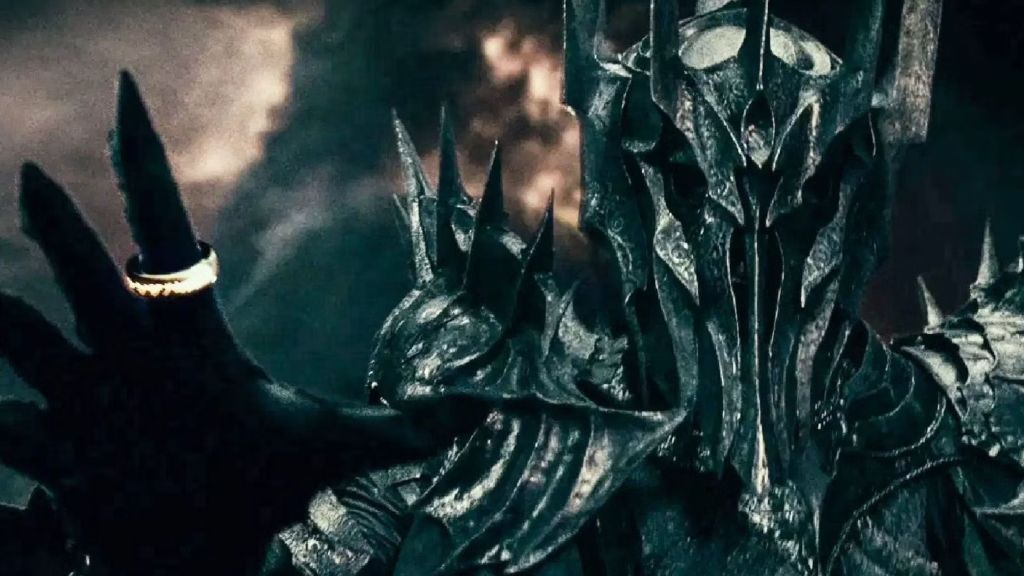
In the book, Gandalf warns that when you use the Ring, you’re not just turning invisible. “You were in gravest peril while you wore the Ring, for then you were half in the wraith-world yourself,” he said to Frodo. In other words, invisibility in The Lord of the Rings isn’t about magic tricks, but about reality and perception.
The key point here is that the Ring isn’t a simple “cloaking device.” It doesn’t make you invisible in a purely physical sense; it shifts you into a different plane of existence, what Tolkien calls the wraith-world. For mortals like Frodo, this means being pulled partly out of the physical world, becoming invisible to normal eyes — but that’s not exactly an advantage. Being in the Unseen realm makes you more vulnerable. You don’t vanish from everything, you just become visible to those who already operate on that level, like the Nazgûl (also known as the Ringwraiths). So invisibility, in truth, is a side effect of becoming half a wraith.
But another interesting layer is that the Ring’s invisibility isn’t just about disappearing physically, but about how the bearer’s power manifests to others. Frodo becomes invisible to mortal eyes because his essence is still deeply tied to the physical world, and the Ring brutally exposes the fragility of that link. Frodo is still a hobbit, grounded in body and senses. When he wears the Ring, part of that connection breaks, leaving him “out of sync” with reality and open to outside influence.
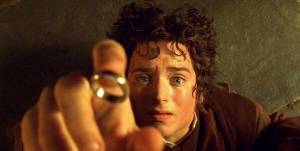
Sauron, however, plays in a completely different league. He’s not mortal; he’s a Maia — a spiritual being who already exists partly within the Unseen realm. He doesn’t need to cross into the wraith-world because he already exists there. And Sauron doesn’t turn invisible because he is the standard: the master of the space between worlds. He doesn’t depend on matter, so he doesn’t need to be invisible to go unnoticed or to wield power. His influence is imposed through will and intent, not through physical presence. The Ring doesn’t change that, because the kind of invisibility it offers is built for mortals, not for beings of divine power. Sauron is a shadow without form, yet still able to exert power in the physical world. So, for someone who doesn’t rely on physical existence, invisibility doesn’t apply.
So basically, the Ring’s effect mirrors whoever wears it: it amplifies their limits. For hobbits, it’s dramatic. For Sauron, it’s irrelevant. And that contrast shows how Tolkien wasn’t just designing a magic trick; he was creating a narrative mechanic to reflect hierarchy, vulnerability, and perception.
The Lord of the Rings Always Wanted to Show That the Ring Is Dangerous

And here’s the real point: invisibility in The Lord of the Rings is a kind of exposure. Frodo might disappear to ordinary eyes, but he becomes more visible to those who see in the spiritual realm. The key is understanding that the Ring’s invisibility is metaphysical. When Frodo wears it, he becomes less real in the physical world and more perceptible in the unseen one. That’s what makes the Ring’s danger more than moral or psychological — it’s existential. Tolkien shows that the Ring doesn’t just corrupt your soul; it reshapes your very being.
That’s also why Frodo feels both fear and fascination every time he uses it — the sensation of disappearing comes with a warning: the Ring isn’t safe. It doesn’t protect its bearer; it only changes the kind of threat they face. That’s why Sauron was able to see Frodo whenever he put the Ring on.
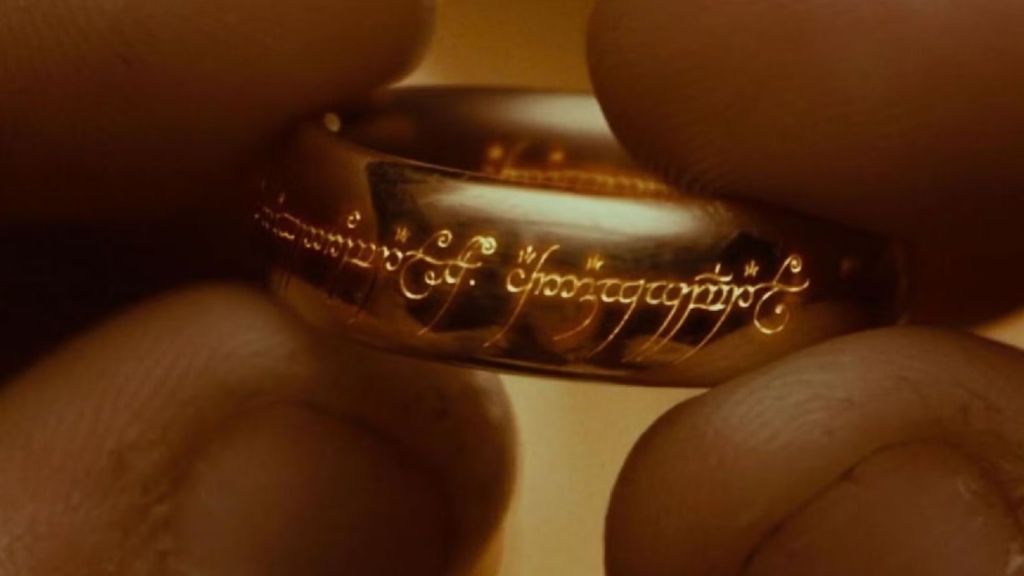
And that tremendous danger is exactly why Gandalf refuses it in the first movie, because he knows the problem isn’t losing sight of yourself, but losing your self entirely, since the worst part was that there was a progressive effect: the longer the Ring was worn, the harder it became to come back. To put it in perspective, the Nazgûl, for instance, became completely dependent on their own rings (which were vulnerable to Sauron since he forged them), and the Unseen realm eventually turned them into wraiths, almost unable to return to the physical world.
So, in short, it all comes down to nature. Frodo disappears because the Ring pulls him into a plane he normally can’t access, and invisibility is just a side effect. Sauron doesn’t vanish because he already exists there, even when he manifests physically. For him, vanishing would be pointless. And this is not a flaw in the Ring; it’s just consistent worldbuilding. Tolkien built a clear distinction between mortals and spiritual beings, and invisibility is just one of the narrative tools to show the cost of wielding power you don’t truly understand. For Frodo, disappearing has consequences. For Sauron, it simply doesn’t exist.
What do you think about how the One Ring was portrayed in The Lord of the Rings movies? Let us know in the comments!
Most Viewed
-

Image courtesy of Universal Pictures. -

Image Courtesy of ABC