There are some movies you can recognize before you even remember exactly where you know that image from. And a lot of the time, you don’t even need to have seen the movie to know where it comes from — and that’s especially true in sci-fi. It’s a genre that offers plenty of themes that can be used to build truly striking visual identities: sometimes it’s a spaceship flying through space, a city covered in rain, or a completely absurd scene made unforgettable by its color palette. This happens when the aesthetic stops being just another part of the production and starts working as a signature. And some films have taken that idea very far in order to tell their stories, leave an impression on audiences, and make their mark on cinema.
Videos by ComicBook.com
Of course, there are hundreds of sci-fi movies with legendary, timeless images, but there’s a difference between having a visually memorable scene and making pretty much every scene feel like it could belong only to that movie. In this list, we’ve brought together 5 genre features that built such specific visual identities that, even without any context, basically anyone would be able to recognize them from a single frame.
5) Alien
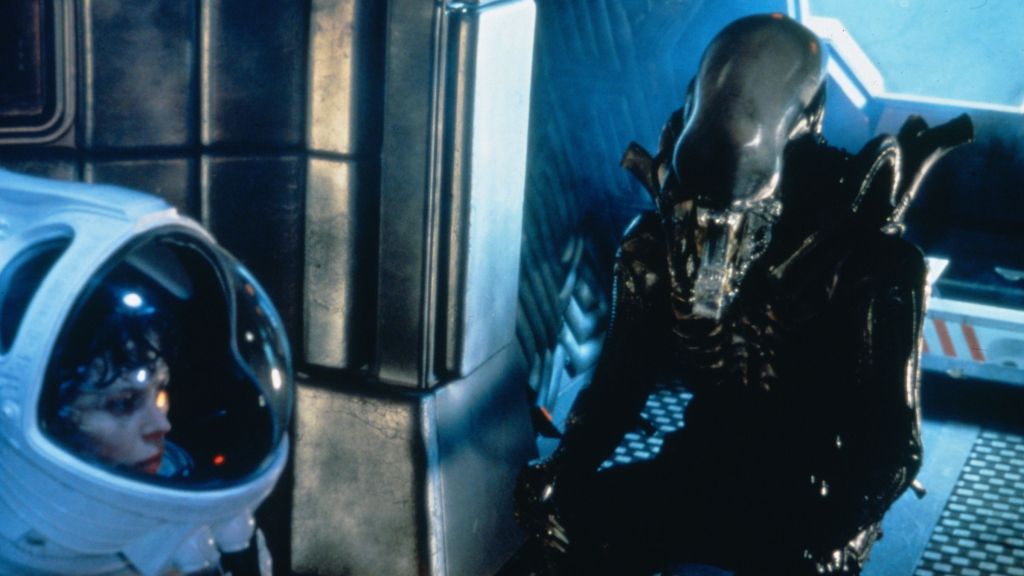
It’s hard to think of another movie that can make a corridor filled with pipes, dirty metal, and steam look as instantly recognizable as Alien. And if you can, Ridley Scott’s film usually comes to mind right after. The classic sci-fi horror story follows the crew of the Nostromo, a cargo ship that interrupts its journey to investigate a mysterious signal and ends up bringing aboard a creature that begins hunting them down one by one. But even before the Xenomorph appears, the movie makes sure to establish its environment and what it represents for the tone of the experience.
The Nostromo doesn’t look like a futuristic spaceship designed to impress. Instead, it feels like an old, cramped, poorly maintained workplace filled with equipment the characters need to operate for a living. In general, Alien makes absolutely no attempt to make the future look elegant. And when the Xenomorph finally enters the picture, that contrast becomes even stronger, because it is nothing like a traditional movie monster. The combination of organic and mechanical elements makes the creature recognizable even today. A shot of a Nostromo corridor, an egg, or simply the creature’s silhouette would be enough to tell you exactly what story you’re watching.
4) The Matrix
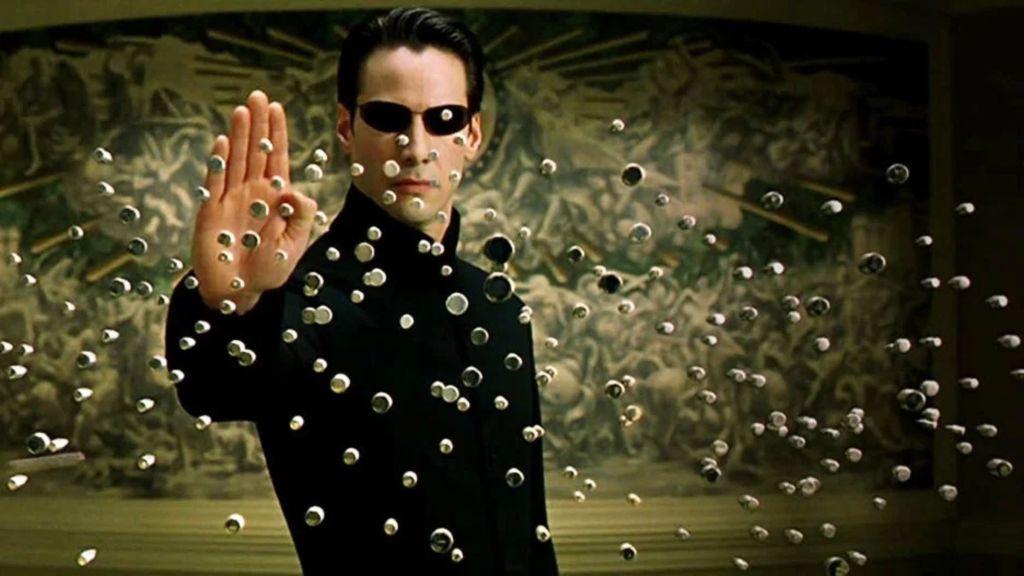
Put someone in a black trench coat and sunglasses in an urban setting with a green-tinted look, and even without any context, a lot of people will immediately think of The Matrix, right? The story follows Neo (Keanu Reeves), a programmer who discovers that the reality he knows is actually a simulation created by machines, and then joins the resistance to try to bring it down. But the most interesting thing here is that the visual style of this movie, which went on to become a major franchise, isn’t there just to make the film look cooler (although it certainly does that). It’s also there to distinguish the story’s two different worlds.
In the movie, the Matrix has that artificial green look, while the real world is colder and more desaturated. The costumes, architecture, and cinematography all work together to create an incredible cyberpunk vision that has since been copied many times. At the same time, there’s the action, which practically created a whole new visual vocabulary for sci-fi cinema: an image of Neo leaning backward as he dodges bullets, Trinity (Carrie-Anne Moss) frozen in midair, or dozens of Agent Smiths filling the same frame is no longer just an action scene; it’s an image that could only belong to The Matrix.
3) Interstellar

The visual identity of Interstellar is very different from the other films on this list because its future doesn’t look futuristic at all to begin with. The story initially follows Cooper (Matthew McConaughey), a former NASA pilot who leaves his children behind to take part in a mission through a wormhole in search of a new habitable planet for humanity. Before he ever reaches space, however, the movie spends a considerable amount of time on a farm surrounded by dust, fields, and enormous skies. And yes, that choice is important because it establishes the scale of everything that comes afterward. When Cooper finally leaves Earth, space doesn’t feel like a backdrop with visual elements designed to fill the screen — most of the time, it’s the emptiness itself that dominates the image.
The spacecraft in Interstellar are small, the planets feel enormous, and the black hole Gargantua has a visual presence that doesn’t look like anything from another sci-fi movie. Even when the film is showing something as simple as a spacecraft floating through space, there’s a very specific sense of scale and physical realism to it. And all of these details matter because they play a big role in establishing the story’s tone. In the end, a single image of Gargantua or an astronaut stranded in an alien landscape already carries the identity of one of Christopher Nolan’s most visually distinctive productions.
2) Blade Runner 2049
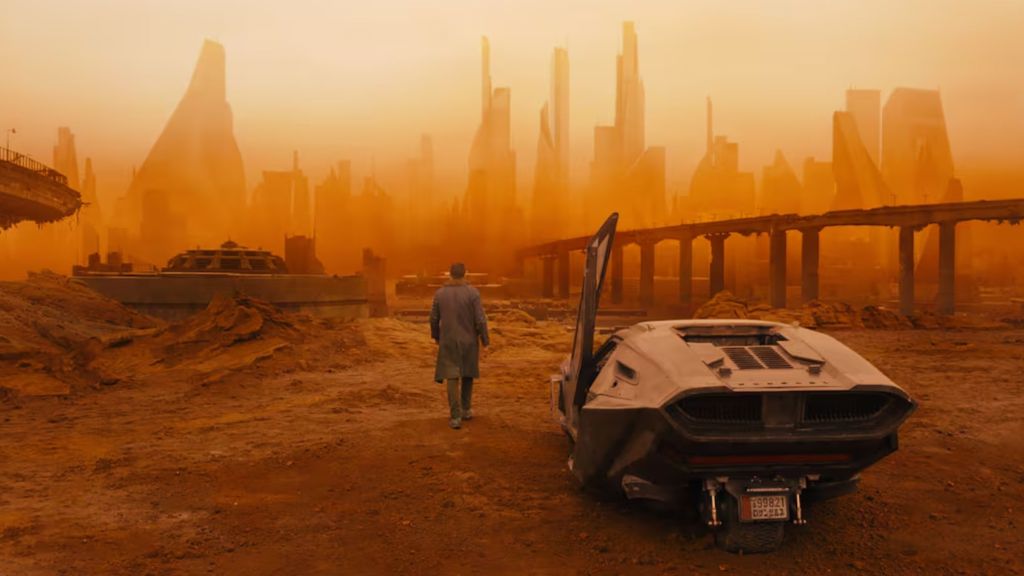
Back in the ’80s, Blade Runner arrived with a visual style that immediately made an impact. Then, years later, Blade Runner 2049 came along and took that identity even further, showing just how important a film’s visual language can be. The story follows K (Ryan Gosling), a replicant who works as a police officer and discovers a secret that could completely change society, leading him to search for former Blade Runner Rick Deckard (Harrison Ford). And the film’s aesthetic is so carefully controlled that every location seems to have its own visual logic. That’s already a signature of Denis Villeneuve’s filmmaking, but with this movie, he takes it to another level.
The city is filled with rain, neon, and massive architecture; some environments are dominated by cold tones and shadows; and Las Vegas looks as if it has been submerged in an orange cloud. And in all of them, the characters often seem too small for the spaces they occupy — which is exactly where Blade Runner 2049 separates itself from a simple sequel trying to recreate the original’s look. The movie takes the idea of a decaying future and just makes everything bigger.
1) Mad Max: Fury Road

The funny thing about Mad Max is that not every movie in the franchise has the same kind of strong visual identity as Mad Max: Fury Road. Even people who have never watched a single installment in the saga can recognize this one as it’s so incredibly unique in that regard. All it takes is a completely absurd vehicle racing across a desert, a group of people covered in dust, and that’s it. The story itself follows Max (Tom Hardy) and Furiosa (Charlize Theron) as they flee from Immortan Joe (Hugh Keays-Byrne) through a post-apocalyptic world. The thing is that the plot is basically one giant chase, and that ends up creating one of the most visually distinctive experiences in modern cinema.
Absolutely nothing in Fury Road feels generic: the cars were modified to look like machines built by people who only had access to scrap metal, the costumes help explain the society of this universe, and the War Boys belong to a culture that could only exist in this particular world. On top of that, the intense orange of the desert, the blue of the nighttime sequences, the real vehicles, and the practical stunts give the action a physicality that feels totally its own and almost impossible to compare to any other production. It’s an exaggerated movie in practically every possible way, but it’s never confusing. Honestly, there isn’t much out there that looks like this.
What do you think? Leave a comment below and join the conversation now in the ComicBook Forum!
More Movies
-

Image Courtesy of Universal -

Image Courtesy of Warner Bros