
When director Ridley Scott introduced audiences to the Nostromo in 1979’s Alien, he created one of the most enduring horror and sci-fi franchises by merging the cold isolation of deep space with the psycho-sexual artistry of H.R. Giger. The original movie established the mythology centered around a perfect biomechanical organism, prioritizing survival horror over traditional action tropes. Over the subsequent decades, the intellectual property expanded far beyond its haunted-house origins, evolving into a sprawling cosmic narrative that explored the hubris of artificial intelligence and the consequences of genetic tampering. This sustained thematic depth allowed various visionary filmmakers to leave their distinct visual signatures on the property, continually mutating the central xenomorph antagonist to reflect the shifting technological anxieties of different eras.
Videos by ComicBook.com
Currently, the Alien franchise is experiencing a massive resurgence. The 2024 theatrical release of Alien: Romulus grossed over $350 million at the global box office, leading to the active development of a highly anticipated sequel. Concurrently, the universe has successfully expanded into prestige television with Noah Hawley’s Alien: Earth, which premiered to record-breaking viewership in August 2025. The momentum continues to build as the series prepares to shoot its second season in 2026 at the legendary Pinewood Studios in London, bolstered by the recent casting addition of Peter Dinklage. While the upcoming productions might include new xenomorph types, the creature has already appeared in multiple shapes and different stages of life across the movies.
11) Chestburster
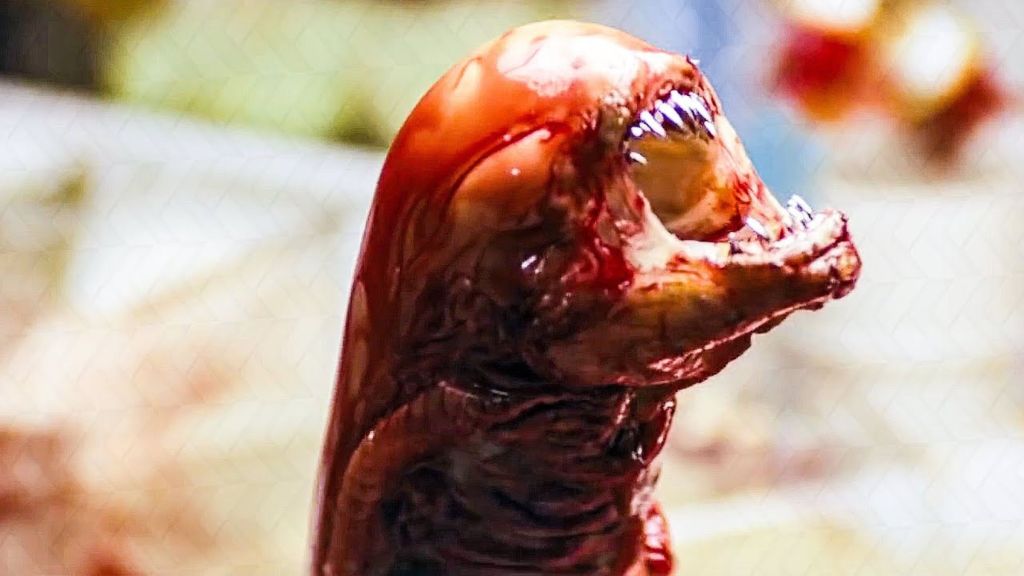
The lifecycle of the xenomorph creature begins with the Chestburster, the infant stage of the organism that forces its way out of the host’s ribcage. Instead of engaging in combat, its primary instinct is to flee into the shadows, relying on the labyrinthine ventilation shafts of starships or the chaotic debris of planetary colonies to hide while it rapidly molts into a mature threat. Despite its lack of physical strength, the creature is incredibly fast and difficult to track, as seen during its iconic introduction in the original 1979 film. The true danger of this infant lies entirely in its potential to grow, making it the most physically vulnerable iteration of the species.
10) Facehugger
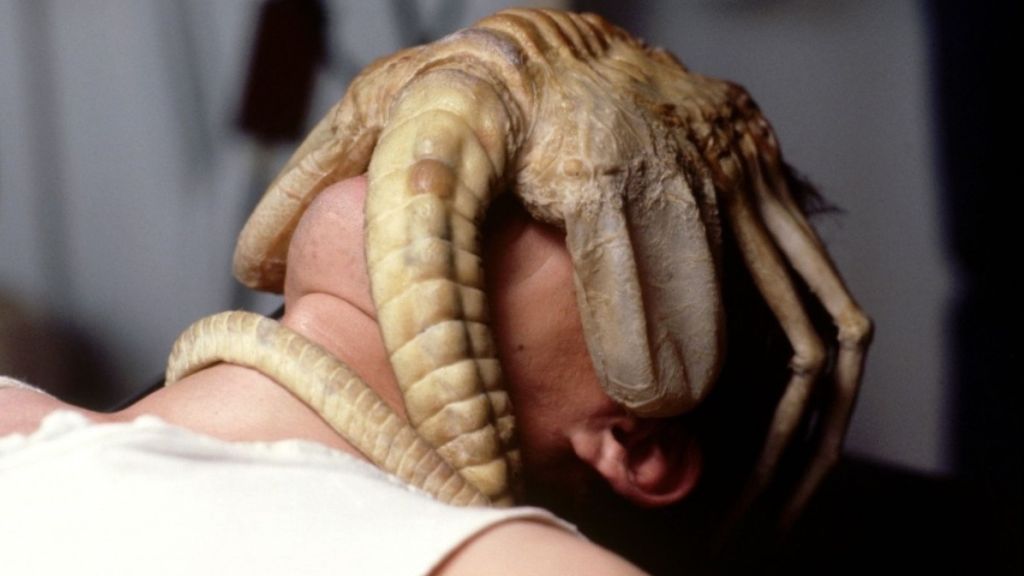
Operating as the delivery mechanism for the species, the Facehugger is an arachnid-like parasitoid explicitly designed to subdue a host and implant an embryo. Emerging directly from the Ovomorph egg, it lacks the raw physical power and durability of the fully grown xenomorph adults. Still, across the franchise, the Facehugger exhibited astonishing agility, launching itself across rooms to wrap its multi-jointed digits around a victim’s head. The creature also possesses a highly concentrated acidic blood defense mechanism, which prevents surgical removal without causing catastrophic damage to the host or the surrounding environment. Once its task is completed, the organism simply detaches and dies, possessing no sustained combat utility.
9) Deacon
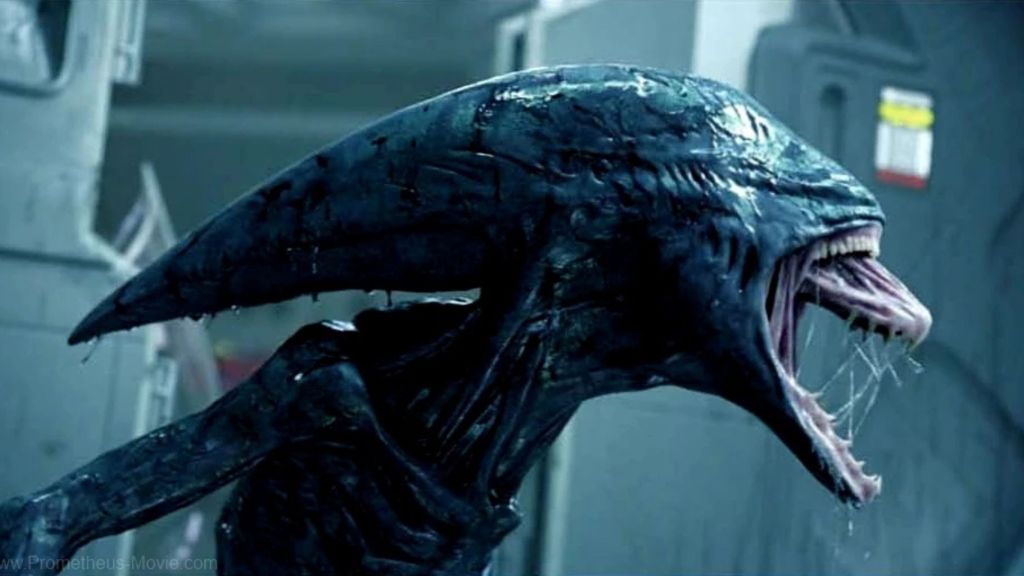
Serving as a genetic precursor to the iconic monster, the Deacon made its singular appearance during the climax of Ridley Scott’s Prometheus. Born from an Engineer host after it was attacked by a massive Trilobite, this creature possesses a sleek, blue-hued biology that lacks the biomechanical tubing and armored exoskeleton of its descendants. Because the audience only witnesses the birth of this entity, its full combat capabilities and maximum size remain largely theoretical. Nevertheless, its origin from the biologically superior Engineer rather than a fragile human suggests a baseline of immense strength and predatory instinct.
8) Runner

Also known as the Dog Alien, the Runner introduced the concept of DNA reflex to the franchise in David Fincher’s Alien 3. Because the facehugger implanted its embryo into a quadrupedal host, the resulting creature adopted a distinct stance that favored moving on all fours. This structural shift sacrificed the bipedal power of previous iterations in exchange for unparalleled speed and agility. The Runner is capable of navigating the metallic corridors of the Fiorina 161 penal colony at blinding velocities, frequently running along walls and ceilings to ambush unsuspecting prisoners. Aesthetically, it lacks the dorsal tubes typically found on standard xenomorph adults and possesses a smoother exoskeleton. While its speed makes it an incredibly lethal hunter against unarmed targets, its lighter frame renders it more vulnerable to heavy ballistics or sustained physical damage.
7) Neomorph
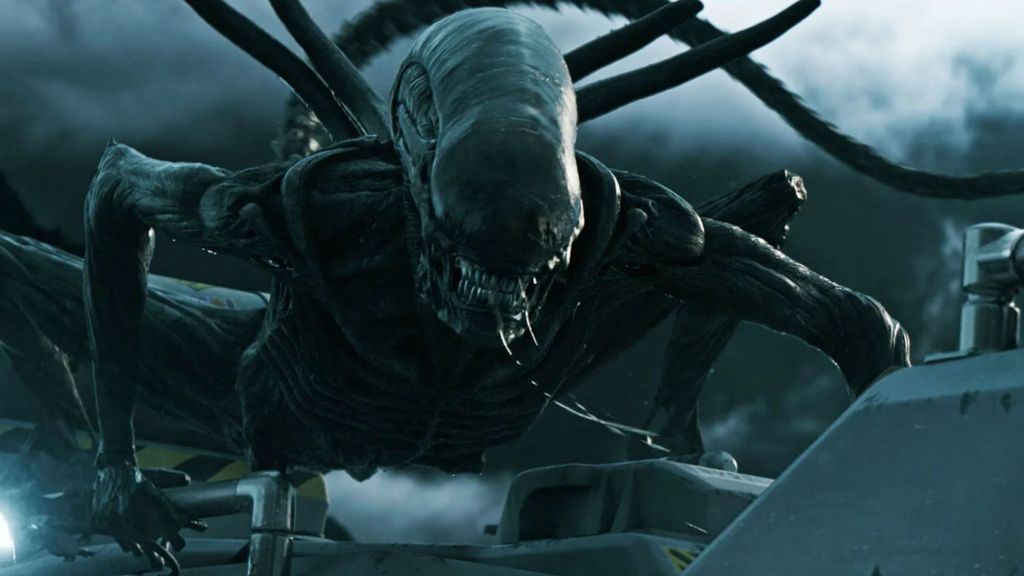
The Neomorph is a feral offshoot of the xenomorphs, unleashed upon the crew in Alien: Covenant. Unlike the traditional lifecycle that relies on a large egg and a specialized facehugger, this variation infects its host through airborne microscopic spores derived from mutated local flora. The resulting creature bursts from the host’s back or throat, immediately exhibiting a level of hyper-aggressive hostility that surpasses even the standard adult iterations. However, the neomorph lacks the stealth-oriented intelligence of the classic design, operating purely on an animalistic instinct to slaughter anything in its immediate vicinity. On top of that, while its speed and sheer ferocity make it a terrifying threat in close quarters, its softer organic tissue lacks the bullet-resistant armor of the biomechanical versions.
6) Drone
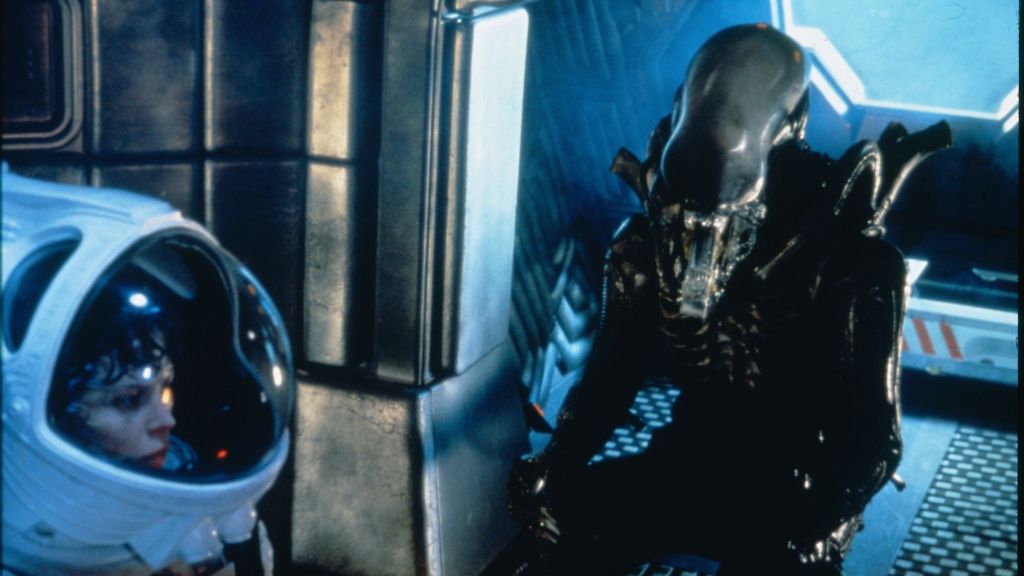
The original xenomorph Drone remains the face of the Alien franchise. Born from a human host, this variation stands upright and utilizes a combination of stealth, intelligence, and physical strength to eliminate its prey. Featuring a smooth, domed carapace and a lethal inner jaw, the organism is a master of environmental adaptation, frequently blending into the industrial architecture of deep-space vessels. The Drone intentionally isolates targets, utilizing the air ducts and vertical shafts to strike from unexpected angles. In addition, its exoskeleton is highly resilient to standard physical trauma, and its acidic blood serves as a devastating deterrent against close-range attacks. This balance of predatory intelligence and formidable biological weaponry establishes the foundation for the entire cinematic species.
5) Warrior

When James Cameron turned the franchise into a full-scale action movie with Aliens, he introduced the Warrior caste, a heavily armored xenomorph variation designed explicitly for combat. Operating as the primary soldiers of a centralized hive, they lack the self-preservation instincts of their predecessors, willingly throwing themselves into the line of fire to overwhelm heavily armed Colonial Marines. Their physical strength is immense, capable of tearing through reinforced steel doors and dragging fully armored soldiers into the darkness. Furthermore, they exhibit a terrifying swarm intelligence, coordinating their attacks to bypass automated defenses and exploit the architectural weaknesses of the Hadley’s Hope colony.
4) Predalien

Featured prominently in Aliens vs. Predator: Requiem, the Predalien mixes the reproductive drive of the hive with the imposing physical architecture of a Yautja hunter. Its raw physical power allows it to easily overpower seasoned alien hunters in hand-to-hand combat, utilizing its enhanced strength to shatter concrete and crush heavily armored opponents. Beyond its brute force, this hybrid directly implants multiple embryos into defenseless human hosts by forcing its inner jaw down their throats. The ability to instantly spawn an army while simultaneously serving as a nearly unstoppable physical juggernaut makes it one of the most formidable standalone threats in the broader cinematic mythology.
3) Newborn
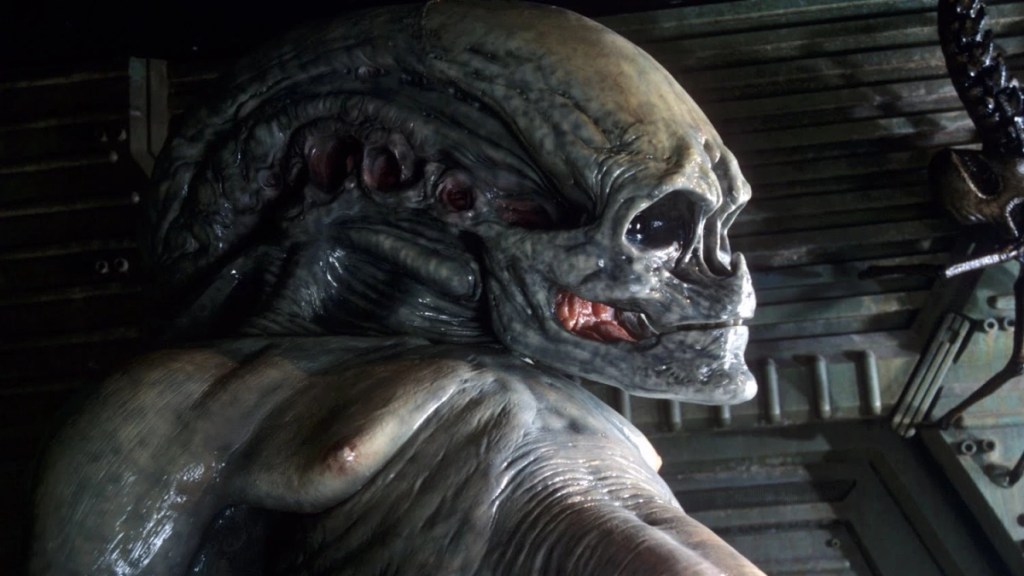
The Newborn is the result of the genetic tampering and cloning experiments depicted in Alien Resurrection. Born from a cloned Queen that had absorbed human DNA, this towering hybrid bypassed the traditional egg cycle entirely, emerging through a terrifying mammalian birth. Visually, the creature is deeply unsettling, possessing pale skin, deeply sunken eyes, and a more pronounced humanoid facial structure that strips away the sleek biomechanical elegance of its xenomorph ancestors. Its physical strength is staggering, easily decapitating the very Queen that birthed it with a single swipe of its elongated arm. Despite this overwhelming power, the entity operates with the emotional volatility of a confused infant, imprinting upon the clone of Ripley (Sigourney Weaver) and displaying a twisted sense of affection that proves to be a major weakness.
2) The Offspring
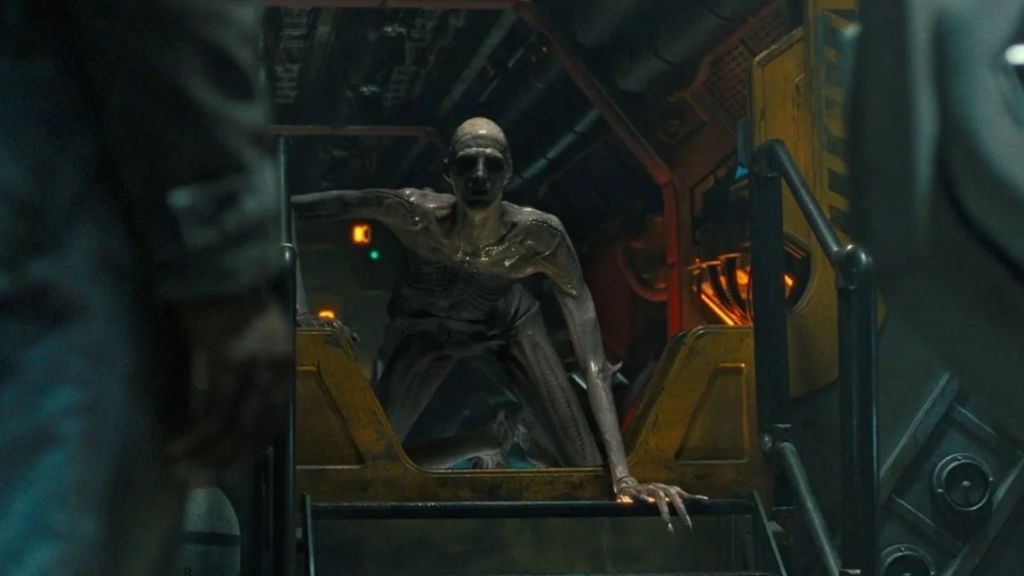
Introduced at the climax of Alien: Romulus, the Offspring comes from injecting the experimental Prometheus strain into a pregnant human host. This nightmarish creation bypasses standard gestation, rapidly mutating into a massive figure that blends human anatomy with the darkest elements of the Engineer and Xenomorph lineages. Featuring an elongated skull, pitch-black eyes, and a terrifyingly human-like face, the creature evokes an intense uncanny valley effect that subverts the established visual language of the franchise. Its physical prowess is overwhelming, easily overpowering standard synthetics and shrugging off severe environmental damage as it pursues Rain Carradine (Cailee Spaeny) through the desolate station.
1) Queen

Standing at the absolute apex of the hierarchy, the Queen is a massive engine of destruction that commands the entirety of the hive. First introduced in the 1986 sequel Aliens, this towering monarch features a crown-like head crest, a secondary set of arms, and a massive ovipositor used to continuously lay eggs. While she typically remains stationary to prioritize reproduction, she can detach from her egg sac, revealing a terrifyingly agile and virtually indestructible combatant. Her exoskeleton easily deflects standard pulse rifle fire, and her massive tail acts as a lethal bludgeon capable of effortlessly impaling heavily armored synthetics like Bishop (Lance Henriksen). The Queen’s ability to coordinate thousands of warriors while serving as a towering force of vengeance solidifies her position as the undisputed biological pinnacle of the xenomorph species.
Which variation of the Xenomorph do you think poses the greatest threat to humanity? Leave a comment below and join the conversation now in the ComicBook Forum!
