
It’s not an exaggeration to say that J.R.R. Tolkien established the framework of modern fantasy literature. By synthesizing disparate elements of European folklore and classical mythology into a rigorous historical continuum, the author established a cohesive universe that dictated the rules of the genre for decades. In addition, Tolkien’s meticulous world-building allowed him to imagine races and civilizations that became cultural staples, transforming vague mythological concepts into societies with deep historical grievances and distinct languages. The resulting legendarium possesses a profound sense of lived-in authenticity, where every faction operates within an intricately designed ecosystem spread across Middle-earth, a sprawling continent containing its own geographical and political logic.
Videos by ComicBook.com
A crucial component of Tolkien’s legendarium is the diverse array of antagonists who rise to challenge the heroes. Specifically, throughout the events of The Lord of the Rings, the Fellowship of the Ring confronts threats shaped by dark powers to conquer the world and eradicate the realms of Men. Both the original novels and Peter Jackson’s monumental cinematic adaptations showcase these varied forces of evil, ranging from corrupted beasts of burden to ancient entities of unfathomable power.
12) Gríma Wormtongue

Gríma Wormtongue systematically dismantles the military readiness of the Rohirrim from within Meduseld. As the son of Gálmód, Gríma leverages his position as chief counselor to King Théoden to enact Saruman’s strategy, prescribing poisons that accelerate the monarch’s premature aging and cognitive decline. This sabotage directly results in the death of Théodred at the Fords of Isen and leaves the Westfold completely vulnerable to Uruk-hai incursions. Gríma relies on whispers and stolen resources to weaken the human resistance without deploying a single soldier. Once Gandalf breaks the spell and strips Gríma of his unearned authority, the counselor flees to Isengard and eventually to the Shire. While he ultimately murders his own master, Saruman, his danger stems entirely from proximity to power rather than inherent strength.

11) Wargs
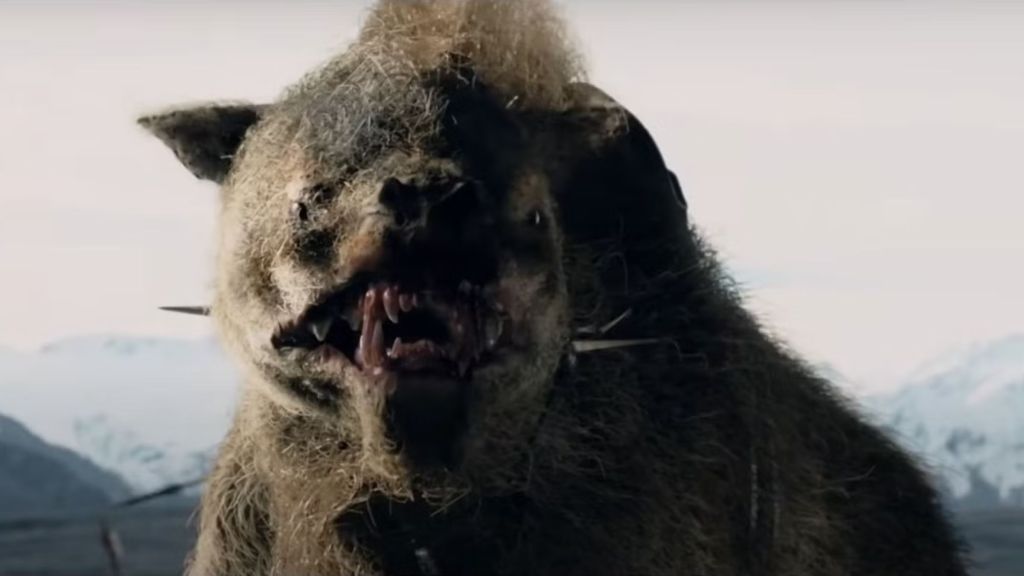
The Wargs function as the primary cavalry for the Orc regiments. Tolkien’s text establishes that these creatures possess their own dreadful language and willingly align themselves with the forces of evil, rather than being simple beasts of burden. During the War of the Ring, Wargs actively hunt the Fellowship through the region of Hollin long before the group reaches the gates of Moria, coordinating their ambushes with tactical precision. Their massive physical frames and innate cruelty allow Orc riders to traverse vast distances rapidly. However, their vulnerability to fire and standard infantry tactics limits their overall strategic impact compared to the higher-order evils.
10) Orcs

Orcs are both the infantry and industrial labor force for both Mordor and Isengard, bred originally by Morgoth during the First Age through the torturous corruption of Elves or Men. Throughout the Third Age, various specialized breeds emerge, including the sunlight-resistant Uruk-hai developed by Saruman and the heavily armored Black Uruks of Barad-dûr. These foot soldiers also execute the grunt orce demanded by the war effort, deforesting Fangorn, operating massive siege engines, and sustaining prolonged sieges across multiple fronts from Osgiliath to Dale. Despite their overwhelming numbers and brutal efficiency in close-quarters combat, Orcs are inherently fractured by deep-seated tribal hatreds and a fundamental cowardice. Their cohesion relies entirely on the driving will of Sauron or their immediate commanders, as demonstrated when the garrison at Cirith Ungol annihilates itself over a dispute regarding a mithril shirt.
9) Mûmakil
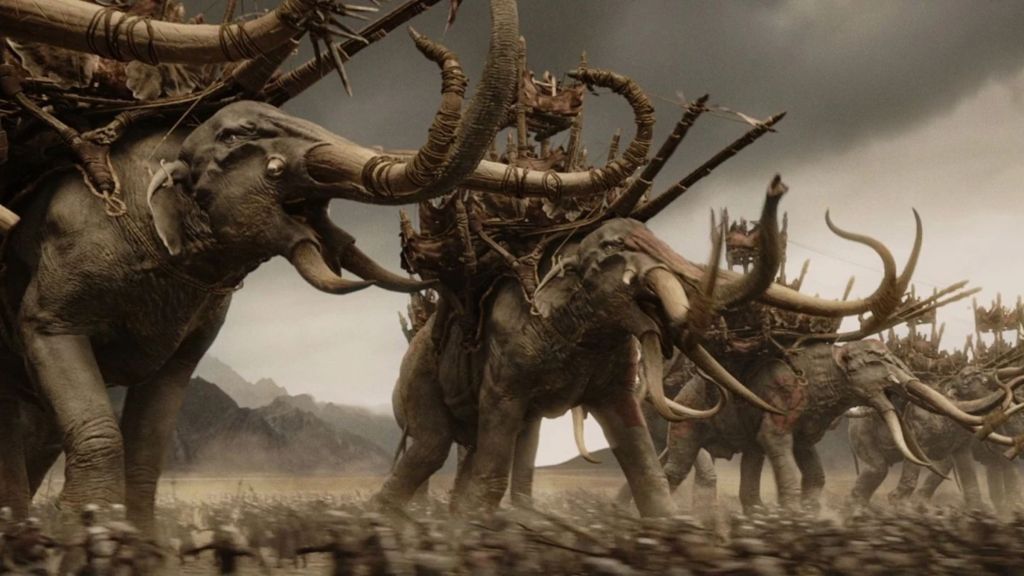
The Mûmakil are colossal pachyderms deployed by the Haradrim as mobile siege platforms during the Battle of the Pelennor Fields. Native to the southern jungles of Far Harad, these massive beasts are outfitted with war towers containing archers and spearmen, rendering traditional cavalry charges completely suicidal. The Rohirrim also suffer devastating casualties when their horses refuse to approach the Mûmakil, whose sweeping tusks and massive feet easily crush both mounted knights and entrenched infantry lines. While their physical destruction is immense, the Mûmakil remain easily disoriented when wounded, frequently trampling allied Haradrim forces in their blind panic, which undercuts their reliability as military assets.
8) Trolls

Morgoth originally bred Trolls during the twilight of the First Age as a direct mockery of the Ents, engineering a species of massive, thick-skinned shock troops driven by primitive malice. By the end of the Third Age, Sauron had successfully developed the Olog-hai, a superior mutation capable of enduring direct sunlight without turning to stone, provided they remained under the Dark Lord’s direct control. These behemoths serve as the heavy artillery of the dark armies, pushing the massive battering ram Grond to the gates of Minas Tirith and shattering the defensive lines during the Battle of the Morannon. A single Troll possesses enough strength to crush a company of Gondorian soldiers or sever the head of a warhorse with a single blow. Despite this overwhelming physical power, their sluggish intellect and reliance on external commands relegate them to the status of living siege weapons rather than independent threats.
7) Easterlings and Haradrim
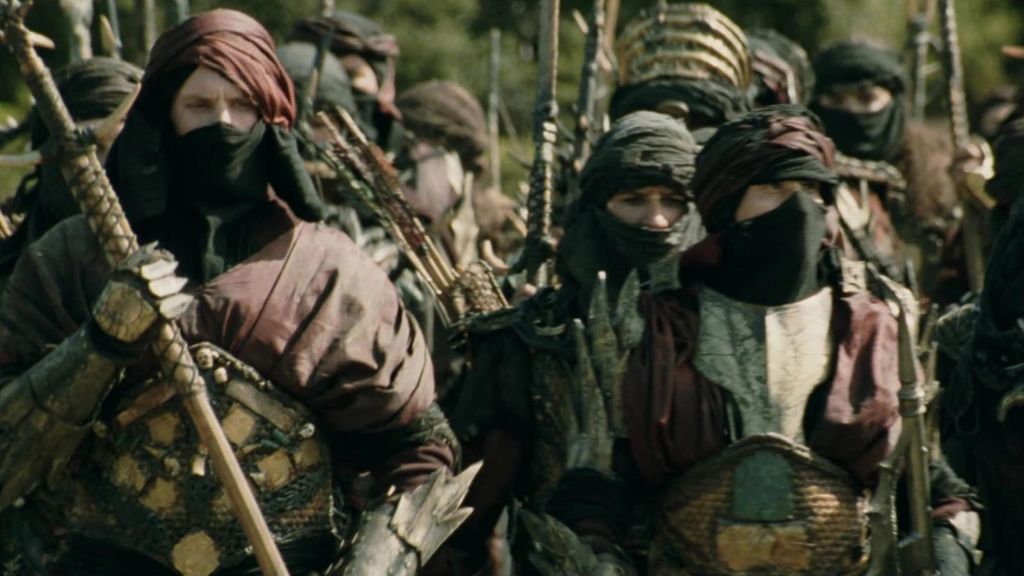
The Easterlings of Rhûn and the Haradrim of the South represent the mortal human empires that pledged allegiance to Mordor. Unlike the chaotic Orc legions, these human factions arrive at the Pelennor Fields as highly organized military forces, featuring elite cavalry units, disciplined spearmen, and the naval superiority of the Corsairs of Umbar. Their alliance with Sauron stems from thousands of years of geopolitical manipulation, historical grievances with the descendants of Númenor, and the direct worship of the Dark Lord in the eastern territories. These men of the East and South possess the same adaptability and martial courage as the defenders of Gondor, fighting fiercely even after the Witch-king falls in battle. Because they do not suffer from the sunlight weakness of lesser creatures and operate with structured military precision, these empires form the most reliable division of Sauron’s forces.
6) Shelob
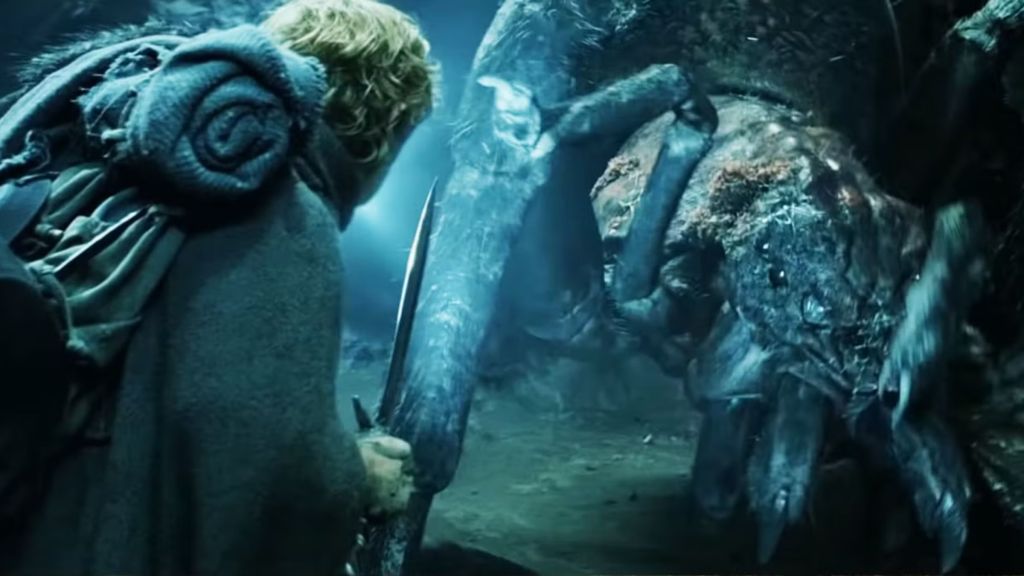
Shelob is the last surviving offspring of Ungoliant, a primordial arachnid entity that predates the creation of the Sun and the Moon. Residing within the lightless tunnels of Torech Ungol, she operates entirely outside the command structure of Mordor, serving only her own insatiable hunger. Sauron tolerates her presence, viewing the massive spider as an effective guardian for the secret pass of Cirith Ungol; he even offers her Orcs or prisoners as sustenance. During the quest to destroy the Ring, she successfully paralyzes Frodo Baggins with her venom, nearly halting the entire mission just miles from Mount Doom. It ultimately requires the light of the Phial of Galadriel and the desperate courage of Samwise Gamgee, wielding the barrow-blade Sting, to severely wound the ancient terror.
5) Saruman
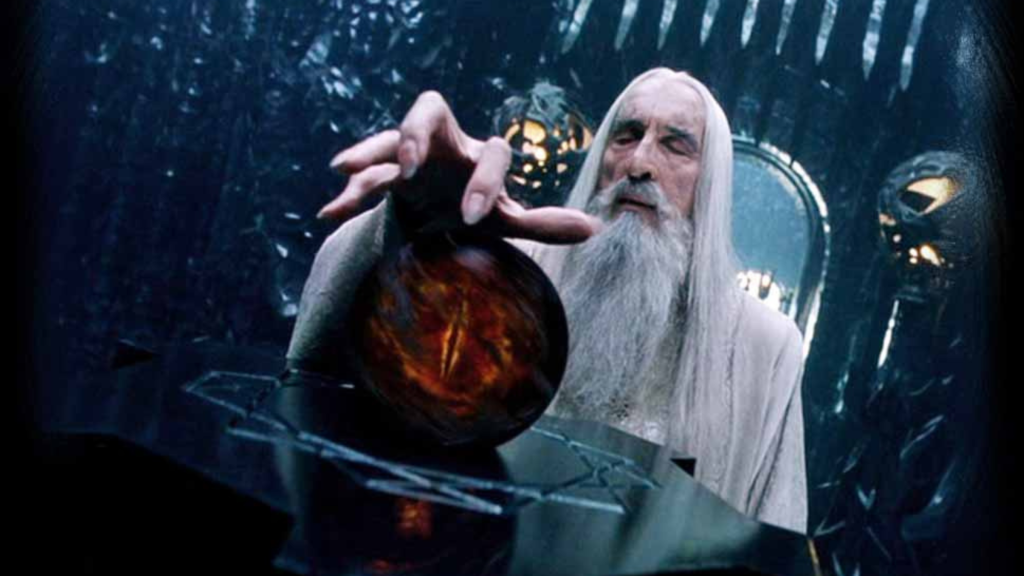
As the head of the Istari order, Saruman was the most knowledgeable authority on the Rings of Power in Middle-earth outside of Sauron himself, a position he exploited for decades while secretly pursuing the One Ring for his own ends. His corruption of Rohan through Gríma Wormtongue neutralized the Free Peoples’ most capable cavalry force for years, while his industrial operation at Isengard produced the Uruk-hai, a breed of Orc immune to sunlight that nearly destroyed Rohan’s entire population at Helm’s Deep. Beyond his strategic achievements, Saruman possessed a voice of supernatural persuasion that Tolkien describes as capable of bending the will of listeners before they could mount a rational defense, a power so effective that even Gandalf warns the Rohirrim not to engage him in conversation at Orthanc. His ambition was never to serve Sauron but to replace him, and the only reason he failed is that the One Ring found its way to a hobbit in the Shire rather than into the hands of someone Saruman could manipulate.
4) The Nazgûl
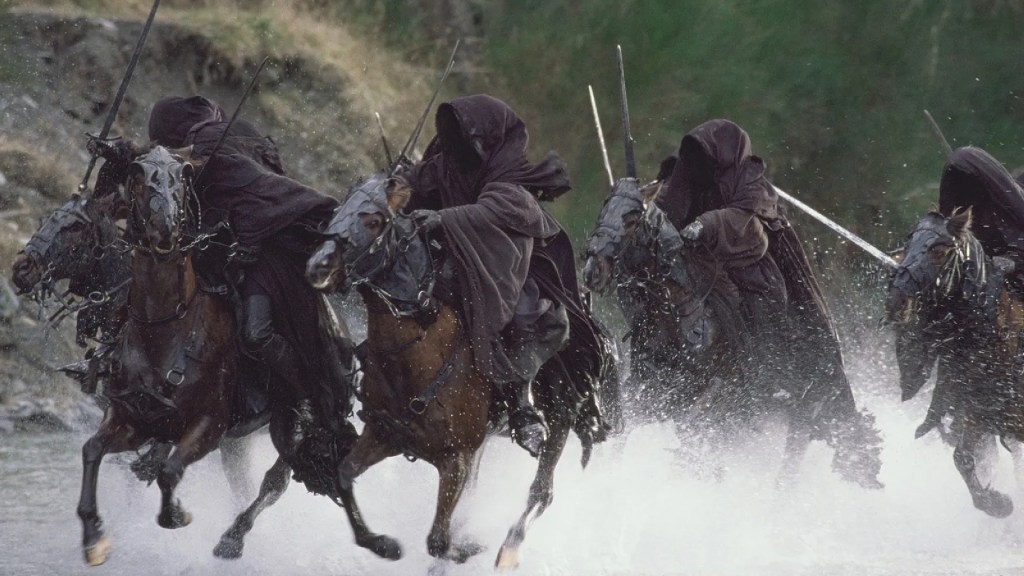
The Nazgûl function as the elite supernatural enforcers of Sauron’s will, bound eternally to the Dark Lord through the corruption of the nine Rings of Power gifted to mortal kings during the Second Age. Stripped of their physical bodies, these Ringwraiths exist permanently in the unseen world, using black cloaks and armor to give shape to their nothingness. Their most devastating weapon is the Black Breath, an aura of despair and paralyzing terror that shatters the morale of enemy armies and causes debilitating sickness in those who cross their path. Riding fell beasts and shadowy steeds, the Nazgûl also operate as Sauron’s most efficient trackers, relentlessly pursuing the One Ring from the Shire to the borders of Rivendell. Finally, their absolute immortality by conventional means makes them the most effective instruments for projecting Sauron’s malice across vast distances.
3) The Balrog

The Balrog of Khazad-dûm, historically known as Durin’s Bane, is a corrupted Maia spirit that defected to Morgoth’s service during the earliest days of Arda. After surviving the catastrophic War of Wrath, this demon of shadow and flame burrowed deep beneath the Misty Mountains, slumbering until the dwarven mining operations of King Durin VI awoke it in the Third Age. The entity single-handedly destroyed the greatest kingdom of the Dwarves, forcing the survivors into exile and transforming the majestic halls of Moria into a lightless tomb. As a being of the same angelic order as the Wizards, the Balrog possesses access to primordial magic, while his twisted form makes it immune to the standard weaponry of Elves and Men. His confrontation with Gandalf on the Bridge of Khazad-dûm sends both of them into the abyss, and the pursuit that follows lasts ten days across the depths and up to the peak of Zirakzigil, where Gandalf finally destroys him and dies in the process.
2) The Witch-King of Angmar
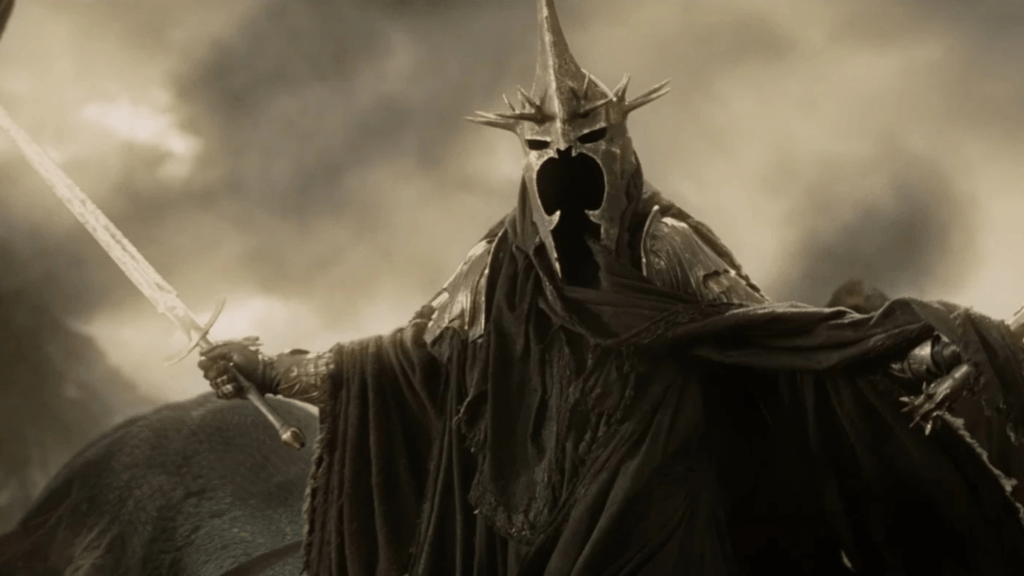
As the Lord of the Nazgûl, the Witch-king of Angmar combines the supernatural terror of the Ringwraiths with the strategic brilliance of a military commander. During the Third Age, he destroyed the northern kingdom of Arnor by establishing the realm of Angmar, engaging in a centuries-long campaign of attrition that permanently fractured the Dúnedain lineages. Following Glorfindel’s prophecy that he would not fall by the hand of man, the Witch-king operated with confidence in his impunity, eventually capturing the Gondorian city of Minas Ithil and transforming it into the dreaded Minas Morgul. During the War of the Ring, the Witch-king commands the assault on Minas Tirith, personally shattering the gates of the city and striking down King Théoden on the Pelennor Fields. His destruction is only achieved when Meriadoc Brandybuck uses an enchanted Westernesse dagger to dispel the magic binding his form, allowing Éowyn to deliver the fatal strike.
1) Sauron
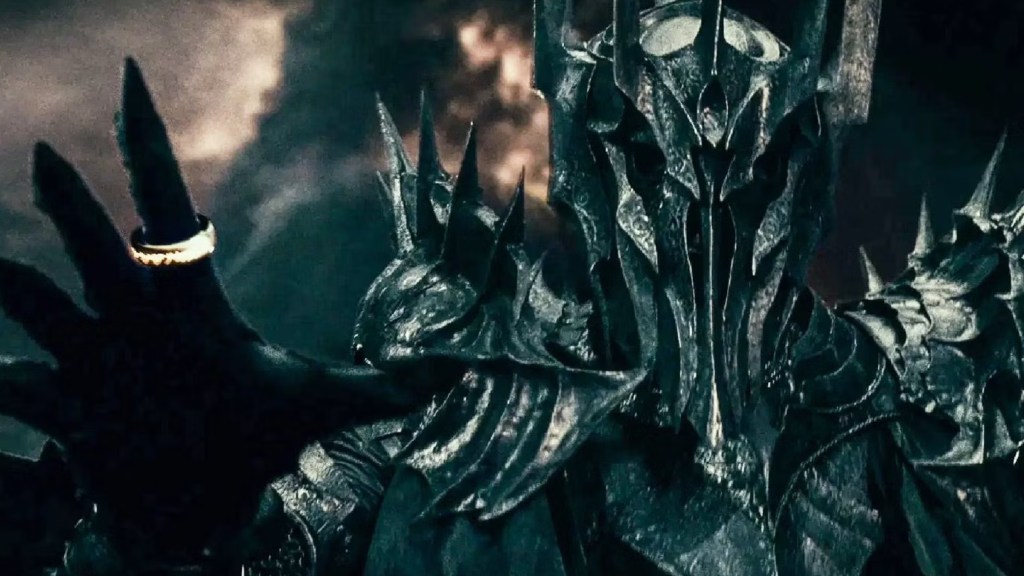
Sauron is the source of every threat in The Lord of the Rings, a Maia who served Aulë in the earliest ages of the world before being corrupted by Morgoth and eventually surpassing his master in cunning and reach. Tolkien’s text establishes that at the height of his power in the Second Age, Sauron conquered all of Middle-earth save for Lindon and Rivendell, forged the One Ring to bind all other Rings of Power to his will, and was destroyed in combat with Gil-galad and Elendil before reconstituting himself over centuries in Dol Guldur. By the time of The Lord of the Rings, Sauron had already survived physical death multiple times, maintaining control over Mordor and almost every force catalogued on this list. The entire plot of the trilogy exists because destroying Sauron by conventional means is impossible, and the only viable path is destroying the One Ring from where the Dark Lord draws his power. Every villain in this list exists because Sauron willed them into existence, bent them to his service, or created the conditions that made them dangerous.
Which villain from Tolkien’s Middle-earth do you consider the most dangerous? Leave a comment below and join the conversation now in the ComicBook Forum!
