Universal’s The Mummy franchise turned a pulpy Egyptian adventure premise into one of the defining blockbusters of the late 1990s, with an equally acclaimed sequel repeating the feat in the early 2000s. The Mummy in 1999 and The Mummy Returns in 2001 paired Brendan Fraser’s Rick O’Connell with Rachel Weisz’s Evelyn Carnahan against a resurrected Egyptian priest named Imhotep (Arnold Vosloo), the titular creature that threatens to take over the world. Departing from the expected tone of the Universal Monsters brand, the duology blends genuine horror with adventure comedy, a mix that would influence dozens of copycats. Then came 2008’s The Mummy: Tomb of the Dragon Emperor, which swapped Weisz for Maria Bello and largely drained the goodwill the first two films had built, putting the franchise to rest for almost two decades.
Videos by ComicBook.com
Universal has officially announced a fourth installment of the franchise, directed by Radio Silence’s Matt Bettinelli-Olpin and Tyler Gillett. The directors, who previously helmed Ready or Not and the return of the Scream franchise in 2022, have also confirmed the third movie won’t factor into the story. That’s not all, as Fraser and Weisz are both confirmed to return, joined by John Hannah’s Jonathan Carnahan, Oded Fehr’s Ardeth Bay, Kevin J. O’Connor’s Beni Gabor, and even Arnold Vosloo as Imoteph, the original villain. Fans won’t even have to wait too long for the reunion, as Universal has dated The Mummy for May 19, 2028. All the right pieces seem to be aligned, and we only need a script that uses the best plot details of the series.
3) The Flesh-Eating Scarab Beetles
Years after first watching The Mummy, I still think of the scarabs, an incredibly effective piece of body horror hiding inside a PG-13 adventure movie. The first film establishes the scarabs as part of the Hom-Dai, the ancient curse inflicted on Imhotep after a forbidden affair ends in the pharaoh’s murder. Imhotep is buried alive with a swarm of carnivorous scarabs that slowly consume his flesh while keeping him conscious. The beetles resurface three more times across the first film. Jonathan Carnahan pockets a live one that starts biting into his hand before Rick digs it from his shoulder with a knife, a prison warden picks one up that burrows under his skin and into his skull, and Beni Gabor is swallowed by a full swarm as Hamunaptra collapses around him. The Mummy Returns brings them back a decade later, when an archaeological dig unearths a fresh swarm that attacks the crew, implied to be the same scarabs that spent ten years feeding on Beni.
The idea of a bug that crawls under your skin and eats you from the inside out is terrifying, and many 1990s kids had nightmares about these vicious bugs. Since the fourth movie is willing to go back to its Egyptian roots and explore the original mythology, bringing the scarabs back is a must.
2) The Medjai Mythology
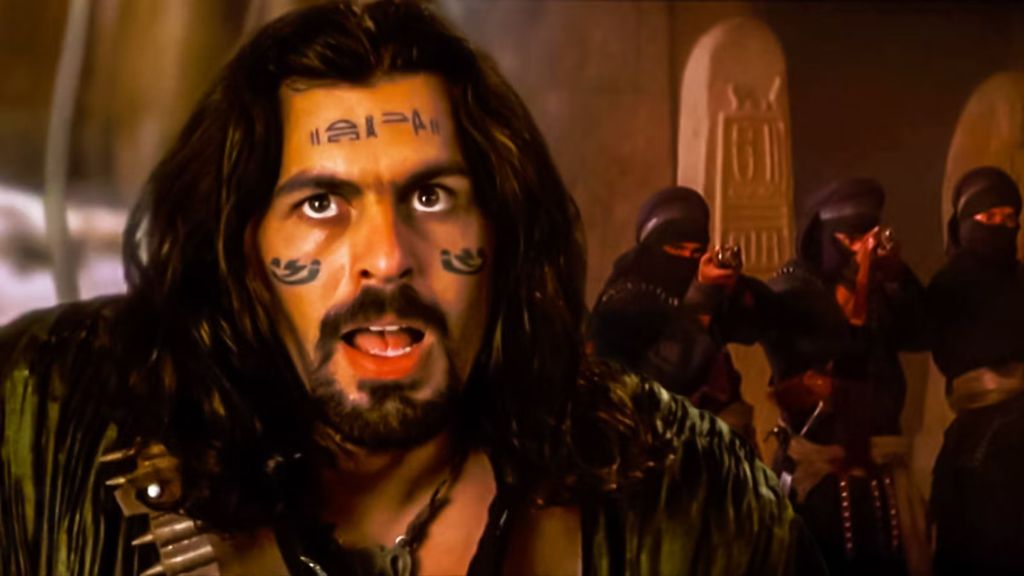
While the first two Mummy movies deliver great self-contained adventures, the franchise’s success can also be explianed how how it presents a complex lore that goes well beyond the immediate threats. One of the key aspects of this lore is the Medjai, a secret order descended from Pharaoh Seti’s personal bodyguards who have spent three thousand years making sure nobody wakes Imhotep back up. Introduced through Ardeth Bay in the 1999 film, the Medjai are marked by facial tattoos and operate as a hidden desert army that patrols the ruins of Hamunaptra, intervening only when explorers get close enough to become a genuine threat. In the sequel, that army also rises against the forces of Anubis, buying Rick time to defeat the Scorpion King (Dwayne Johnson).
The Mummy Returns also reveals Rick is a descendant of the Medjai, the perfect hook for the franchise to dive deeper into their lore. The 2008 sequel dropped the Medjai almost entirely, and the story felt smaller without them, closer to a straightforward monster hunt than a chapter into an ancient story. To succeed, the new movie needs to bring the Medjai back and put their millenary history at the center of the plot.
1) The Book of the Dead and the Book of Amun-Ra

The Book of the Dead and the Book of Amun-Ra are the two ancient Egyptian tomes introduced in the first Mummy movie, one able to raise the dead and the other able to send them back to the afterlife. The black book, sealed inside a statue at Hamunaptra, is what Evelyn accidentally reads aloud, resurrecting Imhotep and setting the plot in motion. Its golden counterpart contains the only incantation capable of stripping Imhotep of his immortality, becoming the weapon the heroes chase during the final stretch of the story. Both books resurface years later in The Mummy Returns, as a mysterious cult ressurects Imoteph once again and begins the race for the Scorpion King.
Beyond Imoteph, the books also contain spells and inscriptions that can awaken other dead people or cast them off. Over two movies, very little of those pages has been shown or used, which means there are still secrets to be uncovered. The next Mummy movie should bring the books back to continue to explore their arcane power.
More Movies
-

Courtesy of 20th Century Studios -

Courtesy of Ketchup Entertainment