
Before superheroes dominated pop culture, Marvel and DC spent decades adapting their characters. The 1966 Batman series introduced American primetime audiences to a live-action Batman (Adam West), and a decade later, the 1975 Wonder Woman series placed Lynda Carter at the center of a network drama that ran for three seasons. Furthermore, The Incredible Hulk cast Bill Bixby and Lou Ferrigno as Banner and Hulk, respectively, for a five-season run that showed a superhero drama could sustain a network audience for years. On the animated front, The New Adventures of Superman, which debuted on CBS in 1966, brought the Man of Steel to Saturday mornings, and the 1981 Spider-Man and His Amazing Friends extended Marvel’s reach with a shared-universe format that anticipated the studio’s later cinematic strategy. Among these early efforts was the CBS adaptation of The Flash, which premiered in the fall of 1990.
Videos by ComicBook.com
The Flash ended exactly 35 years ago today, on May 18, 1991, after a single season consisting of 22 episodes. Developed by Danny Bilson and Paul De Meo, the CBS network production placed Barry Allen (John Wesley Shipp) in a muscle-sculpted red suit that demanded a substantial budget of over a million dollars per episode. Unfortunately, despite strong initial excitement, the network shifted the programming time slot multiple times, damaging viewer retention and ensuring a premature cancellation. With the end of The Flash, the narrative arc of the Scarlet Speedster was cut short before the creators could delve into the hero’s extensive Rogue’s Gallery. However, this brief run left an undeniable mark on DC television history, as the high production values and cinematic tone set a benchmark for future adaptations. It’s no wonder that, decades later, a new iteration of the hero would heavily honor that exact legacy.
How The CW’s The Flash Brought Back John Wesley Shipp

When The CW launched The Flash in 2014, the network was in the early stages of establishing a burgeoning superhero continuity known as the Arrowverse. Arrow had already proved to be a massive audience hit in 2012, but The CW needed a second success to validate the strategy, which is exactly what The Flash offered. From that foundation, the Arrowverse expanded to include Supergirl, DC’s Legends of Tomorrow, Batwoman, and Black Lightning, all connected through annual crossover events that drew DC audiences across multiple networks. Plus, with 184 episodes aired across nine seasons in total, The Flash concluded on May 24, 2023, as one of the longest superhero productions in the history of television.
From its earliest episodes, The Flash on The CW treated the 1990 CBS series as a direct predecessor worth honoring. For instance, the creative team brought back multiple members of the original cast, including Mark Hamill as the Trickster, Amanda Pays as Dr. Tina McGee, and Alex Désert as Julio Mendez. Instead of playing the same characters, these legacy actors brought variants of their respective characters to life, seemingly integrated into the Arrowverse. Still, the biggest tribute to the 1990s television era came through the careful integration of Shipp into the core narrative.
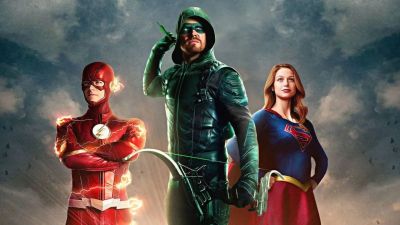
The Flash first cast Shipp as Henry Allen, Barry’s imprisoned father, a recurring dramatic role that ran across multiple seasons. The show then elevated him further through the multiverse framework, casting him as Jay Garrick, the elder Flash of Earth-3 who served as a mentor figure for Gustin’s Barry Allen. The next step of the experiment came during the 2019–2020 Crisis on Infinite Earths crossover event, in which Shipp donned an updated version of his original costume as the Earth-90 Barry Allen, and the CBS series was integrated into the Arrowverse’s official multiverse canon. During the massive television crossover event Crisis on Infinite Earths, the Earth-90 Barry Allen sacrifices himself to save the multiverse, running on a cosmic treadmill to prevent an anti-matter wave. This heroic death finally delivered closure for a storyline that had been abruptly halted decades earlier.
The classic 1990 season of The Flash is currently available for purchase on digital platforms, while The CW’s The Flash is available on Netflix.
Are you satisfied with how the Arrowverse concluded the original The Flash television series storyline? Leave a comment below and join the conversation now in the ComicBook Forum!
