
The revival industry has become one of Hollywood’s most dependable revenue sources, with networks and streaming platforms returning to familiar IP at a pace that has accelerated throughout the 2020s. Paramount+ relaunched Frasier, NBC brought back Night Court, and this year alone, we already got new seasons of Scrubs and Malcom in the Middle. There’s even a new version of The X-Files in development by Ryan Coogler. The strategy makes sense, as even if not every revival and reboot lands, the costs of bringing back a TV show are still lower than creating fresh IP, which, added to the power of an existing fanbase, makes these endeavors less risky for investors.
Videos by ComicBook.com
Even though classic shows from the 1990s and the early 2000s keep getting a second chance in recent years, the 1980s still have many properties worth exploring. Some shows released in that era had intriguing concepts that crumbled under an uneven execution, while others achieved moderate success before vanishing from the collective conscience. There are even 1980s that became influential only after their cancellation, gathering a cult following that nevertheless didn’t help the show to stay alive. With a well-made revival, all of them could return and receive the glory they deserve.
5) Misfits of Science

Created by James D. Parriott and airing on NBC from October 1985 to February 1986, Misfits of Science ran for sixteen episodes before low ratings ended it prematurely. The show followed a team of scientists and powered individuals at the fictional Humanidyne Institute, including a shrinking researcher, a rock musician capable of conducting and releasing electrical charges, and a telekinetic teenager played by Courteney Cox in one of her first television roles. The ninth episode was also the first paid writing credit for Tim Kring, who would go on to create Heroes two decades later.
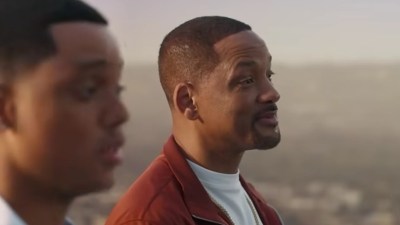
The superhero ensemble concept the series was attempting had no serialized storytelling precedent and no budget capable of making superpowers look credible, which explains the project’s failure. However, a reimagining of Misfits of Science could make the best of the superhero hype the Marvel Cinematic Universe helped Hollywood develop in the past decades, while also making the best of modern visual effects.
4) Sledge Hammer!
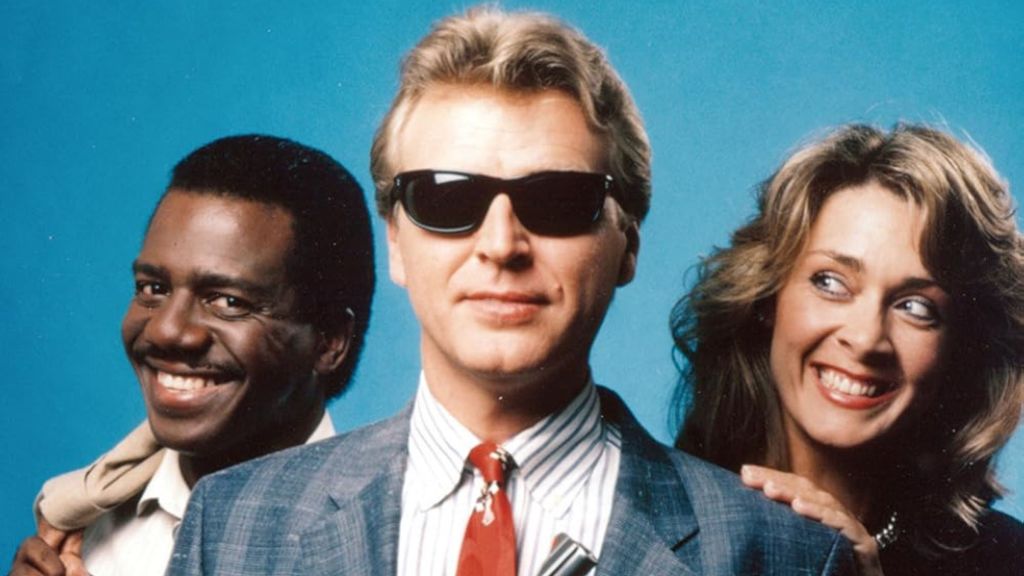
ABC’s Sledge Hammer! ran for two seasons and 41 episodes between 1986 and 1988, and it remains the sharpest police procedural satire that American network television produced before Brooklyn Nine-Nine made the genre great again. Created by Alan Spencer and starring David Rasche as the gun-worshipping, due-process-indifferent Inspector Sledge Hammer, the show skewered the Dirty Harry template so precisely that it played as legitimate action television and pointed parody simultaneously. The first season’s conclusion remains one of the more audacious network television choices of the decade, with the writers ending on a nuclear detonation that destroyed the city under the assumption they would not be renewed. They were, which required setting the second season five years before the first.
Debates about qualified immunity, police militarization, and the culture of impunity within law enforcement have moved from the political margins to the center of the national conversation, making a revival of Sledge Hammer! More timely than ever. That means a streaming revival with the budget to stage the practical action comedy the original could only gesture at would have both a built-in cult following and a ready-made argument for cultural relevance.
3) The Greatest American Hero

Stephen J. Cannell’s The Greatest American Hero ran for three seasons on ABC from 1981 to 1983, following substitute teacher Ralph Hinkley (William Katt) after an alien encounter leaves him in possession of a supersuit whose instruction manual he immediately loses. The show’s central joke revolved around an ordinary man trying to function as a superhero with powers he cannot reliably control, while FBI Agent Bill Maxwell (Robert Culp) kept Hinkley in the field despite his inability to fly in a straight line. While we now have ultraviolent TV shows about superhero failure, such as Invincible, The Greatest American Hero, levity still makes it a unique entry in the genre’s canon.
The Greatest American Hero has gone through a failed 1986 spin-off pilot, two Phil Lord and Chris Miller-developed reboot pilots that Fox passed on in 2014 and 2015, and a 2018 Hannah Simone-led ABC pilot that was shot and shelved without airing. All of those attempts failed to produce a single broadcast episode. It’s been almost a decade since the last attempt, and the flexibility of streaming could give creators the freedom they ned to bring the series back in an ingenious way.
2) Moonlighting
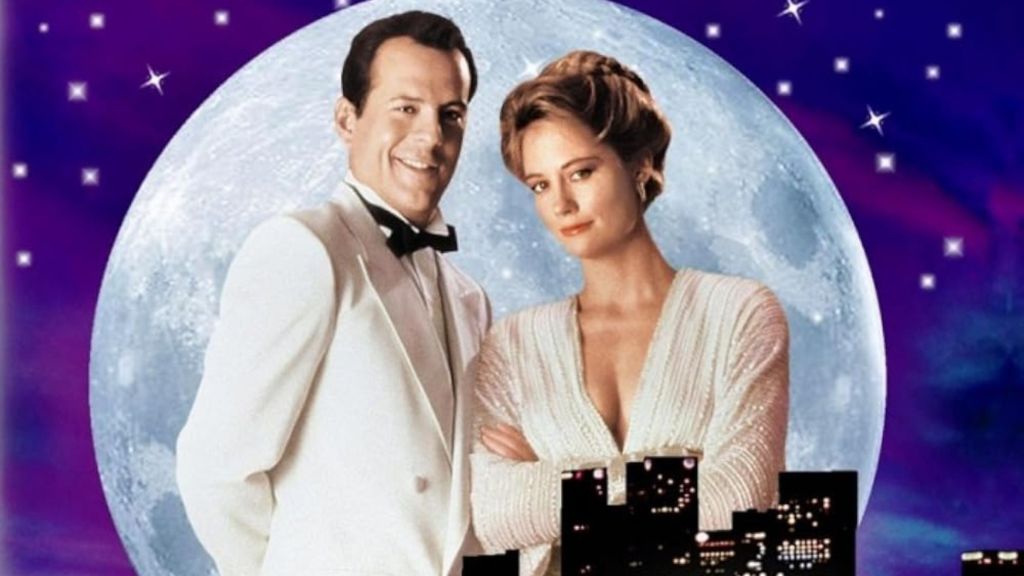
Glenn Gordon Caron’s Moonlighting ran on ABC from 1985 to 1989, producing 66 episodes that collectively constituted one of the most inventive network dramas in television history. Starring Cybill Shepherd as former model Maddie Hayes and Bruce Willis as private detective David Addison, the show broke the fourth wall, performed full episodes in iambic pentameter, shot a season-two installment entirely in black-and-white at a then-unheard-of cost of $2 million per episode, and combined screwball comedy, mystery, and romantic drama into a genre it effectively invented. The Directors Guild of America even nominated it for both Best Drama and Best Comedy in the same year, which had never happened before, and reflected how groundbreaking the show was.
The premise of Moonlighting could work even without its original cast, making a revival easy to achieve. The Blue Moon Detective Agency, the rapid-fire overlapping dialogue, the meta-commentary, and the will-they-won’t-they tension between a mismatched investigative pair are all transferable to new characters in a new decade, with streaming budgets finally matching Caron’s ambitions for the original series.
1) Crime Story

No 1980s television series has been more consequential in retrospect and more ignored in practice than Michael Mann’s Crime Story, which aired on NBC from 1986 to 1988, across two seasons and 44 episodes. The show followed Lt. Mike Torello (Dennis Farina) and his Major Crimes Unit as they pursued mobster Ray Luca (Anthony Denison) from the streets of early-1960s Chicago to the casino floors of Las Vegas in a single sustained narrative arc that unfolded over the entire run. That approach to serialized crime drama did not become standard practice in American television until The Sopranos proved it was commercially viable more than a decade later, which underlines how groundbreaking Crime Story was. The two-hour pilot was even exhibited in theaters before attracting more than 30 million viewers when it aired.
Unfortunately, Crime Story spent its entire run fighting for its life against scheduling changes and the ratings dominance of Moonlighting on the competing network. As a result, the show was canceled before it could wrap up its story, which is outrageous considering how Crime Story set the foundations for the storytelling architecture that American prestige television has spent thirty years refining. Streaming was built for serialized storytelling, and since Mann has proved himself multiple times by helming movies such as Heat, Collateral, and Ali, he should get the opportunity to tell the full story he had planned in the 1980s.
Which 1980s cult shows would you most want to see return? Leave a comment below and join the conversation now in the ComicBook Forum!
