
Patrick Rothfuss’s Kingkiller Chronicle is one of the defining fantasy series of the 21st century. The saga revolves around Kvothe, a gifted musician and arcanist who narrates the myth of his own legend to a traveling scribe over the course of three days. The series is distinguished not just by its world-building but by its prose style and narrative architecture, as Kvothe is an unreliable narrator telling his own story from the position of a ruined man. That narrative choice means every moment of brilliance in Kvothe’s story is shadowed by the knowledge that something went catastrophically wrong, and that the legend the reader is watching being built is one the narrator himself no longer believes in.
Videos by ComicBook.com
The Kingkiller Chronicle’s first book, The Name of the Wind, was published in 2007, winning the Quill Award and becoming a number one New York Times bestseller. Its 2011 sequel, The Wise Man’s Fear, debuted at the top of the same chart and won the David Gemmell Legend Award. Since then, fans’ patience has been tested, as The Doors of Stone, the third and final book in the trilogy, still has no confirmed publication date. A screen adaptation has fared no better. Lionsgate acquired the rights in 2015 with Lin-Manuel Miranda attached as executive producer, but after Showtime passed on the series in 2022, the project has remained in development limbo. Fortunately, for readers who have finished both books and are staring down an indefinite wait, other fantasy books can help pass the time.
5) Tigana by Guy Gavriel Kay

Published in 1990, Tigana is one of the most devastating standalone fantasy novels ever written. Set in a peninsula of Italian-inspired city-states, Tigana follows a rebellion from a province whose name has been erased from the world’s memory by a conquering sorcerer. Things are not as simple as they seem, since the sorcerer’s actions were motivated by the death of hs soon by the hands of a man who came from the nameless province. Kay’s prose operates at a register closer to literary fiction than genre fantasy, and the connection to Kingkiller runs through both writers’ conviction that language itself is a form of power. Furthermore, Kay builds his antagonist into someone whose grief the reader fully understands and whose methods remain monstrous regardless, which produces the same moral discomfort that Rothfuss generates when Kvothe’s brilliance leads him somewhere the reader cannot entirely condemn and cannot entirely excuse.
4) Jonathan Strange & Mr Norrell by Susanna Clarke

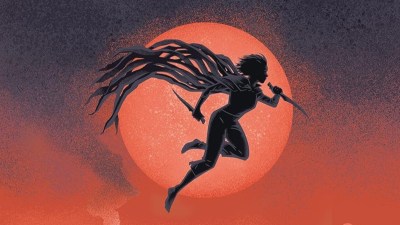
Susanna Clarke’s 2004 debut is a thousand-page alternate history of England in which magic is a scholarly discipline that has been theorized but not practiced for centuries, until two very different magicians revive it simultaneously. Just like in the Kingkiller Chronicle, Jonathan Strange & Mr Norrell treats magic as something that can be studied, debated, and systematically understood. Furthermore, Clarke’s footnotes, which cite centuries of fictional scholarship on the history of English magic, perform the same function as Kvothe’s narration, establishing that the version of events the main text presents is one account among many and that the gaps are where the real story lives.
3) The Poppy War by R.F. Kuang
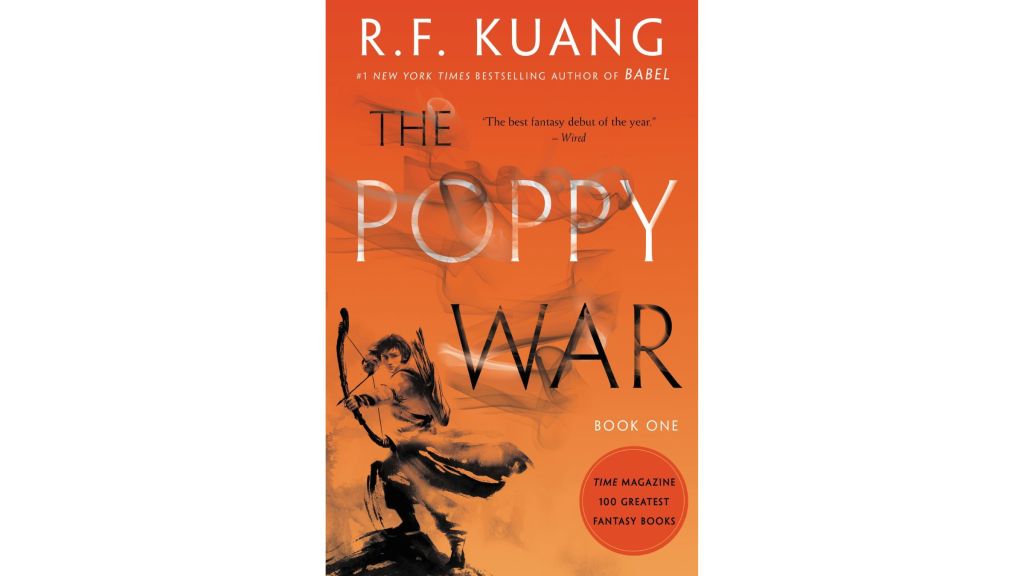
The Poppy War follows Rin, a war orphan from a rural province of a China-inspired empire who scores well enough on the imperial examination to earn a place at the country’s elite military academy. The book is split into two parts, as the first half is a coming-of-age story about a brilliant outsider navigating an institution designed to contain people like her. Then, the second half abandons the academy entirely and drops her into a genocidal war modeled closely on the Second Sino-Japanese conflict, where her growing capacity for mass destruction becomes the novel’s central moral problem. R.F. Kuang completed the trilogy with The Dragon Republic and The Burning God, which means readers who are tired of waiting for books that may never arrive can read the entire arc.
2) Piranesi by Susanna Clarke

Clarke’s Piranesi follows a man who lives alone in an impossible house of infinite halls filled with tidal statues, cataloguing his surroundings in careful journals without understanding how he arrived there or why a second man visits him twice a week and refuses to answer direct questions. The journal entries are made clear to the reader, well before protagonist Piranesi understands that something has been done to his memory and that the man who visits him knows exactly what. That mechanism is similar to the Kingkiller Chronicle framing device, as the narrator tells the truth as he knows it — or as he wants it to be — while the reader assembles a different picture from the same evidence. Piranesi won the Women’s Prize for Fiction in 2021 and can be read in a single afternoon, which makes it a perfect choice for when time is short.
1) The Lies of Locke Lamora by Scott Lynch

Scott Lynch’s 2006 debut, The Lies of Locke Lamora, is a book that Rothfuss himself has recommended, calling it one of his top five novels. The novel follows Locke Lamora, a precocious orphan raised by a master con artist to become the leader of the Gentleman Bastards, a guild of thieves in the Venice-inspired city of Camorr. The Bastards run elaborate confidence schemes against the nobility while hiding their true operation from the underworld kingpin, who believes he controls them. The overlap with Kingkiller starts with a dual timeline that alternates between Locke’s formation under his mentor Father Chains and a present-day crisis. In addition, Locke is also a protagonist whose primary weapon is his ability to construct a convincing fiction under pressure. Three books in the Gentleman Bastards series have been published, giving you additional reading material beyond The Lies of Locke Lamora.
Which fantasy series has best helped you survive the wait for The Doors of Stone? Leave a comment below and join the conversation now in the ComicBook Forum!
