Fox Kids launched in 1990 as a joint venture between the Fox Broadcasting Company and its affiliated stations to offer quality family-friendly programming. The block grew rapidly through the early 1990s, expanding to four hours of Saturday morning programming alongside a daily afternoon slot, and formalized its partnership with Saban Entertainment in 1996 as Fox Kids Worldwide, drastically expanding its scope. That dominance rested on a slate of genre-defining productions, including X-Men: The Animated Series, Batman: The Animated Series, Mighty Morphin Power Rangers, Animaniacs, and Spider-Man, all of which passed through the block at various points during its run. Things changed in 2001 when News Corporation sold Fox Kids Worldwide to The Walt Disney Company, stripping Fox of its children’s programming infrastructure and ending one of broadcast television’s most impactful Saturday morning institutions.
Videos by ComicBook.com
4Kids Entertainment stepped into that void in 2002, launching the FoxBox programming block in the time slot Fox Kids had vacated. Originally branded as a five-hour showcase for 4Kids’ library of licensed anime and original productions, the block was renamed 4Kids TV in 2005 and ran until 2008, when a financial dispute between 4Kids and Fox over unpaid lease fees forced the arrangement to end. During its six-year run, 4Kids produced its own generation of cultural touchstones, such as Teenage Mutant Ninja Turtles, Yu-Gi-Oh!, Sonic X, and Winx Club. Together, Fox Kids and 4Kids TV collectively programmed Fox’s Saturday morning schedule for eighteen consecutive years, during which both blocks aired dozens of animated series that earned fierce audience loyalty. Some of its best shows, however, are often overlooked by modern audiences.
7) Eek! The Cat
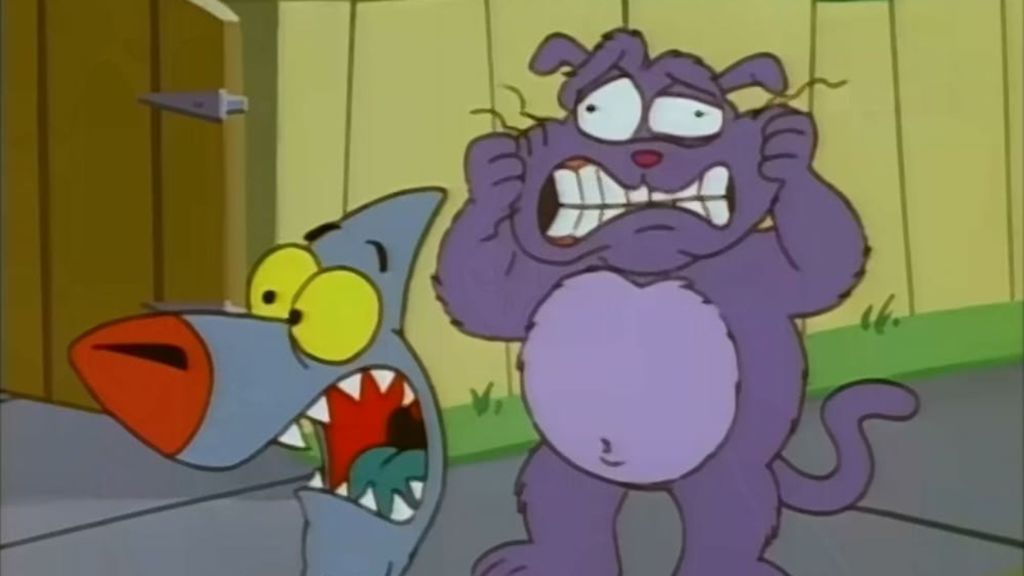
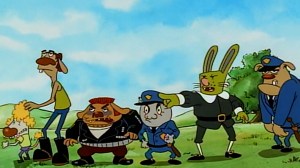
Fox Kids aired Eek! The Cat from 1992 to 1997, and the show’s cult reputation has grown quietly in the three decades since its debut. Created by Savage Steve Holland, the director behind the 1985 film Better Off Dead, the series followed an optimistic purple cat (voiced by Bill Kopp) who relentlessly attempted to help people despite producing catastrophic outcomes at every turn. Its humor depended on rapid-fire gags, anarchic pacing, and a commitment to punishing its protagonist that bordered on absurdism. That creative engine sustained five seasons and a companion segment, The Terrible Thunder Lizards, which proved the show’s comedic premise could extend well beyond its original format.

6) Beast Machines: Transformers
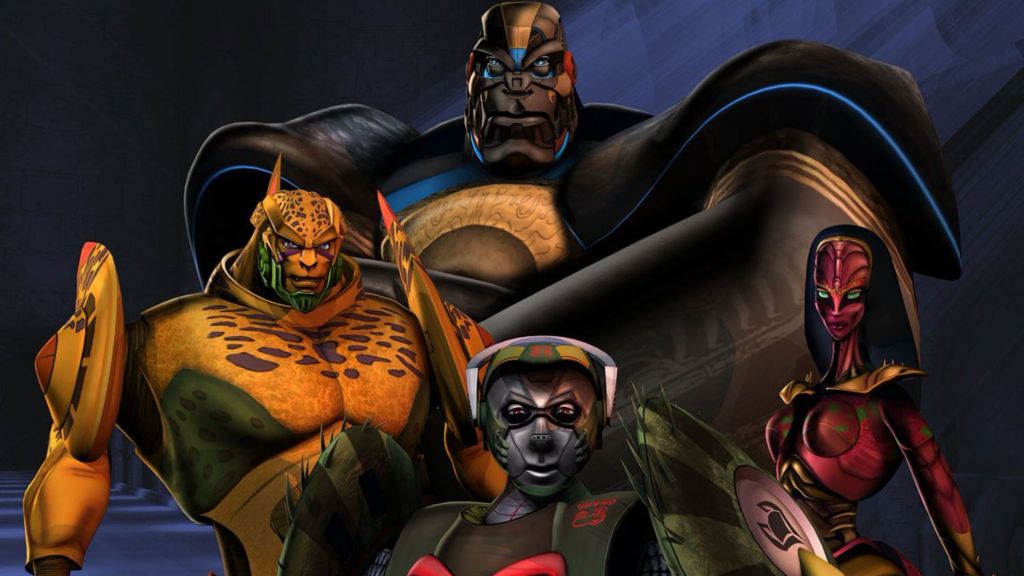
Beast Machines: Transformers premiered on Fox Kids in 1999, as a direct sequel to the highly regarded Beast Wars: Transformers. However, where Beast Wars operated as an adventure series with strong individual character work, the 26-episode Beast Machines committed entirely to serialized storytelling, following Optimus Primal (voiced by Garry Chalk) and his Maximals as they battled a virus-corrupted Megatron (voiced by David Kaye) across a depopulated Cybertron. Mainframe Entertainment delivered significantly advanced CGI for the period, and Beast Machines remains the only Transformers production in North American history fully pre-plotted before a single episode entered production. That level of planning gave the series an unusually linear narrative structure compared to its contemporaries. The divisive response it received in 1999 has since softened into genuine critical reappraisal, with many Transformers fans now acknowledging the show’s thematic ambition.
5) Kirby: Right Back at Ya!

Kirby: Right Back at Ya! arrived on the FoxBox block in 2002 as one of 4Kids Entertainment’s earliest attempts to build on the success of Pokémon by acquiring and dubbing video game-based anime. The original Japanese series ran 100 episodes for NHK, but 4Kids broadcast only 52 of them in the United States, leaving a substantial portion of the show’s story unaired for American audiences. The series followed the pink hero of Nintendo’s long-running platformer franchise as he crash-lands in Dream Land and battles the monsters summoned by the greedy King Dedede (voiced by Ted Lewis) from the Nightmare Enterprises corporation. What distinguished Kirby: Right Back at Ya! from many of 4Kids’ other acquisitions was its consistent rotation of the franchise’s iconic copy abilities across individual episodes, giving it a structural variety that rewarded familiarity with the games.
4) The Tick
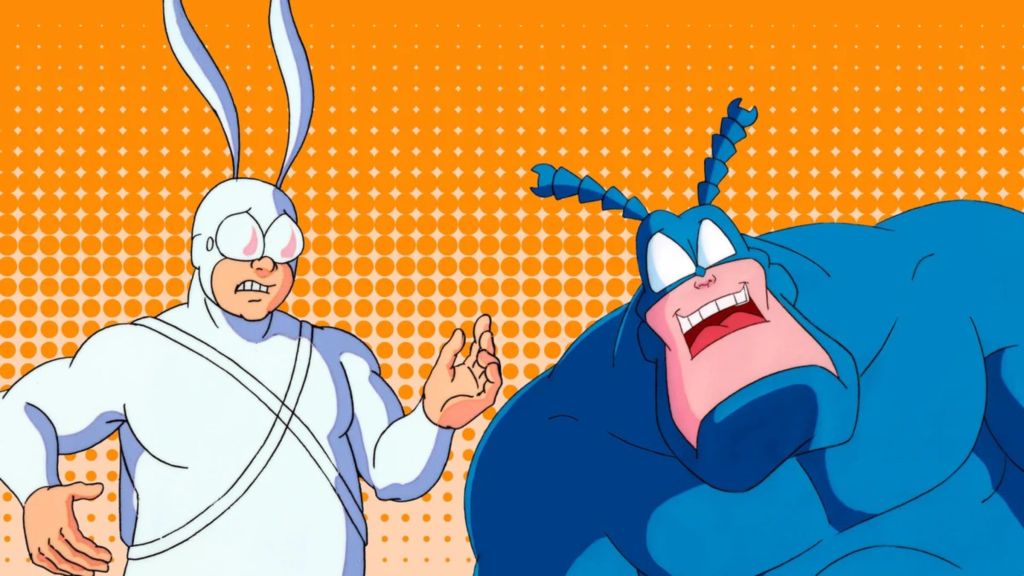
The animated The Tick ran on Fox Kids from 1994 to 1996 and brought cartoonist Ben Edlund’s independent comic book creation to its largest audience. The show centered on the Tick (voiced by Townsend Coleman), a relentlessly enthusiastic and physically invincible superhero of dubious intellect, and his partner Arthur (voiced by Micky Dolenz in Season 1 and Rob Paulsen in Season 2 and 3), a meek ex-accountant who wore a moth costume and functioned as the voice of reason amid a parade of surreal villains. Across its three-season run, the series developed one of the most eclectic rogues’ galleries in animated superhero television, including Chairface Chippendale, El Seed, and the Evil Midnight Bomber, each conceived as a comedic escalation of the superhero genre’s conventions. While there have been other adaptations of The Tick in the past decades, the original animated series remains the most faithful and sustained expression of Edlund’s original vision.
3) Silver Surfer

Silver Surfer aired on Fox Kids for a single season in early 1998, and its cancellation after 13 episodes stands as one of the most frustrating events in Marvel’s animated history. Creator Larry Brody built the series around a fully serialized narrative, blending cel and computer animation in a visual style modeled directly on the work of co-creator Jack Kirby. The storytelling went considerably further than most Saturday morning programming at the time, with individual episodes addressing imperialism, slavery, and environmental collapse. Eight scripts for a planned second season were completed before the production shut down entirely due to a legal dispute between Marvel and Saban Entertainment arising from Marvel’s bankruptcy, leaving the show on a cliffhanger that was never resolved. The series is now available on Disney+, and the audience that has found it there has largely confirmed that its strong original ratings accurately reflected the quality of what Fox Kids had on its hands.
2) Godzilla: The Series
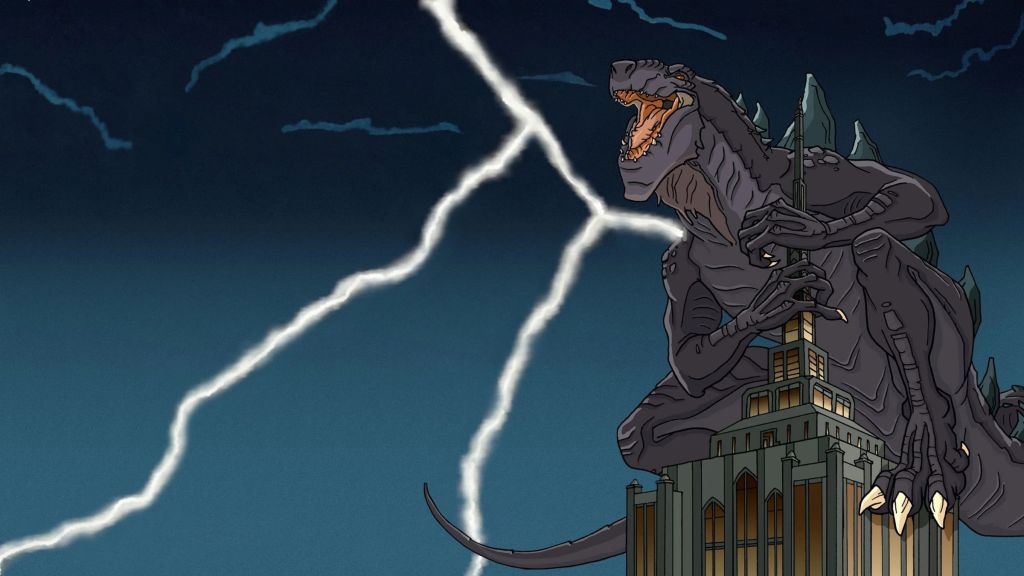
Godzilla: The Series premiered on Fox Kids in 1998, within months of Roland Emmerich’s widely criticized theatrical film, and proceeded to accomplish what the feature could not. Developed by Jeff Kline and Richard Raynis, with Raynis bringing production experience from The Simpsons, the series followed Dr. Nick Tatopoulos (voiced by Ian Ziering) and his Humanitarian Environmental Analysis Team as they battled a rotating cast of mutant creatures alongside Godzilla’s surviving offspring, who had imprinted on Nick as its parent. The production immediately corrected the film’s most criticized omission by restoring Godzilla’s signature atomic breath and introducing a three-part story arc centered on Cyber-Godzilla, a direct homage to Mechagodzilla from the original Toho films. The show ran for 40 episodes across two seasons before the Pokémon and Digimon programming war crowded Fox Kids’ schedule and pushed the series into irregular time slots.
1) The Pirates of Dark Water

The Pirates of Dark Water premiered on Fox Kids in 1991 as a five-part miniseries simply titled Dark Water, and each of its half-hour episodes cost Hanna-Barbera $500,000 to produce, making it the most expensive animated project the studio had undertaken at that point. Created by David Kirschner, the series was set on the alien ocean world of Mer, where Prince Ren (voiced by George Newbern) led a crew of misfits, including the ecomancer Tula (voiced by Jodi Benson) and the mercenary Ioz (voiced first by Héctor Elizondo), on a quest to recover the Thirteen Treasures of Rule, the only objects capable of stopping a carnivorous black liquid called Dark Water from consuming the planet. The show featured a serialized plot structure that was genuinely unusual for the period, and a moral seriousness that treated themes of greed and collective survival without condescension. Hanna-Barbera canceled it after 21 episodes, with the quest unfinished and the story unresolved due to the high production costs, but the series remains an underwatched gem.
Which of these forgotten Fox Kids and 4Kids TV cartoons do you most want to see revived or continued today? Leave a comment below and join the conversation now in the ComicBook Forum!
More TV Shows
-
Image Courtesy of DC Comics