For more than five decades, Stephen King has been one of the most adapted authors of all time, his name practically synonymous with the horror genre. King’s genius lies in transforming the familiar into the terrifying, making him a reliable source for Hollywood projects seeking to unnerve audiences. Yet, to label him solely a horror writer is to ignore the vast breadth of his work, which frequently crosses into drama, fantasy, and suspense. King’s stories explore the full spectrum of the human condition, a fact made clear by the sheer variety of adaptations that continue to emerge from his extensive bibliography.
Videos by ComicBook.com
This versatility is on full display with the slate of films released this year. Projects like The Life of Chuck, The Long Walk, The Running Man, and The Monkey showcase the incredible range of King’s storytelling, from hopeful and poignant to bleak and action-infused, proving that his work cannot be confined to a single category. It is no surprise, then, that King has also penned numerous science-fiction tales. Several of these stories, with their high-concept premises and deep character studies, have been adapted into television series, each attempting to capture a different facet of King’s limitless imagination.
6) Firestarter: Rekindled
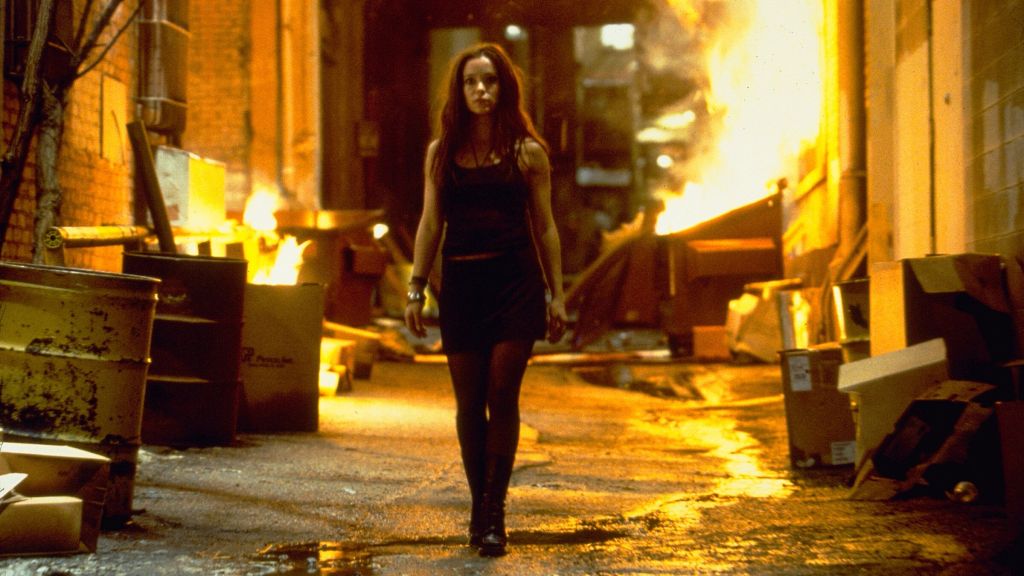
The 2002 two-episode miniseries Firestarter: Rekindled served as a sequel to the 1984 film adaptation, picking up the story of a now-adult Charlie McGee (Marguerite Moreau). Living under an assumed identity, Charlie is still trying to understand and control her powerful pyrokinetic abilities while attempting to live a normal life. Her quest for normalcy is shattered when she is hunted by John Rainbird (Malcolm McDowell), the relentless assassin from her past, who now leads a new generation of super-powered children created by the shadowy organization known as The Shop.

Airing on the Sci-Fi Channel, Firestarter: Rekindled suffers from a low budget and a script that leans into cheesy B-movie territory. The nearly three-hour runtime of the miniseries is poorly paced, filled with unnecessary padding that transforms an intriguing premise into a slog. While Moreau delivers a credible performance as the tormented protagonist, the series ultimately fails to capture the tension of the original story, instead becoming a forgettable and clunky follow-up that bears little resemblance to King’s compelling novel.
5) Under the Dome

When a mysterious and impenetrable dome slams down over the small town of Chester’s Mill, its residents are cut off from the rest of the world and forced to survive with dwindling resources. The high-concept premise of Under the Dome was perfect for television, and the series premiered with massive hype and strong viewership. The initial season effectively established the core conflict, exploring the rapid societal breakdown and the rise of the dangerously charismatic politician, “Big Jim” Rennie (Dean Norris).
However, Under the Dome‘s biggest flaw was its decision to stretch a self-contained story into a multi-season affair. To keep the narrative going, the writers deviated significantly from the source material, introducing convoluted new mysteries and changing the dome’s origin entirely. This departure diluted the novel’s powerful themes of human nature under pressure, transforming a tense survival story into a convoluted sci-fi soap opera.
4) The Mist

Based on King’s terrifying 1980 novella, The Mist TV series expanded the scope of the original story. Instead of confining its characters to a single location, the show follows multiple groups of survivors in a small town as they struggle to understand the mysterious fog that has enveloped them. The series splits its cast between a mall, a church, and a police station, exploring how different pockets of society react when faced with an incomprehensible threat.
While the premise had potential, The Mist was flawed. The show was criticized for its slow pacing and for revealing its threats too quickly, failing to build the psychological tension that made the novella and the 2007 film adaptation so effective. Furthermore, the decision to focus on pre-existing small-town drama and conspiracies felt like a misinterpretation of the source material, which used the external horror to expose the darkness already lurking within ordinary people. Finally, by spreading its narrative too thin, the series lost the claustrophobic dread that defined the original story.
3) The Institute
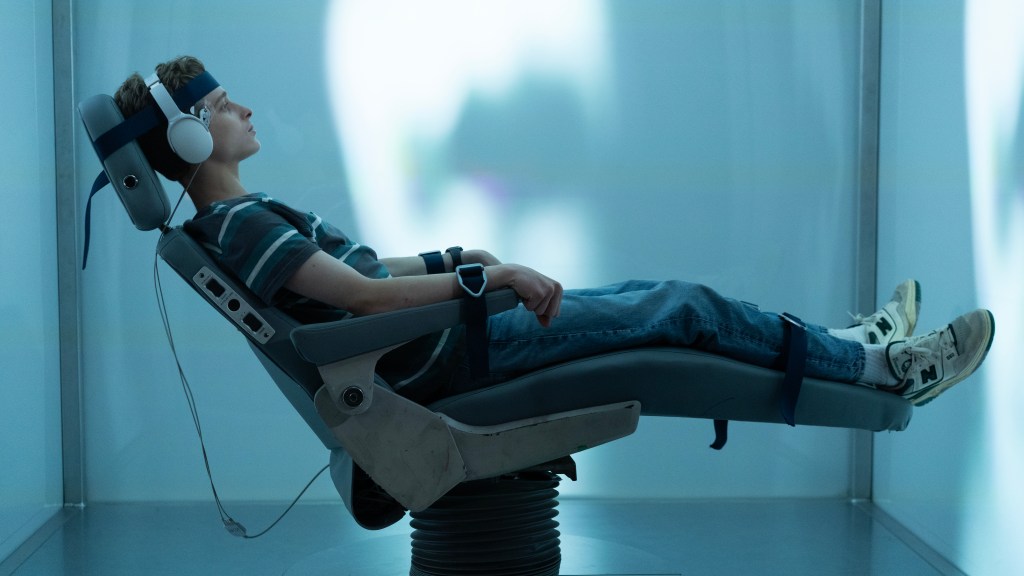
One of the more recent King novels to get a television adaptation, The Institute premiered in 2025 on MGM+. The story follows Luke Ellis (Joe Freeman), a 12-year-old genius who is kidnapped and taken to a secret facility hidden deep in the Maine woods. There, he discovers other children with special telekinetic and telepathic abilities who are being subjected to cruel experiments under the watch of the sinister Ms. Sigsby (Mary-Louise Parker). Meanwhile, a haunted former police officer, Tim Jamieson (Ben Barnes), in a nearby town finds himself drawn into the mystery.
The Institute benefits from a strong cast and a commitment to capturing the novel’s dark and suspenseful tone. As a high-end streaming production, it boasts impressive visuals and successfully builds a world of immediate danger and creeping unease. The show balances its psychological thriller elements with moments of light horror, creating a compelling narrative centered on the young protagonists’ resilience and their fight for freedom.
2) The Dead Zone

Running for six seasons on the USA Network, The Dead Zone was a long-running and popular adaptation of King’s classic novel. The series stars Anthony Michael Hall as Johnny Smith, a schoolteacher who awakens from a multi-year coma to discover he possesses powerful psychic abilities. With a single touch, Johnny can see visions of a person’s past, present, and future, an ability he uses to help solve crimes and prevent future tragedies. The show adopted a successful “case-of-the-week” procedural format, with Johnny’s visions providing the central mystery for each episode.
While this episodic structure was a departure from the novel’s more focused narrative, it allowed for a deep exploration of the character and the immense burden of his powers. The Dead Zone also maintained the overarching storyline involving the sinister political ambitions of Greg Stillson (Sean Patrick Flanery), providing a consistent thread of suspense throughout its impressive 80-episode run. Though it was canceled before receiving a proper finale, The Dead Zone remains a fan-favorite adaptation that did justice to one of King’s most compelling protagonists.
1) 11.22.63
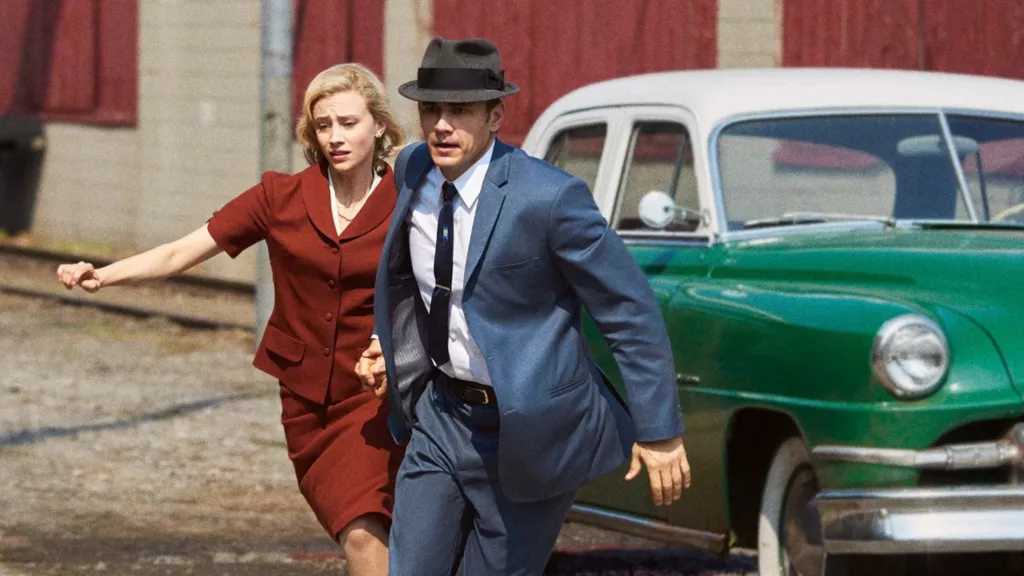
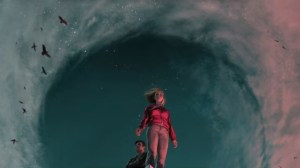
The eight-part Hulu miniseries 11.22.63 is a stellar example of how to adapt Stephen King’s work with prestige and care. It stars James Franco as Jake Epping, a high school teacher who discovers a time portal that takes him back to 1960. He is tasked with an impossible mission: live in the past for three years to prevent the assassination of President John F. Kennedy. The show is a faithful and engrossing period thriller that beautifully captures the look and feel of the 1960s.
Executive produced by J.J. Abrams, 11.22.63 successfully balances the high-stakes tension of Jake’s investigation with a compelling and emotional romantic subplot involving a librarian named Sadie Dunhill (Sarah Gadon). Franco delivers a strong performance, anchoring the story’s complex narrative twists and supernatural elements. Unlike other adaptations that stumble, this one understood the heart of the novel, focusing on the personal journey of its protagonist and the immense weight of his choices. Its satisfying and emotionally resonant conclusion solidifies 11.22.63 as the best science-fiction series based on a Stephen King book.
Which Stephen King sci-fi series do you think is the best? Leave a comment below and join the conversation now in the ComicBook Forum!
Most Viewed
-
Image courtesy of Warner Bros. Pictures