Steven Moffat is Doctor Who royalty. Showrunner during the Matt Smith and Peter Capaldi eras, Moffat was also writer of some of the best Doctor Who stories of all time; we’re talking the likes of “Blink,” “The Empty Child,” and “The Doctor Dances.” He even penned one of the best stories of Russell T. Davies’ recent run, “Boom,” an episode that transcended all the RTD2’s era’s controversy. Unsurprisingly, then, Moffat has thoughts about what will happen now Doctor Who has gone out to tender.
Videos by ComicBook.com
Moffat airs his views in the latest issue of Doctor Who Magazine, and he’s optimistic. “There’ll be a lot of production companies excited at the idea [of making Doctor Who],” he says. “I’m just guessing, but I think there will be a huge number thinking, ‘Wow. If we had Doctor Who on our books, that would be great.’” That said, he cautions that producing Doctor Who is an all-year-round experience, preventing people doing other things; which means only “production companies of a size and prestige” will be capable of it.
Moffat moves on to discussing the idea of a Doctor Who reboot, which some have proposed. “I think it’s a bad idea,” he explains. “And it’s not just because I’m obsessed with continuity, or because I’m a hardcore fan. It requires more explanation than a soft reboot. Normally, when you reboot something, you can tell it’s a reboot. With Sherlock, I didn’t need to explain that Benedict Cumberbatch is not playing a continuation of Jeremy Brett, because he’s a different actor. You don’t really expect Daniel Craig to be continuing the story of Pierce Brosnan. Because there’s a new actor, you instantly reset and say, ‘We’re starting again, it’s a new version.’
“But with Doctor Who, the fact it’s a new actor doesn’t tell you that at all, so most people casually watching would just be assuming, ‘Oh, it’s the next version of Doctor Who, he’s changed again.’ Then they’ll say, ‘Why doesn’t he know who the Daleks are?’ And you start getting confused. You’d have to keep reminding the audience, ‘We started from the beginning again.’ Unless of course you did the nightmare option – which is exactly the wrong thing to do – which is starting with Doctor Who stealing the TARDIS and running away from Gallifrey. That’s a terrible beginning for Doctor Who.”
Moffat Has a Good Point About a Doctor Who Reboot
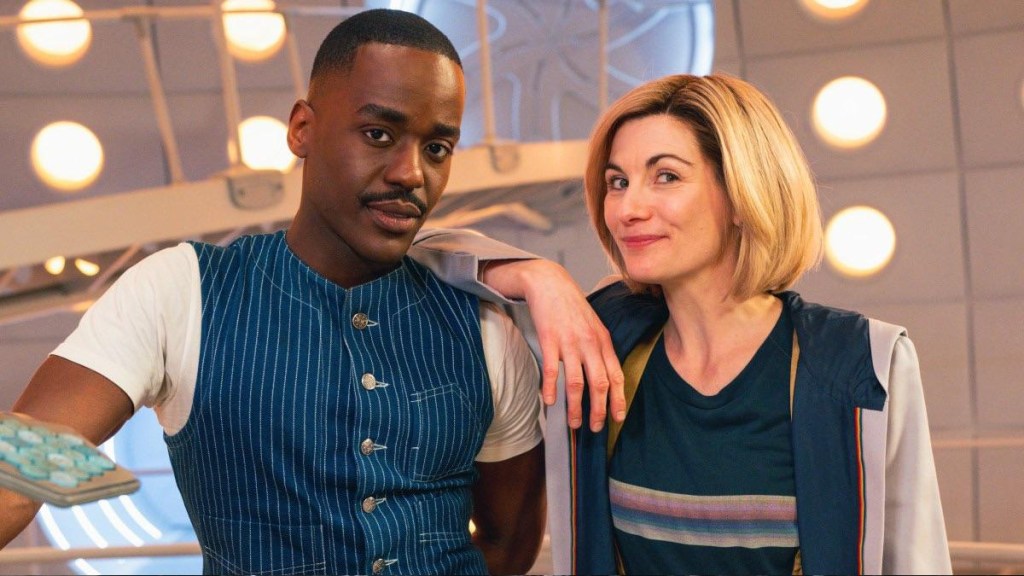
It’s still early days for Doctor Who‘s tender process, with the BBC promising to put the show out for tender by the end of this year. A lot will be driven by the BBC’s own requirements, and there seems to be a lot of internal debate over those; they are yet to be published, and we have no sense of timescale. That said, Moffat seems to believe some studios will already be making their pitches, sounding the BBC out over whether they’ll be viewed as acceptable should they turn them into a formal bid. BBC bosses are optimistic about Doctor Who‘s future, and Whovians can safely stop panicking over the tender process. Even the BBC’s flagship, Strictly Come Dancing, is going out for tender next year.
I will admit that I’m finding the debate over a full reboot absolutely fascinating. One of Doctor Who‘s best writers, Paul Magrs, presented his case for a reboot just ten days ago; he argued it would give the show a new lease of life, a stronger sense of discovery. In his view, smart writers could even capitalize on the fact viewers knew more about the Doctor’s enemies than the Doctor himself, creating phenomenal opportunities for dramatic tension. But Moffat’s argument – likely predating Magr’s own video – is a useful counter to that, because he points out that viewers won’t remember the reboot.
Regeneration has always been the secret to Doctor Who‘s success, the reason this show can reinvent itself so quickly and efficiently. I’d never considered it from the other perspective, though; that regeneration means Doctor Who can only reinvent itself in certain specific ways before risking confusing audiences. With most franchises, a change in the actor’s face means a reboot; that isn’t the case for Doctor Who, where the concept of changing actors is baked in.
This doesn’t quite make the idea of a full reboot impossible, of course. There’s probably only one way to pull it off; by integrating the reboot into the story itself, perhaps with the Doctor rewriting his own timeline. But the problem there, as Moffat observes, is that casual viewers will quickly forget that happened – if they ever noticed at all. They’d then tune in and be confused. Moffat has a smart argument here, and I think it’s a fairly compelling case.
What do you think? Leave a comment below and join the conversation now in the ComicBook Forum!
More TV Shows
-
Image Courtesy of Netflix -

Prime Video & United Artists