
It has been 30 years since Marvel Comics took on one of its riskiest moves. In 1996, Marvel did something that some see as a precursor to the Ultimate Marvel Universe that came along four years later. Ultimate Marvel was an attempt by Marvel to update its characters for a new generation of readers. Origins were changed and given fresh coats of paint to make the characters more relatable to young readers, rather than the mainline characters with decades of history. Marvel did this with two teams of heroes in 1996 as well, but that test run didn’t work out so well.
Videos by ComicBook.com
In 1996, Marvel Comics rebooted the Avengers and Fantastic Four titles in a line called “Heroes Reborn,” and did what they succeeded at four years later. They gave all these heroes new origins and started them over from scratch. Not everything worked out. Captain America #1 by Jeph Loeb and Rob Liefeld came out on September 11, 1996, and Cap’s redesign is something people still discuss today.
Rob Liefeld Turned Captain America Into a Hulking Behemoth in 1996
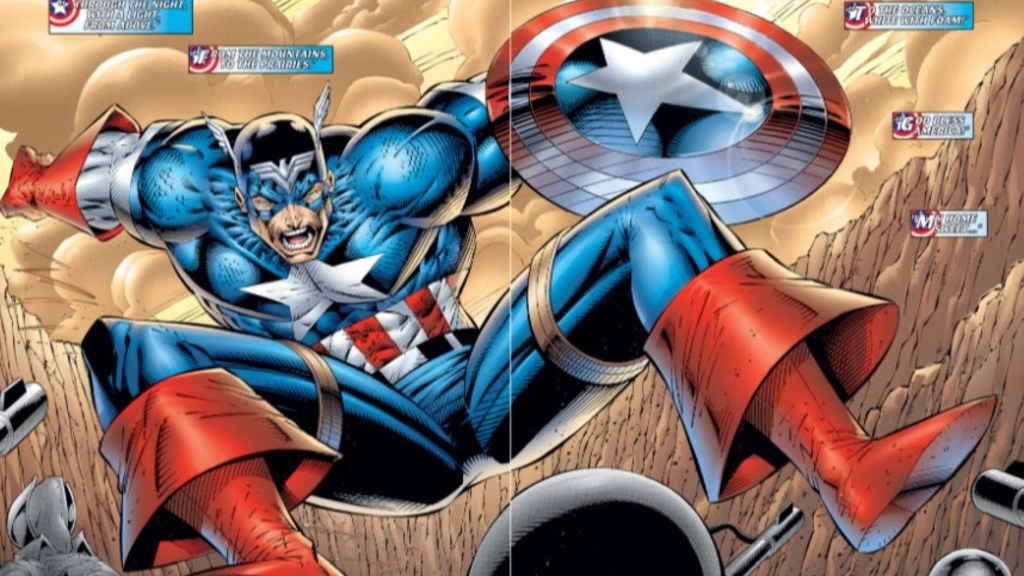
In 1996, Marvel Comics rebooted several titles after the “Onslaught” storyline in the main Earth-616 universe killed off the Fantastic Four and several of the Avengers. The “Heroes Reborn” line was run by Rob Liefeld’s Extreme Studios, working on Captain America and The Avengers, and Jim Lee’s WildStorm Productions, producing Fantastic Four and Iron Man. These comics had the heroes “reborn” with no memories of their past, while living out new origin stories.
This ended up being on Counter-Earth, a pocket dimension created by Franklin Richards to hide the heroes from Onslaught. In Captain America #1, Steve Rogers lived with his wife, Peggy, and son, Rick Rogers, and he had no idea that he was the legendary World War II hero. He was having dreams about it, but it was something that he was struggling to come to terms with. It turned out that Peggy and Rick were Life Model Decoys created to trick Steve. After meeting Abraham Wilson and getting his shield back, Steve became Captain America again.
It was an interesting reboot of his origin story, but fans couldn’t help but comment on his redesign. There is even an image from a different comic that had Cap from the side in what looked to be a comically inflated muscular pose. Interestingly, that pose was based on an actual photo of a shirtless Arnold Schwarzenegger standing sideways and flexing during his bodybuilding career. The only problem was that Cap’s costume made it look ridiculous and nothing like what the original photo showed.
Captain America Ended After Only 13 Issues, and Rob Liefeld Was Gone Before That
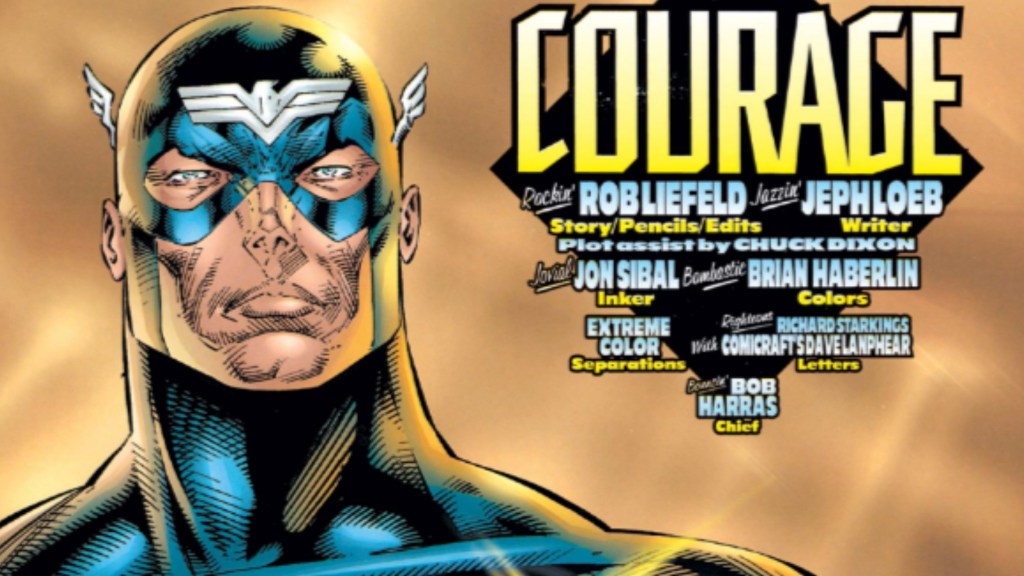
Liefeld loves to brag about the fact that the “Heroes Reborn” comics were best sellers when he and Lee started the run. However, the sales numbers didn’t hold up for long. What makes things worse is that Marvel was starting to face financial issues and was nearing bankruptcy. As a result, Marvel asked Lee and Liefeld, among others, to accept pay cuts rather than what they signed on for when starting this endeavor. When Liefeld rejected the pay cut, Marvel let him go, and he was finished with the Captain America run after only six issues.
James Robinson, Joe Phillips, and Travis Charest came on for issue seven, Joe Bennett and Al Rio joined Robinson for issue eight, and Robinson and Bennett handled issues nine through 11 alone. Captain America #12 saw Loeb and Bennett return, and the final issue was Captain America #13, with Robinson and Ron Lim closing out the series. It’s almost dizzying to see how many writers and artists worked on just 13 issues of this rebooted series, but it’s clear why the comic and the “Heroes Reborn” line struggled so much.
Interestingly, after Liefeld left the series, the book’s art style somewhat changed, and Cap looked a little more like the character fans had grown used to over the years rather than the hulking muscle-man that started the new series. There are fans who love Liefeld’s style, but the fact that his version of Cap is known more for memes and jokes than for the actual storyline he helped create proves that sometimes it is better when classic heroes are left alone. After Captain America #13, the series relaunched with a new number one in 1997 with Mark Waid and Ron Garney on board, and Cap was back to normal once again.
More Comics
-
Image Courtesy of Marvel Comics -
Image Courtesy of DC Comics -
Image Courtesy of Marvel Comics -
Image Courtesy of DC Comics -
Image Courtesy of DC Comics -
Image Courtesy of Marvel Comics
![War All the Time Begins in Teenage Mutant Ninja Turtles #25 Covers First Look [Exclusive]](https://comicbook.com/wp-content/uploads/sites/4/2026/09/tmnt-25-exclusive.jpg?w=300)
