Spoiler warning for Avengers: Armageddon #4, which went on sale this week.
Videos by ComicBook.com
Marvel spent most of 2026 telling readers that a new hero with unrivaled power was coming, and then spent four issues of an Avengers event refusing to say who he was. The answer landed in Avengers: Armageddon #4, and it is bigger than a new character. David Colton, the post-9/11 Captain America that Chip Zdarsky and Valerio Schiti introduced last August, says the word Kimota, transforms, and announces that the world will know miracles. That is not a new catchphrase. It is the line Alan Moore used to reintroduce Marvelman in 1982, and it means Marvel has just put Miracleman inside the Marvel Universe proper for the first time in the character’s 72-year existence. Zdarsky writes the issue, with art from Delio Diaz Cespedes and Frank Alpizar, and it is the payoff to a tease Marvel has been running since April, when the publisher first promised a hero whose arrival would turn the tide of the event. Readers spent five months guessing, and almost nobody landed on this.
The obvious next question is whether any of this can reach the screen, because on paper the power level is absurd enough to reset what the MCU considers a heavy hitter. The less obvious answer is that this is the one Marvel character where the comics and the films are not on the same map at all. Marvel Studios has never said a word about Miracleman, in any capacity, and the reason is not shyness about a spoiler. It is that Marvel does not own him outright, has spent 17 years untangling who does, and currently cannot publish part of its own Miracleman library. What follows is what actually happened this week, what Marvel did and did not claim about the character’s power, and why the answer to whether it can work is more complicated here than for anyone else on the publisher’s roster, and why the obstacle is legal rather than creative.
What Actually Happened in Avengers: Armageddon #4
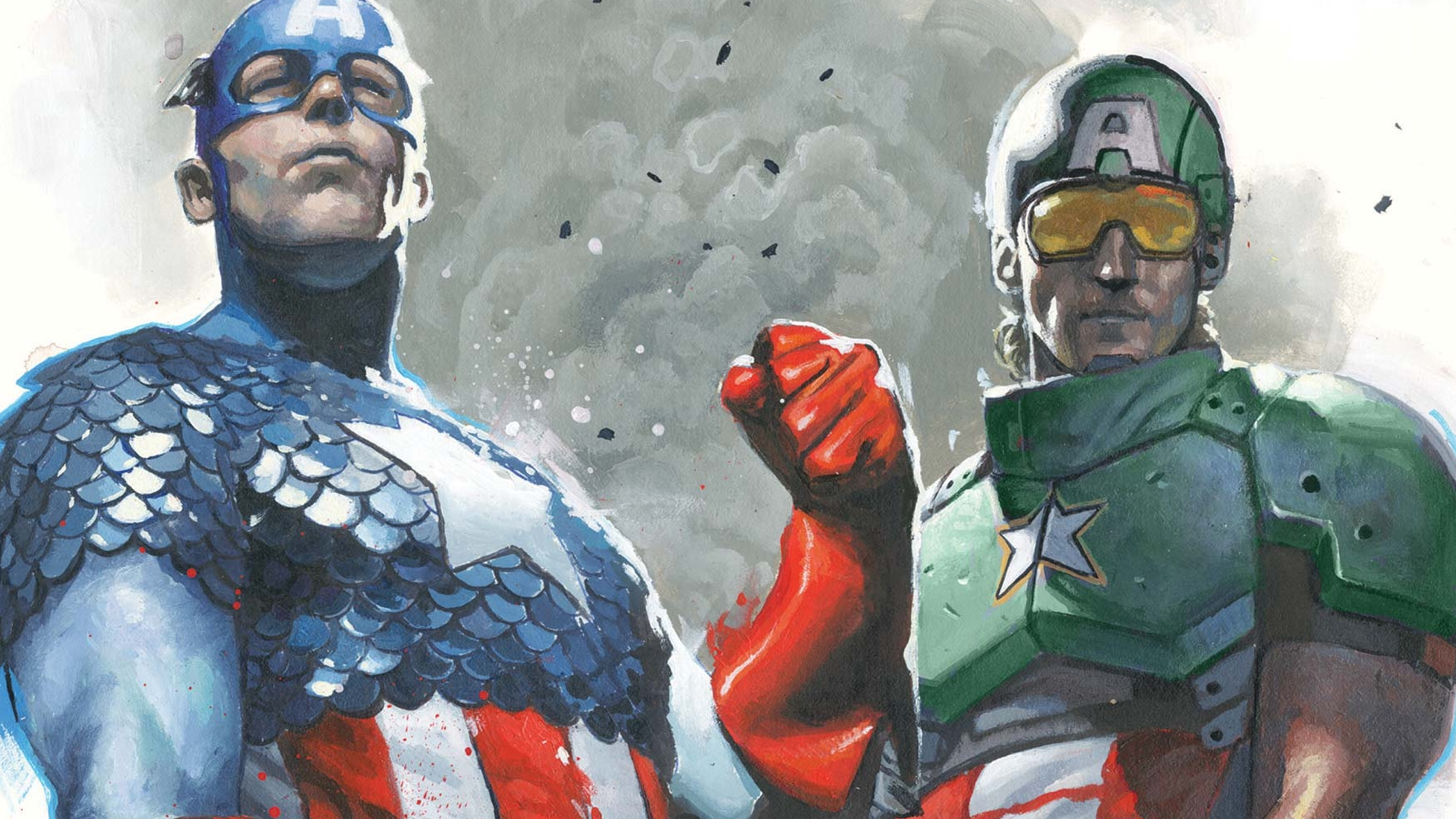
Colton is not quite the brand-new arrival the marketing suggests. He first appeared in Captain America #2 in August 2025, as a government-sanctioned Captain America who operated while Steve Rogers was gone, a soldier Zdarsky described as a Cap lost to time and woken into a post-9/11 world. Marvel’s solicitation copy for this week’s issue still calls him a new character taking the stage, which is doing some work. What is genuinely new is the identity. Thirteen months of setup ran through Zdarsky’s Captain America run and into the Armageddon event before the word Kimota finally arrived on the page, and the character who says it has been in print the whole time.
The mechanism is an Origin Box, technology from the Ultimate Universe built by that reality’s Tony Stark to restore heroes the Maker had erased, carried over to the main Marvel Earth by Miles Morales and since scattered. Colton found one. What it gave him is described as speed, strength, invulnerability, flight, enhanced senses and the ability to swap bodies with a counterpart in the Qys dimension. That last detail is the giveaway for anyone who knows the source material, because the Qys are Moore’s invention and body-swapping is the mechanic Miracleman has always run on. The clue sat in plain sight for a month before the reveal.
Marvel Called Him Unrivaled, Not the Most Powerful Ever
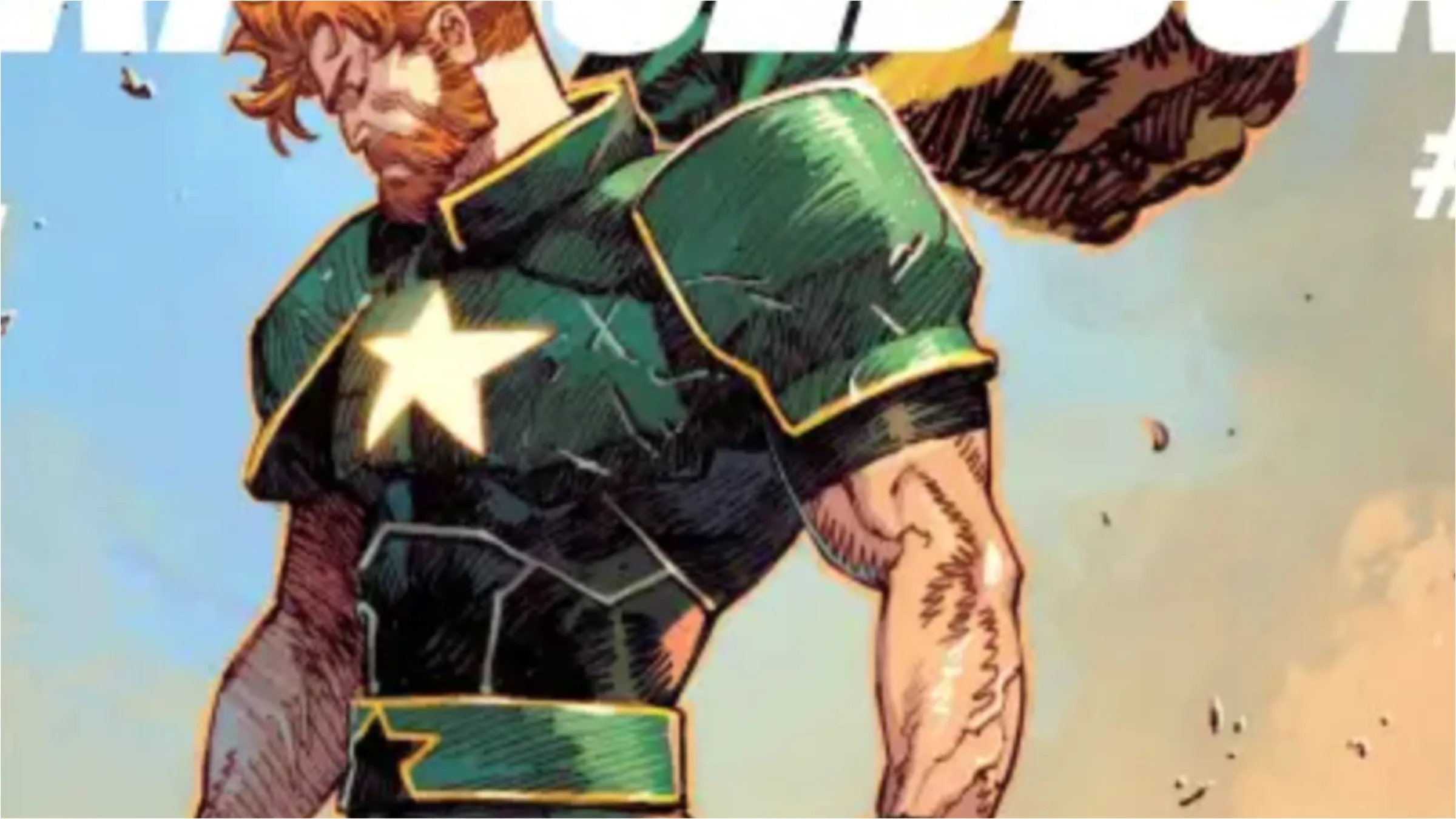
This is worth being precise about, because the two phrases have been used interchangeably and only one of them came from Marvel. The publisher’s press release in April billed Avengers: Armageddon #2 as introducing a new hero with unrivaled power who turns the tide of battle. Marvel’s own article copy described a mysterious new hero with unrivaled power appearing to level Red Hulk and the Avengers. Nobody at Marvel is on record calling him the most powerful hero ever, and the only named Marvel voice attached to the character at all is Zdarsky, who put it more carefully: the point of that fight, he said, was to showcase that there is a new guy in town and he is on another level.
The distinction matters because Marvel has oversold a power level in this exact way before, with a character this story is directly connected to. The Sentry arrived in 2000 wrapped in a fabricated story about being a lost Stan Lee co-creation, has been billed as the publisher’s most powerful hero on and off ever since, and has lost the title and won it back more times than is worth counting. Treating any Marvel superlative as promotional rather than editorial is simply the correct default. What is not promotional is the page itself, where Colton handles Red Hulk without visible effort, and Zdarsky has said the story was building to it for well over a year.
The MCU Comparison Is Real, and the Connection Is Stranger Than It Looks
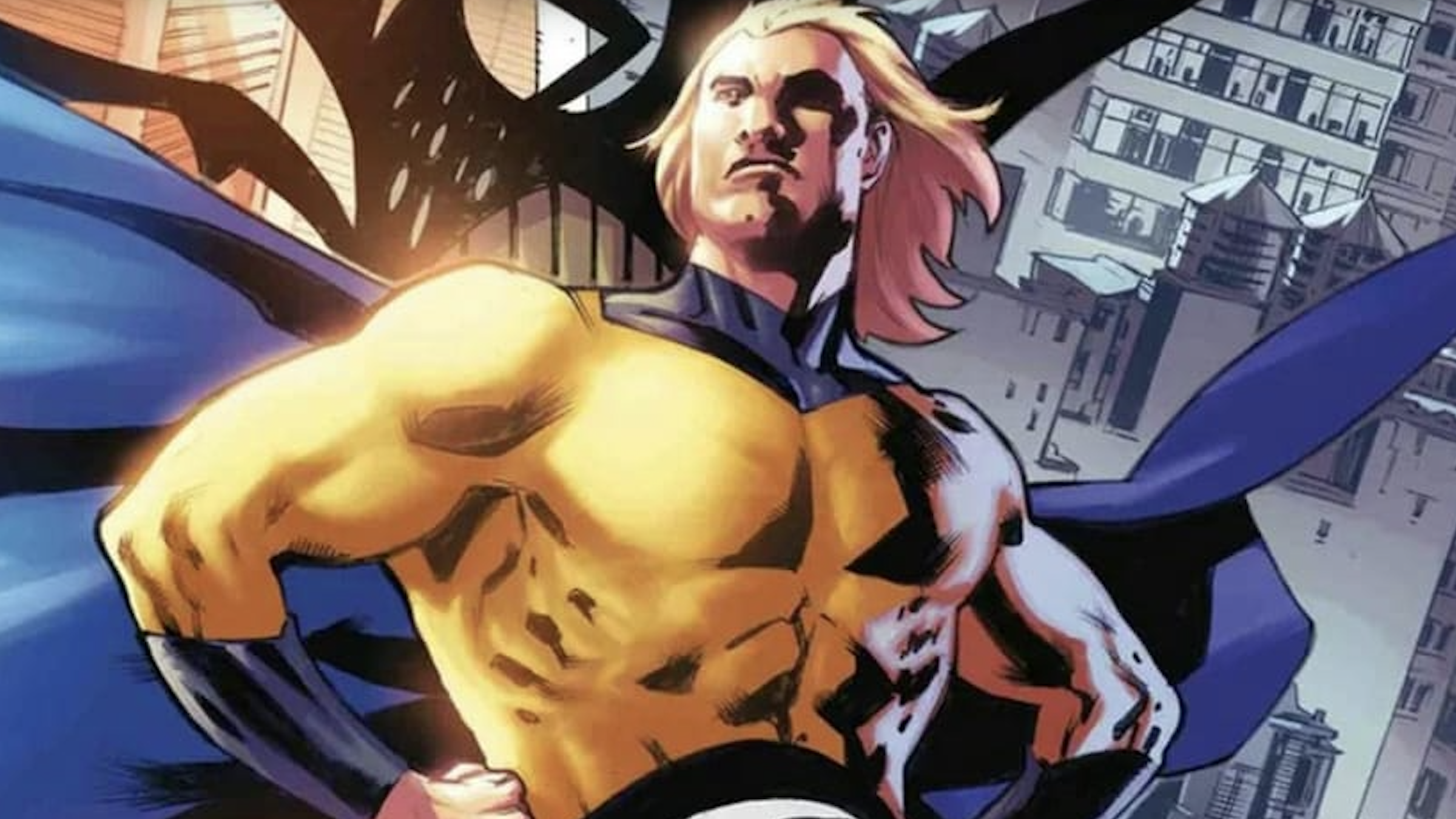
The MCU’s reigning power ceiling is the Sentry, introduced in Thunderbolts* in 2025 and described in that film as carrying the power of a million exploding suns, a figure the movie backs up by having an entire team fail to lay a hand on him. Scarlet Witch has a genuine competing claim on the strength of WandaVision and Multiverse of Madness, and the argument between the two is unsettled enough that most rankings pick one and quietly ignore the other. Either way, the MCU’s current idea of a top-tier hero is a person who can end a fight by deciding to.
Which is where the comics story does something genuinely odd. In Armageddon #3, Mister Fantastic is trying to work out whose origin the Origin Box was built to restore, and the story points hard at the Sentry. If that reading holds, the machine that made Marvel’s new Miracleman was aimed at the Sentry and hit the wrong man. That is tidy construction on the page and an accidental commentary off it, because Miracleman is the character the Sentry was always reaching for. Moore’s 1982 revival is the template for the deconstructed superman whose power is inseparable from the horror of it, and the Sentry is Marvel’s in-house version of that idea. The publisher has now reached past its own copy for the original.
Can It Work on Screen? The Rights Are the Real Obstacle
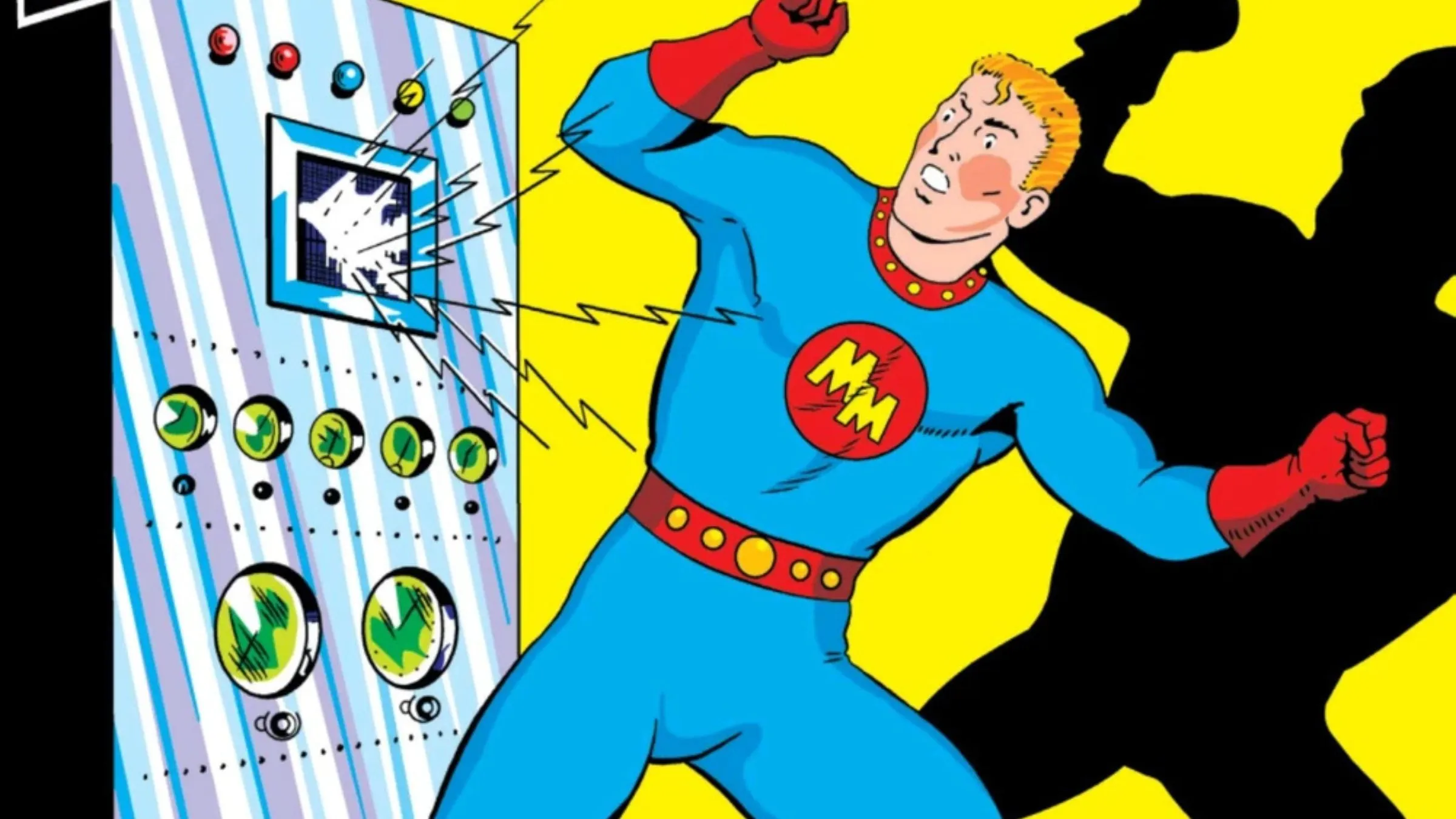
Marvel Studios has never commented on Miracleman. Not a development report, not a casting rumor, not a passing mention from Kevin Feige. That silence is not evidence of a secret plan and should not be read as one, because the character’s legal history explains it well enough on its own. Marvel acquired a publishing license in 2009 and the trademark by 2012, but the underlying rights sit with the estate of Mick Anglo, who created Marvelman in 1954. Individual creators kept rights to their own contributions. Moore permitted reprints only on the condition that his name not appear, which is why he is credited as The Original Writer. No film or television rights are documented anywhere, by anyone.
The situation has also got worse recently rather than better. Neil Gaiman and Mark Buckingham retained editorial control over the Miracleman material they created, and Marvel said in January 2025 that it had no new books forthcoming from Gaiman following sexual assault allegations against him. Tom Brevoort confirmed the following month that Miracleman: The Dark Age, the long-promised conclusion to Gaiman’s run, is not moving forward. A publisher that cannot currently print a section of its own Miracleman catalogue is not a publisher whose parent studio is quietly preparing a film, and the case was made on this site last year that Miracleman may never appear in live action at all.
Where it goes next is at least dated. Avengers: Armageddon #5 arrives in October, and Avengers #1 from Zdarsky and Marco Checchetto follows in November with a roster of Spider-Man, Wolverine, Captain Marvel, Daredevil, Luke Cage and one member Marvel has pointedly left redacted, described only as an all-new hero about to make an explosive debut. Neither Colton nor Miracleman is named anywhere in Marvel’s November solicitations, which is either careful spoiler management or a sign the publisher is still deciding how loudly to say the name. On the film side there is nothing, and given who owns what, there may not be for a long time.
More Movies
-

Courtesy of Vertical Entertainment