Videos by ComicBook.com
We saw comments on our Facebook page, people tweeted it at us and in the comments thread of our Supergirl story, one commenter put it quite succinctly:
“I think there is too much on at the moment,” wrote a user with the handle Bob Trekfan, listing off the handful of projects that are either on the air or in various stages of TV development at the moment. “Assuming two of those pilots ONLY get picked up, you looking at 16 comic book series coming up in the next year.”
There’s perhaps a debate to be had about whether 16 comic book superhero shows is too much. Certainly there are more police procedurals than that between the various networks, but those are widely considered to be less specialized programming.
All that said, it’s a touch misleading to pretend that there will be more than a dozen comic book superhero shows on the air in a year’s time, for a few reasons.
Before we go any further, let’s clarify: I’m not picking on Bob. He was polite and thoughtful in the presentation of his ideas, and the fact that I disagree with him doesn’t mean I’m attacking him or even that he’s wrong. I’m simply taking his post because he’s the one who provided a good list and some very basic reasons for his opposition. Everything he said has been said by others, but nobody else took the time to write it all out.
Let’s take a look at Bob’s list:
Marvel has:
1. Agents of S.H.I.E.L.D. Season 2
2. Powers
3. Agent Carter
4. Daredevil
5. AKA Jessica Jones
6. Luke Cage
7. Iron Fist
8. Defenders
DC has:
1. Arrow Season 3
2. Gotham
3. The Flash
4. Constantine
5. iZombie
6. Preacher
7. Hourman (Pilot)
8. DMZ (Pilot)
9. Scalped (Pilot)
10. Titans (Pilot)
11. Lucifer (Pilot)

Is that a dig on Marvel? God, no. Here’s why:
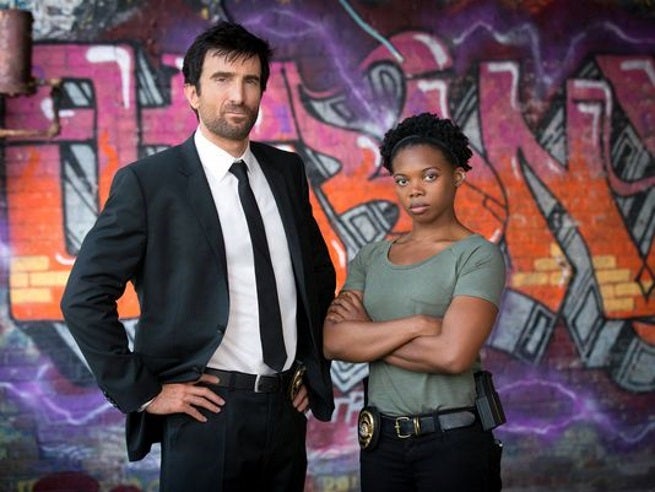
Of the eight series he listed as Marvel TV shows, one of them — Powers — is actually based on a creator-owned series that Marvel merely publishes. It’s a superhero show, sure, but it has a tone and sensibility all its own and it will not be tied in any way to the superhero TV shows and movies with which Marvel is identified.
Subtracting powers, there are basically two sets of shows:
Set 1
Marvel’s Agents of S.H.I.E.L.D., Marvel’s Agent Carter
Set 2
Marvel’s Daredevil, Marvel’s Defenders, Iron Fist, Luke Cage, [A.K.A.] Jessica Jones
It’s worth noting that the shows in Set 1 will not air concurrently with one another, and neither will the shows in Set 2. Carter is a bridge series that will keep fans of Agents of S.H.I.E.L.D. entertained during the show’s extended hiatus.
Why’s it extended? To create a better show with fewer breaks, which makes the show more sustainable and entertaining. It’s difficult to argue against the extended hiatus in that regard, except that if there wasn’t a bridge series, fans might get tired of waiting.
Carter is far from a liability, then; it’s a way to keep momentum and fan enthusiasm going while also making S.H.I.E.L.D. all that it can be. For all intents and purposes, it’s just an ingenious way of milking a few extra episodes out of your existing show, as much as it is an independent endeavor.
Of course, Set 2 will be released to Netflix and can be viewed whenever, so it’s distinctly possible that somebody will wait until the final series is released and watch them all in a marathon. That would be a consumer choice, though, and that choice is equally open to every consumer if they want to watch nothing but shows about British women or hipsters in New York, both of which have better representation on Netflix than Marvel superheroes.
For all intents and purposes, those five netflix shows are one series as well, in the way that Netflix’s Arrested Development Season Four was still one show even though each episode dealt with a different character or group of characters until it built to the finale.
So in a lot of ways, that list of eight Marvel shows is really three, and of those three, none of them are particularly alike. Powers has a distinct voice and execution, along with a police procedural element that makes the show not much more “superheroic” than Psych or The X-Files or The Mentalist; the S.H.I.E.L.D. family of shows are slick, high-tech and full of fantastical elements; from everything we can tell, the Netflix shows will be low-fi, ’70s action film-inspired street dramas more akin to Arrow than anything Marvel has done before. That variety’s pretty exciting, and should continue to drive interest — especially as hardcore fans struggle to see how all of the pieces of these seemingly-disparate worlds tie together.
DC Entertainment’s offerings are a bit more scattered and, as noted above, the DC properties aren’t all interconnected in the way that Marvel’s are. They also don’t have the benefit of a sweeping, epic cinematic universe informing their every move.
But I still don’t think there’s a lot to worry about here.
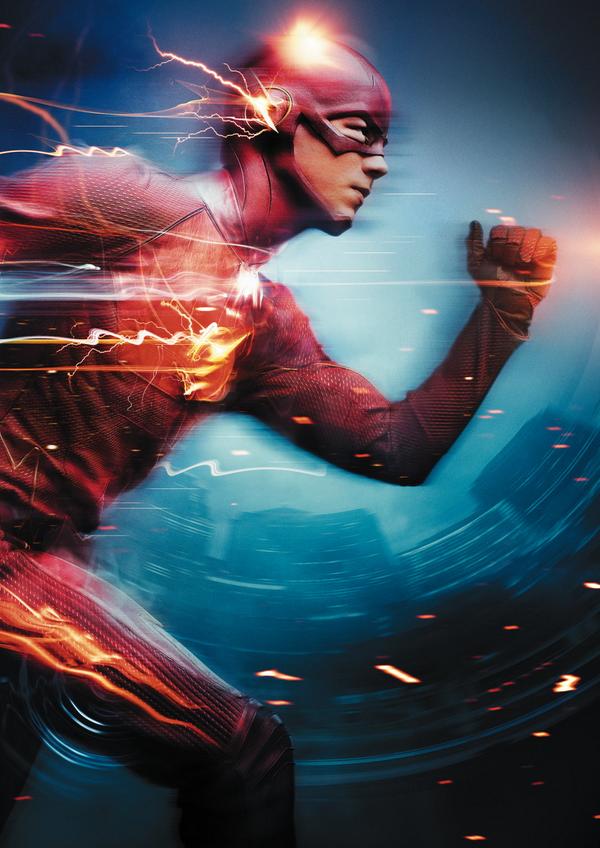
The fact that Arrow is a proven hit for the network that took a quantum leap forward in quality, reviews and fan enthusiasm last year doesn’t hurt, and neither does the fact that The CW doesn’t need ABC- or NBC-level ratings to turn a profit. The Flash also seems to be taking a very distinct approach to the genre, more akin to Agents of S.H.I.E.L.D.‘s lighthearted and fantastical world than Arrow‘s grounded and Nolan-inspired one. Both of them also have romantic subplots and other flavors mixed in — political intrigue for Arrow and police procedural elements for The Flash.
Gotham is one that seems the most…unnecessary…but also seems likely to be the biggest hit. Coming to a major network, being given a prime time slot and with ties to the most popular and highest-grossing solo superhero in the game, this one’s biggest risk isn’t that it will stink or be cancelled but that everything it does can reach out and impact the other shows on this list. Whether it will or not remains to be seen.
That said, it’s built around a hard-boiled murder mystery and while the pilot wasn’t my favorite show I’ve seen so far this year (or even my second), it’s nothing like anything else we’ve seen so far on this list. It’s pretty dark, and the zanier elements play against the gritty and brutal world of Gotham City almost like nails on a chalkboard. You can see why Batman’s villains are insane.

And that’s a familiar refrain here. If Marvel’s saving grace was that they won’t flood the market because there will only be one or two new shows going on at a time, DC’s is that they just aren’t that similar to one another, and often seem to appeal to wildly different audiences. iZombie is a girl-detective show with a supernatural slant, airing on a network famous for Supernatural, Vampire Diaries and Veronica Mars. Preacher is a supernatural soap opera airing on the same network whose previous comic book adaptation — The Walking Dead — is the top-rated scripted show on TV. DMZ, Scalped and Lucifer are all wildly different than one another or anything above them on the list, and in the cases of both DMZ and Scalped, they’re creator-owned series that couldn’t tie into anything else even if it wanted to.
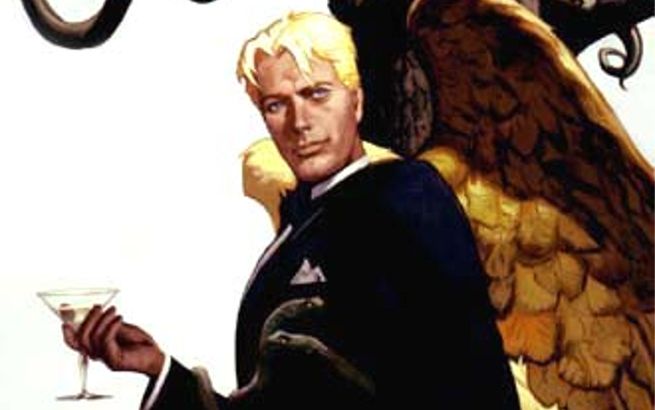
That still leaves Hourman, which seemed to be set as a fairly straightforward superhero series…but we don’t really know much of anything about it, and even so it seems unlikely to get made. Yeah, The CW says they just had too much on the schedule and they’ll get to it, but Syfy said that about Booster Gold for so long, people just stopped asking altogether. Comic book shows, just like any other in Hollywood, are better at going into development than they are being made. Just ask any number of creator-owned series that thought their ship was going to come in when some TV network or another bought up an option that never led to any concrete project.
At the end of the day, there are a lot of shows, nominally. But most of them don’t bear any particular resemblance to one another except that they’re comic book shows. Those that do, in many cases, aren’t going to be airing at the same time. And with Gotham, The Flash, Agent Carter, iZombie and Constantine all debuting around the same time, the odds of all of them making it to next year aren’t great. That means by the time Titans, Supergirl or any of the other pilots on the list above make it to TV, there will already be less competition for the fanboy dollar.
More Comicbook
-
Image Courtesy of Storm King Comics -
A Nintendo Switch and PlaySTation 4 on a Winner's Platform with a ? representing the winner. -
Image Courtesy of Image Comics -
Image Courtesy of Image Comics -

Image Courtesy of Top Shelf Productions