Starting in 2013, Injustice has become one of the most popular franchises in modern DC Comics. Beginning as a fighting game, the series has expanded to include a sequel game —with another one rumored to be in the works— numerous comic books, and even an animated film adaptation. The story takes place in an alternate universe where Superman becomes a tyrant, with Batman leading a rebellion against his former friend. The event that causes the Man of Tomorrow’s descent into villainy occurs after the Joker tricked him into killing Lois Lane and detonating a nuclear bomb in Metropolis. However, in 2002, DC Comics had already released a storyline that completely undermined Injustice’s plot, while also demonstrating why Superman is one of the greatest heroes of all time.
Videos by ComicBook.com
Superman: Ending Battle is a dark story that pushes the Man of Steel to his limits as he desperately tries to uncover the mysterious enemy who knows his secret identity. This shadowy figure has Superman’s entire rogues’ gallery attack the hero and his loved ones. Eventually, Superman deduces that the mastermind behind the attacks on his friends and loved ones is none other than Manchester Black, a satire of anti-heroes and a powerful telekinetic and telepathic who previously appeared as the main villain in the critically acclaimed comic “What’s So Funny About Truth, Justice and the American Way?” When Superman confronts Black, the villain has one final surprise for him: Lois Lane lying dead on the floor. What happens next perfectly encapsulates Superman’s true character.
Manchester Black Tried the Same Plot as the Joker, and Failed
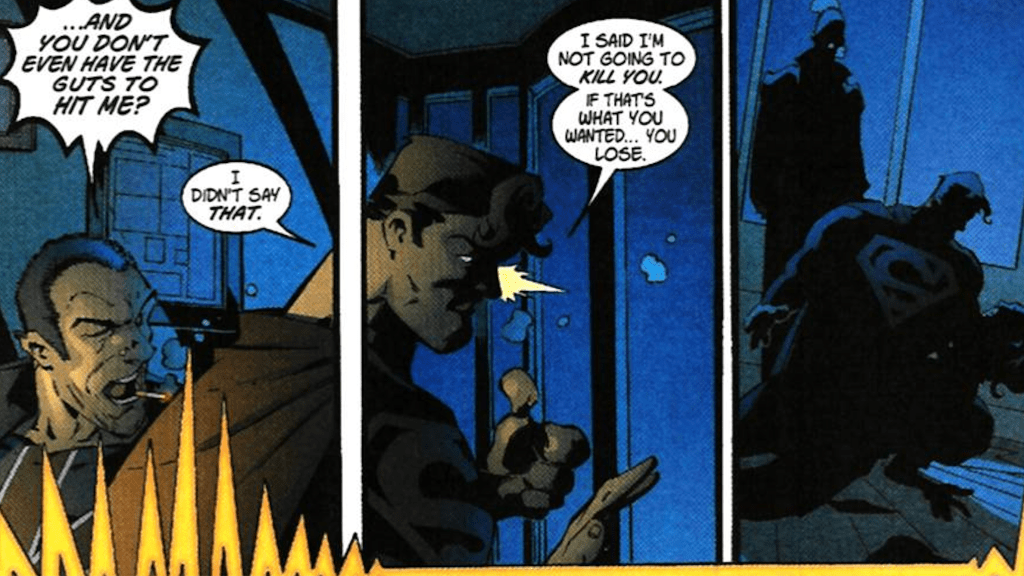
Manchester Black’s plot and motivation are eerily similar to that of the Injustice universe’s version of the Joker. In Injustice, the Joker uses fear toxin to trick Superman into killing Lois and their unborn child, which triggered a nuke in Metropolis. The Joker wanted to traumatize Injustice Superman so that the infallible Man of Steel would kill the villain in a fit of rage, thereby corrupting the hero. In Ending Battle, Black was driven by motivations like the Joker’s: he loathes Superman’s refusal to kill and believes that the hero must have darkness within him. By murdering Lois, Black –like the Joker– hoped to prove that Superman was not above taking a life by goading the hero into killing him in an act of vengeance.
Tragically, Injustice Superman fell for the Joker’s plan, brutally murdering the Clown Prince of Crime. Ending Battle at first seems to suggest that the original Man of Tomorrow will follow dark path similar to the one he takes in Injustice. As Superman weeps over Lois’s body while Black continues to mock him, the Man of Steel suddenly lashes out at Black in a blind rage. After an intense battle, Superman ultimately vaporizes Black with his heat vision. At first, it seemed that the paragon of virtue had finally given in to his darker desires and murdered his wife’s killer. However, in a shocking twist, it’s revealed that the entire battle had occurred only in Superman’s mind, and no harm had come to Black.
Back in reality, true to his character, Superman states that he won’t dishonor Lois’s memory by giving in to hate or by killing Black. The hero’s refusal to kill utterly flabbergasts Black, who demands to know why Superman won’t even hit him, even though he murdered Lois. Finally seeing that he could never break the Man of Tomorrow, Black reveals the truth — Lois was never killed, and her body was merely an illusion. Overcome with relief, Superman embraces his wife. Realizing that he had just tried to corrupt one of the few genuinely good people in the world, Black takes his own life out of guilt.
This earlier Ending Battle storyline reveals that the Joker’s plan in Injustice could ever have succeeded, given the true nature of Superman’s character. More importantly, though, it highlights what makes the Man of Tomorrow such an exemplary character: no matter what obstacles or tragedies he faces, Superman remains incorruptible and continues to embody the best of humanity.
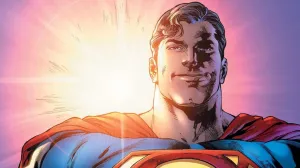
Injustice Doesn’t Understand Superman
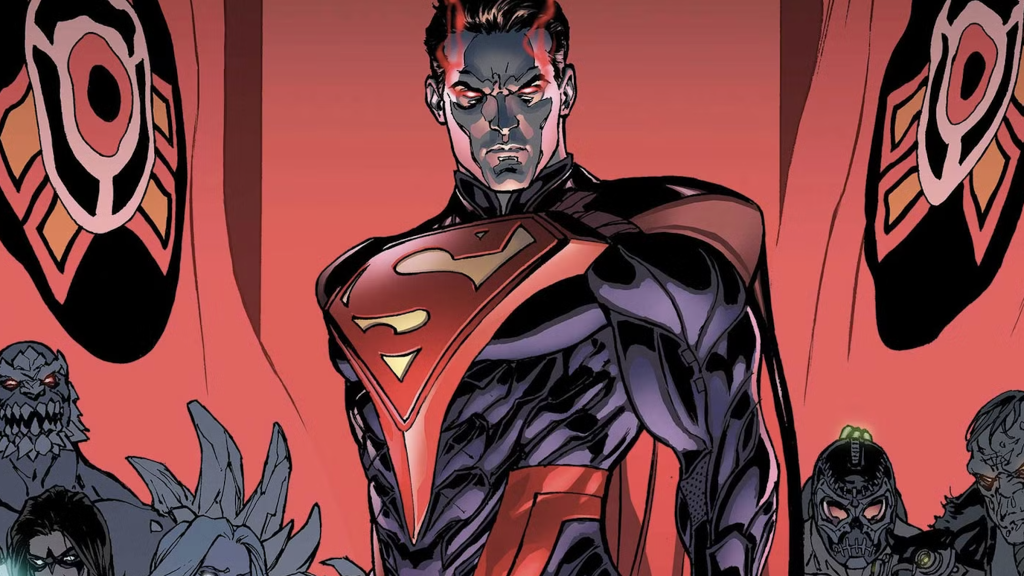
Injustice practically paved the way for the mass Evil Superman trope that became widespread in comics, movies, TV Shows, and video games in the late 2010s. Thanks to Injustice, people began to see Superman as just one bad day away from turning into a psychopathic murderer. Additionally, it diminishes Superman by emphasizing that he’s only interesting when he’s evil – and more broadly, that evil itself is inherently more compelling than moral complexity. What makes Injustice’s version of Superman particularly egregious is that it has the Man of Tomorrow undergo an instantaneous character shift into a heartless tyrant willing to commit countless atrocities. He conquers the Earth, orders the destruction of Gotham, and a newly built Metropolis, and even murders Shazam –a literal child– in cold blood.
As Ending Battle powerfully demonstrates, the Man of Steel is capable of both complex emotions and primal desires, but the strength of his moral center ensures he will never give in to anger, even after suffering a tremendous personal loss like the death of Lois Lane. The idea that Superman is one tragedy away from villainy is an incredibly lazy notion that ignores the depth of his character, reducing him to a one-dimensional brute. Yet, what makes Superman extraordinary is that, even with god-like abilities, he sees every life as equally precious and deserving of freedom.
Superman is an immigrant trying to make the world a better place while inspiring others to be heroes. And, above all, he’s as human as anyone else, and is relatable because he shares in the ethical challenges that are inherent in the human condition. Unlike in Injustice, where he’s portrayed as a flat, irredeemable villain once he kills the Joker, in the main universe Superman is a fully realized three-dimensional hero who, despite having dark impulses –such as his desire to kill Black when he believed Lois to be dead– wills himself to uphold a higher moral standard for the sake of others.
What has allowed Superman to remain relevant for over 80 years is that, despite being an all-powerful alien, he is profoundly human and embodies people’s limitless capacity for good. He doesn’t always know what’s best, but he tries to do the right thing and help those in need. Injustice fundamentally misunderstands this, insisting instead that the Man of Steel can only be relatable and realistic if he allows his grief and power to corrupt him. This mindset enforces the cynical and depressing idea that people can’t rise above their shortcomings, and that we’re inherently hateful and corrupt creatures. In a world where such ideas are constantly echoed and even celebrated, Superman should be a beacon of hope that we should all strive to emulate.
Injustice will forever leave a black stain on the Man of Steel’s reputation because it enforces negative perceptions about Superman and humanity at large. In contrast, Ending Battle exhibits a deep understanding of and appreciation for the Man of Tomorrow’s heroic character, showing that Superman is at his most compelling and emblematic when he doesn’t allow himself to be manipulated by the negativity and cruelty of the world.
What do you think? Leave a Comment below and join the conversation in the ComicBook Forum!
Most Viewed
-

Image Courtesy of Prime Video -

Image Courtesy of Netflix