Today, Marvel Comics is a pop culture juggernaut that has revolutionized the comic book and movie industries with thousands of incredible stories and characters. All of Marvel’s success, from the comics, movies, and global fanbase, can be traced back to one superhero team: the Fantastic Four. Created by Stan Lee and Jack Kirby, Marvel’s First Family of Mr. Fantastic, Invisible Woman, Human Torch, and the Thing made their big introduction in Fantastic Four #1 on August 8, 1961. Although the Fantastic Four aren’t as popular now as they once were, they are undeniably one of the most important and influential comic book characters of all time.
Videos by ComicBook.com
From the moment of their inception, the Fantastic Four were an all-or-nothing gamble by writer Stan Lee. At the time, Marvel Comics was falling into financial ruin, DC was dominating them in and the market, and Stan Lee was thinking of quitting. However, Stan’s wife, Joan, managed to convince her husband to make something of which he was truly proud without regard for what the publishers thought. And with that, Stan Lee and Jack Kirby created a comic unlike anything seen before.
The Fantastic Four’s First Steps Revolutionized Comics
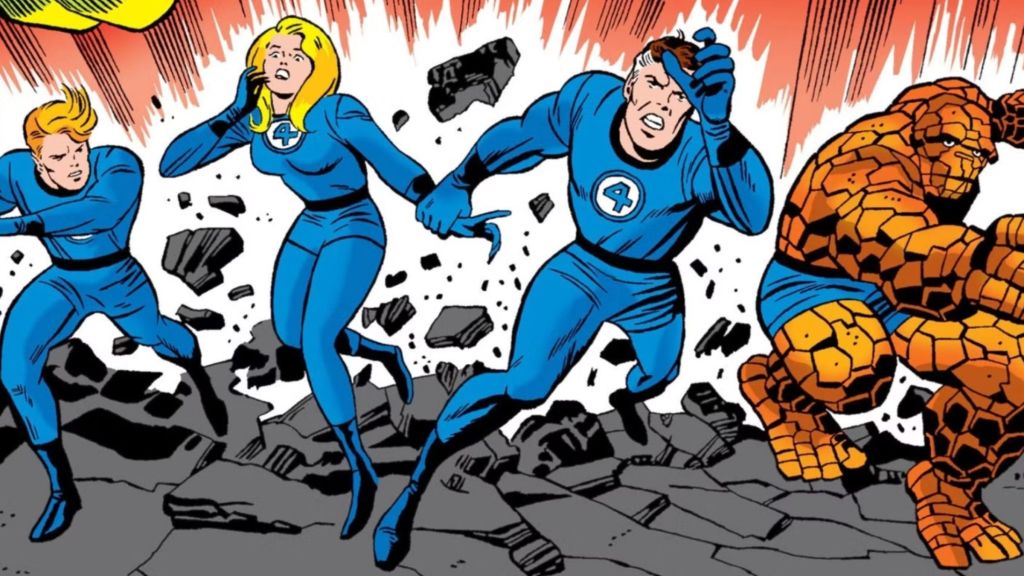
The Fantastic Four had a grand introduction to the world of comics because their introductory issue covered both their origin story and first adventure. When four scientists and astronauts, Reed Richards, Sue Storm, Johnny Storm, and Ben Grimm, tested a rocket ship that would take them past the moon, they accidentally found themselves bathed in cosmic rays. Upon crash-landing, the four discovered that they had gained incredible powers. Reed could become elastic, Sue could turn invisible and make force fields, Johnny could burst into flames, and Ben turned into a giant orange rock monster. Together, they became the Fantastic Four and defeated the evil Mole Man and his army of subterranean monsters. And with that, the world was introduced to Marvel’s First Family.
Right off the bat, the Fantastic Four broke practically every superhero trope in the book that DC Comics had established. They didn’t have secret identities, and they were more focused on advancing scientific knowledge than fighting crime. Of course, the biggest divergence from classic superheroes is that the Fantastic Four were distinctly human. Instead of paragons like Superman, the Fantastic Four had very real human flaws and strong character dynamics. Mr. Fantastic was brilliant but emotionally distant, Invisible Woman wanted to be respected, Human Torch was impulsive, and the Thing suffered from self-loathing. Such relatable problems had never been portrayed in superhero comics beforehand, and it made the Fantastic Four feel less like a superhero team and more like a real family – full of banter, conflict and love.
The relatability and familial drama of the Fantastic Four mixed with the examination of the wonders and dangers of scientific advancement connected with 1960s America because of the Cold War and Space Race. Add in the fact that Fantastic Four #1 was the first comic to use the classic Marvel Method in which the layout is left mostly to the artist, and you have a recipe for an issue that became an instant hit.
Fantastic Four #1 Launched the Marvel Universe

The Fantastic Four’s debut did more than subvert prior superhero tropes; it was the direct cause of one of the most iconic and expansive universes in modern fiction. Before the release of Fantastic Four #1, Marvel was a near-bankrupt publishing company that in the decade prior had all but abandoned superhero comics. Stan Lee and Jack Kirby’s teamwork saved Marvel Comics. Additionally, the success of the Fantastic Four became a starting point and blueprint for the entire Marvel Universe and all of its iconic heroes and villains.
Although Marvel did have some superhero comics during the 1940s, it wouldn’t be until the 1960s that they truly began to build an interconnected and expansive universe where characters from numerous titles would repeatedly crossover. This format could be seen in early Fantastic Four comics as they would introduce or reintroduce iconic characters like Doctor Doom, Black Panther, Namor the Sub-Mariner, Silver Surfer, the Inhumans, and Galactus. Given the cosmic aspect of the Fantastic Four comics, it’s unsurprising that they would be at the forefront of expanding the Marvel Universe to new heights in terms of cosmology and characters. Additionally, the Fantastic Four helped to popularize comic storylines that spanned multiple issues and had long-term effects on the characters’ development and their world.
The Fantastic Four’s depiction as normal people who must learn to understand and control their unanticipated powers while also dealing with personal and interpersonal conflicts acted as the blueprint for practically every Marvel superhero. In just the four years since the debut of the Fantastic Four, a significant portion of Marvel’s superhero community was established. Characters like Spider-Man, the Hulk, Iron Man, Daredevil, and the X-Men were all introduced within this short time. A large part of their popularity came from how they emulated what made the Fantastic Four stand out in the first place. Like the Fantastic Four, all these superheroes deal with relatable issues such as mental health, discrimination, doubt, fear, selfishness, and other flaws that made them feel like real humans imbued with incredible powers.
Few superheroes have made a more significant impact than the Fantastic Four. After just one issue, these four heroes managed to save Marvel Comics and usher in a new age of more grounded and thought-provoking storytelling while still crafting a universe filled with science fiction and wonder. In the same way that the Fantastic Four seek to unlock the mysteries of the universe as a family, they revealed the massive, untapped potential that the superhero genre could explore to inspire countless generations of readers.
What do you think? Leave a Comment below and join the conversation in the ComicBook Forum!
More Comics
-
Image Courtesy of Marvel Comics -

Images Courtesy of DC Comics -
Image Courtesy of DC Comics -
Image Courtesy of Marvel Comics -
Image Courtesy of Marvel Comics -

Image Courtesy of DC Comics -

Image Courtesy of DC Comics