
Ms. Marvel wasn’t the home run that the MCU wanted it to be, but it did introduce us to actress Iman Vellani. She was a massive comic fan and wanted to play Kamala Khan more than anything. She did an outstanding job with the character and her past as a comic reader paid off when she got to write Ms. Marvel comics. Vellani, in every way that counts, is one of us (or at least, she’s like me in some ways); she loves the comic medium and understands how to use it to tell stories. Her Ms. Marvel comics were usually co-written, but she’s ready to write her own comic and she picked the perfect place to do it: the home of the best indies, Image Comics.
Videos by ComicBook.com
The result is Chachu, a collaboration with artist Marianna Ignazi. While Vellani is mostly known for her love of superheroes, her Image debut goes in an entirely different direction. While the book has a few minor issues, mostly stemming from her inexperience with the medium, that doesn’t stop it from being a fantastic comic. This first issue is everything you could want a mystery comic to be.
Rating: 4.5 out of 5
| Pros | Cons |
| Vellani creates characters that feel completely real, nails the dialogue, and is able to build a very engaging story | Vellani does a lot of tell and doesn’t show; it helps set the mood well but it shows her inexperience in the medium |
| Ignazi’s art is fantastic; her style really works for this kind of story | |
| Jordie Belleaire’s colors are gorgeous, setting the emotional mood of the story beautifully |
Vellani Has the Goods, Even If There’s Some Small Problems
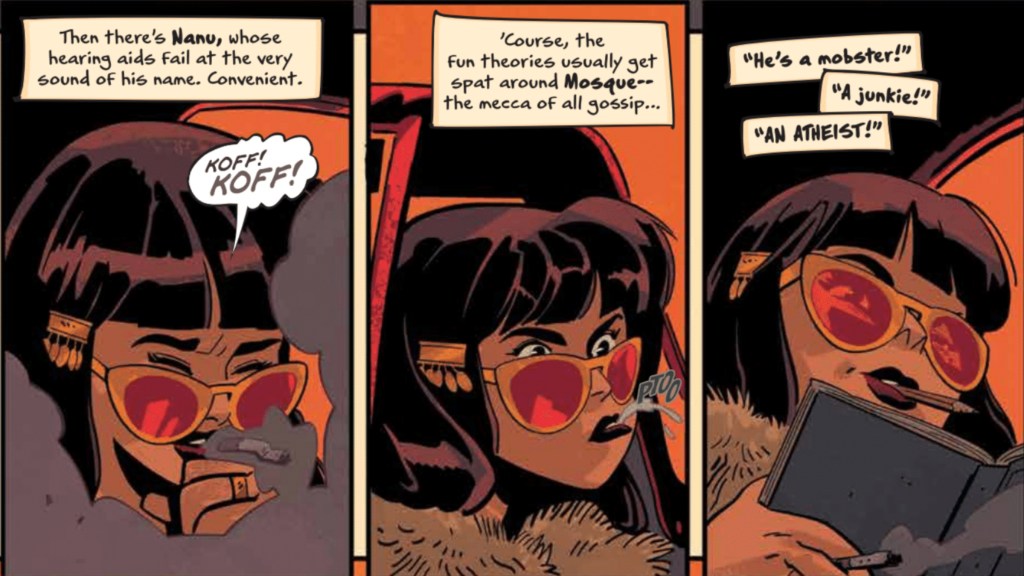
Vellani is mostly known for her works with superheroes, so Chachu is the first time she’s branched out. The book is set in 1979 and follows Pakistani girl Leila as she searches Hollywood for her missing uncle, the titular Chachu. She does a fantastic job of setting the scene, but there is something of a problem with that. While she definitely nails the character and Leila’s life with her family – Vellani understands the dynamics of a Pakistani family because she grew up in one – it’s an example of tell, don’t show. While this comic definitely needs those scenes, maybe flashback panels would have been better, showing her family talking about her missing uncle instead of telling us. It’s something of a rookie mistake, but Vellani is a rookie so it’s not surprising.
However, it doesn’t really hurt the comic at all, though, so it’s a very minor complaint from me. I was drawn into the issue immediately. She does such a fantastic job of building up Leila that she feels like someone telling you the story of finding her uncle. I felt like Leila was a real person, as I did her Uncle Chachu. The story is nicely paced and Vellani expertly builds the mystery of the book, showing us all the pieces. While we don’t really know much about the overall mystery and exactly where the book is going, that works. I want to get the next issue and see where she’s going to take this cast of characters. While this book does sometimes seem like a movie pitch, that’s honestly pretty common nowadays when actors write comics. Vellani is growing well as a comic writer and Chachu is the perfect example of that.
Ignzai and Belleaire Give This Book the Perfect Visuals
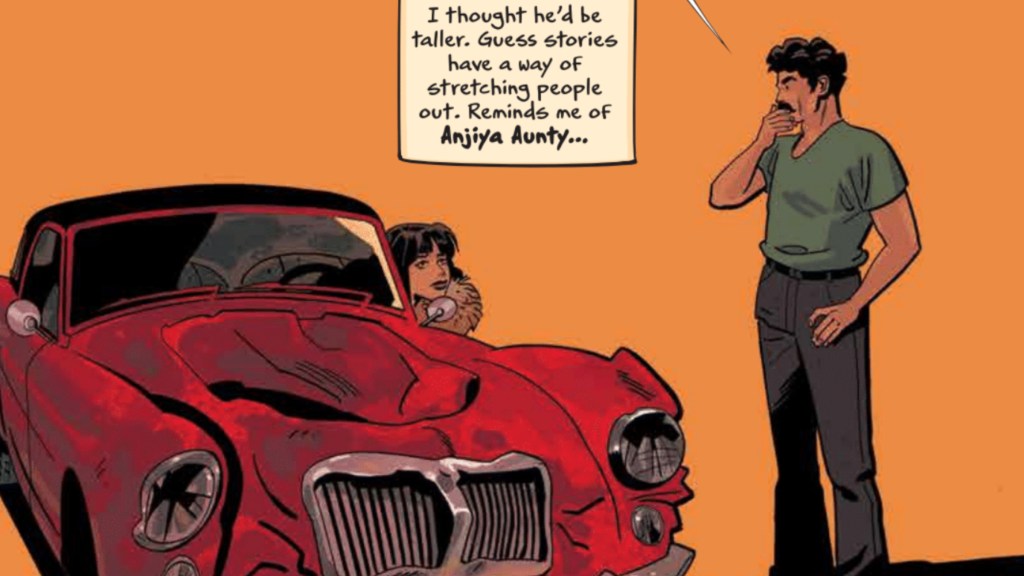
Vellani sets it all up and Ignazi and Belleaire do a great of bringing it to life. Ignazi’s style is basically one of the house styles of indie comics, but it works beautifully for this book. The pages are very detailed and the page layouts help keep the pace fast. I especially like her character acting. She’s able to perfectly capture the emotion of each scene. Honestly, if it wasn’t for Ignazi’s art, Vellani’s verbose style would have hurt the book a little, but Ignazi is able to make it work. The backgrounds definitely capture the style of Hollywood in 1979, which is important to setting the scenes. This is Hollywood noir; it needs to look the part and Ignazi is able to bring that feel to the comic.
As much as I like Ignazi’s style, it’s Belleaire’s colors that are the real MVP. A lot of times, colorists don’t get a lot of credit for the art; their colors are an important part of the setting the scene. Belleaire is a pro, having worked across the comic industry, and his colors really make Ignazi’s style pop. He knows how to light the scenes, helping set the emotional tone. I love the colors on the first page; they have that Hollywood at dusk feel, using a lot of orange to capture the sun setting. He does this throughout the book, each scene lit and colored in a way that capture the feel of everything in the scene. This art would have been fine with another colorist, but Belleaire is able to allow Ignazi to knock the pages out of park.
I didn’t know what to expect when I picked up this book, so it was such a pleasant surprise to get a comic this good. Vellani is still a rookie when it comes to writing to comics, but you see that she understands the craft right from the start of the issue. I seriously love Leila as a character; Vellani is able to capture both her resolve and her fear of meeting her uncle and goes on from there as the young Pakistani is dropped into a situation that she never expected when she decided to find her uncle. Ignazi and Belleaire bring their A-game to this book, setting the scene and giving readers some gorgeous visuals. This is everything that a first issue should be, hooking readers with a captivating story full of characters that you want to spend more time with.
Chachu #1 is on sale now.
More Comics
-
Image Courtesy of Marvel Comics -
Image Courtesy of DC Comics -

DCU Batman appearing in silhouette in Creature Commandos. -

Image Courtesy of DC Comics -
Image Courtesy of Marvel Comics -

Image Courtesy of Marvel Comics -

Courtesy of Marvel / Kadokawa
![Charles Soule Teases Venom’s New Era and Romance (Things Heat Up in Our Venom #2 First Look) [EXCLUSIVE]](https://comicbook.com/wp-content/uploads/sites/4/2026/10/venom-2-exclusive.jpg?w=300)
