DC Comics created the superhero back in 1938 (yes, I know how many times I’ve used this beginning for an article; I have a really good memory), presenting a new kind of pulp hero to the world. Superman was joined by Batman, and then the floodgates open, with Alan Scott’s Green Lantern, Jay Garrick’s the Flash, Wesley Dodd, the Sandman, Hawkman, Hawkgirl, Wonder Woman, Al Pratt’s the Atom, Johnny Thunderbolt, Terry Sloane’s Mister Terrific, Charles McNider as Doctor Mid-Nite, and Black Canary all appearing in the ensuing years. They would soon band together as the Justice Society of America, laying the groundwork for teams like the Justice League and Marvel’s Avengers. They would disappear when superhero fell out of vogue in the ’50s, but would return in the ’60s when DC brought back their four-color do-gooders.
Videos by ComicBook.com
The Justice Society has a rich legacy, helping define the DC Multiverse, but the end of Crisis on Infinite Earths would be a disaster for them. The post-Crisis DC Universe was very ’80s and the heroes of the ’40s were no longer cool. Without Earth-Two’s yearly crossovers, the Society disappeared, with only Infinity Inc. left representing them until they too fell out of vogue. There was an attempted reboot in 1991 that only ran eight issues. Fans in the early ’90s just didn’t want the best heroes of World War II. However, two years later, British writer James Robinson and legendary X-Men artist Paul Smith would team up for one of the best DC miniseries ever: The Golden Age. This four-issue Elseworlds took readers back to 1950s for a story that showed everyone just how awesome DC’s Golden Age heroes could be.
The Golden Age Showed the Breadth of Golden Age DC
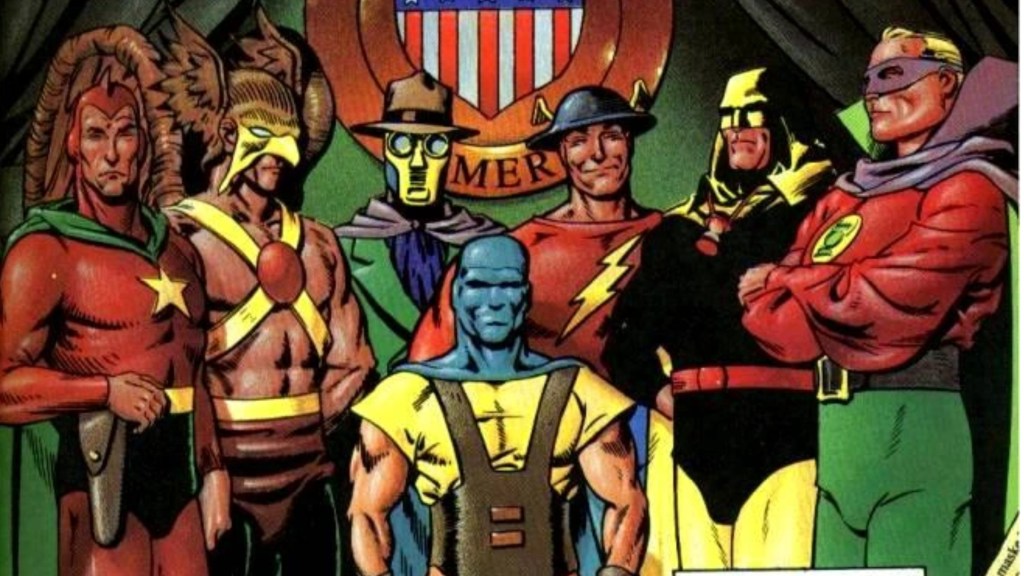
DC’s Golden Age was bigger than just the Justice Society and The Golden Age embraced the whole thing. The story took place in the days after World War II. The Justice Society had protected the homefront from the Nazis and costumed vigilante Mr. America had secretly helped end the war against Hitler. Suddenly, there were numerous superheroes with little direction in life; while there were villains, the war against the Nazis had been a huge part of their lives. Mr. America was hailed as a hero and angling to become a Senator after he returned from the war, which is where we find the characters of the book. It concentrates on numerous members of the Justice Society, like Alan Scott, Hourman, Starman, the Atom, and Johnny Thunder, as well as Liberty Belle, Johnny Quick, Tarantula, Manhunter, the Cheetah, Captain Triumph, and loads more you’ve never heard of.
All of these characters came together for a story that (SPOILER WARNING FOR A 33-YEAR OLD COMIC) revealed that Mr. America had been taken over by the Ultra-Humanite, who had saved Hitler’s brain and turned Dan the Dyna-Mite, a Z-list sidekick, into Dynaman, putting Hitler’s brain into him, and trying to take over the United States. This led to one of the most violent battles you can imagine, as the entire superhero community throws themselves at Dynaman while Manhunter, who had lost his memory after escaping witnessing Mr. America’s brain drain, went after the Ultra-Humanite. It’s an amazing superhero story, but that’s not how it revived the Justice Society.
No, the reason why this series is still fondly remembered all these decades later is because of what it did with the characters. It showed these icons as people – Alan Scott didn’t know what to do with his life and had lost his drive. Starman was a schizophrenic and it was getting worse. Hourman was a junkie. Johnny Quick, Tarantula, and Liberty Belle were in a messy love affair. Manhunter was an unstoppable force of nature, broken by terrible truths. The Atom and Johnny Thunder were dealing with feelings of inadequacy and Hawkman was losing his mind in his reincarnations. Robinson was able to find the core of each of character and present it in the most human way possible. For years, the Justice Society was looked at as the legends of DC. Robinson was able to make them human while still building their mystique. It showed the Justice Society for more than the idols of every generation of heroes; they were men and women working hard to save the world.
Smith’s art is another huge factor in the book’s success. I love Golden Age DC, but let’s be real – the art isn’t exactly the best. While it can be fantastic, it’s mostly quite crude compared to what we have now. Smith was the perfect person to bring these old characters to life. His simple linework is reminiscent of the best Golden Age artists, but the improved printing techniques allowed him to do things that those old artists didn’t, with Richard Ory’s rich colors giving his pencils a lush palate that drew the eye. There’s a two page spread of Hourman tripping out because of a new Miraclo formulation that is fantastic; the book is full of gorgeous full and double-page spreads. His figure work was gorgeous, his character acting was perfect, and his action scenes were fluid and dynamic. I was able to get my hands on the first issue (and a couple of Smith issues of Uncanny X-Men) and it is one of the most beautiful books I own. It presented the Golden Age to readers in the best possible light and they wanted more.
The Golden Age Birthed the Second Renaissance of the Justice Society
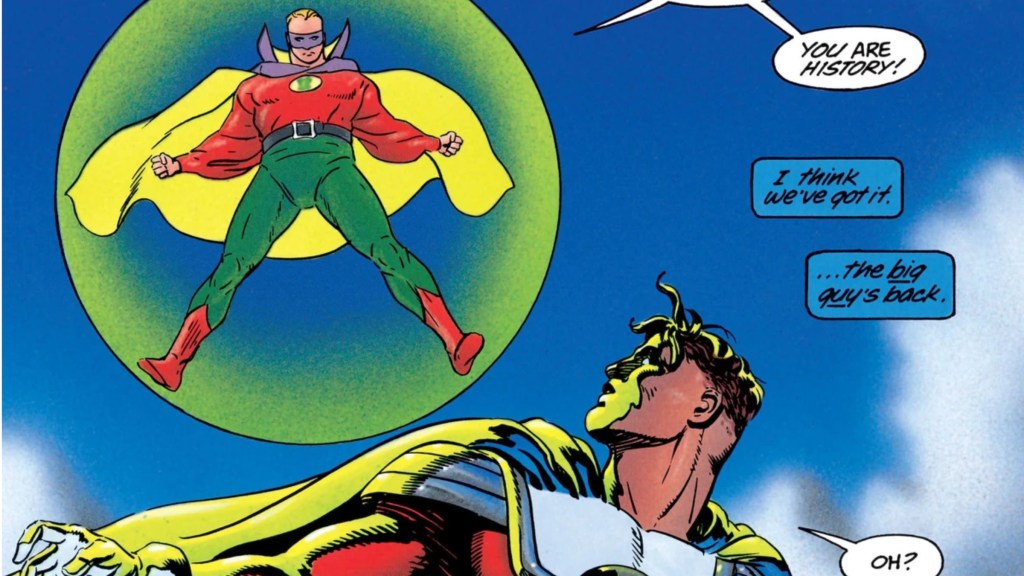
The Golden Age came from a time I like to refer to as the “Golden Age of Elseworlds”. There were numerous amazing Elseworlds tales in the late ’80/early ’90s and it was one of the best. Robinson was tapped into what made Golden Age DC so awesome and he brought that realistic edge that British creators brought to the company to their oldest heroes. Robinson knew how to make these characters sing and he would soon get a chance to bring Golden Age characters to the forefront of the DC Universe.
Zero Hour: A Crisis in Time killed off the Atom I, Doctor Mid-Nite I, Hourman I, and Doctor Fate, with the other members aged up. This might have seemed like the end of the team, but instead Robinson launched Starman (Vol. 2), starring Jack Knight, the son of Starman. He’d end up taking his father’s place and battling against the daughter of the Mist, his adventures reintroducing readers to the Golden Age greats. By 1999, it was time for the Justice Society to come back, reforming in “Crisis Times Five” in JLA, with Robinson tapped to write JSA with David S. Goyer. This series would carry the team into the new millennium, with Robinson handing the team off to Geoff Johns after giving readers a brilliant opening story. None of this would have been possible without The Golden Age. Robinson and Smith brought the oldest superheroes into the modern day, showing readers why sometimes, the classics never go out of style.
More Comics
-
Image Courtesy of Marvel Comics -
Image Courtesy of Marvel Comics -

Image Courtesy of Marvel Comics -
Image Courtesy of Marvel Comics -

Courtesy of The Walt Disney Company -
Image Courtesy of DC Comics -
Image Courtesy of Marvel Comics