Spider-Man stands as one of the biggest faces of the superhero genre. The Web-Head has been viewed as the quintessential hero and an inspiration to countless generations. After spreading messages about the importance of responsibility and kindness for over six decades, Marvel Comics finally released the 1000th issue of the Amazing Spider-Man comic series. Coincidentally, just two months prior, DC Comics also celebrated the milestone comic of their biggest superhero: Superman. Indeed, in July, DC released Action Comics #1100 to honor the legacy of their Man of Tomorrow. But of the two comics, only Action Comics #1100 truly understood the importance of a milestone issue.
Videos by ComicBook.com
Spider-Man and Superman are the faces of their respective companies and have both acted as the ultimate champions of hope and heroism for decades. The legacies of these two heroes are practically unrivaled in all of modern fiction. Yet, despite everything, Amazing Spider-Man #1000 ultimately failed to live up to its hype and potential and didn’t match the greatness of Action Comics #1100.
Action Comics #1100 Is a Better Tribute Than Amazing Spider-Man #1000
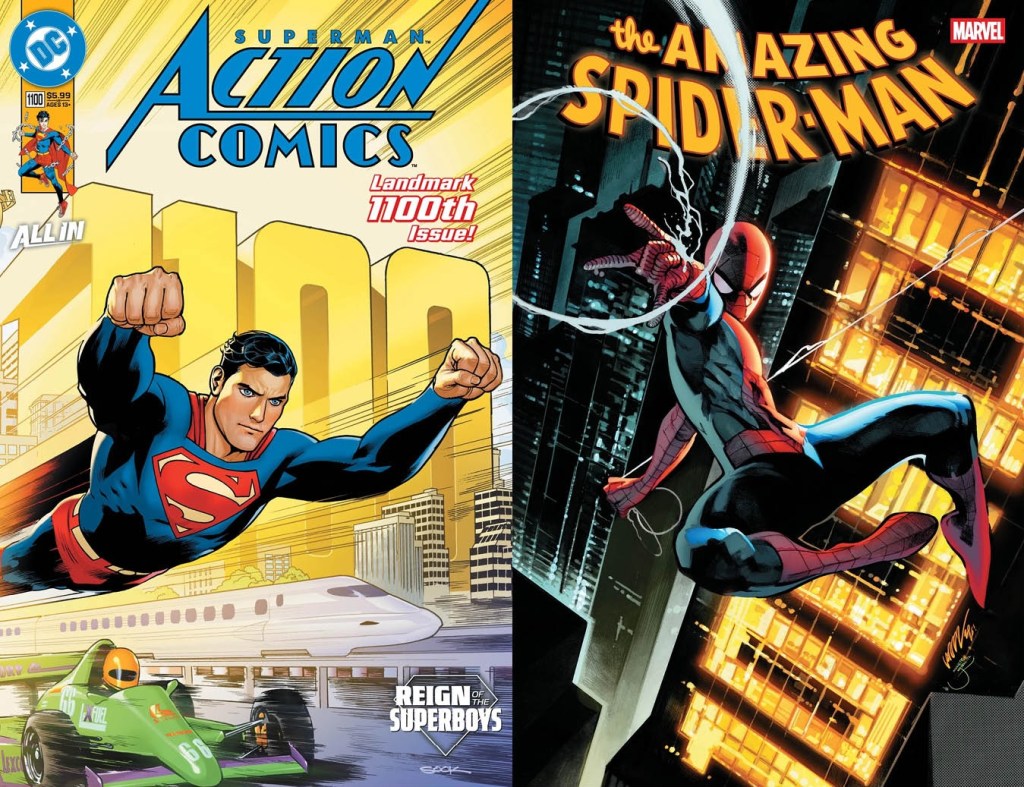
Milestone issues are always significant celebrations of the legacies of both the characters and the countless writers and artists who have developed them. They’re often used to introduce a major status quo shift, serve as a trip down memory lane, or both. Action Comics #1100 and Amazing Spider-Man #1000 both take the approach of featuring multiple stories in their respective issues to offer a broad encapsulation of everything that makes their characters so great. But of the two, only Action Comics #1100 felt like a story and tribute worthy of one of the greatest superheroes of all time.
The biggest failure of Amazing Spider-Man #1000 is the main plot, which, unlike other milestone issues, doesn’t push the boundaries of the Spider-Man mythos and instead feels like your average Spider-Man tale. The story starts when Aunt May wakes up from a stroke with no memory of raising Peter. Afterward, in the most obvious twist possible, May’s recently introduced son Cormac Crane reveals himself to be a new villain called Ravage who stole his mother’s memories of Peter. Their fight doesn’t even have a conclusion, as Peter’s still trying to get Aunt May’s memories back from Ravage. Meanwhile, the seven backup stories range from groundbreaking to just passable. And while they all offer great perspectives on Spider-Man’s character, there’s almost no narrative overlap or long-term consequence.
In contrast to Amazing Spider-Man #1000’s weak main storyline and impactful but disconnected extra stories, Action Comics #1100 feels like a real attempt to organically and impactfully convey everything that makes Superman special. Across the four segments, a younger Clark Kent Superboy is brought into the time stream by Booster Gold, Martian Manhunter, and Mary Marvel. They take Superboy through the time stream where he sees everything he’s destined to become. Even better, Superboy manages to meet and save the Superman of the modern day, who had been lost since the finale of DC K.O. Meanwhile, in the present, Superboy-Prime officially joins the Superman Family but still has beef with Conner Kent. At the same time, General Zod makes his grand return as the villain of the next arc.
Whereas Amazing Spider-Man #1000 features a sub-par main plotline and seven anthology short stories of varying quality, Action Comics #1100 uses all four stories to tell a concise, overlapping tale connected by narrative and themes. Action Comics #1100 served as the finale to the “Reign of the Superboys” arc and the prelude to the next arc, “Kingdom of Zod.” While Spider-Man fought a hollow new villain who’ll probably be forgotten soon, DC Comics featured an emotionally charged crossover between the Supermen of two different eras and set up their next adventure. Milestone issues are meant to celebrate a character’s past and present while also hyping up the next exciting chapter. But where DC embraced the concept, Marvel rejected it.
DC Comics Knows What Makes Its Greatest Hero Special
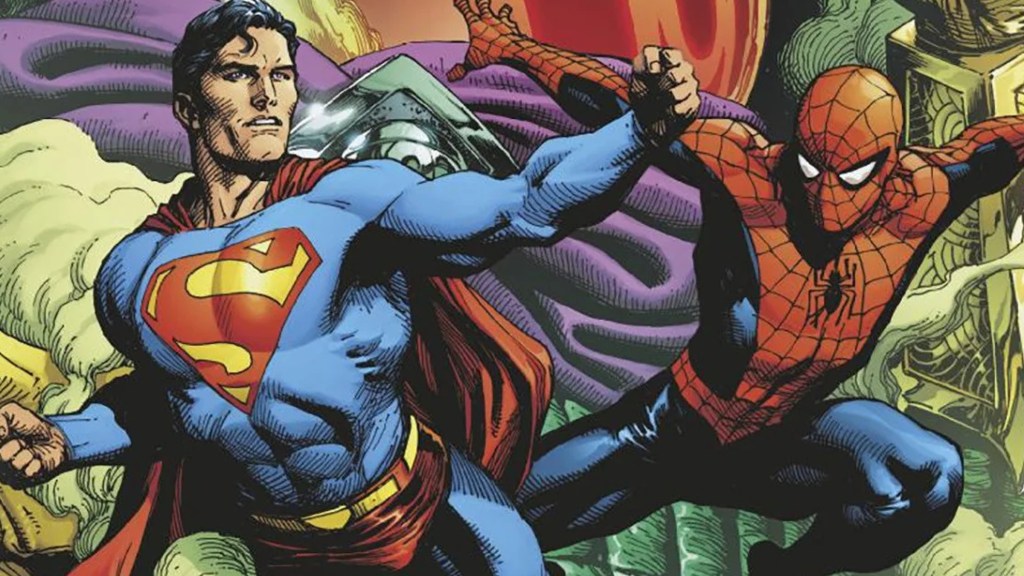
The quality and importance of Amazing Spider-Man #1000 and Action Comics #1100 portray one of the fundamental differences between current Marvel and DC Comics. Comic sales alone show that DC has been absolutely crushing its main competitors this past year and beyond, with its superiority not seeming to waver any time soon. Part of how Marvel and DC reached their current positions in the comic book industry hierarchy ties to how their milestone comics treated their biggest names.
Amazing Spider-Man used to understand the importance of milestones, with deep character introspection or the debuts of significant villains. But with Amazing Spider-Man #1100, outside of the backup stories, it just feels like an average Spider-Man story. It’s a long-running problem with Spider-Man: Marvel is terrified to let him evolve. Many of his recent stories have felt extremely repetitive, and Amazing Spider-Man #1000 is no exception, falling into the same trap with a stock villain that wants to destroy Peter’s life. In contrast, DC Comics respects Superman enough to let him grow by giving him a family and having him face unique challenges. While not all his stories are perfect, Action Comics #1100 still shows his character’s evolution through the interaction between his past and present self.
Spider-Man and Superman have some of the best supporting casts of any superheroes, but only Action Comics #1100 embraces this fact. Across Amazing Spider-Man #1100’s main plot and backup tales, few supporting characters get much focus beyond Aunt May, Uncle Ben, Gwen Stacy, and Harry Osborn. By focusing solely on the people Peter feels like he failed, the comic completely sidelines or ignores Mary Jane, Flash Thompson, Venom, J. Jonah Jameson, and all the other Spider-People. Meanwhile, Action Comics #1100 proudly features Lois Lane and most of the Super Family in the main plot. And while Spider-Man gets one interaction with Captain America, Superboy is shown as destined to inspire the creation of both the Legion of Superheroes and the Justice League.
Milestone issues act as celebrations that show where a character started and how far they have come, both in their actions and development. In a sense, Amazing Spider-Man #1000 perfectly captures the character’s current state: stuck in an endless loop of misery and self-loathing, never allowed to move forward with his life. What should have been the next chapter of Spider-Man’s life became nothing more than another Amazing Spider-Man arc that could’ve been swapped out for any other. In contrast, Action Comics #1100 understood the assignment of a milestone issue by celebrating the past, present, and future of the Man of Tomorrow.
More Comics
-
Image Courtesy of DC Comics -
Image Courtesy of Marvel Comics -
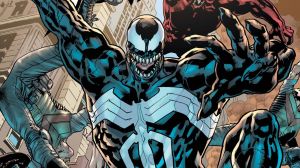
Image Courtesy of Marvel Comics -
Image Courtesy of DC Comics -

Image Courtesy of Marvel Comics -

Image Courtesy of DC Comics