
The X-Men were once the popular superhero team of them all and there’s a good chance that they’ll be it again because of the Marvel Cinematic Universe. For years, this was something that fans dreamed of. The Fox movies started out well, but as the years went on, their films became a cycle of diminishing returns. With the MCU dominant in the ’10s, fans wanted to see what Marvel Studios would do with the mutants, taking about how much more “comic-accurate” the team would be if Marvel was in charge of them (tangent – the MCU was never comic accurate, it just had similar costumes; most of the people saying that never read the comics or even my articles). Disney was able to get the film rights to the team and their enemies back in 2019, and it’s taken years to build the foundations for the eventual rise of the mutants.
Videos by ComicBook.com
One of the most tantalizing things about the X-Men in the MCU is the complexity they’ll bring to things. The MCU is, at best, one of the least complex series of movies when it comes to the themes of the stories. Sure, there’s some good emotional stakes at times, but for the most part, the stories are simple morality plays that praise the status quo. However, the X-Men aren’t a simple morality play. They are a complex metaphor for the experience of marginalized people in society and the civil rights allegory is a key part to making it work. People like to say the X-Men were never political, but these people have never been paying attention and the proof is in the pudding. Many of the best X-Men stories play with the concept of racism in society, with one of them proving how political the team has always been – the masterpiece known as God Loves, Man Kills.
God Loves, Man Kills Was Controversial From the Beginning
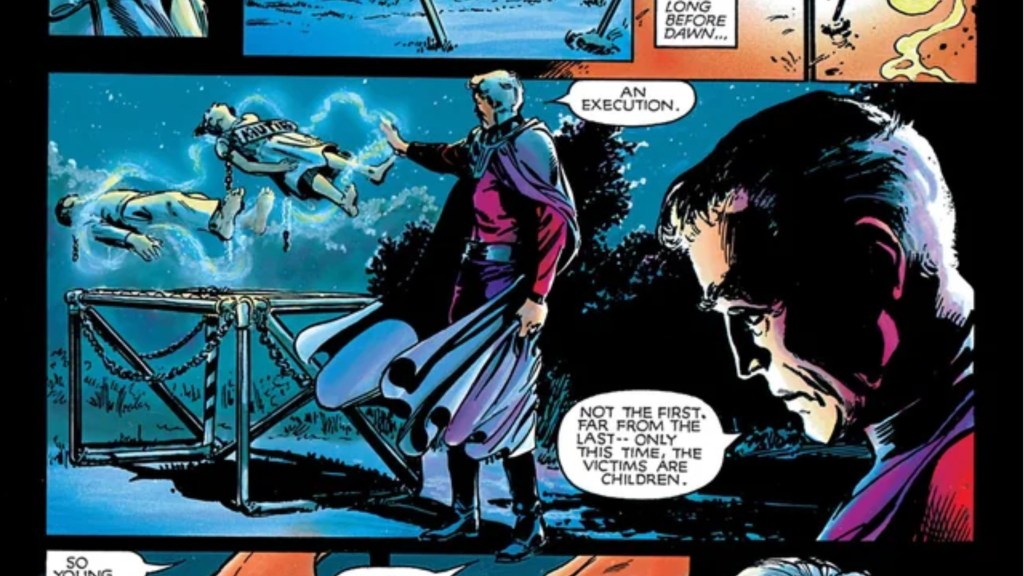
As with all the best parts of the X-Men, it all starts with legendary writer Chris Claremont. While Stan Lee and Jack Kirby planted the seeds of the civil rights allegory – although the characters weren’t created for that purpose – it was Claremont that really dug into this part of the characters, especially as the years went on. Claremont wrote the book for sixteen years, starting in 1975, and would take the team in different directions, as much to keep his own sanity writing them as to keep them interesting for fans. By the time the ’80s had dawned, he started pushing the group in new directions and 1982’s God Loves, Man Kills is the most perfect indication of where he wanted to take the book.
In the early ’80s, Marvel started to put out graphic novels, one-shot stories starring their heroes that were more mature and only available in comic stores. God Loves, Man Kills was the fifth one of these and one look at the story shows that this was the right decision. The story sees Reverend Stryker and his Purifiers starting a campaign of terror against the mutant race. Stryker uses his pulpit as a preacher to spread his racist message, and the Purifiers’ atrocities against mutants include the deaths of children. The X-Men and Magneto end up teaming up against Stryker, tackling him on national TV and leading to his death, killed by a security guard who shot him to save Nightcrawler.
Claremont worked with artist Brent Anderson for this book, the two of them giving readers a story unlike anything they had seen before in Marvel Comics. God Loves, Man Kills was basically Claremont showing the relationship between racism and religion and it was controversial from the word go. Christian groups tried to organize boycotts of the book and its content was talked about on news shows across the country. It’s a story that perfectly takes the central ideas behind the team – a group that fights for the unification of mutants and humans – and shows the institutional challenges the group faces. Religion has often been used as a cloak for the worst beliefs and God Loves, Man Kills commented on that in an unflinching manner. Claremont had no problem showing the power of faith and religion in positive lights, mostly in the characters of Kitty Pryde and Nightcrawler, and God Loves, Man Kills was him showing the other side of that.
It also was a sign of the future for the book. While Claremont and the writers who had come before him all dealt with the metaphor of the book in various ways, the superheroics were always at the core of everything. However, God Loves, Man Kills was the moment when it was taken the forefront in realistic ways. In real life, we’ll never have Sentinels hunting trans people (unless Elon Musk gets his way), but we do have preachers speaking out against them. It made the whole thing hit that much harder. The Mutant Registration Act had been introduced as an idea, but it would soon become a reality, partly because of this book. There’s also the way it treated Magneto.
In 1982, Magneto was still the Lee/Kirby villain, basically Doctor Doom if he was a mutant supremacist (and not a Doom supremacist). He was the evil opposite of everything the X-Men wanted. We had gotten inklings of his more sympathetic origins but he was still a bad guy who wanted to take over the world and enslave humanity. God Loves, Man Kills was one of the first times we’d see him team up with the group, putting aside his differences with the X-Men to fight for mutants. This would become a major part of the team’s history, leading us to the version of the character that we have today.
God Loves, Man Kills Charted the Future of Comics and the MCU Needs to Remember Its Example
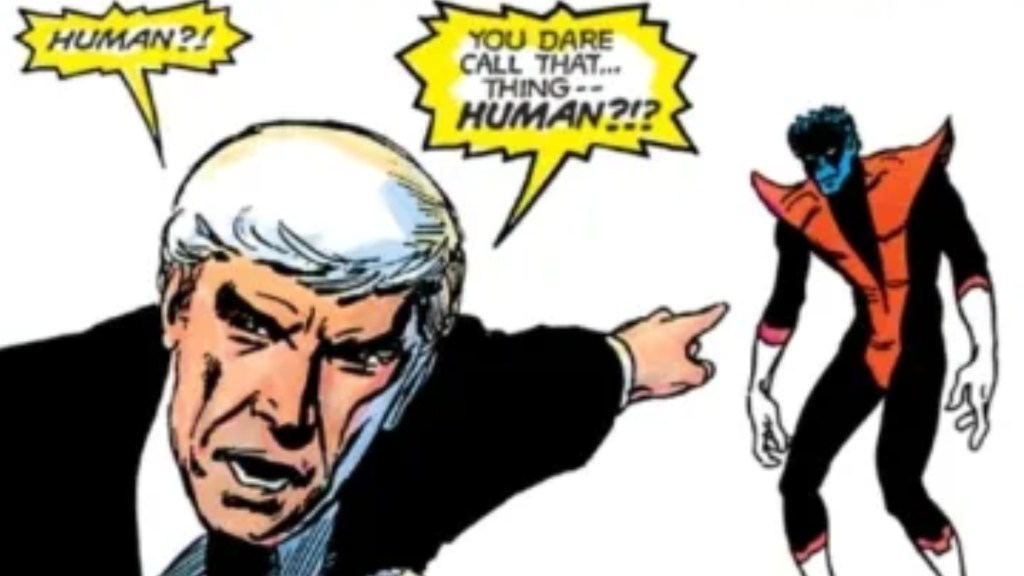
Chris Claremont wrote the best X-Men comics, bar none. I’ve always liked Morrison’s stuff more, for my own reasons, but Claremont’s stuff is the best. He changed comics forever in numerous ways, and God Loves, Man Kills is the perfect example of what he did so well. It’s a story that lives and dies by its characters, one that dug into the real world consequences of racism in a way that you couldn’t really get away with at the time on the newsstands. God Loves, Man Kills wasn’t full of sex, violence, and profanity, but it was the perfect example of a mature comic at a time when those were harder to find. It was a controversial story, especially with the rise of the religious right during the Reagan Administration. It changed the way fans and creators looked at both the X-Men and comic books. ’82 was the year that Moore’s Swamp Thing started, a book that gets credit for birthing modern comics. However, it’s time that we recognize the role this book played it in it.
The MCU has often found ways to sidestep a lot of the political statements that their comics make. People pretend that the MCU is so left-leaning, when it’s really the most center-right, authority-glazing superhero universe in decades. The X-Men are unequivocally not center-right in any way shape or form. The whole point of the team is that they are there to show the realities of our modern “freedoms”. The MCU does good superhero stories, but the best X-Men stories are more than that. God Loves, Man Kills is the perfect example of everything an X-Men story should be and Marvel Studios would be wise to make everyone working on their mutant movies read it to truly understand the team and what should be done with them.
More Comics
-

Image Courtesy of Image Comics -
Image Courtesy of Marvel Comics -

Image Courtesy of DC Comics -

Image Courtesy of Marvel Comics
![Legendary Artist Jen Bartel Returns to Comics With New Love Ignited 2027 Cover [EXCLUSIVE]](https://comicbook.com/wp-content/uploads/sites/4/2026/10/love-ignited-exclusive.jpg?w=300)
![Star Trek: The Last Starship Reaches Its Final Frontier Today (And Its Creators Have a Message for Fans) [EXCLUSIVE]](https://comicbook.com/wp-content/uploads/sites/4/2026/10/last-starship-exclusive.jpg?w=300)
