After finishing Warhammer 40K: Rogue Trader, it felt like Owlcat Games had finally cracked the code for adapting the grimdark universe into a full-scale CRPG. It was dense and deeply respectful of the setting, while still being surprisingly approachable once its systems started to click. Rogue Trader set a high bar, not just for Warhammer RPGs, but for Owlcat’s own catalog. Going into Warhammer 40K: Dark Heresy, I expected something familiar. What I did not expect was how confidently Owlcat has taken that foundation and refined it into something that already feels more focused and more ambitious.
Videos by ComicBook.com
I was graciously given a preview key by Owlcat Games to play Dark Heresy early, and, spoiler alert, my early impressions are overwhelmingly positive. Even at this early developmental stage, Dark Heresy feels like Rogue Trader taken to a grander scale, not in terms of raw scope, but in how tightly its systems, narrative, and mechanics are woven together. This is not a direct sequel, but the DNA is unmistakable. Where Rogue Trader was about power and excess, Dark Heresy is about authority, investigation, and consequence. It already feels like a natural next step for Owlcat’s Warhammer CRPG design philosophy.
Dark Heresy Builds Directly on Rogue Trader’s Core Systems
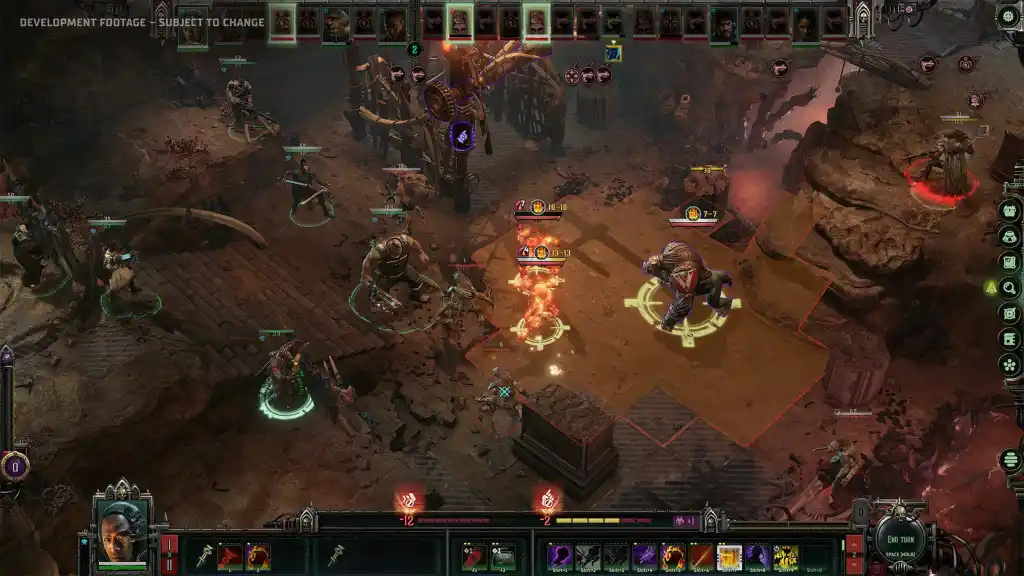
Anyone who has spent time with Rogue Trader will feel immediately at home in Dark Heresy. Movement, turn-based combat flow, cover usage, and overall pacing are instantly recognizable, as Dark Heresy does not attempt to reinvent Owlcat’s CRPG framework. This is one of its biggest strengths. Instead, it refines what already worked, smoothing out rough edges, giving you a more readable and approachable experience from the very start.
The biggest difference is not mechanical familiarity, but contextual framing. In Rogue Trader, you command a dynasty with near-limitless authority, shaping star systems and political outcomes through wealth and influence. Dark Heresy pulls that power inward. You are no longer an empire unto yourself. You are an acolyte of the Inquisition, operating under its shadow, focused on uncovering threats that fester beneath the surface of the Imperium.
This shift does a lot of heavy lifting for the game’s tone. Dark Heresy feels more grounded and more dangerous, even when using similar systems. The stakes feel personal, and the consequences of your decisions are less about galactic dominance and more about survival, loyalty, and truth. For Rogue Trader fans, this familiarity, paired with a tighter narrative focus, makes the transition seamless.
Investigation Feels Like the Heart of Dark Heresy’s Design

Dark Heresy is not just about refinement, though. One of the most interesting additions to Dark Heresy is its investigation system, which fundamentally changes how you approach quests, exploration, and narrative progression. As an Inquisition acolyte, your role is not simply to eliminate enemies, but to uncover heresy in all its grueling forms. That fantasy is embedded directly into the gameplay loop.
Exploration is similar to that of Rogue Trader’s, but here it is further driven by discovery rather than explicit direction. As you investigate environments, you uncover clues that provide insight into where you should search next or how a situation might be approached. Information is not just flavor text. It actively shapes your options, gradually revealing multiple paths forward without spelling them out for you.
What makes this system especially compelling is how it ties into authority as a mechanic. NPCs respond to you differently depending on what you reveal and when. Early interactions might be tense or dismissive, particularly with criminals or underworld figures. The moment your connection to the Inquisition becomes clear, the power dynamic shifts. Fear replaces defiance, and new dialogue options open up, along with additional investigative threads. It is a smart blend of narrative and gameplay that reinforces the weight of your role without feeling artificial.
Character Progression Feels Deeper and More Intentional

One of the most immediately noticeable changes from Rogue Trader appears the moment you open the character sheet. Character progression in Dark Heresy has been reworked in ways that are visible right away, and it feels more structured and more intentional as a result. While the core stats and familiar framework remain intact, the way characters specialize and define their roles has been meaningfully expanded.
Specializations are a key new mechanic to progression, and they stand out as one of the most impactful additions. These fundamentally shape how a character plays and is built, rather than offering minor bonuses. The effects are substantial enough that they influence positioning, ability usage, and even how a character wants to exist on the battlefield.

One specialization that stood out during the alpha was the Attack Debuff Specialist my Psyker had in his build. This specialization made it so that anytime my Psyker inflicted a debuff, they would also afflict targets with an additional Suppression debuff, which reduces the enemy’s chance to hit, and persisted longer every time it landed. That single effect completely changes how the character is played, as every time he used his Pyromancy abilities to burn an enemy, Suppression also actively took effect. All characters had room for four specializations in the playtest, which means the options for builds are even more extensive than what Rogue Trader offered.
This approach to progression feels like a natural evolution of Rogue Trader’s already strong systems. Instead of simply growing more powerful, characters grow more defined. Their strengths and weaknesses become clearer, and their roles within a party feel more deliberate. It is clear that these changes are designed to further promote experimentation and replayability.
A Cleaner Interface That Supports Complex Systems

Dark Heresy also benefits from a noticeably refined user interface. Compared to Rogue Trader, the UI is cleaner, clearer, and easier to navigate, especially during combat encounters. Importantly, this simplification does not come at the expense of depth. All the information you need is still present, but it is presented in a way that feels more intuitive and less overwhelming.
Ability descriptions are easier to parse, skill bars feel more readable, and important combat information is easier to track at a glance. In Rogue Trader, complexity was part of the appeal, but it could occasionally slow things down. Dark Heresy feels more… confident in how it communicates its systems, allowing you to focus on decision-making rather than deciphering menus. You’ll still be menu hunting, but Dark Heresy makes it so it’s a bit easier to follow this time.
This refinement suggests Owlcat has taken lessons from Rogue Trader’s reception and feedback, and applied them thoughtfully. Even in the early test, Dark Heresy feels like a game that respects the player’s time while still demanding careful planning and engagement.
Combat Has Evolved Through Toggle-Based Abilities
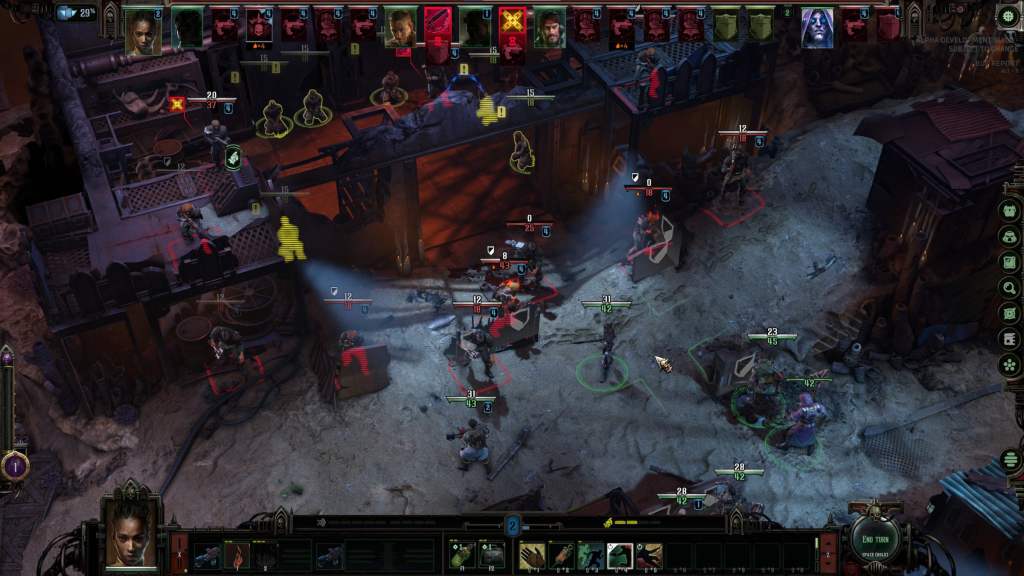
Combat in Dark Heresy will feel instantly familiar to Rogue Trader veterans, but the differences become clear once abilities come into play. One of the most notable changes is the shift away from cooldown-heavy abilities toward toggle-based effects. Instead of activating an ability and waiting for it to refresh, many skills are now toggled on or off, remaining active until disabled.
Run and Gun is a strong example of this new design philosophy. In Dark Heresy, it no longer relies on a cooldown. Instead, it becomes a toggle that provides meaningful benefits while also imposing penalties. Keeping it active requires commitment, forcing players to weigh risk and reward on a turn-by-turn basis.
This change encourages synergy and long-term planning rather than burst usage. Characters can be built around combinations of toggled abilities that interact with positioning, movement, and attack conditions. Combat feels more reactive and personalized as a result, rewarding thoughtful setups rather than optimal timing alone. It is a clear evolution of Rogue Trader’s combat system that feels deliberate and well-considered.
A Strong Impression That Signals Confidence
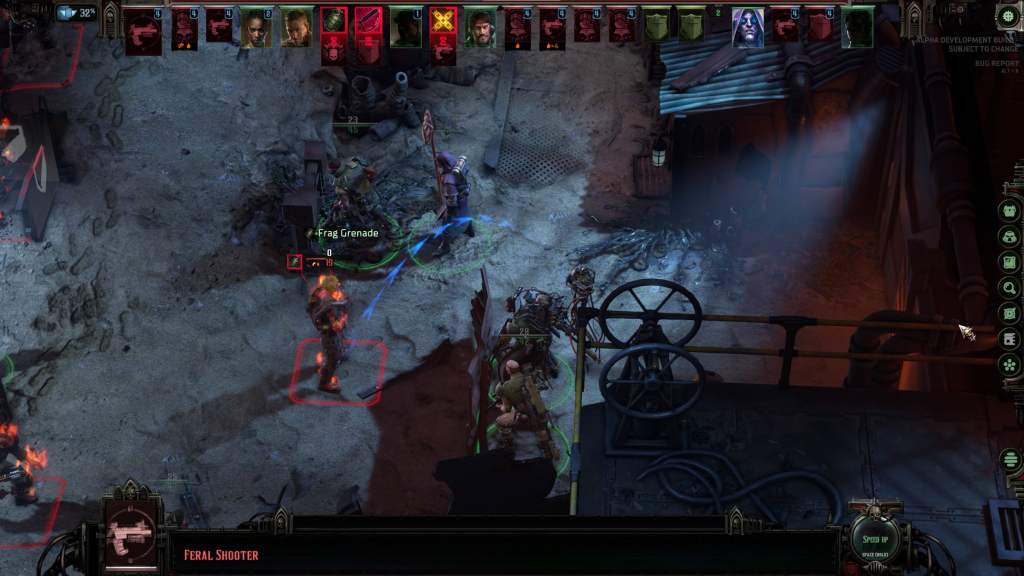
What impressed me most about Dark Heresy is how complete and cohesive it already feels in its alpha state. Systems are interconnected, mechanics feel purposeful, and the overall vision is clear. There is a level of confidence here that comes from a studio that understands both its tools and its audience.
Rogue Trader was an extremely strong foundation, and Dark Heresy does not shy away from that legacy. Instead, it builds on it, aiming to refine and deepen its systems and progression, all the while anchoring everything in a premise that fits the Warhammer 40K universe perfectly.
If this alpha is any indication, Warhammer 40K: Dark Heresy is shaping up to be a confident step forward, offering Rogue Trader fans more of what worked, while sharpening the experience into something more focused and reactive. For anyone who enjoyed Owlcat’s take on Warhammer 40K, Dark Heresy already feels like a very promising evolution.
What do you think? Leave a comment below and join the conversation now in the ComicBook Forum!
Most Viewed
-

Official art by Bastien Lecouffe-Deharme -

A photo of the Retrovolt Arcade taken in 2017, showing several classic arcade cabinets and stools. -

Image Courtesy of MAPPA