The first-person shooter genre is easily one of the biggest in gaming, as some of the most successful franchises fall into it. These include Call of Duty, Fortnite, and many more, and the genre continues to grow. Of course, the games of today look nothing like they did in the beginning, and it took several complex steps to develop FPS games into the graphical behemoths they are today. With each new game, small and large innovations evolved the FPS genre, taking it from its 2D roots into 3D, VR, and who knows what else? These are the most significant innovations in the genre that brought FPS games from the 1970s to the 21st century.
Videos by ComicBook.com
1) Maze War (1973)

The first game that could be identified as an FPS is Maze War, developed by high school students in 1973 for the IMLAC PDS-1 minicomputer. After some tooling, the game allowed gameplay across two linked computers and involved shooting by the end of ‘73. It even encroached onto the ARPANET, the early precursor to what would become the Internet, and it was banned at DARPA for taking up too much productivity. Several versions of Maze War followed, and its most significant contribution to the genre was establishing it, though it shares some of that distinction with 1974’s Spasim, which also introduced elements to the genre.
2) Battlezone (1980)

While several games came and went after Maze War, the next to improve on the FPS concept was Atari’s Battlezone, which took up real estate in arcades when it was introduced in 1980. The game featured 3D vector-based graphics and is considered by many to be the first truly 3D arcade game. Gameplay involved turning a digital periscope around a battlefield, which functioned alongside a tank turret. Once a target is identified, the player can shoot at it, but leading is required. These innovations further moved the needle on engaging 3D gameplay, which was important in the earliest FPS games.

3) Midi Maze (1987)
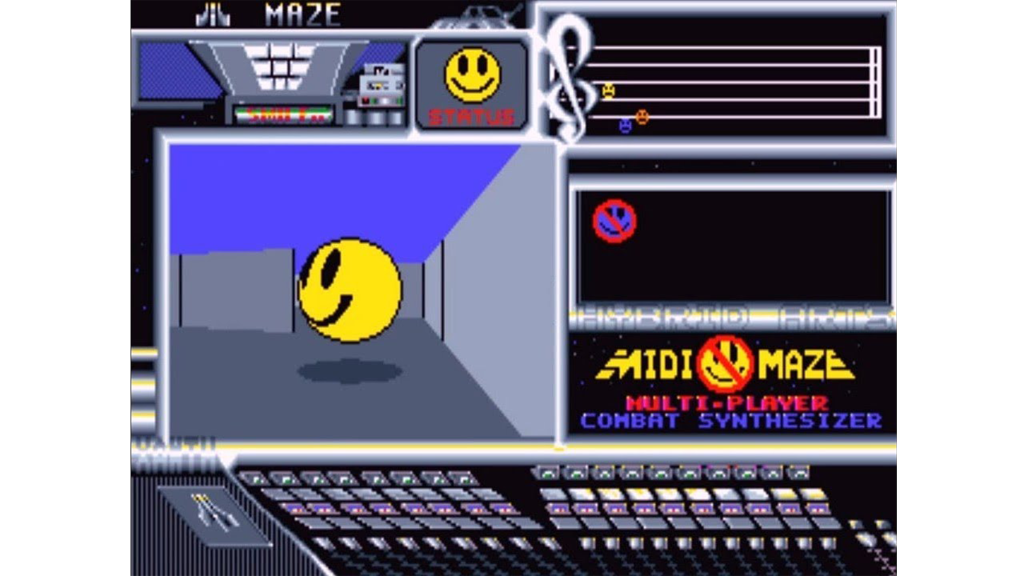
The 1980s brought video games into homes through a variety of video game consoles, and this included FPS’. Granted, the processing power was limited, but there were several examples, including Midi Maze, which was released in 1987. Gameplay takes place in a maze of untextured walls, where the player controls a smiley-face character that shoots lethal bubbles. The most important aspect of the game was its ability to allow for smoothly animated turning. Previous FPS titles similar to Midi Maze, like 1982’s Wayout, only allowed for 90-degree turns. Smoothing this out added a dynamic element to gameplay that became a staple of the genre. Additionally, the game could be networked across a LAN, allowing for 16 players, which was a significant innovation despite the lag.
4) Wolfenstein 3D
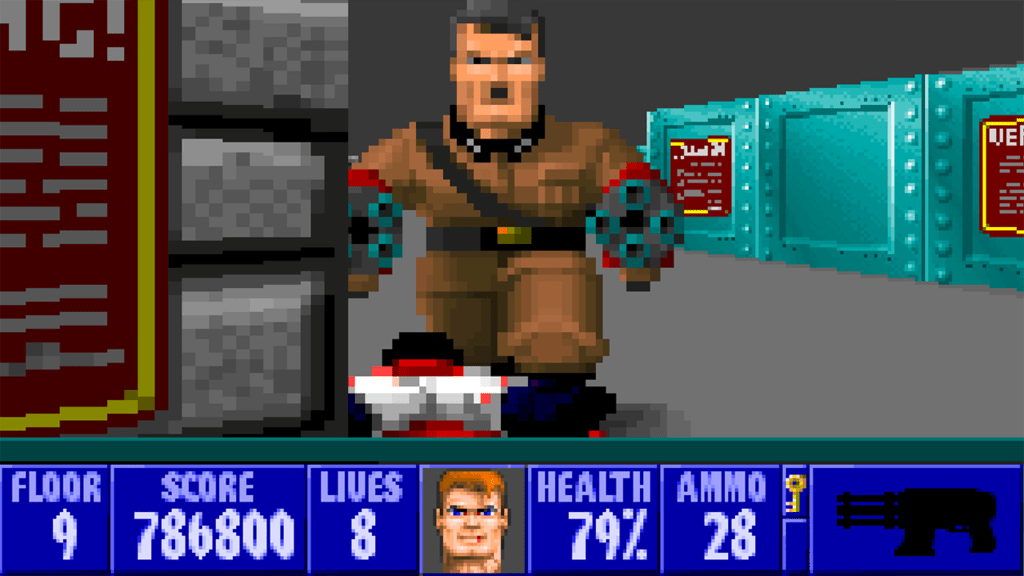
Everything changed for the FPS genre in 1992 with the introduction of Wolfenstein 3D. Not only did the game feature smooth animations that made movement easier throughout its levels, but it also included many additions absent from earlier attempts. It features an immersive story, numerous enemy mobs, and a final boss. Players could acquire multiple weapons alongside their trusty knife, and the game had huge replay value. It spread like wildfire, showing that FPS’ could be dynamic and engaging, while ensuring they’re challenging and fun. The success of Wolfenstein 3D opened the door for what followed.
5) Doom (1993)
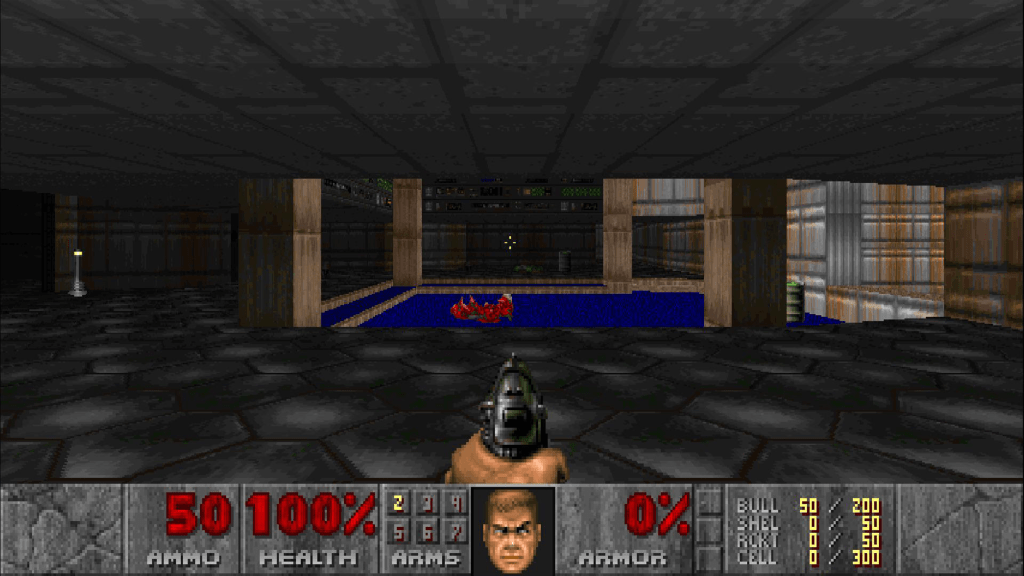
While Wolfenstein 3D revitalized the FPS genre, its successor, Doom, completely turned it on its head. The mobs all have different behaviors; it features an excellent soundtrack that enhances the game’s visceral visuals, and it became one of the first truly addictive video games that people couldn’t walk away from. Its most significant innovation was its multiplayer support, which could be done locally or via direct dial-up modems. This allowed players to kill their buddies from anywhere they could call, tying up phone lines across the world as more and more players got into the game. Doom was especially innovative in its use of a new 3D game engine, which paved the way for the next big step in FPS games.
6) Marathon (1994)
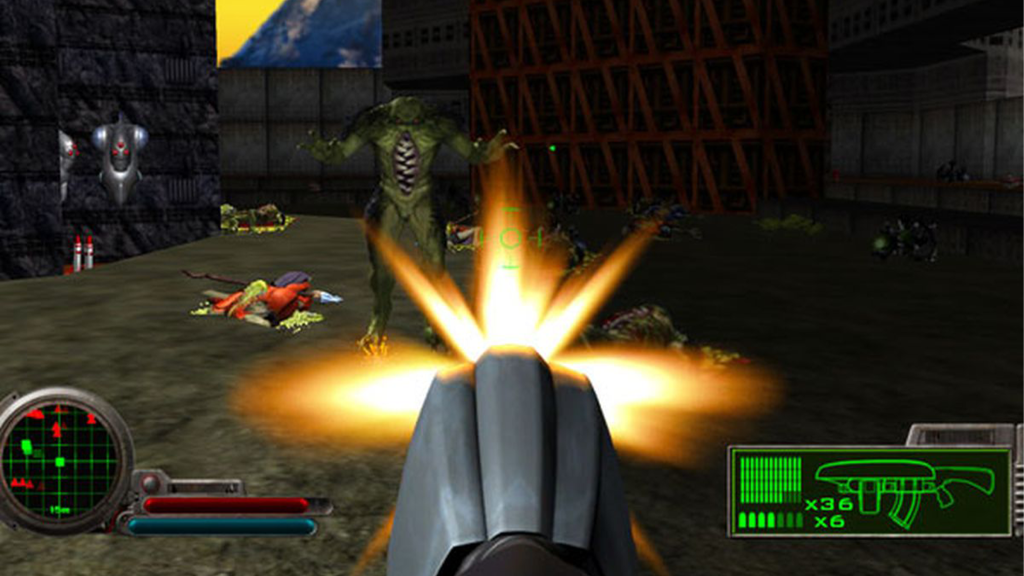
It can be hard to imagine looking back, but the ability to look around inside an FPS game wasn’t always an option. In fact, free look wasn’t a thing until Bungie coded it into its 1994 FPS Marathon. The game was available on the Apple Macintosh and holds the distinction of being the first game with free look. Imagine playing Black Ops today with your vision locked onto a flat plane — it’s unfathomable, right? Well, before Marathon, that was the only option available, but this game introduced something truly innovative that’s remained a major factor in every 3D gaming environment ever since.
7) Quake (1996)
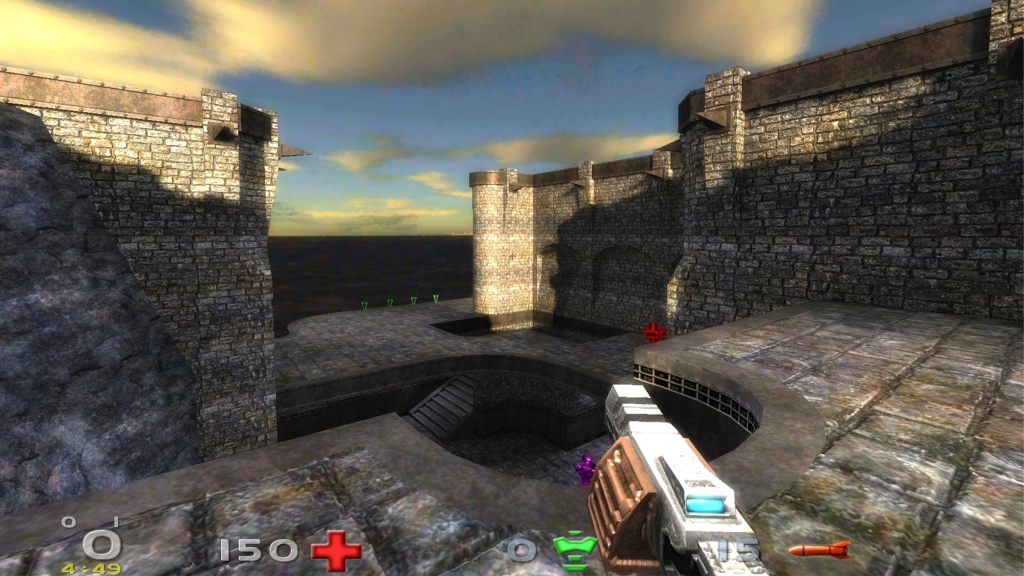
Doom was a monumental game, but many of its textures look flat compared to what followed. Quake took its lead from Doom and moved into another era through the development of its game engine. This enabled more textures in a fully realized 3D environment, taking the genre beyond its flat-rendered roots into a new era. On top of that, it added significantly more multiplayer options, leading to its placement as one of the first massive games used in competitions. This makes Quake an early precursor to modern Esports. Still, it’s the Quake Engine that had the biggest impact, as it spurred further development, enabling vast graphical improvements.
8) GoldenEye 007 (1997)
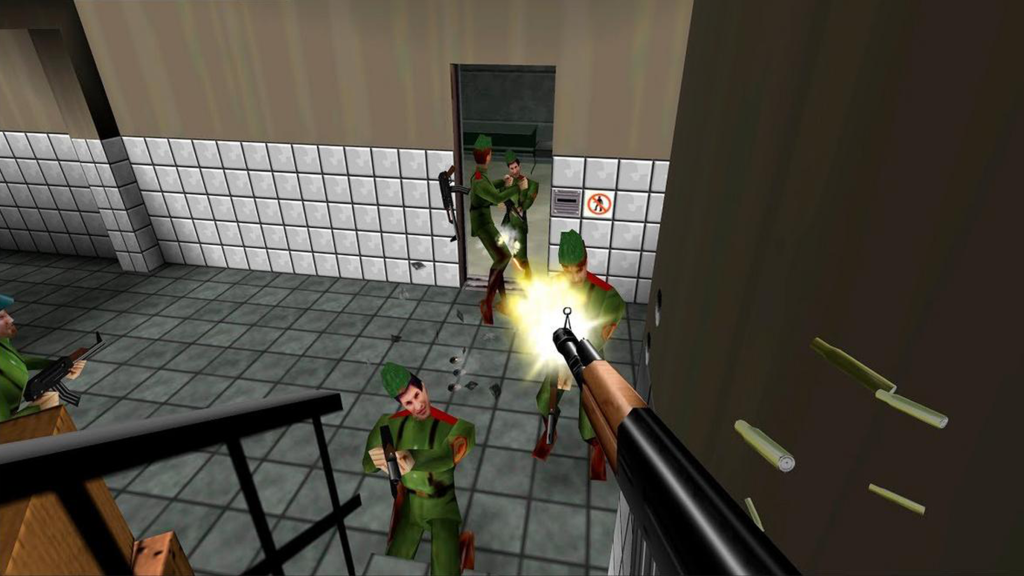
By the time GoldenEye 007 came out exclusively for the Nintendo 64, FPS games had been around for several years. There were console ports of Doom, Quake, and more, but GoldenEye 007 was different. It utilized split-screen local multiplayer in a way that hadn’t worked previously as well on consoles, indicating it was a format with staying power. Players sat around their consoles with friends, gunning one another down as they stared intently at their corners of the screen, and this helped transition FPS titles into more of a shared experience. These days, most multiplayer games are handled remotely. In the ‘90s, folks had to be in the same room (for the most part), and GoldenEye 007’s success in this area made it a standout of the genre, and it’s one of the best licensed games of all time.
9) Half-Life (1998)
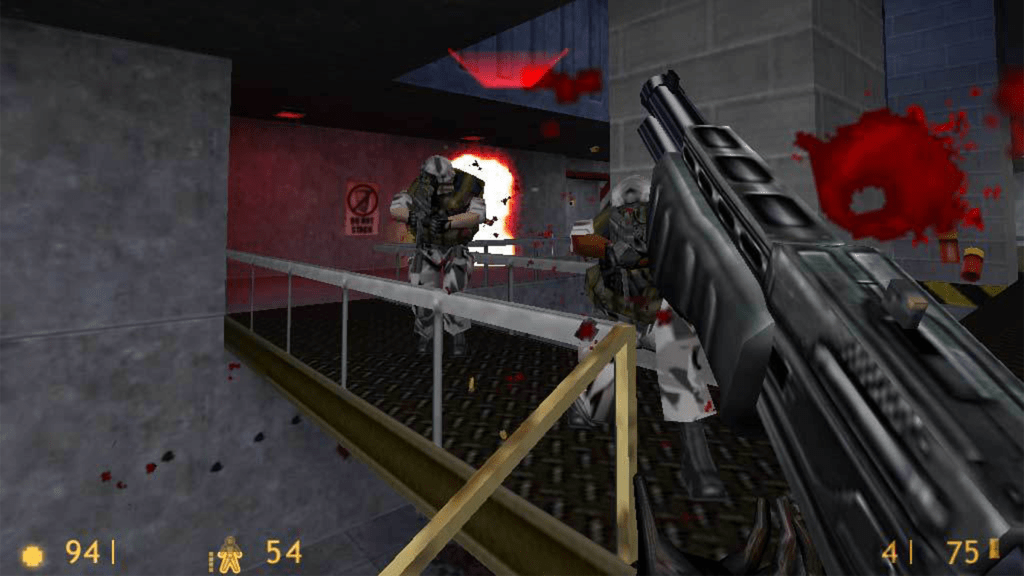
When Valve released Half-Life in 1998, it unleashed a game with a deep narrative and excellent mechanics. It wasn’t the first FPS to feature a rich narrative, but it was the one that stood out for its brilliant story, which throws the player into an engaging adventure the moment they start playing. When Valve set out to develop Half-Life, it did so to evolve the genre from its shoot-’em-up nature into something more developed, and that’s precisely what gamers got. Not only was Half-Life an innovative juggernaut for FPS games, but its intense storytelling also evolved the entire medium. What followed was a plethora of popular IPs that interwove excellent stories and gameplay.
10) Tom Clancy’s Rainbow Six (1998)

Tom Clancy’s Rainbow Six arrived the same year as Half-Life, and while it boasted an excellent story and great graphics, that’s not how it innovated the FPS genre. The game used a tactical command system that allowed the player to issue orders to AI-controlled teammates in their squad. They could direct them to a location, have them perform specific actions, and more. This was an impressive innovation that has remained in various forms across a wide variety of FPS games. Titles like Borderlands 4 allow the player to do the same kind of thing with side-characters, and that’s one of many examples that benefited from Rainbow Six’s innovative approach to combat.
11) Halo: Combat Evolved (2001)
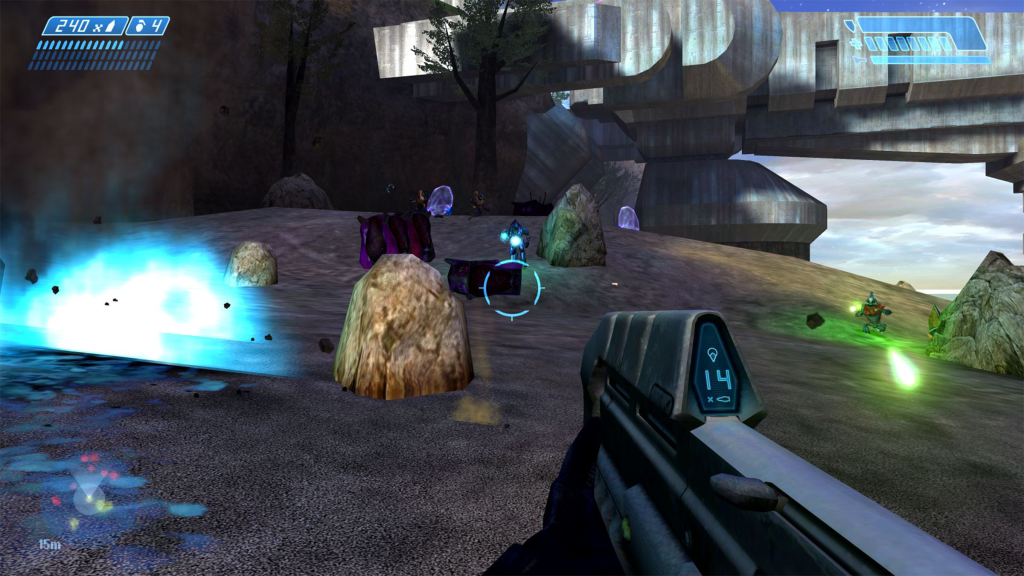
The concept of multiplayer FPS games had been around for a long time before Halo: Combat Evolved entered the conversation, but it was unlike any of its predecessors. In addition to having an incredible single-player campaign with a wide-reaching narrative, excellent characters, and innovative mobs, the game’s multiplayer took things to a new level. Halo was a pioneer of the FPS genre in the 21st century, significantly upping the game with numerous aesthetic and gameplay mechanics, and it also introduced regenerating shields and health. Previously, players would have to find health packs or med kits, but Halo changed that for many FPS games that followed. It standardized many of the genre’s mechanics, paving the way for more complex multiplayer games.
12) Battlefield 1942 (2002)
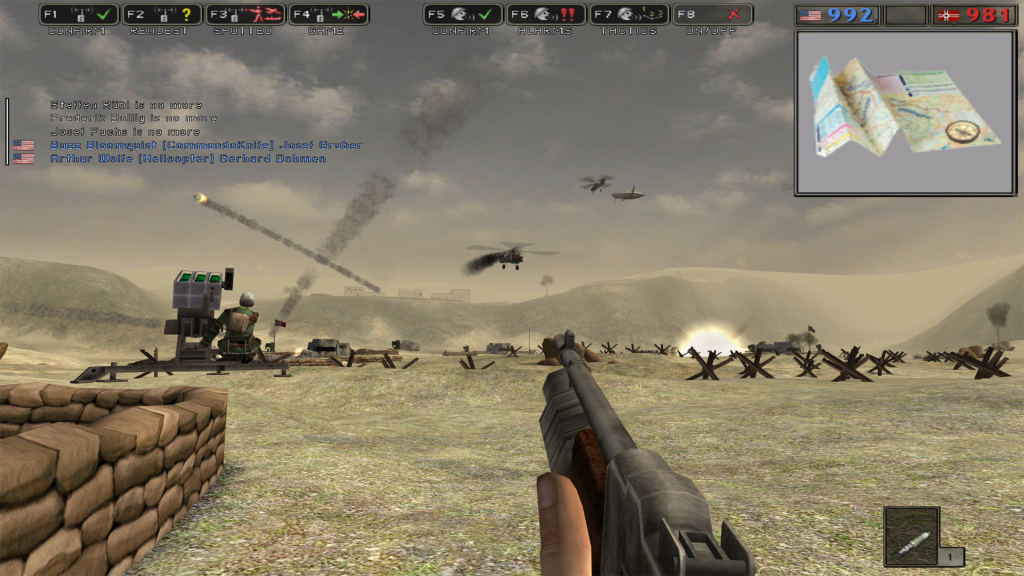
Modern shooters and battle arena games owe a lot to Battlefield 1942, which allowed players to choose from various classes. Still, it was the multiplayer mode that enabled proper multiplayer battles, elevating the genre significantly and helping establish a common trope in modern shooters. It allowed up to 64 concurrent players, a considerable innovation in the genre that paved the way for massive arena battles and battle royale games like Fortnite. The genre continued to develop after Battlefield 1942, but it, along with the games that came before, established the FPS genre as we know it today.
Which innovation in FPS games do you think was the most important? Leave a comment below and join the conversation now in the ComicBook Forum!
Most Viewed
-

Courtesy of Crunchyroll -

Image Courtesy of WIT Studio