Recent gameplay footage for Persona 4 Revival shows an important side of the JRPG remake, indicating what systems will be coming back and what new ones are changing what players might remember. The iconic status of Persona 4 comes partially from how turn-based battles are fought, with your powerful Personas combining with team strategy to take down Shadow monsters in the Midnight Channel. Many features from the original game are coming back, but some new ones borrow concepts from throughout the series to invent a fresh experience.
Videos by ComicBook.com
It has been revealed that elements of Persona 4 Golden will be within Persona 4 Revival, similar to how the expansive P3: The Answer content was included in Persona 3 Reloaded. Although not everything from this definitive edition of the original Persona 4 will be brought over for the remake, it’s important to note the gameplay changes that version of the game created. Similar to how more combat options were included in Persona 5 Royal compared to Persona 5‘s base version, having Golden‘s features in Revival will expand the base structure of what players can do.
Persona 4 Revival Adds Multiple Combat Systems Inspired By Other Persona Games
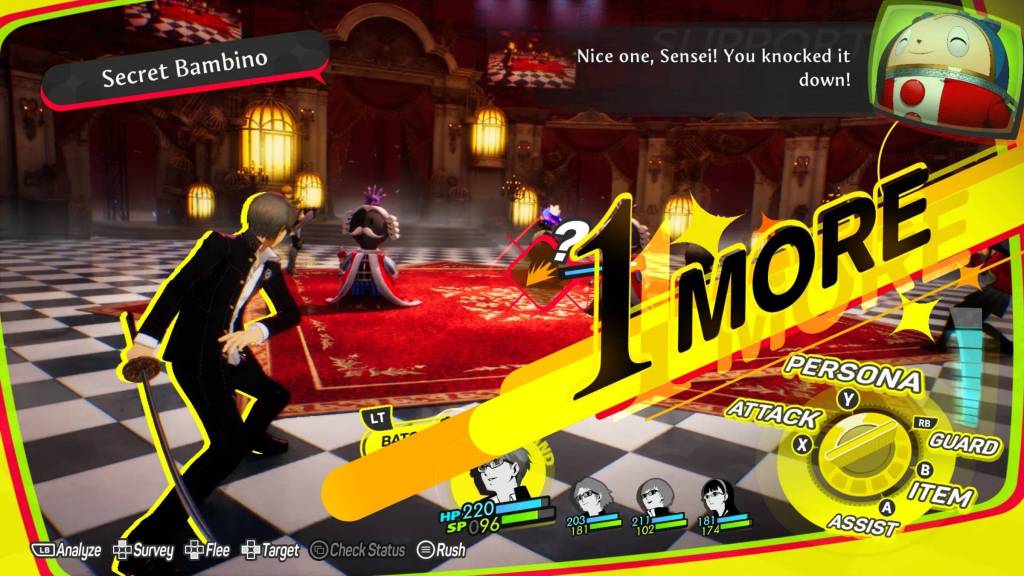
Many classic Persona combat systems were shown off in Persona 4 Revival‘s gameplay deep dive by developer Atlus, including the 1-More mechanic for exploiting a Shadow’s weakness. Knocking down an enemy by hitting it with an attack it’s weak to will grant you an extra turn, allowing you to finish it off quickly. However, should you knock down all Shadows on a battlefield, your team can initiate an All-Out Attack, attacking everything in sight for massive damage. These systems are returning features from Persona 4, yet they are far from the only ways to approach combat.
Three new features have been included in the battle system, including the following:
- Send Flying – Use on a Shadow with a status ailment to spread that condition to nearby enemies.
- Baton Pass – When given a “1-More,” pass your extra turn to an ally to use their unique skills to exploit enemy weaknesses further.
- Prime Time – Build up a unique meter to enter a state of “4-More,” where all your allies gain additional turns. During Prime Time, all skills cost 0, and the state ends with a powerful move called “Series Finale.”
Baton Pass is a system introduced in Persona 5, with the Prime Time “Series Finale” also mimicking the Showtime finishers seen in Persona 5 Royal. Prime Time itself builds naturally when you continuously attack enemies, making it a powerful tool to work towards against difficult foes. Bosses or overwhelming fights from Persona 4‘s toughest dungeons may become much easier through Prime Time, as well as the other Baton Pass and Send Flying mechanics.
Another feature shown in the gameplay deep dive was Guarding, or a way for players to block incoming attacks from Shadows before entering turn-based battles. In past Persona games, a Shadow getting the drop on you means it takes its turn first once a battle starts, which can be hard to avoid in dense dungeons. By being able to guard their incoming strike, you prevent them from gaining an upper hand, allowing your team to adjust to whatever they’re fighting.
Classic Gameplay Combines With Various New Party Systems To Make The Title More Accessible
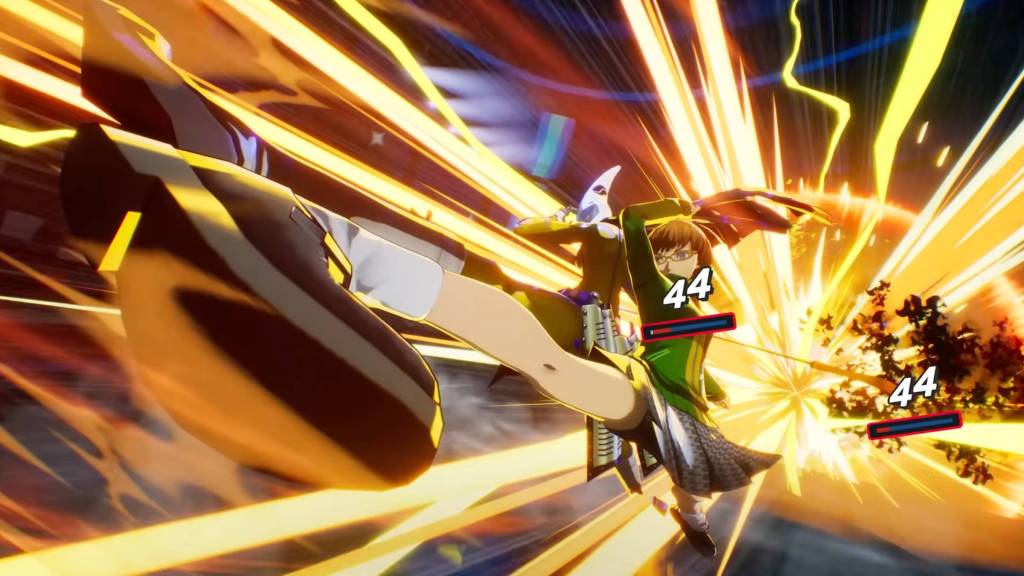
Each of the new combat features are deceptively complex, at least in comparison to the classic systems of Persona 4. Baton Pass adds another layer to 1-More, giving your party a chance to work together with more synergy. For example, if you’re fighting a Shadow on Chie’s turn and knock it down into a 1-More, you may realize Chie doesn’t have any moves equipped on her Persona to exploit a Fire weakness. Through Baton Pass, you can transfer your 1-More extra turn over to Yukiko, whose Persona is specialized in Fire elemental moves to score a critical hit.
Send Flying is fairly simple to understand, allowing you to spread status conditions to foes. Yet, using this feature during Prime Time, when all of your status condition moves cost 0 SP to cast, is a brilliant strategy when your party is facing multiple Shadows. Although you’ll always want to build toward the powerful Prime Time whenever you can, choosing when and where to unleash a character’s highly damaging Series Finale may require some testing. With some of the best Persona characters in the series at your disposal, each Series Finale might have its own merits.
These expanded combat options for the remake borrow heavily from Persona 3 Reloaded and Persona 5 Royal, but they hardly feel out of place. If anything, each new feature puts less of a focus on grinding the perfect Persona fusions from the original game, giving players more tools to tackle harder challenges. That alone makes the new combat system in Persona 4 Revival an interesting one, without taking away the back-and-forth mechanics traditional to the beloved JRPG franchise.
What new feature in Persona 4 Revival‘s combat do you like the most? Leave a comment below or join the conversation in the ComicBook Forum!
More Gaming
-

Image Courtesy of Kwalee -

Image Courtesy of Sony Interactive Entertainment