Hollow Knight: Silksong pits players against a litany of pissed-off and well-armed bugs. Samus Aran is constantly bombarded by all sorts of aliens and space pirates in the Metroid series. Bloodstained: Ritual of the Night, in addition to an army of undead freaks, has a giant, nasty dog head for an enemy, for some reason. Search action platformers are almost always filled with all kinds of threats, something that pairs nicely with the genre trait of building power. But not many of these forces are as relatable as the main enemy in Constance: burnout. It’s a running theme the game uses relatively well, and, when combined with its tight controls and superb art style, it becomes a noteworthy entry in one of the most competitive genres.
Videos by ComicBook.com
Its visual style is its most instantly enrapturing aspect, and this persists until the credits roll. The baby blue hues of the sky in the first area is just a sample of what’s to come. The whole game is overflowing with bright colors and simple shading, a keen look the adorable titular hero benefits the most from but one that isn’t lost on the many robots stomping around, either. Even the environments, while usually standard in theme, are wonderful because of their unique color palettes and well-realized backgrounds. Between the detailed animation of the protagonist and overall art style, everything in Constance is remarkably crisp and aesthetically pleasing to look at. It’s a game that absolutely backs up its killer key art and then some.
Rating: 4/5
| Pros | Cons |
|---|---|
| Responsive controls make combat and platforming quite rewarding | …But it doesn’t always nail the central metaphor or go as deeply as it should |
| Its sublime art direction is filled with color and absolutely stunning | |
| Solid pacing means it doesn’t overstay its welcome | |
| The meta story adds a decent layer to the whole experience… |
Constance Is Pretty and Pretty Responsive
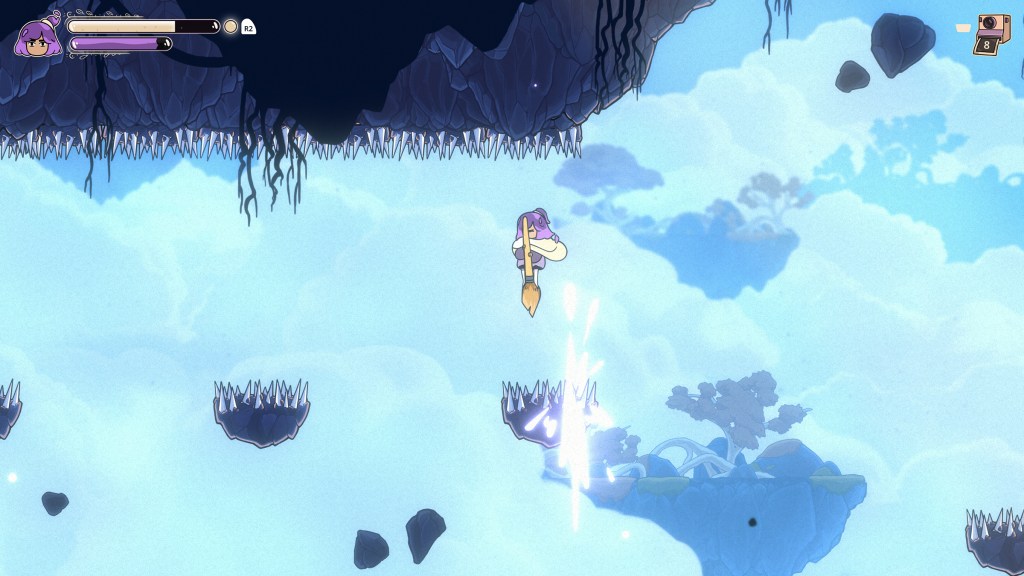
Constance isn’t just a pretty game, either. It controls just as fluidly and shows how the main character’s scintillating animation isn’t just for looks. Combat is rarely deep, but the key here lies in its responsiveness. Constance moves quickly, and that gives the game a pleasing sense of immediacy. While it would have been better to have a more flexible dodge that didn’t move a fixed distance, slashing rogue robots and dashing away feels great and allows its relatively basic fights to be more rewarding than they might be in another game with less responsive controls.
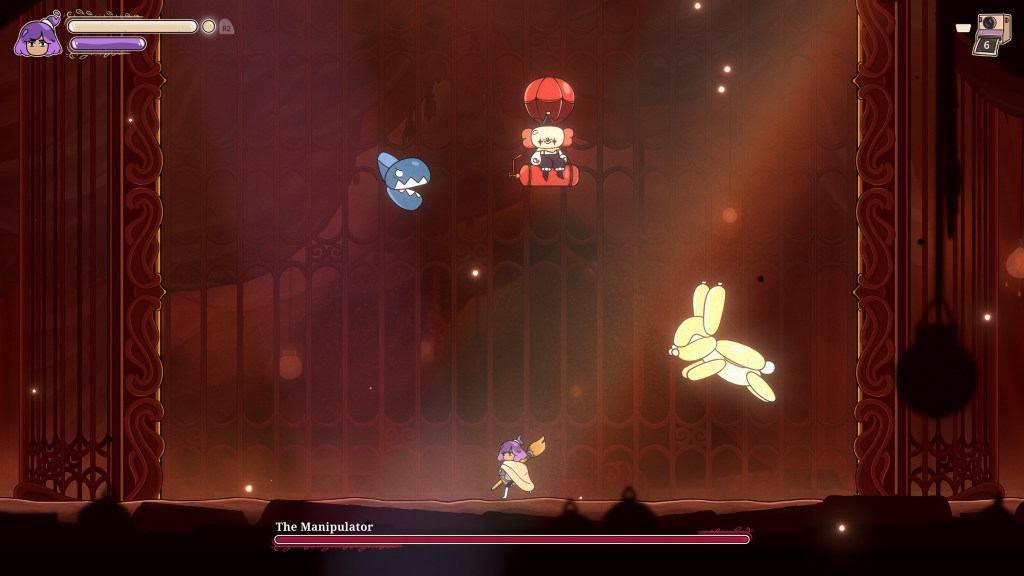
Crunchy sound effects and thoughtful enemy design play a role in this success, too, especially the latter, as each biome-specific foe is unique and requires a different approach that usually discourages mindless mashing. Boss fights are designed similarly well and push the player to learn their simple patterns and move quickly to come out on top, providing just enough of a challenge to push back but not enough to become frustrating roadblocks. There are no aerial juggles, parries, or other similar skill-based moves, and while extra depth would have been welcome, its fundamental strengths are designed well enough to get by without those other bells and whistles.
Fights often seamlessly incorporate Constance’s array of acrobatic options — many moves have a nifty dual purpose — and speak to its well-tuned platforming. Constance’s levels gradually layer in new systems and abilities and start mixing and matching these elements to create satisfying gauntlets. Chaining together multiple pogo bounces, wall slides, grapples, dashes, and more is almost always an engaging test in skill, usually besting the respectable highs felt during its comparatively straightforward combat. These abilities are truly put to the test in the weirdly hidden Milkshake Challenges that often have players go through the toughest obstacle courses backwards without getting hit, leading to some devious layouts that demonstrate the pliability of its level design and mechanics.
Constance Doesn’t Drag Its Feet
It’s only a little disappointing that there aren’t more sections like this. For a game with such rock-solid fundamentals and multiple examples of tricky, finger-twisting level design, these trials are relatively rare. But instead of being a drawback, it illustrates one of Constance’s greatest assets: its ability to focus on quality over quantity.
Constance is a tautly designed game that doesn’t indulge in excess. Stages are decently sized but not too big, and there aren’t too many of them. It has upgrades and collectibles to seek out, yet they don’t pepper the map at a frequency reminiscent of a Ubisoft game. Instead, developer Blue Backpack honed in on what matters by having a modest scope, tuning what was there, and not attempting to outclass genre titans with its first platformer.
Constance‘s Story Is Heartfelt, Yet a Little Inconsistent
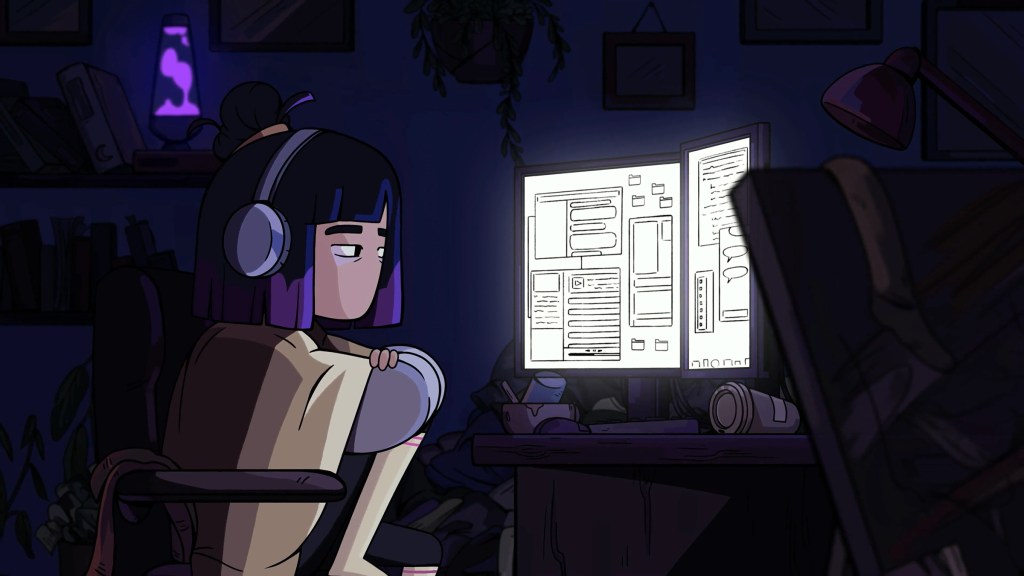
Constance attempts to be a little more than just a simple platformer with its dual-layered story. The Constance in the game wielding a paintbrush as a weapon is merely a allegorical reflection of the real-world Constance, who is clearly going through a quiet mental health crisis. Her struggles with isolation and the demands of modern-day life pile on and take center stage in playable vignettes that play after the main boss fights, giving insight into what is causing real Constance to slowly crumble.
It’s a novel premise that uses metaphor to get at something deeper and relatable. And the story works best when these ties are strong. In-game Constance’s stamina is measured by her paint reserves that she uses for various abilities, which, emulating the effects of an artist who works too hard, literally drains her health if she overextends. A few of the side missions also often get at a deeper truth through such simple interactions, like the quest that has players tracking down little impish Ewok-like creatures who demonstrate the benefits of keeping up with family. An admittedly confusing side mission regarding a phone gets at a similar lesson in a different way. One of the bosses is even a wonderfully realized metaphor for someone with an overactive brain. Elegantly weaving together both threads like this leads to a lovely symbiosis where each half is strengthening the other.
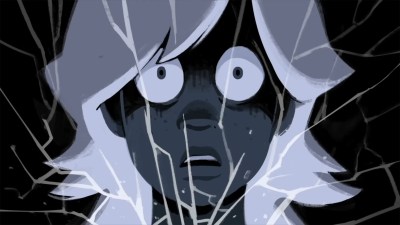
However, these more thoughtful ties highlight all the times when the game is more clumsy or isn’t nearly as clear with its message. It’s unclear why there’s a boss with a name that’s a pun based on the famous Ancient Roman scholar and philosopher Hypatia or why there’s a fight against a huge blob named King Koba, a character who’s likely not a stand-in for former Soviet Union leader Joseph Stalin, who also went by Koba. Sometimes there are links that seem to have been made after the fact, like the character who, with almost no buildup, mentions the benefits of taking breaks. In-game Constance’s lack of a backstory is also a missed opportunity the game could have used to layer in more parallels. Even though there are moments when it all comes together and creates something poignant, the analogies are inconsistent and mean Constance isn’t able to hit its full potential.
A few missed connections don’t rob Constance of its beauty, though. Its outwardly dazzling visual style doesn’t obscure how stunning it is on the inside, too, with its slick controls and admirable, polish-driven modesty. So while it doesn’t paint the most innovative and groundbreaking picture — an extremely tough task in a genre crowded with classics — it still paints a beautiful one, nonetheless.
A PS5 copy of Constance was provided by the publisher for the purpose of this review.
What do you think? Leave a comment below and join the conversation now in the ComicBook Forum!
More Gaming
-
Courtesy of FromSoftware -
Image Courtesy of Top Hat Studios