
It’s been a long, strange while since I seriously sat down with Diablo 4. I finished the full campaign back at launch, saw the story through, poked at a few seasons here and there, and then quietly drifted off like a ghost that forgot why it was haunting the place. The systems, the tone, the general vibe of Sanctuary all stuck with me, but the day-to-day rhythm of actually playing it faded into something fuzzier.
Videos by ComicBook.com
Because of that perspective, this review isn’t coming from someone who’s been grinding Diablo 4 nonstop since release. This is a return trip, and Lord of Hatred didn’t exactly roll out a welcome mat for me. It just kind of grabs you by the collar and drags you back into the mess, assuming you’ll figure it out as you go. In some ways, that confidence is refreshing, because it doesn’t waste time reintroducing itself or apologizing for what it is. In other ways, it can feel like you’ve walked into the middle of a conversation that never stopped, and everyone expects you to keep up.
Still, once it clicked, it clicked hard. There’s a weight to everything now, like Diablo 4 has finally decided what it wants to say and isn’t interested in softening the delivery. By the time I settled in, which didn’t take more than a hour or so, it became clear that Lord of Hatred is just Diablo 4 finishing a sentence it started a long time ago.
Rating: 3.75/5
| Pros | Cons |
|---|---|
| Strong narrative payoff that feels like a true continuation and conclusion of Diablo 4’s story | One major narrative moment feels forced and breaks immersion |
| Mephisto dominates the expansion in the best way, carrying scenes with constant unsettling presence | Heavily reliant on prior Diablo 4 knowledge, making it weak for new players |
| Warlock is a standout class, mixing temporary summon chaos with strong traditional spellcasting builds | Core gameplay is still just Diablo 4, with no major reinvention |
| Skill tree rework and new progression systems add meaningful customization without overcomplicating returns | Systemic changes are relatively conservative, which may leave long-term or returning veterans wanting more innovation |
| Combat remains tight and satisfying, making it easy to slip back into Diablo 4’s core loop | Repetitive objective structure can make certain sections feel overly grind-like |
A Narrative That Mostly Knows What It’s Doing (Until It Doesn’t)
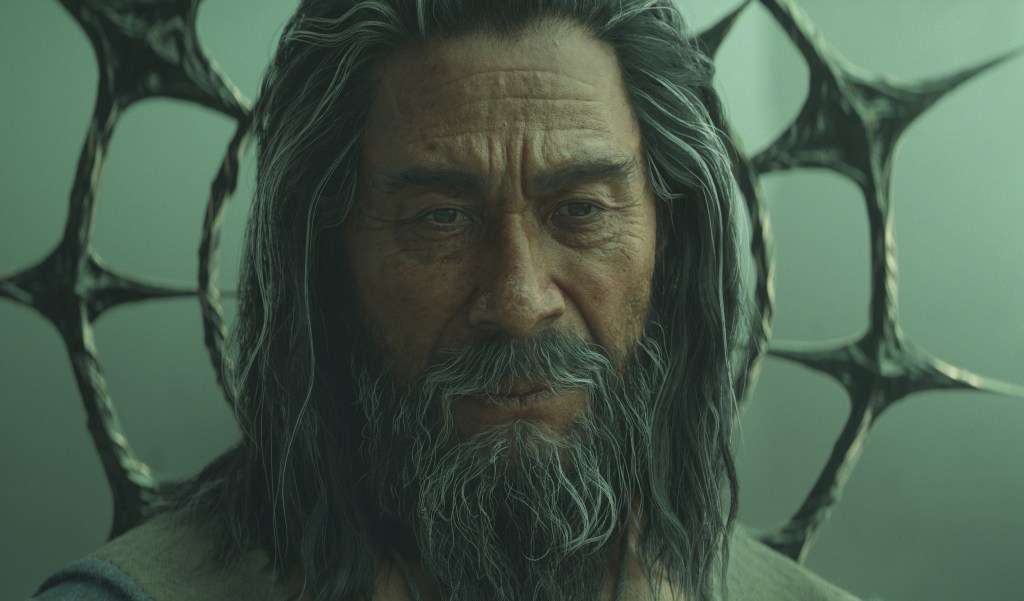
The story in Lord of Hatred comes out swinging with a kind of confidence that Diablo 4 didn’t always have at launch. It feels like a direct continuation, not just in plot, but in tone, pacing, and overall intent, like the writers finally got to pick up the threads they actually cared about. There’s a strong sense of direction here, with the narrative steadily building toward something that feels like a real conclusion rather than just another “to be continued” slapped on top. It takes its time in a way that feels deliberate, letting scenes breathe just enough to settle in before moving on. Even quieter moments carry a bit of tension, like something is always lurking just out of frame waiting for its turn. It’s not subtle in a traditional sense, but it is controlled, and that control makes a difference.
But there’s a sour moment I hit, that pulled me right out of the narrative. You’ll know it when you hit it, because it lands with all the grace of a brick through a stained glass window. Spoilers aside, a certain character makes a decision that feels less like a natural outcome and more like the narrative grabbing the wheel and yanking it hard to the left. It’s not just a little off, it’s the kind of thing where you stop and go, “Wait, what? Why?” and not in a good way. You can practically see the writers behind the curtain, frantically pushing the plot forward before it stalls out. It didn’t completely derail the story for me, but it absolutely left a dent in it that’s hard to ignore. And because everything else is handled so carefully, that dent stood out even more by the end.
By the time the expansion wraps up, it feels like Diablo 4 has finally delivered on the promise it made at launch. There’s a sense of closure here, or at least something close enough to it that it satisfies the itch. That kind of payoff goes a long way, especially in a game like this where narrative can sometimes feel secondary to everything else. Here, it’s front and center, and for the most part, it holds its ground. Even with its one very noticeable misstep, it’s a strong showing overall.
Mephisto Is Not Just in the Room, He Is the Room

Mephisto is easily the highlight of the Lord of Hatred narrative, which naturally fits because of name of the expansion. Every time he’s involved, which is quite often, the tone shifts in this subtle but unmistakable way, like the air gets heavier and the world tilts just a little bit off balance. He’s not loud or overly dramatic, which somehow makes him even more effective, because it feels like he doesn’t need to prove anything. There’s a quiet confidence to how he operates, like he already knows how everything is going to play out and is just watching it happen.
If you’re a fan of any of Mephisto’s previous showings in prior games, like I am, then you’re in for a treat here. That “Lord of Hatred” title really shows its fangs in this expansion, as the incredible dark things he does in the narrative will have you on the edge of your seat. What makes him stand out is how controlled he is as a character, never tipping too far into spectacle or excess. He’s calculated in a way that makes every action feel intentional, even when it’s not immediately clear what he’s aiming for. That restraint makes him unpredictable, because you’re never quite sure how far ahead he’s thinking or what he’s setting up behind the scenes.
Lorath, on the other hand, acts as the grounding force that keeps everything from drifting too far into Mephisto’s orbit. Where Mephisto feels distant and almost abstract, Lorath is tangible, someone you can actually connect with on a human level. He brings a sense of familiarity that helps anchor the story, especially when things start to get a little too strange. That contrast between the two characters creates a dynamic that carries the narrative through its quieter moments. It’s not always about direct interaction, but more about how their presence shapes the world around them. Together, they form the backbone of the expansion’s character work. And honestly, without them, the whole thing probably collapses in on itself a bit.
The rest of the cast exists, and they serve their purpose, but it’s very clear where the focus is. Mephisto and Lorath are doing the heavy lifting, and the expansion knows it, so it leans into that hard. That focus keeps things tight, even when the story starts to wander a bit. It gives the narrative a center of gravity, something to keep pulling it back into place when it drifts. By the end, Mephisto doesn’t just feel like a highlight, he feels like the point. And in an expansion literally named after him, that’s exactly how it should be.
Gameplay That Says “Yeah, I’m Still Diablo” and Means It
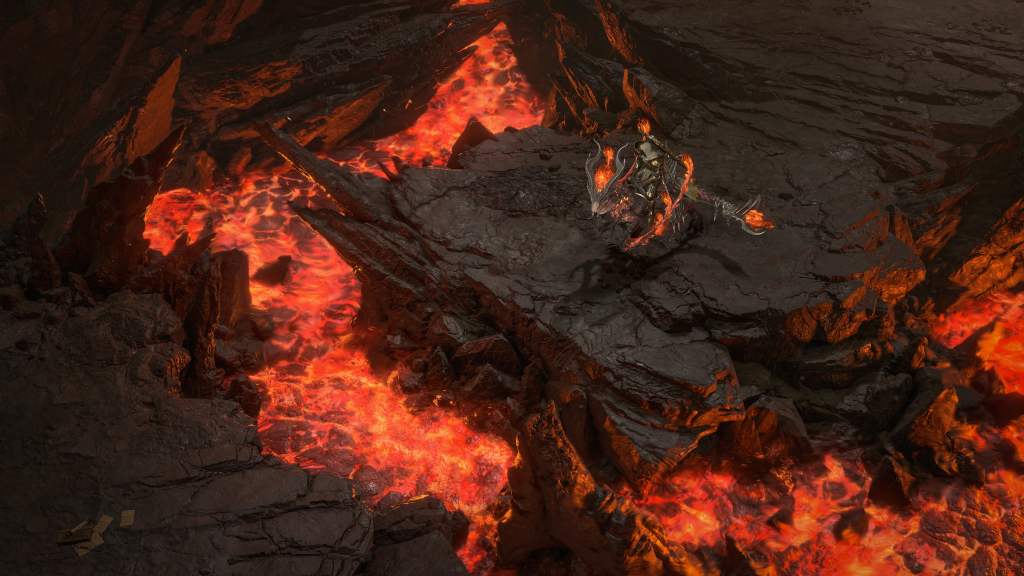
If you were expecting Lord of Hatred to suddenly reinvent Diablo 4 into something wildly different, that’s not what this is. This is Diablo 4 looking you dead in the eyes and saying, “You know what I am,” and then proceeding to double down on exactly that. The core gameplay loop is intact, untouched in its foundation, and immediately recognizable the moment you step back into it.
That familiarity is both a strength and a limitation, depending on what you’re looking for. If you already liked Diablo 4, this is more of it, just a bit sharper and more confident in its execution. If you didn’t, there’s nothing here that’s going to suddenly change your mind or flip your perspective. The expansion doesn’t try to win over skeptics, it just caters to the people who were already on board. It’s not trying to be everything for everyone, and whether that’s a good thing depends entirely on where you’re coming from. For me, coming back after a long break, it worked. It felt like slipping back into something I already understood, just with a bit more depth layered on top.
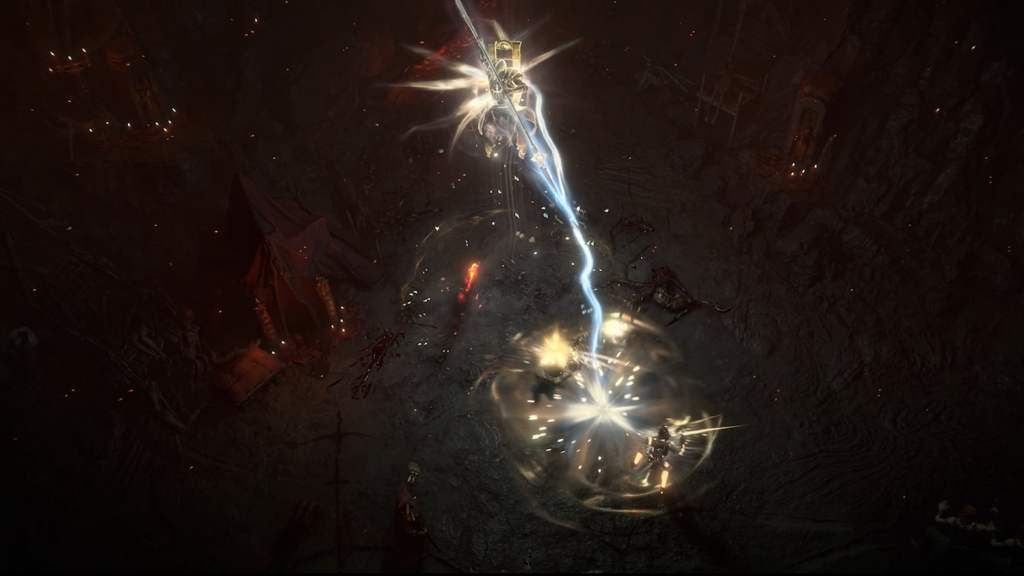
The system changes, especially around the skill trees for all classes and the brand new progression systems (Talismen) help keep things from feeling stale without overcomplicating the experience. There’s more room to experiment now, more ways to shape your character without feeling locked into a single path. That flexibility adds a layer of engagement that wasn’t as pronounced before, giving you more control over how you approach combat.
Encounters themselves feel slightly more tuned, reinforcing the darker tone of the expansion without dramatically altering the core gameplay. I did feel that too many of them leaned into the whole “Survive this ambush” objective, but that wasn’t a huge deal, just something notable.
By the time you’ve spent a few hours with it, the rhythm comes back fully, and it’s hard not to get pulled in again. There’s a flow to Diablo 4 that’s easy to forget until you’re back in it, and Lord of Hatred taps into that effectively. It doesn’t need to surprise you, it just needs to work, and for the most part, it does. It’s confident in what it is, and that confidence carries the experience forward. You might not be shocked by anything it does, but you probably won’t be bored either.
The Warlock Is Pure Controlled Chaos and It Rules
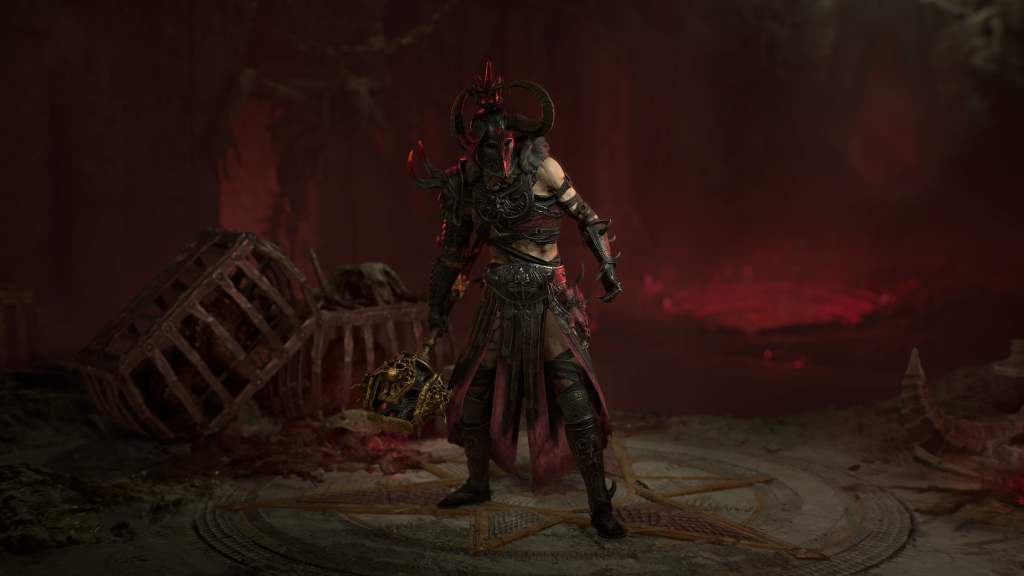
The Warlock is one of the two new classes introduced in Lord of Hatred (alongside the Paladin), and it fits into Diablo 4’s roster so naturally that it almost feels like it should have been there from the start, making its absence until now feel slightly surreal in hindsight. At a glance, it leans heavily into pet-based gameplay, but not in the traditional “build an army and watch them do everything” kind of way. Instead, a lot of its identity revolves around summoning temporary entities that show up, do something useful, and then immediately vanish like they were never there. It creates this rhythm where you’re constantly orchestrating bursts of activity rather than maintaining a constant presence.
Those temporary summons can be pushed in all kinds of directions thanks to the Warlock’s skill nodes and gear Aspects, which give you a surprising amount of control over how they behave. You can tweak how they interact with enemies, how long they stick around, or what kind of impact they leave behind when they disappear. At the same time, the Warlock isn’t locked into that identity if you don’t want it to be. It can just as easily lean into a more traditional spellcaster role, focusing less on summons and more on raw destructive power. That flexibility makes it approachable while still offering depth for players who want to dig into it. It’s a class that meets you where you are, but also gives you room to grow into something more complex.
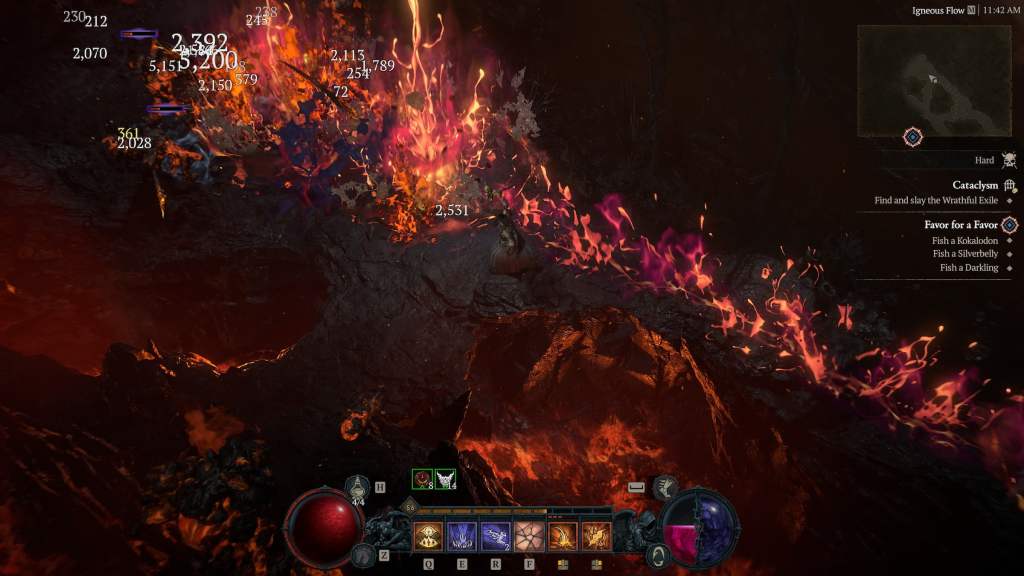
I personally leaned hard into that spellcaster side, and it was an absolute blast in the most literal sense. There’s something deeply satisfying about raining down fire and brimstone in a way that feels both excessive and completely justified. Dropping massive flaming quakes into groups of enemies and watching them crumble never really got old, especially when everything is tuned to feel impactful. The Warlock lets you lean into that power fantasy without completely losing control of it. It’s chaos, but it’s your chaos.
By the end of my time with Lord of Hatred, the Warlock was my favorite part of the expansion in terms of gameplay. It was the thing that kept me playing longer than I expected. It’s fun in a way that’s hard to fully explain until you get your hands on it, something about the way it flows just feels right. There’s a slight weirdness to it, like it’s operating on a slightly different wavelength than the rest of the classes, but that’s exactly what makes it stand out. If nothing else, the Warlock alone makes a strong case for jumping into this expansion.
A Strong Expansion That Knows Exactly Who It’s Talking To
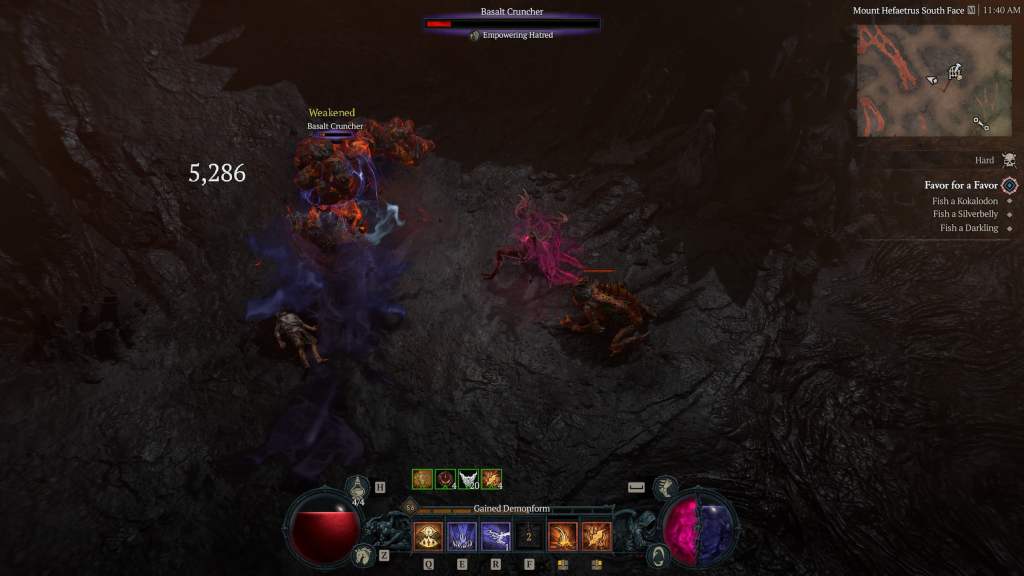
Lord of Hatred is a great expansion, but it’s not trying to be a fresh start for new players, and it doesn’t pretend otherwise. The story leans heavily on everything that came before it, expecting you to not only understand the events of Diablo 4 but also, the Vessel of Hatred. You can piece things together through in-game recaps, sure, but it’s not the same as actually experiencing those moments yourself. That gap creates a bit of distance, especially in a narrative that relies so much on its emotional payoff. It’s not inaccessible, but it’s definitely less impactful if you’re coming in cold.
At the same time, Lord of Hatred reinforces what Diablo 4 is at its core, choosing to expand rather than reinvent. It builds on the existing framework without disrupting the overall experience. That consistency helps maintain the game’s identity, even as it introduces new elements like the Warlock and updated systems. It’s a careful balance between growth and stability, and for the most part, it works. The expansion feels cohesive, like every piece belongs where it is. It doesn’t try to be something it’s not, and that honesty carries it a long way.
Ultimately, Lord of Hatred leaves Diablo 4 in a stronger place than it found it. It doesn’t fix every issue, and it doesn’t try to, but it builds on what works and pushes it just far enough to matter. There’s a confidence to it now, a sense that the game understands itself better than it did before. That clarity shows up in every part of the experience, from the narrative to the gameplay to the presentation. It’s not perfect, but it’s focused, and that focus makes it memorable. For fans, it’s an easy recommendation. For everyone else, it’s a very clear statement of what Diablo 4 is and what it intends to be.
ComicBook was provided a review account for the purposes of this review.
What do you think? Leave a comment below and join the conversation now in the ComicBook Forum!
