
Memorial Day is a time when America remembers its fallen heroes in the Armed Forces. Not surprisingly, the annual holiday also causes a surge in viewership of war-drama movies, which are often far more digestible and cathartic experiences of real-life loss and tragedy. That said, there are a few war films that get remembered and revered for how they make the horror and toll of war feel all too real, and the greatest war movie of all time burned things into our collective consciousness that will never be forgotten.
Videos by ComicBook.com
In 1998, Steven Spielberg released Saving Private Ryan, changing war movies and cinema forever. It swept the Golden Globes and Oscars in 1999, and earned nearly $500 million at the box office. But it was the cinematic and larger cultural impact that needs to be appreciated now, nearly 30 years later, when the world feels like it could be headed for its third World War.

Saving Private Ryan Made War (Traumatically) Realer Than Any Movie Before It

The opening sequence of Saving Private Ryan is still considered one of the greatest action sequences in war films, both from a technical standpoint and as a cinematic experience. Set on June 6, 1944, “aka D-Day,” the film plunges the viewer right into the Allied Invasion of Normandy, and the calamitous fate of the soldiers that fought in it. Stormy conditions and winds pushed Allied boats off their targeted course and directly into enemy fire; the film follows soldiers who faced the worst of the worst at Omaha Beach, where unthinkable numbers died before the beachhead and shore were claimed by the Allies. The protagonist, Captain John H. Miller (Tom Hanks), leads his squad to a narrow victory (read: survival) in the battle, and immediately the viewer is intimate and attached to Miller, having literally gone through the battle at his back. The sequence featured scenes of soldiers being maimed and killed in all the ways the fierce combat weapons of World War II could do, imagery that audiences had never seen put to screen so viscerally, brutally, and unflinchingly gory in its realism and detail.
To create the Omaha Beach sequence, Spielberg and his team filmed in Ireland’s Ballinesker Beach, using a team of about 1,5000 people that included 400 crew members, 1,000 actual soldiers from the US Army reserve and Irish Army, as well as regular actors, all serving as extras. Several dozen real-life amputees and paraplegics were fitted with makeup and prosthetics to portray soldiers who were maimed and/or dying on the battlefield, and over 1,000 highly detailed and costumed mannequins to act as corpses. The props and costuming were so detailed that the production (and designer Joanna Johnston) worked with the actual company that made US Army boots during WWII and depleted the very last of the usable dye from that era to make their costumes authentic. Shooting that one sequence took about a month and cost the budget of an entire indie movie ($12 million).
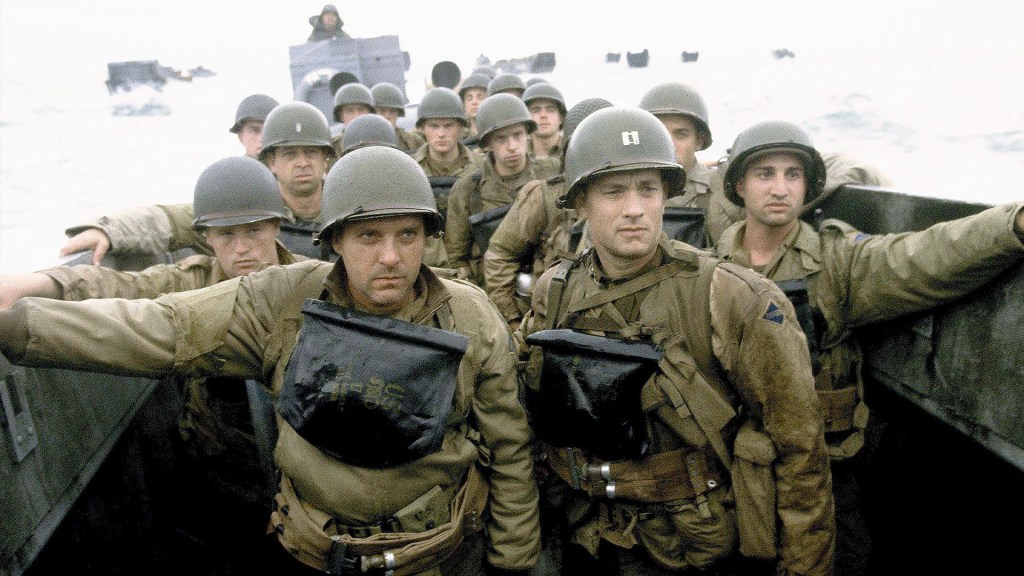
It was a massive undertaking and massive risk, but it also resulted in a massive payoff. As stated, audiences were locked in for the rest of the film, but the effect was greater than that: In just one opening sequence, Spielberg redefined war movies. Saving Private Ryan ushered in a new era of guerrilla-style shooting for war movies, with the camera embedded in the midst of the soldiers and going through the ground-shaking experience of combat along with them. It’s now practically the standard for combat sequences in war films, especially after Spielberg and Hanks cemented the approach in their 2001 HBO WWII series Band of Brothers, which is similarly hailed by many as the greatest war TV show ever.
Saving Private Ryan Never Forgot the Drama Beneath the War
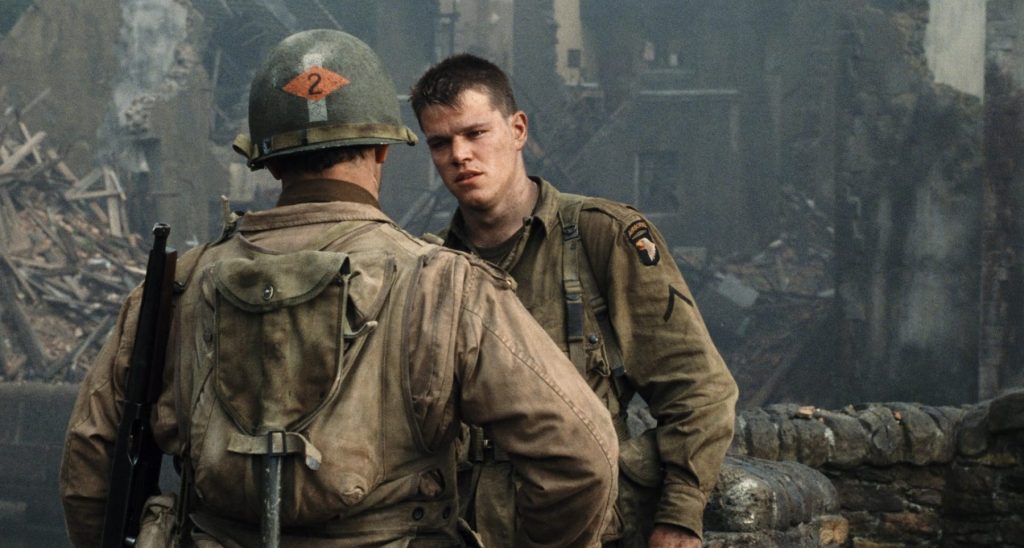
Of course, Saving Private Ryan isn’t hailed as the greatest just because of its powerful and haunting recreation of D-Day: The film’s dramatic arc is just as powerful and gut-wrenching as the bloody beginning. Captain Miller is given the impossible-but-noble mission of finding one last surviving brother (Matt Damon) from the Ryan Family, and is forced to drag a reluctant squad of soldiers into the fray with him. The film examines the strain of war on the souls of the soldiers fighting it, and peels back the “heroic soldier” archetype in films to show how much fear, trauma, loss, and at times rage and insanity, the men (often young men) of WWII had to face, and why fighting on regardless makes them heroic.
The same thing goes for the concept of sacrifice: Over the course of the movie, the entire idea of Captain Miller and his men laying down their lives to save Mama Ryan’s last surviving boy becomes a means of spiritual redemption in the hellscape of war. It’s a powerful theme from writer Robert Rodat: it aggrandizes the various characters in Miller’s company (played by now-famous names like Vin Diesel, Ed Burns, the late Tom Sizemore, Jeremy Davies, Adam Goldberg, Giovanni Ribisi, and Barry Pepper), while also resonating as a universal theme that looked beyond traditional ideas of “victory” or “winning” a war, and made the sacrifice of life, for a noble cause, the core “heroism” of those whose serve. And no ending will ever drive it home better than the cut from Matt Damon’s young Private James F. Ryan, to the shot of Ryan now old, visiting the grave of the man who helped him make it home, to show he “earned” the sacrifices of his brothers in arms, by just living.
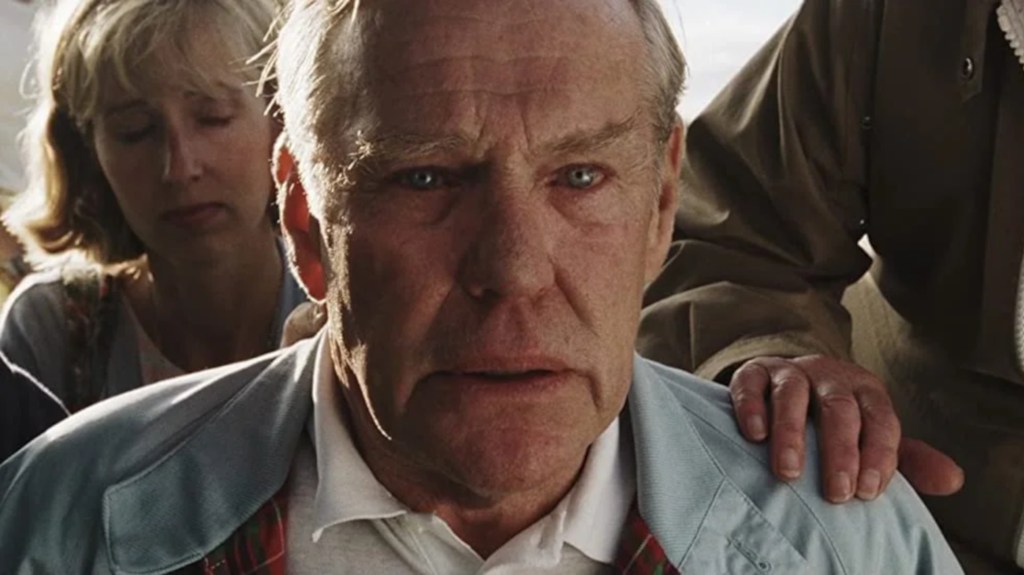
Saving Private Ryan made war “real” for those who needed the reality check, made the minds and spirits of the soldiers as precious (and imperiled) as their bodies, and ended it all with heartbreak that also inspires survivors to do more with their lives than live in the shadow of war for the rest of it. Other war films have come along and done some of these things well, maybe even better; none have ever managed to do them all, let alone come close to touching Spielberg in his prime.
Between the releases of Saving Private Ryan and Terrence Malick’s The Thin Red Line, both in 1998, Hollywood was convinced to once again invest in war dramas (after upstart indie films like Oliver Stone’s Platoon or political/espionage thrillers had become the rage). Top-tier actors once again flocked to the genre, hoping for the awards prestige both films had generated. The floodgates have been open ever since, with Oscar-calibre filmmakers continuing to examine the brutality and visceral reality of war (Fury, Warfare) while others have probed the psychological and spiritual toll of combat, dramatically (The Hurt Locker, American Sniper). But in the midst of all that, Saving Private Ryan has never faded from relevance, including topping streaming charts during Memorial Day 2026.
In fact, there’s even a highly-anticipated (and awards hopeful) new film about to hit theatres, that some are already looking at as a spiritual prequel ot Saving Private Ryan. So don’t expect the classic film to fall out of discourse anytime soon. You can stream it on Paramount+. And discuss Spielberg films with us on the ComicBook Forum!
