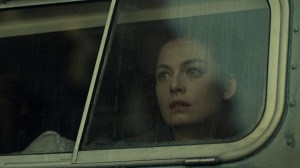
The war movie remains one of the most enduring genres of cinematic storytelling, providing a visceral lens through which audiences confront the complexities of human conflict and national identity. These productions are typically concerned with the psychological erosion of the individual, the logistical chaos of the battlefield, and the moral ambiguity inherent in state-sanctioned violence. Throughout Hollywood history, the genre has produced a series of defining works that managed to combine critical prestige with massive commercial success. Films such as Apocalypse Now, Platoon, and Saving Private Ryan demonstrated that a well-crafted narrative about the horrors of combat could resonate on a global scale, shattering box office expectations while securing a permanent place in the cultural zeitgeist.
Videos by ComicBook.com
However, critical excellence and thematic depth provide no guarantee of commercial viability in a crowded theatrical market. Great war movies frequently fail to connect with contemporary audiences upon their initial release, often due to poor timing, a lack of traditional heroics, or a narrative tone that proves too somber for mass consumption. That means even when a production earns glowing reviews or eventually attains the status of a cult classic, it can still bomb at the box office and fail to turn a profit.
7) Devotion

Directed by J.D. Dillard, Devotion arrived in 2022 as a visually stunning tribute to the first Black naval aviator in the United States Navy. The narrative focuses on the friendship between Jesse Brown (Jonathan Majors) and Tom Hudner (Glen Powell) during the early years of the Korean War, emphasizing the racial tensions and technical dangers of mid-century aerial combat. Critics praised the production for its reliance on practical effects and actual vintage aircraft, which provided a level of authenticity that surpassed the digital trends of the era. This commitment to realism, however, required a substantial budget of approximately $90 million. Despite the positive reception and the rising star power of its lead actors, the film struggled to find an audience during a competitive Thanksgiving release window. It eventually grossed only $21 million globally, representing one of the most severe financial failures for a war film in recent memory.

6) Casualties of War

Brian De Palma used Casualties of War to explore a horrifying true story from the Vietnam War, focusing on the abduction and murder of a local woman by a squad of American soldiers. The story is presented through the perspective of Max Eriksson (Michael J. Fox), a private who attempts to report the crime committed by his commanding officer, Sergeant Meserve (Sean Penn). This ideological clash between a sense of duty and a sense of morality provides the film with its intense psychological weight, distinguishing it from more action-oriented Vietnam War features of the 1980s. While the performances and De Palma’s technical direction were widely lauded, Casualties of War’s relentlessly bleak subject matter proved too alienating for general audiences. With a production budget of $22.5 million, the movie earned only $18.6 million at the box office.
5) Jarhead

In Jarhead, director Sam Mendes subverted the traditional expectations of the war genre by focusing on the crushing boredom and psychological frustration of modern combat. Following Anthony Swofford (Jake Gyllenhaal) through his training and deployment during the Persian Gulf War, the film depicts a conflict where technology and air power often leave the infantry with nothing to do but wait. Although the movie received respectable reviews and featured a strong performance from Jamie Foxx, its lack of traditional combat sequences made it a difficult sell for mass audiences. The production cost approximately $70 million, but it only managed to gross $97 million worldwide. Once accounting for marketing expenditures and the percentage of revenue taken by exhibitors, Jarhead failed to turn a profit.
4) Flags of Our Fathers

Clint Eastwood directed Flags of Our Fathers as a complex examination of the manufacturing of heroism and the political exploitation of the iconic flag-raising at Iwo Jima. The narrative alternates between the visceral combat on the island and the subsequent promotional tour taken by the survivors, including John Bradley (Ryan Phillippe) and Rene Gagnon (Jesse Bradford). By focusing on the trauma of the soldiers as they are transformed into public relations tools, the film offers a cynical perspective on how governments utilize imagery to sustain war efforts. This intellectual depth was paired with high production values, requiring a budget of roughly $90 million to recreate the Pacific theater. Unfortunately, the movie grossed only $65 million, failing to capture the same broad demographic that had embraced Eastwood’s previous directorial efforts. This commercial disappointment was likely exacerbated by the film’s non-linear structure and its refusal to provide a straightforward patriotic narrative.
3) The Thin Red Line
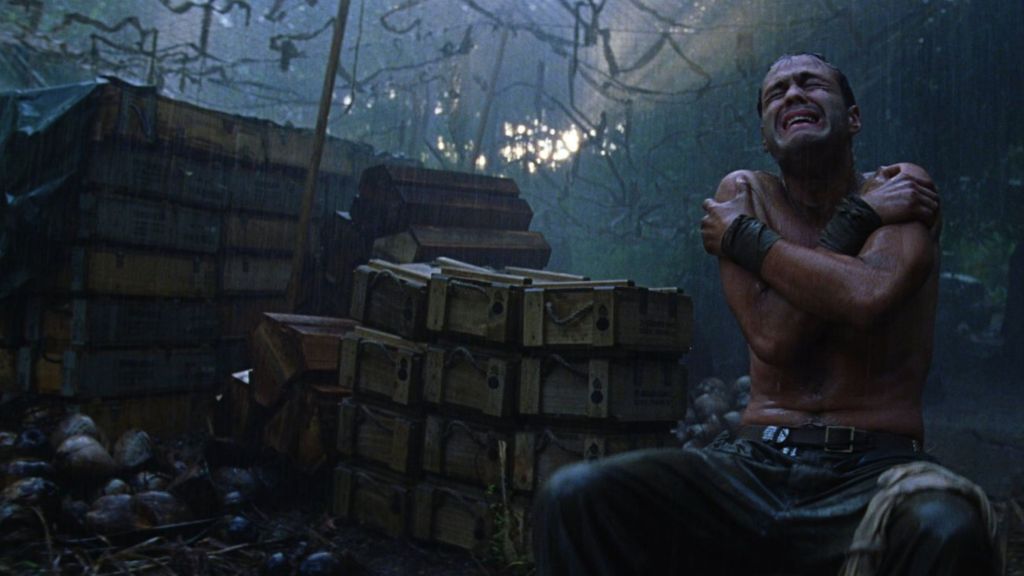
Released in the same year as Saving Private Ryan, Terrence Malick’s The Thin Red Line offered a poetic counterpoint to the visceral realism of the traditional World War II film. The story follows a group of soldiers, led by Private Witt (James Caviezel) and Sergeant Welsh (Sean Penn), during the Guadalcanal Campaign. Rather than prioritizing tactical maneuvers or clear objectives, Malick utilizes the conflict to investigate the relationship between humanity and the natural world, punctuated by internal monologues and ethereal cinematography. This abstract approach garnered seven Academy Award nominations but struggled to compete at the box office against more accessible military dramas. With a production budget of $52 million, the film grossed $98 million globally, which fell short of the threshold required for profitability after accounting for distribution costs.
2) Empire of the Sun

Steven Spielberg’s Empire of the Sun remains an epic that examines the horrors of war through the eyes of a young boy named Jim Graham (Christian Bale). Separated from his parents during the Japanese invasion of Shanghai, the protagonist must learn to navigate a brutal internment camp while being mentored by a cynical American hustler named Basie (John Malkovich). The film is noted for its grand scale and its exploration of how a child’s imagination can serve as both a survival mechanism and a psychological burden in a hostile environment. Despite the prestige associated with Spielberg’s name and the impressive production design, the movie was a commercial disappointment upon its 1987 release. It grossed only $22 million in the United States against a significant budget of $35 million. This financial shortfall was often attributed to the film’s long runtime and its focus on a theater of war that was less familiar to American audiences at the time.
1) Paths of Glory

Stanley Kubrick’s Paths of Glory is widely regarded as one of the greatest anti-war films ever produced, yet its uncompromising stance on military corruption led to a difficult theatrical life. Set during World War I, the narrative follows Colonel Dax (Kirk Douglas) as he defends three soldiers who are being used as scapegoats for a failed attack ordered by ambitious generals. The film utilizes striking black-and-white cinematography and long tracking shots through the trenches to depict the claustrophobia and absurdity of the conflict. Because the story exposed the callousness of the military hierarchy, the production was banned in several European countries for decades, severely limiting its initial earning potential. This political friction, combined with its refusal to offer a redemptive ending, ensured that Paths of Glory remained a financial failure in 1957. After these early losses, the film’s reputation has only grown, serving as a definitive indictment of the institutional arrogance that often dictates the lives of the infantry.
Which underappreciated war movie do you think deserves a second chance from modern audiences? Leave a comment below and join the conversation now in the ComicBook Forum!
Most Viewed
-

Official art by Bastien Lecouffe-Deharme -

A photo of the Retrovolt Arcade taken in 2017, showing several classic arcade cabinets and stools.