Among countless film genres, there’s crime, and one thing it does better than most is survive the test of time. That’s not a coincidence. Crime movies have a unique ability to hook audiences because they’re built on conflict, tension, high-stakes decisions that can change everything, and characters who are constantly living on the edge. So when the genre hits, it hits hard, exposing exactly how the machinery of power, violence, and influence works in this kind of world. And some movies go even further, setting new standards, shifting the conversation, and influencing everything that came after. But have you ever stopped to think about which ones are truly the best?
Videos by ComicBook.com
In this list, the goal isn’t just to revisit classics, but to highlight why each of them still matters today in the landscape of quality cinema. Here are the 10 best crime movies ever made, ranked from great to legendary. Naturally, not every good film makes the cut, but the ones here share one thing: each left a concrete mark on the history of fiction.
10) The Departed

The Departed obviously deserves a spot on the list because it works as a fully efficient crime movie, even if it’s not exactly the most sophisticated in the genre. The storyline of a cop infiltrating the mob and a mobster infiltrating the police is still a killer dramatic engine, and coming from Martin Scorsese, it delivers tension from start to finish. The premise alone sells the whole thing: two men living opposite lives, trapped in the same lie. But it’s not flawless. Despite the energy and pacing, the film sometimes leans more on shock value than emotional build-up. In short, it works incredibly well, but it doesn’t reinvent anything.
Its strength is that The Departed is chaotic on purpose. Nothing about it is elegant, and that lack of polish is exactly what makes it deserve a mention among the ten best. Still, it lands at the bottom of the ranking because, while it’s a great modern crime thriller, it doesn’t carry the same cultural impact, innovation, or thematic depth that define the true heavyweights of the genre.
9) Casino
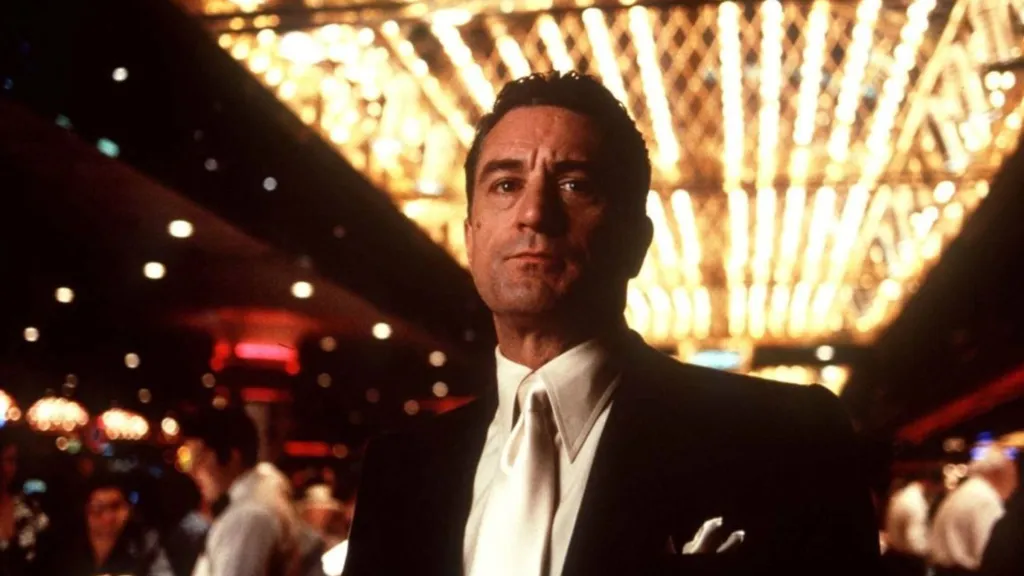
Here, the movie takes the glamour of the underworld and shows what happens when ego completely overtakes strategy. In Casino, a gambling expert takes over a mob-controlled casino and, between ambition and terrible decisions, ends up losing everything. Another Scorsese entry, the real appeal is watching the mix of professional competence and emotional disaster unfold. And the director doesn’t soften anything: he shows how small personal flaws can blow up an entire empire. At its core, it’s an excellent case study in how a criminal operation is built and destroyed, and the film excels at showing exactly that.
But when you think of Scorsese’s career, this isn’t necessarily the first title that comes to mind. And that says a lot, because it means the film isn’t quite revolutionary enough to stand out at the very top. Within the crime genre, Casino is brilliant in the details, and compared to other films, it explores greed and self-sabotage with exceptional clarity. Still, to climb higher in the ranking, it would need a stronger cultural impact.
8) Se7en
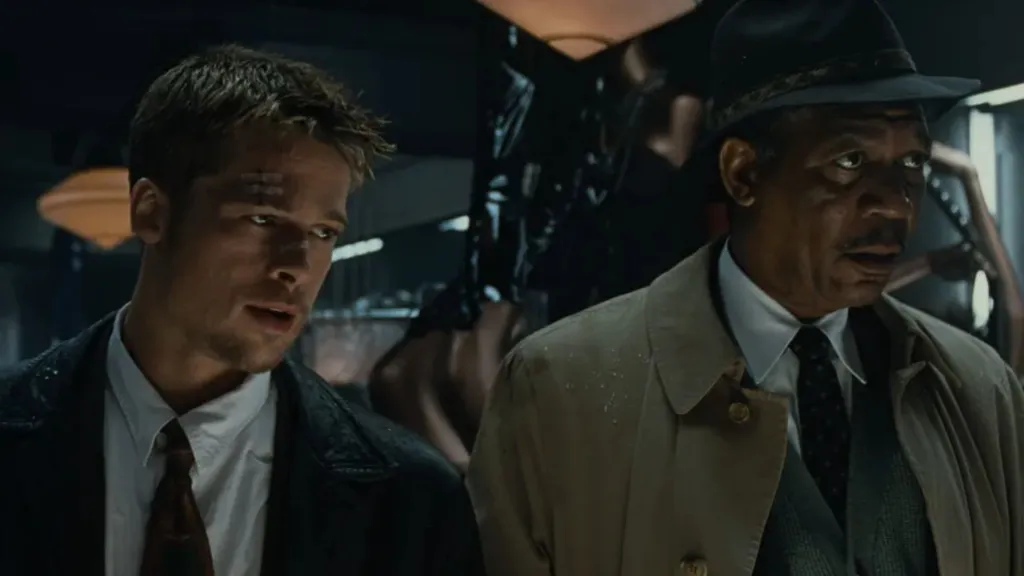
A film that gets talked about constantly, especially when the subject is plot twists, is Se7en. This is a movie that fully commits to discomfort, and that alone puts it way ahead of most of the genre. The investigation led by two detectives hunting a killer inspired by the seven deadly sins follows a straightforward structure, but David Fincher makes that simplicity work overtime. The premise is extremely direct, yet the execution is all about atmosphere: nonstop rain, crimes that are disturbing because they’re so meticulous, and an overwhelming sense that things absolutely won’t end well.
But it’s not perfect. Se7en is a massive standout when it comes to psychological thrillers in particular, but overall, it doesn’t reach the same thematic breadth as other major crime films. There’s no denying it made history, but honestly, much more within the “serial killer” subgenre compared to broader crime storytelling. Still, it unquestionably earns its position on this list because it remains essential viewing for anyone craving that dark, criminal vibe, and for how it redefined the entire grammar of cinematic tension.
7) Fargo
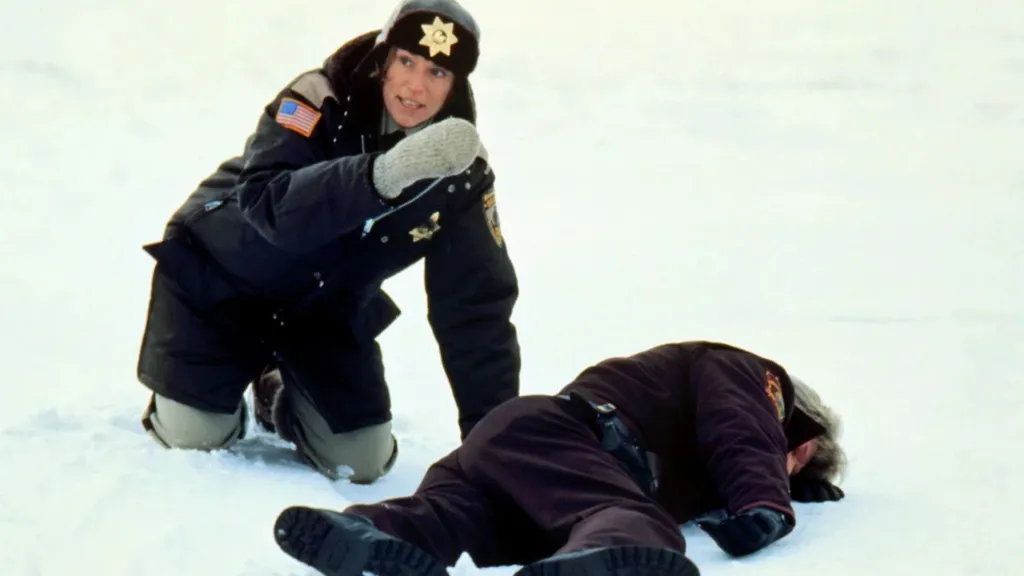
Fargo is special. It earns a spot on this list because it’s one of the rare crime movies that fully embraces the idea that many criminals are simply bad at what they do. The plot about a poorly planned kidnapping set off by a husband hiring two incompetents to abduct his own wife blends dark humor with absurd violence. On paper, this premise sounds too small to carry a great film, but the impact is huge: everything goes wrong because no one involved is as smart as they think. And out of that chaos emerges Marge Gunderson (Frances McDormand), who is easily one of the best protagonists the genre has ever seen.
So why does it land in this position on the ranking? Because it offers a unique take on crime: not glamorous, not epic, just deeply human and, at times, downright pathetic. Fargo doesn’t try to compete with massive, operatic crime epics — it wins by being different. It doesn’t climb higher because it doesn’t exactly define the genre (we have to be fair), but it does prove how much personality you can bring to crime storytelling. And that alone puts it ahead of many others.
6) Heat
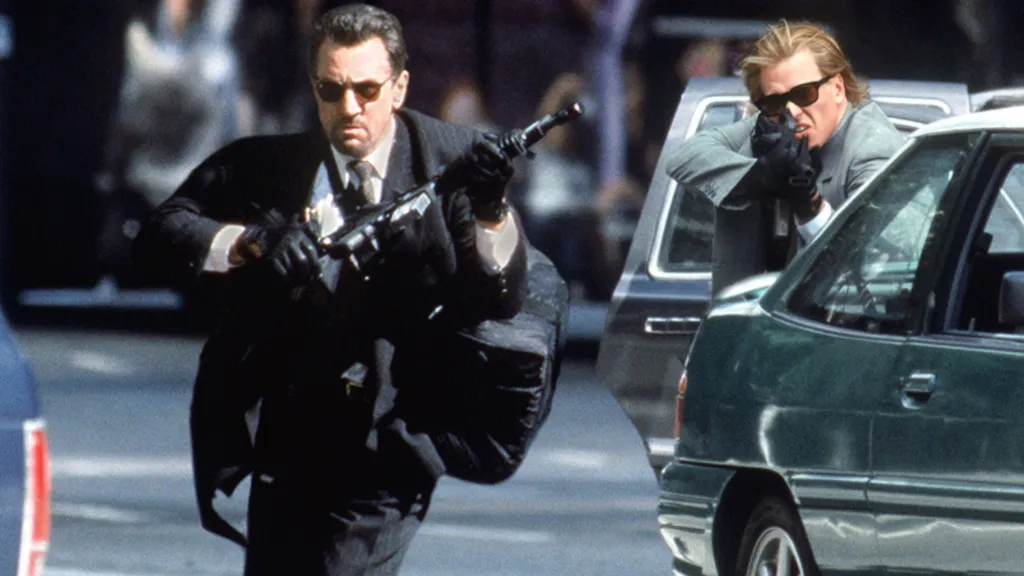
It’s no surprise Heat is getting a sequel. This is a film that portrays crime through the lens of professional obsession, built on a very classic idea. The story follows a hyper-disciplined thief and an equally obsessive detective, each one destroying their own personal life while trying to prove they’re better than the other. It’s another movie that refuses any kind of glamour, because the world of crime here is routine, logistics, and precision. And the famous coffee scene between Al Pacino and Robert De Niro sums it all up: both sides are way more alike than either wants to admit.
Heat is easily one of the most complete films in the genre, while also being one of the most emotionally restrained. The action is excellent, the drama works extremely well, and the world-building is flawless. It’s arguably the best “professional criminals” movie ever made, and plenty of people would agree with that. But the reason it doesn’t climb higher in this ranking is simple: the five films above it have an even stronger cultural footprint and narrative structure.
5) Pulp Fiction
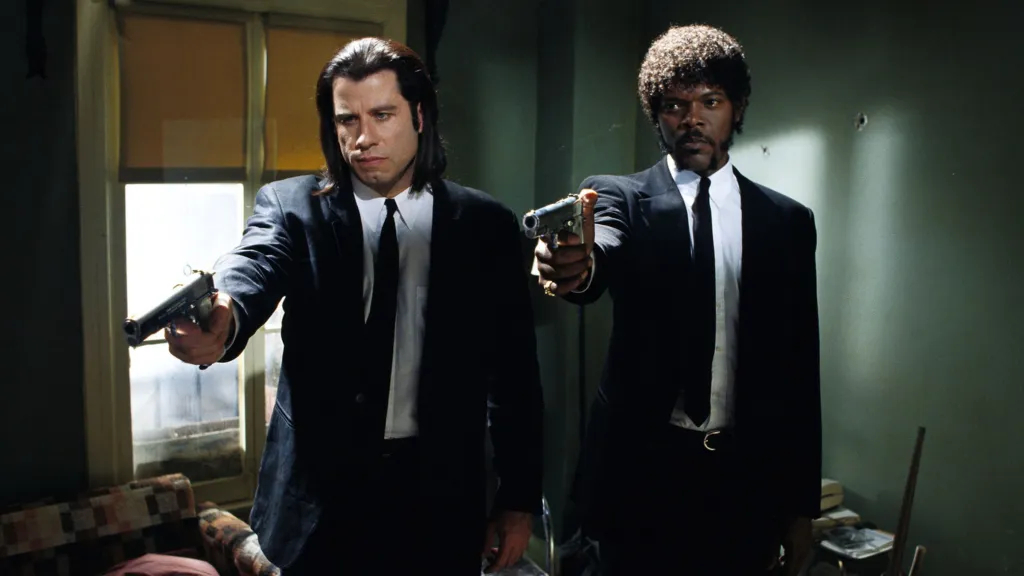
One of the most famous and iconic movies out there (especially in Quentin Tarantino’s filmography). Pulp Fiction basically proved that a crime movie can absolutely be bold by embracing a chaotic, funny, violent, and smart approach all at once. The story weaves together several intersecting plotlines involving gangsters, boxers, and unlucky criminals. The real differentiator is how Tarantino turns ordinary, almost trivial conversations into unforgettable moments. That gives the characters a weirdly realistic vibe, even when they make incredibly stupid decisions. It’s a crime, but filtered through a very specific sense of humor and a completely offbeat rhythm.
Looking at the film as a whole, Pulp Fiction is a turning point because it influenced decades of cinema, but also because it works more through style than emotional density — it doesn’t exactly carry the heavier construction or broader thematic weight seen in other crime masterpieces. It absolutely redefined what crime storytelling could look like, yes, but within this ranking, that alone isn’t enough to put it at the very top.
4) No Country for Old Men
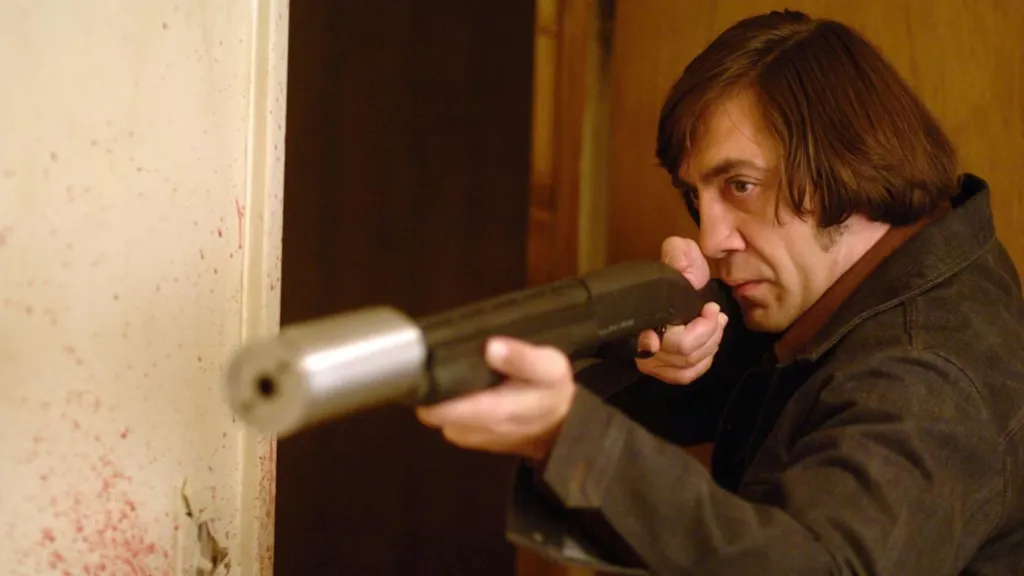
Here, we move into a higher tier when it comes to being blunt about crime. No Country for Old Men is another film in the genre that doesn’t promise answers, only consequences. In it, a man finds a suitcase full of money and ends up hunted by a relentless killer. But the real strength of the story is in its refusal to follow traditional narrative rules. The Coen brothers chose to explore a world where violence makes no sense, justice doesn’t exist, and evil isn’t explained. It’s a harsh approach, but incredibly aligned with reality.
What No Country for Old Men does is embrace minimalism as a strength, not a weakness. It cuts out everything that would traditionally help build emotion or suspense, and even so (or maybe because of that), the movie becomes more mature and more compelling. It’s dry, direct, and almost cruel to the audience, but that’s what sets it apart. It doesn’t move up the list because it chooses to stay emotionally distant. But as a portrait of moral collapse, very few productions come close.
3) Chinatown
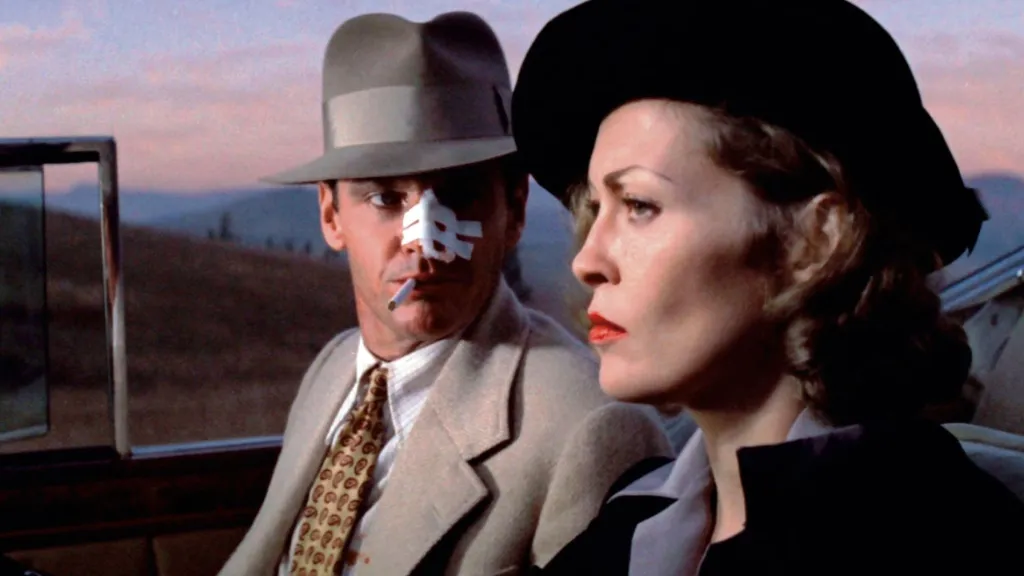
Chinatown is the film that best understands the link between crime and institutional power, and that alone is worth a lot when you’re ranking the greatest movies in the genre. Its story starts with a detective handling a simple infidelity case, but that quickly unravels into corruption, political manipulation, and secrets that run way too deep. It’s modern noir at its core: nothing is what it seems, no one is trustworthy, and the city itself feels like an antagonistic force. The movie never gives you the sense that the protagonist is in control; he’s always one step behind, as if the real villain were the city’s own power structure.
And that’s why Chinatown lands in the top 3. It completely subverts the archetype of the competent detective. It’s essentially the film saying, “Here, the hero doesn’t win” — he survives and loses at the same time. Very few crime movies have had the courage to embrace that level of pessimism so openly, especially in the ’70s. It’s a magnificent, bold, and influential classic. But did it become mythic? Is it widely recognized outside cinephile circles? Not really. And that’s why two other films sit above it.
2) Goodfellas
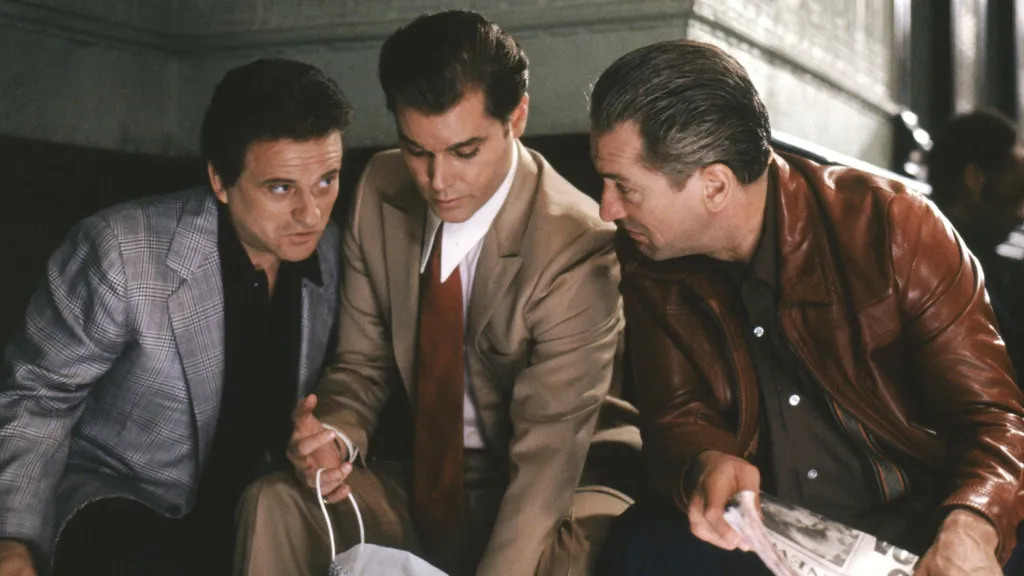
The silver medal goes to Goodfellas simply because it’s the movie that best captures the daily grind of a life built on crime. Plenty of films on this list go for that unpolished, street-level approach, but in a head-to-head comparison, this one comes out on top. It’s all routine and consequence here. The story follows a young criminal from his first steps into the underworld all the way to the complete collapse of his life. The pacing is fast, aggressive, and packed with details that make the film feel like it’s being observed from inside the lifestyle. It’s brilliant because it delivers an honest look at how crime seduces, destroys, and demands loyalties that are basically impossible to maintain.
And no, Goodfellas isn’t just a great mob movie; it’s the definitive portrait of that world. Yet another Scorsese film on this list, but this is the one where he hit the absolute peak. The director made the best movie about life in crime. However, what about power within crime? That’s a crucial element in the genre. Well, another film managed to nail that, and that inevitably pushed it above this one.
1) The Godfather
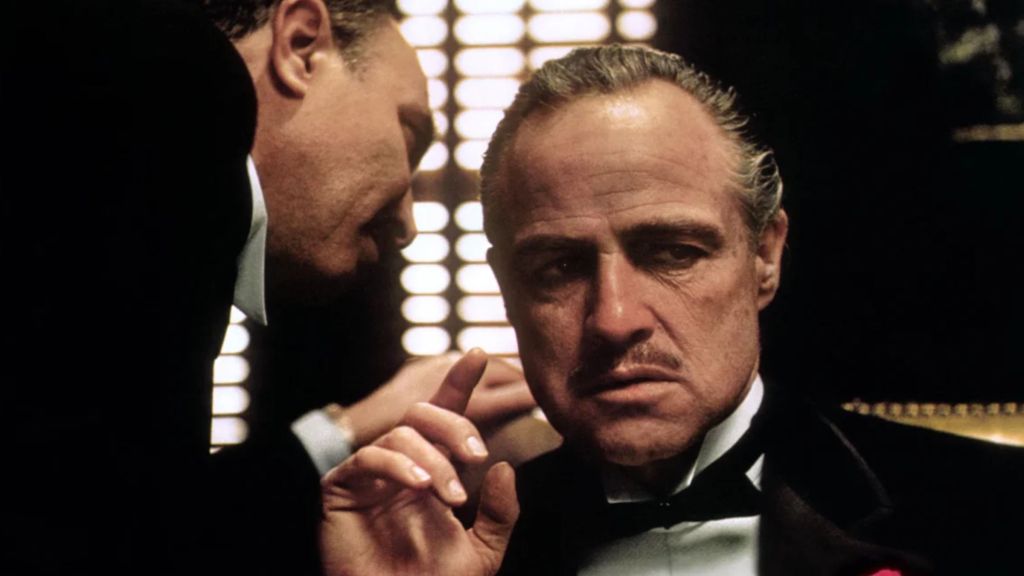
At the top of any list sits The Godfather, and it’s not out of habit — it’s 100% on merit. The film made history by centering on the power shift within the iconic Corleone family and on Michael’s (Al Pacino) transformation from “civilian” to full-blown mythic leader. Crime here isn’t just action; it’s structure, tradition, and legacy. There’s nothing cliché about it, and every tiny decision carries weight. Every character deals with consequences that go far beyond violence, and the movie is meticulous in the way it builds these layers. So overall, it becomes complete not only as a crime film, but also as a story about family, power, and destiny — you simply can’t leave it out.
In short, it’s number one because it’s not just the best crime movie; it’s one of the most important films ever made (maybe the most important). It defines aesthetics, storytelling, character work, and morality within the genre in a way no one had seen before. Nothing here is accidental or throwaway; everything is crafted with intent, which is why it still resonates today and continues to inspire so many films across the board. So in this ranking, the question isn’t whether The Godfather belongs at the top — it’s who would even dare to take it down.
What do you think of the ranking? Is any of these movies your favorite? Leave a comment below and join the conversation now in the ComicBook Forum!
Most Viewed
-

Troll 2. (L to R) Ine Marie Wilmann as Nora Tidemann, Anne Krigsvoll as Ester J. Tiller, Mads Sjøgård Pettersen as Kaptein Kristoffer Holm, Sara Khorami as Marion Rhadani and Kim Falck as Andreas Isaksen in Troll 2. Cr. Courtesy of Netflix © 2024 -

Image courtesy of United Artists -

Sony Animation