Quentin Tarantino’s Pulp Fiction came out in 1994 and is still considered one of the best films of all time. The dark comedy crime drama is a masterpiece in non-linear storytelling, bombastic stylization, and bonkers dialogue that launched a thousand imitators. The details are so rich that every scene in the movie has been picked apart by fans, from Jules’ Ezekiel speech to Vincent’s bathroom breaks. Yet, nothing in Pulp Fiction has prompted as many theories as Marcellus Wallace’s briefcase.
Videos by ComicBook.com
We witness the characters gasp in awe as they open it, a golden light illuminating their faces. Of course, we, the audience, never see what’s inside. It may very well be nothing more than a simple MacGuffin, or a kind of Schrödinger’s box that contains whatever the person inside wants most. However, some of the more concrete theories fit so well that they’re hard to dismiss. And knowing Tarantino, there’s a good chance he had a specific answer in mind, even if he never revealed it. So let’s count down the most compelling explanations for what’s in the briefcase.
5) Elvis Presley’s Golden Suit
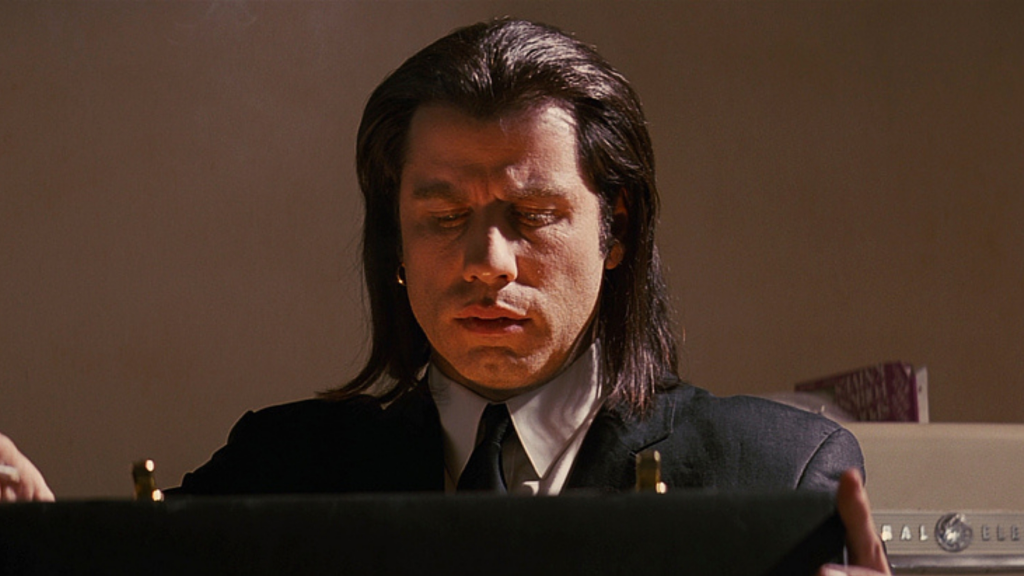
One clever theory ties Pulp Fiction to True Romance, another film written by Tarantino in which Val Kilmer plays the ghost of Elvis Presley. In that movie, Elvis’ famous gold suit becomes a mythological symbol. In Pulp Fiction, Jules tells Brett that the briefcase contains “my boss’ dirty laundry.” While “dirty laundry” is obviously an idiom, taken literally, it’s clothing… hence Elvis’ suit.
Believers in this golden suit conspiracy have pointed out that Tim Roth’s character reacts as if he recognizes what he’s seeing. He doesn’t say “gold” or “money,” but reacts with kind of stunned reverence, which fits better with a legendary artifact than generic loot. In Tarantino’s interconnected universe, Elvis is often treated like a sacred figure, making the suit something people might genuinely revere. Plus, golden suit equals golden light.
The biggest problem here is Vincent. John Travolta’s Vincent Vega is an Elvis fan, and if he had just seen the most famous Elvis relic imaginable, you’d expect him to have the biggest reaction. Instead, he just kind of stares at it. Maybe he’s still processing what he’s seeing, but in truth, he doesn’t act like a guy who just laid eyes on his hero’s most valuable possession.
4) Heroin
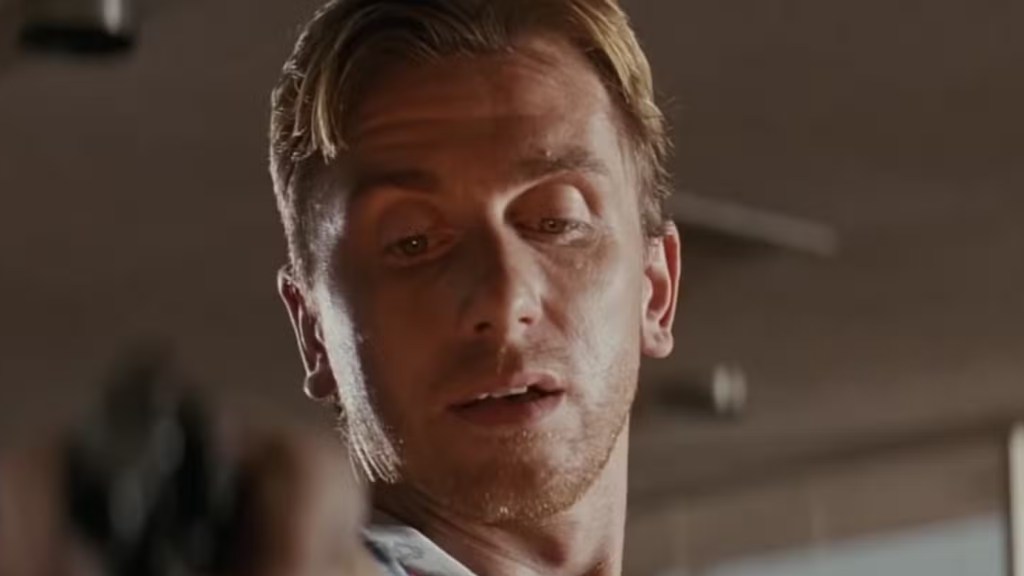
Another popular idea is that the briefcase is filled with high-quality dope. Nearly every character who reacts to its contents shows signs of addiction. Brett and his friends are clearly operating out of a drug house. Pumpkin and Honey Bunny display classic junkie behavior. Meanwhile, Vincent openly shoots up heroin and nearly kills Mia with it.
Characters describe the contents as “beautiful,” which fans have noted is often how addicts talk about drugs. In this case, the glow could be interpreted metaphorically, as the visual representation of temptation and desire. From this angle, the briefcase becomes a symbol of self-destruction as well as wealth.
The issue with this explanation is that it seems too obvious for Tarantino. He’s rarely that straightforward, and given that we literally see the white powder Vincent shoots up with, it’s doubtful the precious unseen contents of the briefcase is the same substance. Also, if it were just drugs, it wouldn’t justify the elaborate security and reverence Marcellus places on it. Heroin is valuable, but not in a way that fits the mystical treatment the briefcase receives throughout the film.

3) Marcellus Wallace’s Soul
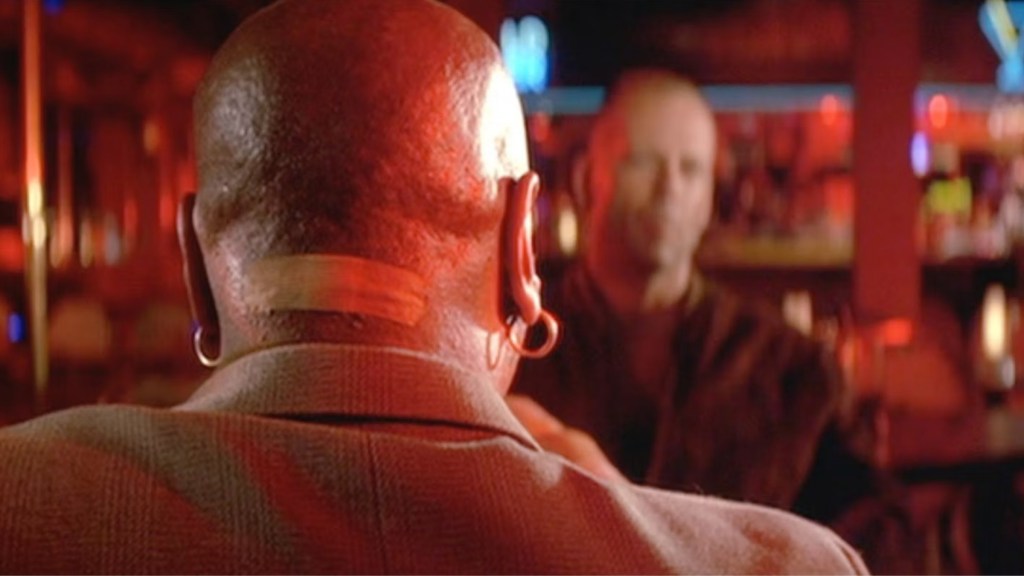
Possibly the most famous and widely held theory of all is that the briefcase contains Marcellus Wallace’s soul. The lock combination is “666,” the number of the beast, which this theory says indicates that Marcellus made a deal with the devil, lost his soul, and sent Jules and Vincent to retrieve it. Marcellus also has a Band-Aid on the back of his neck, which fans claim marks where his soul was extracted, based on an ancient myth. The glowing light is then indicative of something supernatural.
This theory certainly fits well with the story’s themes of redemption and divine intervention. Jules’ transformation from hitman to peaceful “shepherd,” and his belief that he witnessed a miracle, fit neatly into this framework. It’s elegant and tied to the film’s religious undertones.
The problem is that some of the evidence doesn’t hold up under scrutiny. There is no actual ancient myth about souls being removed from the back of the neck. Plus, Tarantino has said that Ving Rhames cut himself shaving his head, wore a Band-Aid, and they kept it because it looked interesting. While it doesn’t completely kill the theory, it does weaken the case.
2) God (Or Proof of God)
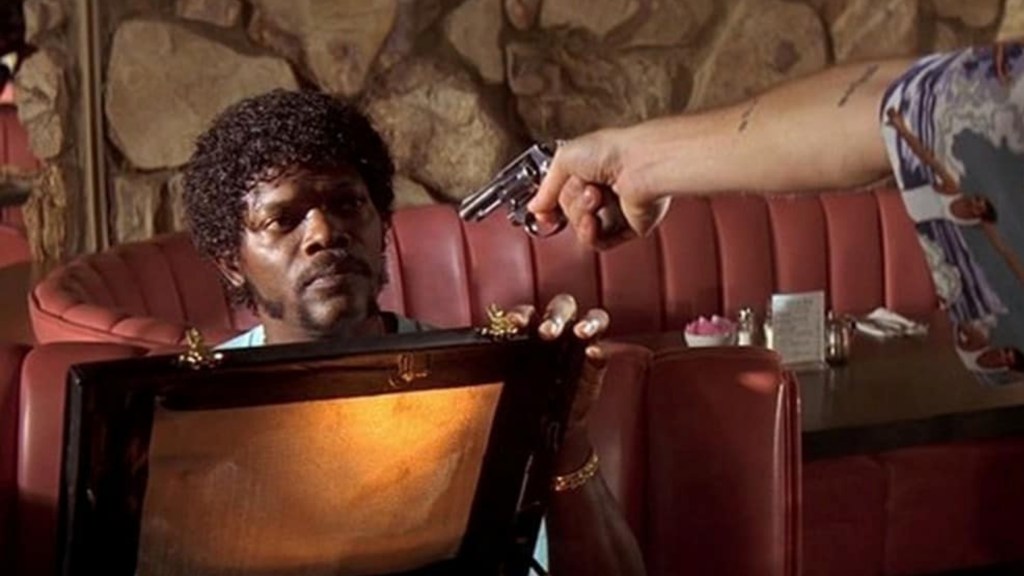
Keeping on the theme of religion, one of the most ambitious theories makes a compelling case for the contents of the briefcase being God, or perhaps proof of God’s existence. In this interpretation, possession of the case means spiritual protection. Characters who accept it or respect it survive, while those who lose or reject it suffer consequences. Jules never actually looks inside, but he believes. He becomes “the shepherd” and walks away unscathed. Pumpkin and Honey Bunny are spared after witnessing it. Marcellus falls into horror only after losing it.
Vincent, on the other hand, sees the contents but never truly embraces the meaning. He dismisses Jules’ spiritual awakening, mocks the idea of divine intervention, and later meets a sudden, pointless death. Mia nearly dies after indulging in Vincent’s drugs. Butch, who is only loosely connected to the briefcase, survives but gains no spiritual protection. It’s a lofty idea, but the logic holds up with nearly every character in the film.
Some actors have also reportedly stated that Tarantino told them the briefcase contains “whatever you want it to,” which could actually support the theory. “God” is often something personal and subjective, taking different forms with different people, and what you see is shaped by what you believe. The Bible references in the film reinforce this, and as some fans have pointed out, the bible itself and all of the violence it contains could be seen as a form of “pulp fiction.” It’s a wild, but extremely compelling theory that doesn’t have much working against it.
1) Diamonds
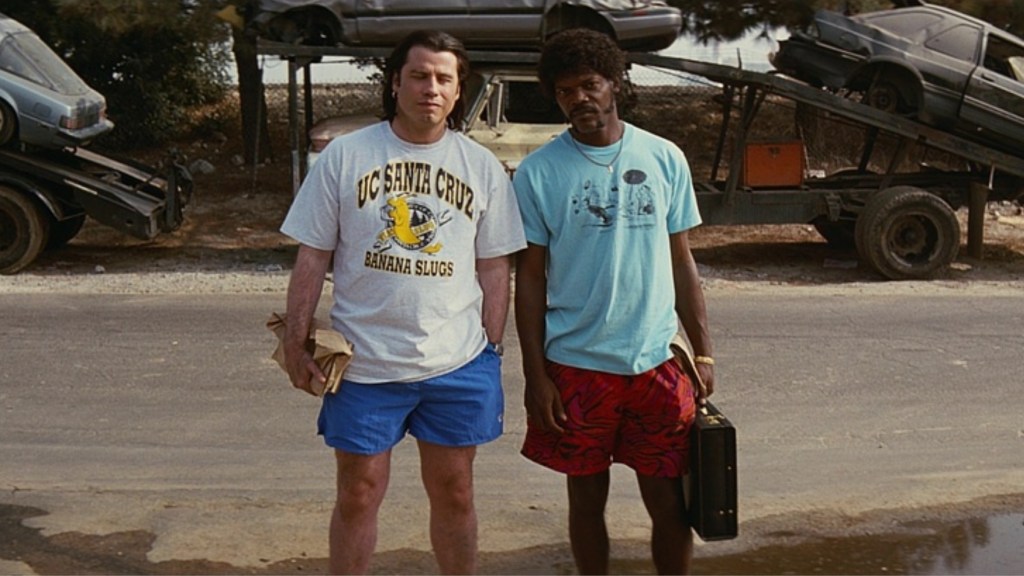
While not the most exciting, the most grounded and likely explanation of them all is that the briefcase contains diamonds, specifically, the diamonds from Reservoir Dogs. Rumor has it that early drafts of the Pulp Fiction script actually identified the contents as diamonds, specifically, with the glow added later for theatrical effect. When we look at the connective tissue of Tarantino’s universe, the theory checks out.
Mr. Blonde in Reservoir Dogs is Vic Vega, Vincent’s brother, and supposedly, the original plan was for Vic to pass the diamonds to Vincent, who would then deliver them to Marcellus Wallace. The connection was meant to be explored further in Tarantino’s unmade Double V Vega project. Vincent’s long stare at the briefcase is then much more loaded, as he’s looking down at the reason his brother died. The glow then also becomes a stylization of the allure of wealth and greed, rather than something supernatural.
Perhaps Tarantino chose not to emphasize this because Reservoir Dogs had already done the stolen diamonds thing. Repeating the same plot device so soon might feel redundant, and keeping it vague preserves the mystery. The director’s only real public statement on the case’s contents is that it’s “the most valuable thing you can imagine.” Diamonds are among the most expensive (by weight) and desired natural commodities. They’re portable and therefore often criminally traded. Yet, whether Tarantino’s statement was referencing diamonds or God or the soul of a man depends on how the meaning of “value” is taken, and perhaps that’s the point.
What do you think was really inside the briefcase? Leave a comment below and join the conversation now in the ComicBook Forum!
Most Viewed
-

Image courtesy of Tor Books/Macmillan -

Official art by Bastien Lecouffe-Deharme