The Walt Disney Company is a global entertainment titan, controlling a vast portfolio of multibillion-dollar brands that consistently dominate the box office. This corporate supremacy was further solidified following the strategic acquisition of 20th Century Fox, a maneuver that transferred the rights to James Cameron’s blockbuster properties directly into the Disney vault. The acquisition granted the studio ownership of the highest-grossing cinematic release in history, with the original Avatar holding the record at $2.9 billion worldwide. This financial dominance continued with Avatar: The Way of Water generating $2.3 billion, and the recent 2025 release Avatar: Fire and Ash pushed the franchise even further by grossing another $1.47 billion. Such consistent revenue generation allows the conglomerate to invest in expansive world-building projects that competitors struggle to match.
Videos by ComicBook.com
Beyond the sci-fi fantasy epics of the Avatar franchise, the Marvel Cinematic Universe routinely demonstrates the sheer earning potential of superhero narratives—historically linked to sci-fi tropes—with the franchise collectively grossing over $30 billion at the global box office. Massive crossover events like Avengers: Endgame and Avengers: Infinity War set the standard by earning $2.79 billion and $2.05 billion, respectively, while recent releases like 2024’s Deadpool & Wolverine easily crossed the one-billion-dollar milestone. Then there’s Star Wars, another billion-dollar franchise that’s returning to theaters with The Mandalorian and Grogu. Yet, when it comes to adapting sci-fi books into movies, Disney has repeatedly struggled to find its footing.
4) A Wrinkle in Time

Ava DuVernay’s adaptation of Madeleine L’Engle’s seminal 1962 novel A Wrinkle in Time centers on Meg Murry (Storm Reid), a grieving teenager who embarks on an interdimensional journey across the universe to locate her missing scientist father. Disney allocated a massive $130 million production budget to realize the story’s cosmic settings, resulting in a saturated, CGI-heavy presentation that overwhelmed the emotional core of the narrative. Critics and audiences alike noted that the heavy reliance on green-screen environments and jarring pacing created a disjointed viewing experience that failed to capture the philosophical depth of the original text. The picture struggled to find an audience amidst intense springtime competition, concluding its global run with a deeply disappointing $132 million. Factoring in extensive marketing costs and theater splits, the studio reportedly lost up to $130 million on the venture.
3) Treasure Planet
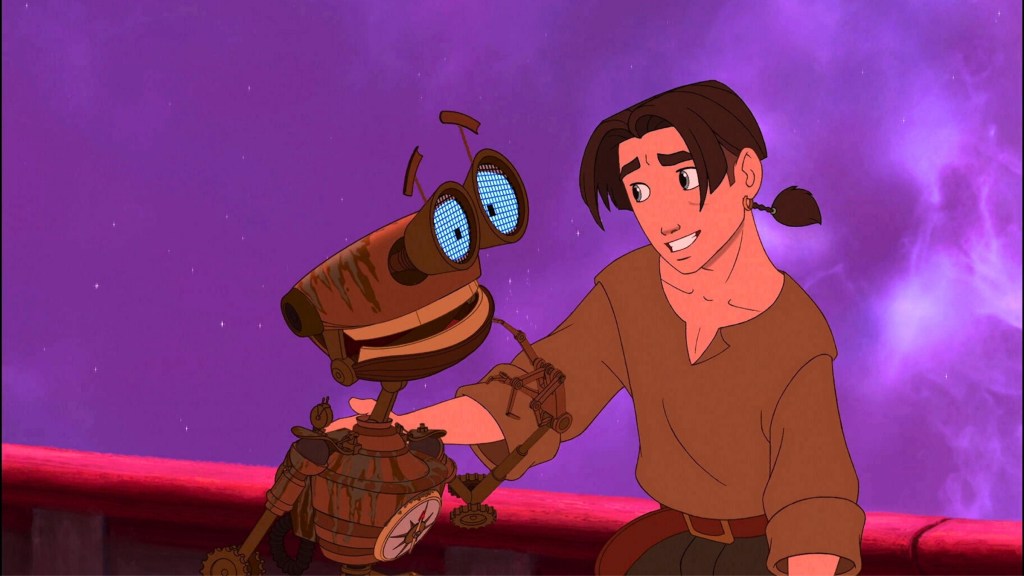
Treasure Planet represents a bold stylistic experiment that fundamentally misjudged the shifting preferences of the early 2000s animation market. Directors Ron Clements and John Musker transposed Robert Louis Stevenson’s classic adventure novel Treasure Island into a steampunk-inspired galactic setting. The story follows a rebellious youth named Jim Hawkins (voiced by Joseph Gordon-Levitt) as he boards a solar-powered galleon to locate a legendary pirate hoard. The production pioneered the “Deep Canvas” technique, blending traditional 2D character animation with expansive 3D computer-generated environments to create a visually striking universe. This technical approach required an astronomical $140 million budget, making Treasure Planet the most expensive traditionally animated project of its time. Competing against established winter blockbusters, the space-faring adventure grossed only $109 million worldwide, resulting in an estimated $74 million write-down for the studio and abruptly ending plans for a direct-to-video sequel and an animated television spinoff.
2) John Carter
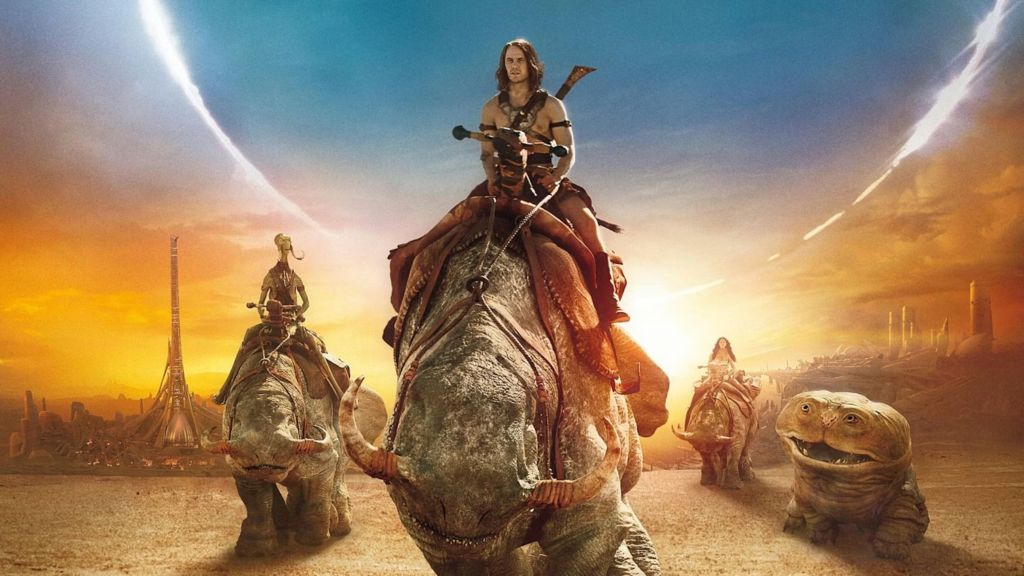
The cinematic adaptation of Edgar Rice Burroughs’s foundational 1912 novel A Princess of Mars stands as one of the most infamous financial disasters in Hollywood history. Directed by Andrew Stanton, the epic centers on John Carter (Taylor Kitsch), a Confederate veteran inexplicably transported to the desolate plains of Barsoom, where he becomes embroiled in a planetary civil war. Disney invested a colossal $250 million into the production, alongside an additional $100 million for a global marketing campaign that fundamentally failed to communicate the film’s premise. Studio executives inexplicably stripped the words “Princess” and “Mars” from the title, attempting to broaden the film’s demographic appeal while completely alienating the established fanbase of the source material. The resulting promotional materials presented a generic fantasy action movie devoid of the high-concept science fiction elements of Burroughs’s work. John Carter ultimately earned $284 million globally, a sum that fell disastrously short of its break-even point and forced the Walt Disney Company to report an unprecedented $200 million operating loss on a single theatrical release.
1) Mars Needs Moms
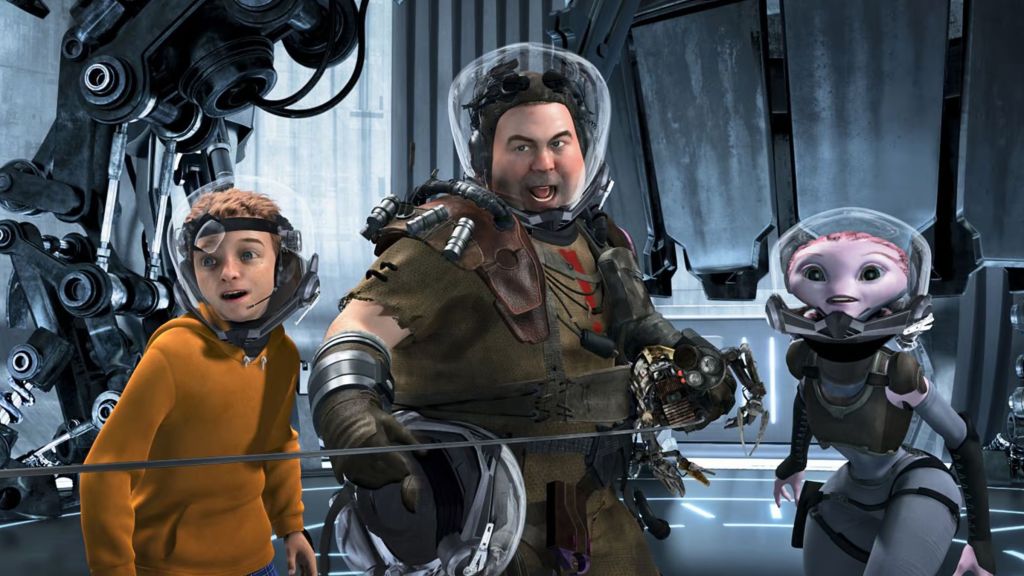
Produced by Robert Zemeckis’s ImageMovers Digital, Mars Needs Moms serves as a glaring example of how technological ambition can repel target audiences. Based on the picture book by Berkeley Breathed, the movie follows a young boy named Milo (voiced by Seth Green) as he attempts to rescue his mother from an alien abduction. The production utilized motion-capture animation to translate the actors’ performances into a digital environment, a decision that resulted in a deeply unsettling visual aesthetic widely criticized for falling directly into the uncanny valley. Viewers rejected the lifeless but hyper-realistic character models, finding the stylistic approach more disturbing than engaging. The audience rejection culminated in a disastrous theatrical run, with the film grossing a mere $39 million against a staggering $150 million production budget. The financial collapse of the project forced Disney to absorb a write-down of over $100 million, ultimately leading to the closure of the ImageMovers Digital studio.
Which of these Disney sci-fi adaptations do you think deserved a better reception at the box office? Leave a comment below and join the conversation now in the ComicBook Forum!
Most Viewed
-

Image courtesy of Daybreak Game Company -

Image courtesy of MAPPA