It can sometimes feel like Prime Video’s science fiction catalog is as vast as the worlds depicted in its films. Thanks to the sheer breadth of the library, there is something for every sci-fi fan, whether you like hard sci-fi, a great mystery, or something that leans into horror. At the same time, it can be overwhelming trying to decide where to start, and many of us have fallen prey to watching the same few movies over and over again.
Videos by ComicBook.com
But it’s very likely that you haven’t fully tapped the Prime Video carousels of thier potential. Buried in the avalanche of content, there are a few hidden sci-fi gems that are straight-up masterpieces. Maybe they’ve slipped through the cracks of the algorithm or time itself, but we’re here to unearth them. If you haven’t seen the five films below, it’s time to boot up the Prime Video app.
5) The Endless
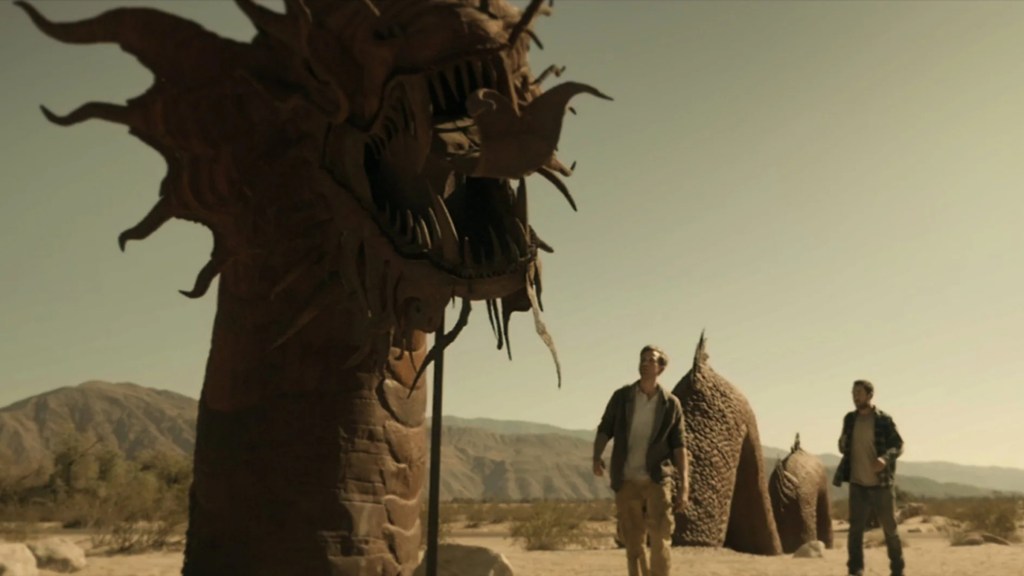
The Endless is a 2017 indie sci-fi horror film made by and starring the filmmaking duo Justin Benson and Aaron Moorhead. We start with two brothers who escaped from what they believed was a UFO death cult a decade earlier, only to return after receiving a cryptic video message. Upon their return to Camp Arcadia, they encounter increasingly bizarre phenomena and realize that the cult’s beliefs about an otherworldly entity may be more real than they thought.
Boasting a 92% rating on Rotten Tomatoes, critics praised it as an impressive feat of genuinely entertaining micro-budget filmmaking. Horror novelist Brian Keene even called it “a true horror masterpiece—a David Lynch meets Stuart Gordon meets Don Coscarelli fever dream of Lovecraftian cosmic horror.” The filmmakers’ choice to star in their own film with their own names adds a layer of authenticity to their dynamic. While it works brilliantly as a standalone, The Endless can also serve as a sequel to Benson and Moorhead’s “Resolution.”
4) Memories

Memories is a Japanese anthology sci-fi film from 1995, executive produced by Katsuhiro Otomo (creator of the ‘80s sci-fi masterpiece Akira). It was also based on three of Otomo’s manga short stories. The story unfolds in three distinct vignettes: “Magnetic Rose,” directed by Studio 4°C co-founder Kōji Morimoto; “Stink Bomb,” directed by Tensai Okamura and animated by Madhouse; and “Cannon Fodder,” written and directed by Otomo himself and animated by Studio 4°C.
In 2001, Animage magazine ranked Memories 68th in their list of the 100 greatest anime productions of all time. Despite not being as widely beloved as Akira, the movie is considered a masterpiece for its stunning animation and ambitious storytelling across three vastly different tones and styles, made by an all-star team of anime industry legends, including future directing legend Satoshi Kon (who would go on to create “Paprika”) and composer Yoko Kanno (of “Cowboy Bebop” fame). “Magnetic Rose” in particular is celebrated for its operatic score, sampling of Puccini’s “Madama Butterfly,” and intricate Rococo production design.

3) Things to Come
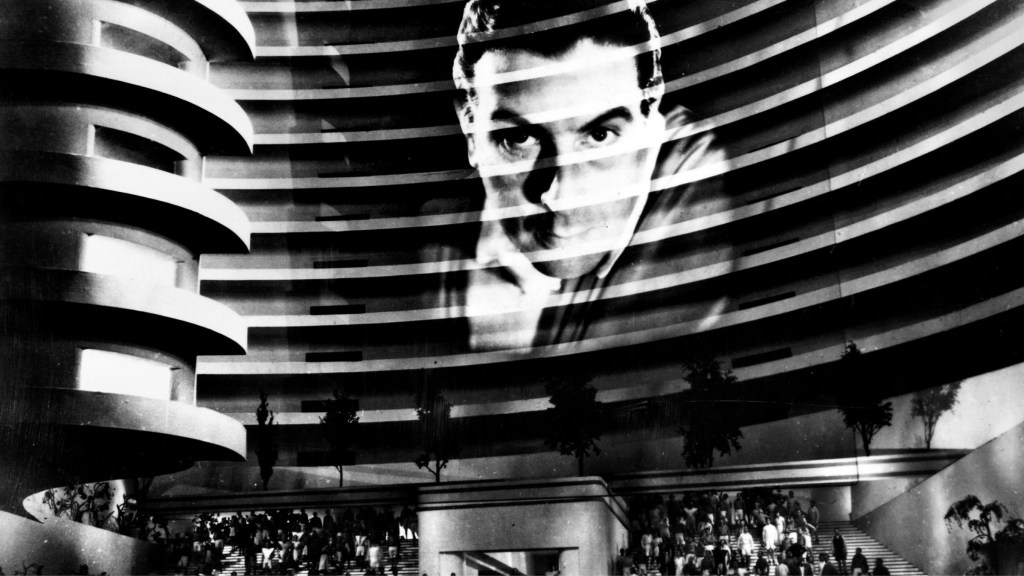
Things to Come is a 1936 sci-fi classic written by H.G. Wells as a loose adaptation of his book The Shape of Things to Come, and stars Raymond Massey, playing dual roles across different time periods. We open on Christmas 1940 in “Everytown,” where businessman John Cabal can’t enjoy the holiday due to the looming threat of war. That night, an aerial bombing starts what eventually becomes a decades-long world war. By 1970, civilization has collapsed into plague and anarchy, with warlord-controlled territories fighting over scraps. By 2036, humanity lives in gleaming underground cities devoted to scientific progress.
The film was Britain’s first million-dollar picture and became famous for its futuristic Art Deco production design. Though its 1936 release date is a barrier to entry for some modern sci-fi fans, the film is still heralded as a masterpiece by those who have seen it, partially for its eerie prescience about World War II, despite being made three years before the actual conflict. Arthur C. Clarke had Stanley Kubrick watch it during the development of 2001 as an example of grounded science fiction. The film’s special effects, particularly the bombing sequences, were groundbreaking for their time and even rivaled Fritz Lang’s Metropolis—the perfect watch for any sci-fi fan interested in retro-futurism.
2) The Vast of Night
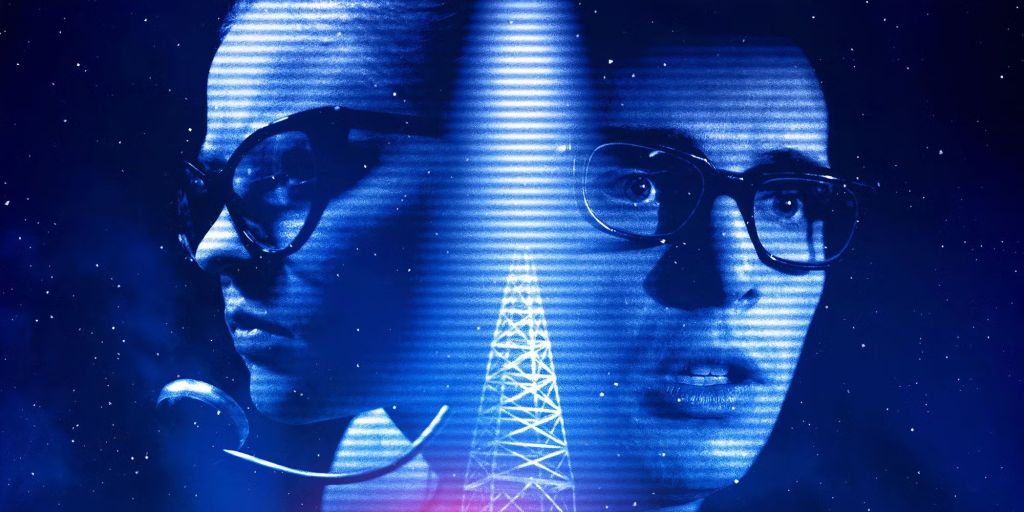
A 2019 sci-fi mystery from Andrew Patterson, The Vast of Night begins one evening in 1950’s New Mexico when teen switchboard operator Fay Crocker (Sierra McCormick) and radio DJ Everett Sloan (Jake Horowitz) discover a strange audio frequency that leads them to uncover evidence of extraterrestrials. The film is framed as an episode of a fictional Twilight Zone-style anthology show called “Paradox Theater.”
Filmed in just four weeks on a budget of only $700,000 (which Patterson financed himself), The Vast of Night received widespread acclaim for its stunning long takes, including a famous tracking shot that races through a parking lot, through an ongoing basketball game, up crowded bleachers, and out a window. The film’s conclusion is deliberately left open-ended, prompting cries for a sequel from the small but devoted fanbase. For lovers of classic first-contact movies like “Close Encounters of the Third Kind,” this is the perfect hidden gem to seek out on Prime Video.
1) 1984
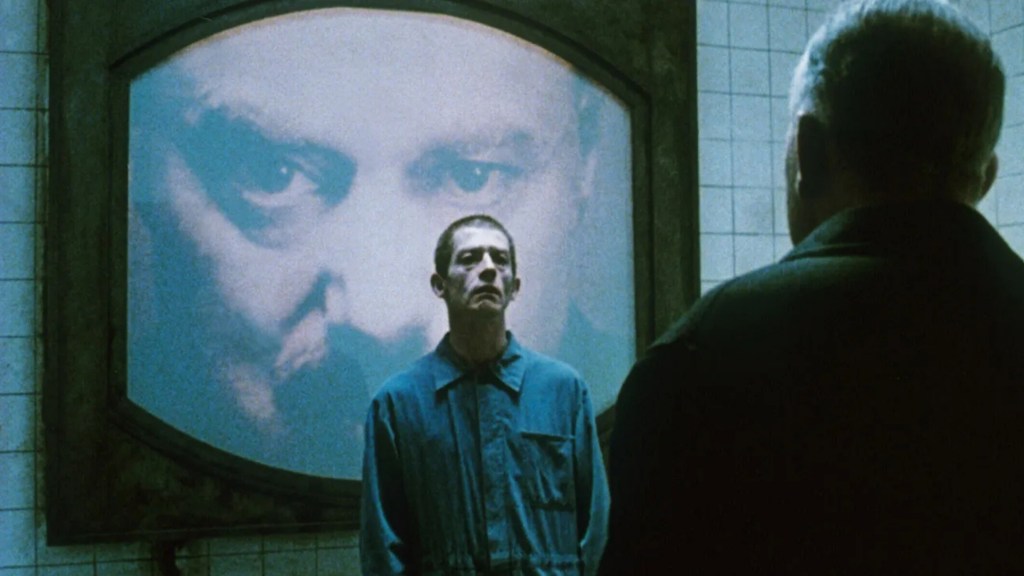
1984 (released in 1984) is a British dystopian film written and directed by Michael Radford, based on George Orwell’s famous 1949 novel. The film stars John Hurt in a tour de force performance as Winston Smith, a low-ranking civil servant in war-torn London (now part of the totalitarian superstate Oceania) who works at the Ministry of Truth rewriting history. When Winston begins an illegal love affair, he is eventually targeted by the Thought Police and O’Brien (Richard Burton). Notably, the movie was shot in 1984 during the exact months depicted in Orwell’s novel, giving it a fascinating meta-textual quality. Radford and iconic cinematographer Roger Deakins used a film-processing technique called “bleach bypass” to create a distinctive, washed-out look.
Upon release, the film earned Roger Ebert‘s praise for penetrating “much more deeply into the novel’s heart of darkness” than previous adaptations. Known for its uncompromising fidelity to Orwell’s vision, with dialogue taken verbatim from the book, 1984 is considered a masterpiece, though it’s not as widely discussed today. John Hurt is universally praised as the perfect Winston Smith, even resembling Orwell himself. Richard Burton delivers one of his most chilling final performances as O’Brien. The film’s corroded, soiled aesthetic, seen through Deakins’ innovative cinematography, speaks to Orwell’s themes as eloquently as the dialogue. It’s a powerful, bleak, and uncompromising vision of totalitarianism that continues to resonate, and is a must-watch for anyone who hasn’t seen it.
Have you watched any of these on Prime Video yet? Leave a comment below and join the conversation now in the ComicBook Forum!
Most Viewed
-
Image courtesy of Marvel Studios -
Image Courtesy of Netflix