
Few franchises in the history of entertainment have expanded as aggressively as the Marvel Cinematic Universe. Beginning with a single Iron Man film in 2008 and growing into a franchise that has collectively grossed over $30 billion at the global box office, the MCU now encompasses dozens of films and streaming series connected by one of the most elaborate narrative architectures in popular culture. However, the sheer scale of the operation has produced an unexpected structural problem, as the universe has grown so large that major characters can disappear from the screen for years at a time. For instance, Shang-Chi (Simu Liu) is five years absent from the Sacred Timeline after a successful first movie, and the Eternals have no place in Marvel Studios’ current schedule despite their unfinished storylines.
Videos by ComicBook.com
The consequence of that relentless forward momentum is a franchise riddled with unexplored history. Characters arrive in new films fundamentally changed from their last appearance, and entire wars, crises, and personal transformations are explained through brief lines of dialogue. Occasionally, the story delivered through that exposition even sounds more gripping than the one the audience actually watched.
5) Nick Fury’s 30-Year Skrull Operation

The premise buried inside Secret Invasion is genuinely one of the most compelling spy thrillers the MCU has ever made. The series reveals Nick Fury (Samuel L. Jackson) spent roughly three decades running a covert intelligence operation using Skrull shapeshifters as embedded agents inside governments, militaries, and intelligence agencies worldwide, all while promising their species a new homeworld in exchange for their service. Unfortunately, that entire history arrives in Secret Invasion almost entirely as exposition. The series, which received the weakest audience and critical reception of any MCU project ever, failed to dramatize the most interesting part of its concept by completely ignoring how shapeshifting aliens could change the world of espionage. A chronicle of Fury building his shadow network across three decades while one radicalized generation slowly turned against him would have been infinitely more interesting than what we actually got.
4) The Budapest Operation

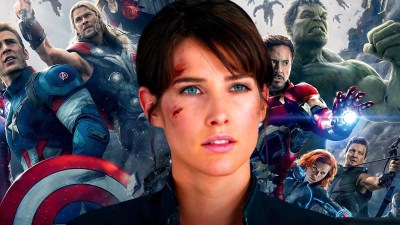
Budapest is the MCU’s most sustained tease, a mission referenced in The Avengers, revisited in Black Window, and alluded to across other entries, yet never shown on screen. What the franchise has gradually confirmed through dialogue is that the operation, which took place around 2008, was Natasha Romanoff’s (Scarlett Johansson) final step in defecting from the Red Room to SHIELD. She and Clint Barton (Jeremy Renner) were tasked with assassinating General Dreykov (Ray Winstone), the head of the Black Widow program, a mission that required Natasha to use his young daughter as bait to confirm his location before detonating the building they were inside. Dreykov survived unbeknownst to them, and the two agents then spent ten days evading Hungarian Special Forces with no extraction plan, including two days hiding inside a subway station air duct. That combination of tactical desperation, moral compromise, and the foundational moment of one of the franchise’s most important friendships is exactly the material that could become a memorable movie.
3) Banner’s Transformation Into Smart Hulk

The off-screen arc Bruce Banner (Mark Ruffalo) completed between Avengers: Infinity War and Avengers: Endgame represented the culmination of nearly a decade of character development. After Hulk refused to emerge following his defeat at the hands of Thanos, Banner spent eighteen months in a gamma lab merging his consciousness with the Hulk’s body, a scientific breakthrough that produced Smart Hulk. With Banner’s intelligence operating at full power inside the Hulk’s indestructible frame, Smart Hulk cleared the Emerald Giant’s name and became a true hero, even saving the President. Audiences meet this version of the character for the first time,e ordering food in a diner. The psychological struggle required to stop fighting the Hulk and start collaborating with it, the science behind the merger, and the surreal experience of a gamma-irradiated monster becoming a beloved public figure are among the most compelling chapters of Banner’s story. Yet, Marvel filmed none of it.
2) Carol Danvers vs. the Supreme Intelligence
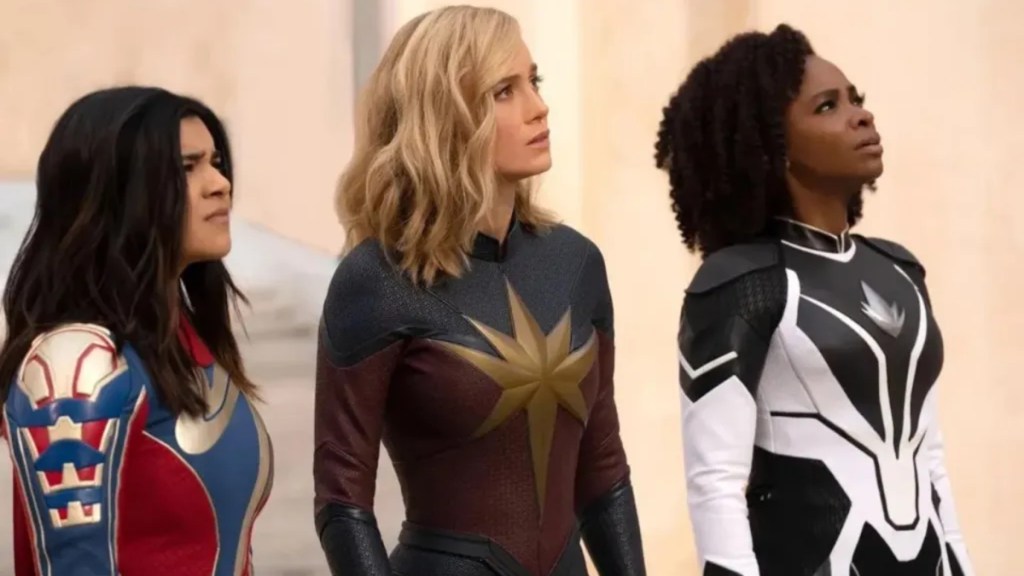
At the end of Captain Marvel, Carol Danvers (Brie Larson) sends Yon-Rogg (Jude Law) back to Hala with a message that she is coming for the Supreme Intelligence, the artificial collective mind governing the Kree Empire. The MCU then spent four years and two Avengers films saying nothing about whether she followed through with her promise. The Marvels finally confirmed that Carol flew to Hala, fought her way through its defenses, and destroyed the Supreme Intelligence, a decision that inadvertently destabilized the Kree civilization, triggered a civil war that depleted the planet’s resources, and earned her the nickname “The Annihilator” among an entire species. That chain of events, a hero dismantling an oppressive regime only to inadvertently cause a collapse she cannot contain, is a more dramatically complex story than anything in the divisive The Marvels. The actual film set around those consequences, but never exploring the actual one-woman war against the Kree, received a deeply disappointing theatrical run, earning just over $200 million globally.
1) Hawkeye’s Descent Into Ronin
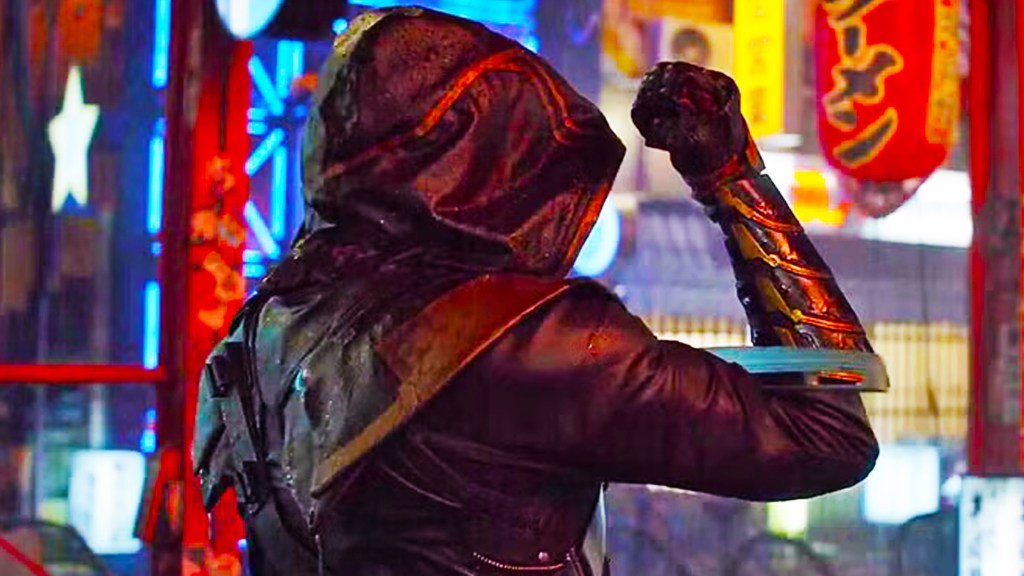
When Avengers: Endgame reintroduced Clint Barton, he was in Tokyo executing the Yakuza’s leadership in a black-and-gold suit with a sword. The film revealed that after losing his entire family to Thanos’ (Josh Brolin) Snap, Barton had spent five years traveling the world and methodically murdering criminals who survived while innocent people died. He became Ronin, a name drawn from the Japanese term for a masterless samurai, and essentially operated as a grieving man with a kill list. Endgame then absorbed him back into the main plot without examining a single moment of that five-year collapse. The Hawkeye series later dealt with the consequences — the enemies he made, the guilt he carried — but the descent itself was never dramatized. A film following Barton’s psychological unraveling from hero to vigilante could have been the MCU’s most unflinching character study. The franchise had all the raw material for something genuinely dark and decided instead to leave it to the imagination.
Which MCU story that happened off-screen do you most want to see dramatized in full? Leave a comment below and join the conversation now in the ComicBook Forum!
