Just a month after its release, Avatar: Fire and Ash has already proved that James Cameron remains the undisputed titan of the modern box office. The film has already amassed a staggering $1.3 billion worldwide, cementing its position as a historic commercial success and proving that the global appetite for the world of Pandora remains voracious. This commercial dominance was mirrored by a generally positive critical response, with reviewers noting the technical evolution of the performance-capture technology and the increased narrative stakes introduced through the antagonistic Varang (Oona Chaplin). The success of Avatar: Fire and Ash is rooted in its ability to balance high-concept world-building with grounded personal stakes, a combination that has resonated with a broad global demographic seeking both spectacle and sincerity.
Videos by ComicBook.com
Avatar: Fire and Ash’s emphasis on the biological interconnectedness of Pandora continues to drive the emotional engagement of the fanbase, particularly through the recurring themes of indigenous resilience and the preservation of natural resources against the industrial greed of the RDA. While the franchise’s visual effects often dominate the conversation, these deeper narrative threads regarding family loyalty and environmental stewardship provide the necessary foundation for its ongoing cultural longevity. For those who find themselves captivated by the sheer scale of Cameron’s vision or the intimate bonds that define the Na’vi struggle, several other cinematic works explore similar frontiers across the science fiction genre.
7) Guardians of the Galaxy

James Gunn redefined the modern space opera with Guardians of the Galaxy by prioritizing the development of a chosen family over traditional superhero tropes or military hierarchies. The story brings together five disparate criminals, including Peter Quill (Chris Pratt) and Gamora (Zoe Saldaña), who must overcome their individual traumas to prevent a galactic genocide at the hands of fanatical antagonists. This focus on emotional bonds is the core characteristic of the Guardians of the Galaxy franchise, mirroring the fierce familial loyalty that Jake Sully (Sam Worthington) and Neytiri (Zoe Saldaña) exhibit throughout their struggle to protect their children on Pandora.

The Guardians band together through their shared history of loss, which makes their eventual commitment to one another feel earned within the context of the larger galactic conflict. On top of that, the production utilizes an imaginative array of alien worlds and cultures to create a sense of scale that matches the variety of the various Na’vi clans. While the film is known for its humor and retro soundtrack, its lasting appeal comes from the sincerity with which it explores how outcasts find meaning and protection in a surrogate family unit.
6) WALL-E

WALL-E utilized a nearly silent first act to deliver a powerful critique of consumerism and environmental neglect while maintaining a high level of emotional resonance that appeals to audiences of all ages. Directed by Andrew Stanton, the film follows a solitary trash-compacting robot named WALL-E (voiced by Ben Burtt) who spends centuries cleaning a desolate Earth while humanity lives in a state of physical and mental atrophy aboard a corporate starship. The discovery of a single living plant serves as the catalyst for a grand adventure that explores the necessity of environmental restoration and the dangers of allowing corporate interests to dictate human survival.
While WALL-E addresses significant ecological themes, its primary strength lies in the profound emotional bond that develops between WALL-E and a high-tech probe named EVE (voiced by Elissa Knight). Their relationship provides a humanistic core to a story about a planet that has lost its vitality, proving that connection is a prerequisite for any meaningful progress toward a sustainable future. Finally, the film’s depiction of the Buy n Large corporation offers a satiric mirror to the industrial exploitation of the RDA, emphasizing the inherent value of coexistence over exploration.
5) Nausicaä of the Valley of the Wind

Hayao Miyazaki established a vital precedent for environmental science fiction with the 1984 release of Nausicaä of the Valley of the Wind, a film that depicts a post-apocalyptic world where humanity struggles to survive on the fringes of the Sea of Decay. This massive, fungal forest releases toxic spores and is protected by giant insects known as the Ohmu, creating a biological barrier on top of the hubris of a forgotten industrial war. The narrative focuses on the titular Princess Nausicaä (voiced by Sumi Shimamoto), whose scientific curiosity leads her to discover that the forest is actually a self-regulating system purifying the polluted soil rather than a predatory threat. This revelation aligns with the ecological concerns found in the Avatar series by portraying nature as a complex force that requires respect and understanding rather than military conquest.
The visual design of Nausicaä‘s Toxic Jungle, with its bioluminescent flora and intricate hierarchies, offers a hand-drawn parallel to the vibrant and interconnected ecosystems of Pandora. Plus, by rejecting the typical hero’s journey in favor of a message about biological stewardship and coexistence, Miyazaki created a lasting landmark that challenges viewers to rethink their relationship with the natural world.
4) Dawn of the Planet of the Apes
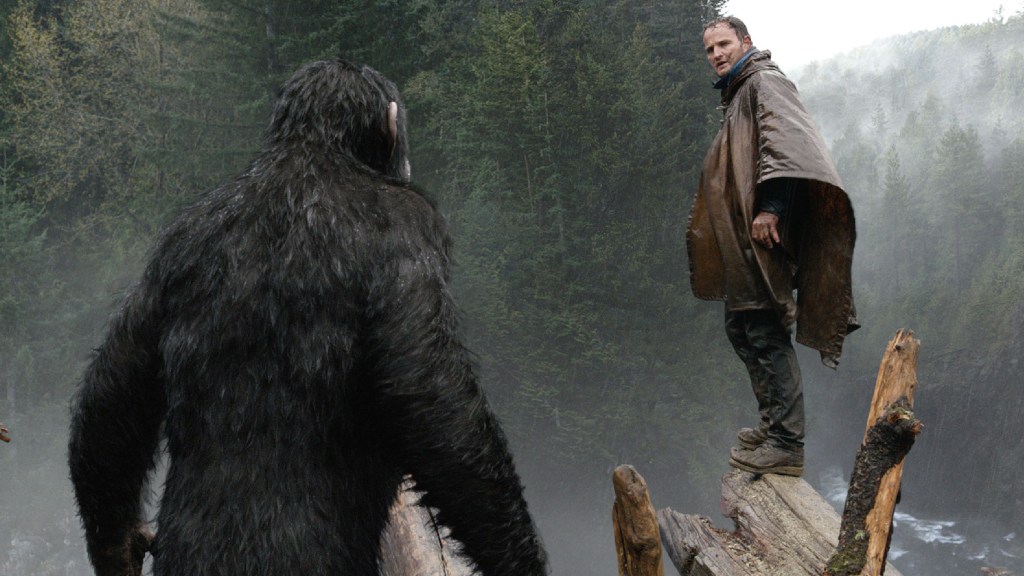
The 2014 Dawn of the Planet of the Apes delivers a sophisticated exploration of civilization, conflict, and leadership in a world where humanity is no longer the dominant species. Directed by Matt Reeves, the film focuses on the fragile peace between a colony of genetically evolved apes led by Caesar (Andy Serkis) and a group of human survivors struggling in the ruins of San Francisco. The narrative emphasizes the similarities between the two groups, showing how fear and historical prejudice can undermine the efforts of leaders like Caesar and Malcolm (Jason Clarke) to avoid total war.
The production utilized cutting-edge motion-capture technology to provide the ape characters with a level of emotional depth that forces the audience to engage with them as fully sentient individuals with valid grievances. This approach mirrors the way James Cameron presents the Na’vi as a culture with its own legitimate political and social structures rather than simple obstacles to human progress. By centering the story on the internal politics of an emerging civilization, Dawn of the Planet of the Apes also provides a tragic look at the difficulties of coexistence and the heavy price of maintaining peace.
3) The Abyss
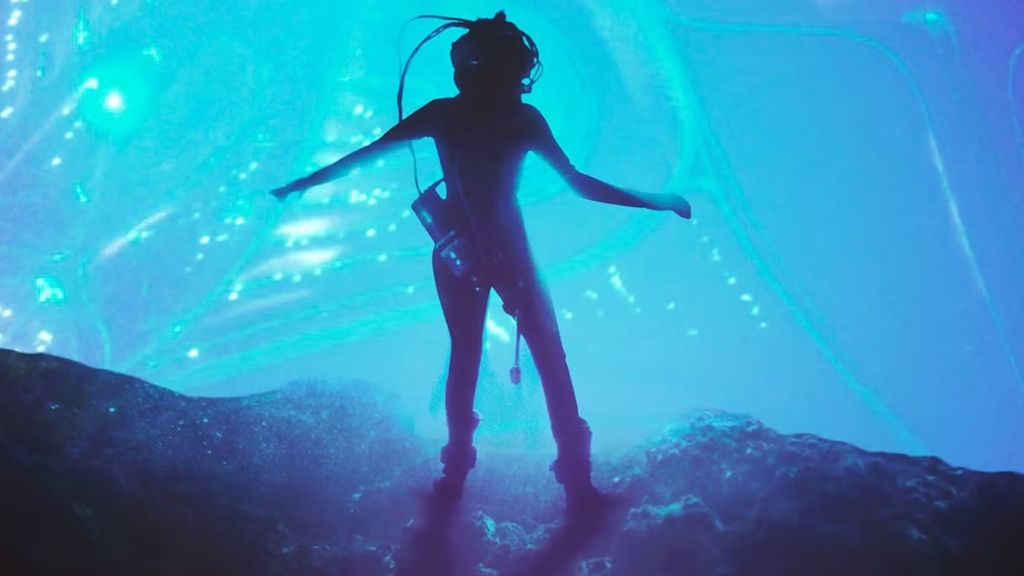
Before he revolutionized the industry with the world of Pandora, James Cameron explored the dangers of extreme environments in his 1989 science fiction epic The Abyss. The plot involves a civilian diving team led by Bud Brigman (Ed Harris) and Lindsey Brigman (Mary Elizabeth Mastrantonio), who are conscripted by the military to recover a sunken nuclear submarine during a period of high international tension. Deep within the Cayman Trough, the crew encounters a non-terrestrial intelligence that has lived undisturbed by human conflict for millennia, leading to a confrontation between scientific wonder and destructive paranoia.
The Abyss reaches a massive scale of epicness by utilizing underwater environments to create a sense of claustrophobia and awe that few other productions have replicated in the decades since its release. In addition, the narrative explores the tension between exploration and military aggression, a theme that has remained a cornerstone of Cameron’s work. The director’s commitment to practical effects and high-stakes realism ensures that the alien encounters feel tactile and grounded, serving as a direct precursor to the bioluminescent wonders seen in his Avatar trilogy.
2) Interstellar

Christopher Nolan’s Interstellar is a grand achievement in science fiction that blends the vast scale of space exploration with a devastatingly intimate focus on emotional bonds that transcend the laws of physics. The story follows astronaut Joseph Cooper (Matthew McConaughey) as he leads a mission through a wormhole to find a new home for a dying humanity, leaving behind his children on a planet decimated by a global environmental blight.
Interstellar uses the relative nature of time to exacerbate the tragedy of Cooper’s separation from his daughter, Murph (Jessica Chastain), turning years of lost contact into a tangible physical obstacle that drives the narrative forward. This structure highlights the idea that love is a force capable of transcending dimensions, providing a thematic anchor to the high-concept science depicted on screen. Furthermore, the production features massive, practical sets and groundbreaking visual effects to depict alien worlds with a level of detail that rivals the diverse landscapes of Pandora.
1) Dune

The 2021 adaptation of Dune stands as a pinnacle of modern science fiction in terms of its sheer scale and the depth of its cultural world-building. Directed by Denis Villeneuve, the film follows Paul Atreides (Timothée Chalamet) as his family takes stewardship of Arrakis, a desert planet that is the sole source of the most precious resource in the universe. The production achieves an unmatched sense of epicness through its use of massive landscapes and brutalist architecture, creating a universe that feels ancient and indifferent to human concerns.
While Dune‘s narrative is a complex study of political intrigue and colonial exploitation, it also provides a detailed look at how the indigenous Fremen have adapted their entire culture to survive in an extreme environment. This focus on the power dynamics between the Great Houses and the local populations mirrors the central conflict of the Avatar franchise, offering a more somber and cerebral take on the struggle for autonomy. Villeneuve’s vision of Arrakis is a masterpiece of atmospheric storytelling, proving that a planet’s environment is just as much a character as the individuals fighting over its surface.
Which epic science fiction movies do you think feature the most imaginative and detailed world-building outside of Pandora? Leave a comment below and join the conversation now in the ComicBook Forum!
Most Viewed
-

Courtesy of Sony Pictures Animation / McDonald's -

Courtesy of Sony Pictures Animation / McDonalds -

Images courtesy of Warner Bros. Pictures -

Image Courtesy of Netflix -

Image courtesy of The Pokemon Company -

Image Courtesy of Marvel Comics