Sixteen years ago, James Cameron took the world to Pandora for the first time with 2009’s Avatar, a movie that revitalized the movement of 3D technology in feature films but also laid the groundwork for Hollywood to try and emulate. Though time got in the way of a follow-up, and it could be argued that many blockbusters outpaced Cameron’s original film in terms of cultural footprint, the success of Avatar could never be denied and was seldom replicated. When 2022’s Avatar: The Way of Water was finally released, it proved that it was worth the wait, but that the filmmaker behind The Terminator, Aliens, and Titanic had not lost any spin on his fastball.
Videos by ComicBook.com
Three years now since The Way of Water, the third movie in the series, Avatar: Fire and Ash, has finally arrived, and, with it, concluded a promise that movie fans have been hearing about for over a decade. It was never a question of if Avatar would get sequels, just when they would happen and how the world would receive them. The good news is that audiences are still proving eager to return to the world, and thankfully, Cameron and his collaborators still have plenty of tricks up their sleeves. Fans might think that the third movie might just be more of the same, and to an extent, that’s not incorrect, but Fire and Ash is hiding lots of surprises.
At one point during Avatar: Fire and Ash, I checked the time; so much had already happened in the film and the progression of its characters and narrative that, to me, it felt like maybe we were halfway through already, but only an hour had occurred. Fire and Ash packs more into sixty minutes than a lot of other movies do in their entire runtime (and clocking in at over three hours, you can pick any string of sixty minutes, and that sentiment would still hold true). That’s the greatest strength of this sequel: it’s a dense narrative that is never dull. Even if there are moments where the film seems to be drawing from the same well as its predecessors or focusing on a boring character, it’s still going to be entertaining.
Rating: 4 out of 5
| PROS | CONS |
|---|---|
| Stunning visual effects and 3D depth | Too much emphasis on the weakest character |
| A major culmination of the story of the series | Finale gets somewhat repetitive |
| New layers of performance for the stars | |
| Impressive pacing given the runtime |
Avatar: Fire and Ash Is the Culmination of the Entire Franchise (Complimentary)
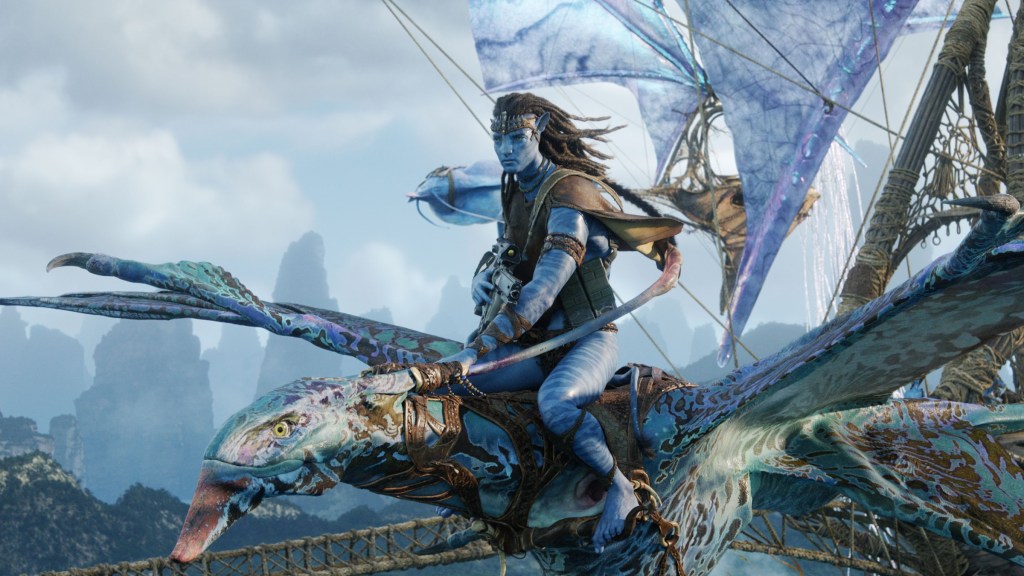
Picking up almost immediately after the events of Avatar: The Way of Water, Avatar: Fire and Ash wastes no time catching you up as quickly as it can while also immediately taking off to new narrative ventures. The Sully clan finds themselves once again moving to new places, threatened once again by the humans on Pandora, but also by the lingering threat of Colonel Miles Quaritch. Narratively, Fire and Ash is picking up almost every available thread from the first two movies, something that longtime fans will no doubt love to see play out but which casual viewers may find tedious, despite the jaw-dropping visuals. That said, the film needs to remind everyone what these story beats are and why they matter.
One of the most compelling things about Avatar: Fire and Ash is how it allows its cast to add even more layers and depth to their characters. The best example of this is Zoe Saldaña as Neytiri, who finds herself in mourning at the start of the film, a deep sadness that both defines her and pushes her into unexpected territory throughout the narrative. Saldaña’s character continues to evolve across the movie, though, and her performance is a soulful and internalized one. Watching Neytiri throughout Fire and Ash makes you appreciate Saldaña as a performer and makes it clear that the visual effects are not doing the bulk of the work here.
Saldaña may be the main standout of the film, but she’s far from the only great performance. Sam Worthington’s stalwart Jake Sully remains the lead, and he continues to use the assumptions his character has about his place as the head of the family as the center for every decision he makes as an actor. There’s a subtlety to all his gestures, but one that is rooted in the character. Given how milquetoast Jake was considered after the first film, it’s amazing to see the progress he’s made. Worthington may not be giving the flashiest performance of the series, but the nuance is present and perhaps only appreciated after stewing on the film.
Sigourney Weaver also continues to push boundaries as Kiri, the adopted Na’vi daughter of Jake and Neytiri, whose story finally comes full circle after her wild origin in The Way of Water. Weaver harnesses the raw emotion of teenage angst, both in finding herself and pushing back against her parents, making for a character that everyone in the audience can find a piece of themselves in. Alongside her is Britain Dalton as Lo’ak, another Sully clan member, who builds on the reluctance he had as a younger sibling in the first film and truly finds himself in the larger story here, which results in the character becoming even more compelling beyond just the Payakan subplot from The Way of Water.
As far as newcomers, though, Avatar: Fire and Ash has one who makes an immediate impact. Oona Chaplin’s Varang, the leader of a volcano-dwelling clan of Na’vi that worship fire, is immediately one of the most compelling villains of the entire franchise. Chaplin not only radiates power in every step she takes, but her commanding presence gives way to new avenues of understanding Pandora that paint the Na’vi in an even more interesting light. What does it mean for a native of this planet to reject everything that has defined the tribes we’ve met so far? Chaplin jumps into the deep end of this with a fresh antagonist that you can’t look away from.
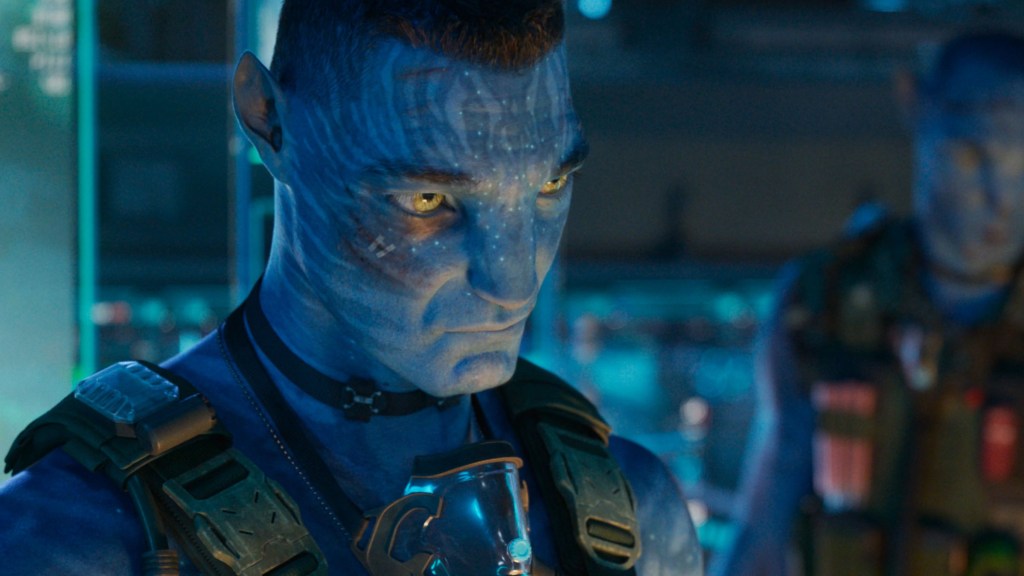
Beyond Saldaña and Chaplin, the most interesting character development in Avatar: Fire and Ash happens for Stephen Lang’s Colonel Miles Quaritch. Across the three films, he might have the most compelling arc of any character in the series, neck and neck with Neytiri, but Lang explores fresh depths with Quaritch in Fire and Ash. Time has given way to new layers for his character’s personality, but there are larger surprises in store for him narratively, all of which allow Lang to play with his role in ways that would have seemed impossible back in 2009. By the end, his character’s complete picture across the three films is fascinating, painting a full tableau of expression and feelings.
Avatar: Fire and Ash Is the Culmination of the Entire Franchise (Somewhat Derogatory)
Avatar: Fire and Ash, building off of the previous two movies, doesn’t come without its faults, though, especially in its third act, when it largely repeats key components of the first two movies. That’s not to imply that the action itself isn’t dynamic or interesting — this is a James Cameron-directed movie, after all — but the setup and larger implications in these moments are rooted in what we’ve already seen; it can feel like playing the hits.
This is where Avatar: Fire and Ash really does feel like the franchise’s third movie, perhaps taking some of its cues from 1983’s Star Wars: Episode VI – Return of the Jedi. In the way that the big ending of that film had echoes of the previous two movies, including an even bigger enemy weapon, Fire and Ash marches to the same beat. By that notion of Return of the Jedi, however, the third Avatar movie utilizes its sameness to take what fans know and are perhaps expecting from previous movies to try new things. Sure, you’ve seen a Tulkun jump on a whaling ship, and you’ve seen Na’vi divebomb each other while riding banshees, and you’ve seen Jake Sully confront Quaritch, but Fire and Ash uses them as a bridge to complete its larger story, both of the film itself and the trilogy as a whole, just like Return of the Jedi. Even with sequences that start in a repetitive fashion, the ending proves that there was a totally different function for that setup.
This only becomes a problem when the sameness of the sequence pulls you out of the film, especially with how the density of the narrative forces some of its best elements to be pushed aside. Varang, for instance, is a major focal point upon her introduction; she has a grand entrance and makes a big splash for maybe the first 90 minutes she’s on screen, but her arc feels totally sidelined by the film’s ending.
The sameness of Fire and Ash‘s is far from the weakest thing about the movie, though, and in truth, it isn’t even that big of a deal due to the larger spectacle of the visual effects and how captivating it is on the whole. No, the true weakness of Avatar: Fire and Ash is the fact that a large chunk of the movie’s entire story hinges on one of the weakest characters of the series: the adopted human son of the Sullys, Spider.
Jack Champion does well in the role, playing the emotional moments with a vulnerability that can only come from his outside perspective, but the writing for the character does him no favors. In terms of the narrative and plot, Spider’s place makes sense and is a fine story to explore, but he’s simply not compelling when compared to any of his scene partners, even the non-speaking animals. Fire and Ash is over three hours long, and though its pacing is fundamentally its greatest strength, any time it becomes clear that a scene is about to be just about Spider, it’s just not as interesting as what came before it or what will follow.
Avatar Is Still Unlike Anything Else at the Movies

The only things holding Avatar: Fire and Ash back are its minor inconsistencies, whether it’s characters who aren’t very compelling and take on a big piece of the narrative, or ones who are compelling and just disappear. Even when factoring in the similarities in major act breaks that reflect the previous movies, it’s not a major fault, as it fits the mold of genre stories that precede it. What makes these complaints largely feel trivial is the fact that this movie is a modern epic, with so much story, character, mythology, action, and emotion that there is always something to latch onto.
Avatar: Fire and Ash is dense and methodical in its storytelling, with grand visual effects that routinely make you forget that a lot of what you’re looking at isn’t even real. Cameron and his team have crafted one of the defining movie trilogies of the modern era, but also some of the greatest spectacle entertainment of all time. Fans who bought stock in Avatar back in 2009 will feel justly rewarded for their patience, as Avatar: Fire and Ash picks up a lot of loose threads and fully embodies the ethos that it’s all about the journey, not the destination.
There’s a finality to Avatar: Fire and Ash that also makes it feel special; even if its last moments are a little abrupt, it’s a film that feels comfortable coming to a definitive conclusion. In a world where many blockbusters look and feel the same, but also cannot overcome the fact that they’re a chapter in a bigger story, Avatar: Fire and Ash is at least refreshing in how it bucks every possible trend. It’s dynamic for newcomers, it’s rewarding for old fans, and there’s nothing else like it at the movies.
Most Viewed
-

Official art by Bastien Lecouffe-Deharme -

A photo of the Retrovolt Arcade taken in 2017, showing several classic arcade cabinets and stools. -

Image courtesy of Tor Books/Macmillan -

Courtesy of Saber Interactive