Abraham Lincoln remains arguably the most famous leader in the United States’ history, universally recognized for his monumental feats. By successfully managing the American Civil War and issuing the Emancipation Proclamation, the iconic commander-in-chief forever secured his legacy as a defining figure of democratic perseverance. Given this unparalleled historical footprint, it is entirely unsurprising that Abraham Lincoln has been the subject of numerous cinematic interpretations. For instance, audiences have seen his life chronicled with prestige in Steven Spielberg’s acclaimed drama Lincoln, and they have even watched him slay the undead in the wacky horror-action hybrid Abraham Lincoln: Vampire Hunter. Now, the legendary political figure is returning to the big screen in a brand-new biopic starring Tom Hanks and featuring an unconventional visual format.
Videos by ComicBook.com
The upcoming project is an adaptation of Lincoln in the Bardo, based on the 2017 Booker Prize-winning novel by acclaimed author George Saunders. Directed by Duke Johnson, who previously helmed the Academy Award-nominated Anomalisa, the film will feature Hanks delivering a live-action performance against a backdrop of stop-motion animation produced by Starburns Industries. Rather than focusing on wartime leadership or political maneuvering, the narrative takes place over a single night in 1862, following the commander-in-chief as he visits a Georgetown cemetery to grieve the recent death of his 11-year-old son, William Wallace Lincoln. This emotionally charged premise will unfold through a surreal ensemble of both living and deceased characters navigating the transitional space known as the bardo.
Tom Hanks Is a Genius When It Comes to Biopics
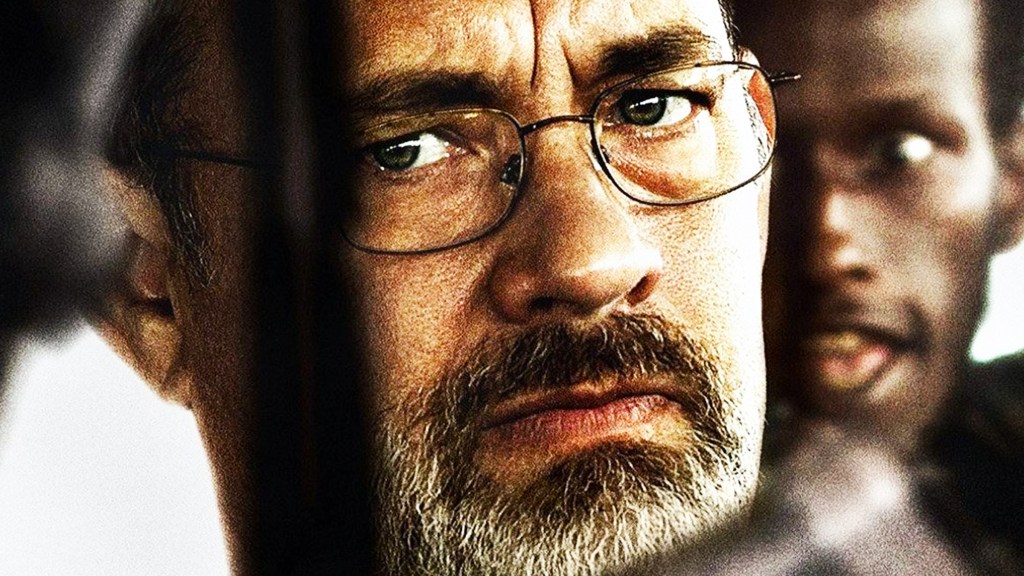
Casting Tom Hanks to anchor an experimental historical drama is a smart move. Throughout his decades-long career, Hanks has consistently anchored true-story adaptations that yielded significant financial returns and critical acclaim for their respective studios. In Ron Howard’s Apollo 13, Hanks portrayed astronaut Jim Lovell, securing a massive $355 million worldwide. In addition, Paul Greengrass’s Captain Phillips hauled in $218 million globally by focusing on the 2009 Maersk Alabama hijacking, while Clint Eastwood’s Sully earned $240 million by charting the media scrutiny surrounding pilot Chesley Sullenberger.

Beyond raw ticket sales, Hanks’s filmography illustrates a highly effective methodology for adapting heavily documented cultural icons without resorting to simple caricature. In Marielle Heller’s A Beautiful Day in the Neighborhood, Hanks captured the distinct mannerisms of television host Fred Rogers, a performance that resulted in an Academy Award nomination. The role required Hanks to replicate a universally recognized persona while maintaining grounded dramatic tension beneath a charismatic public facade. Similarly, his work as Walt Disney in Saving Mr. Banks demanded the careful navigation of a highly scrutinized, real-world visionary. It’s also interesting to note that Hanks narrated the docudrama Killing Lincoln, which already gives him an insight into the President’s history.
Because the movie utilizes a stop-motion format set within a surreal interpretation of a transitional afterlife space, the upcoming adaptation of Lincoln in the Bardo presents a similar structural challenge for the production team. Consequently, the studio is using the talent and the reputation of Hanks to ensure a baseline of public interest, despite the unorthodox concept of the biopic.
Are you excited to see Tom Hanks portray Abraham Lincoln in Lincoln in the Bardo? Leave a comment below and join the conversation now in the ComicBook Forum!
Most Viewed
-

Official art by Bastien Lecouffe-Deharme -

A photo of the Retrovolt Arcade taken in 2017, showing several classic arcade cabinets and stools. -

Image courtesy of Tor Books/Macmillan -

Courtesy of Saber Interactive