HBO is the biggest brand name in prestige television today, but the climb to get there began all the way back in the year 1999. As the new millennium was approaching, HBO was taking bold swings at new high-concept twists on old TV genre staples. Backed by visionary creators, this first new wave of HBO shows truly transformed the medium of TV, set a whole new tone for what shows could be, and broke so many boundaries that it was scary, at times, to consider how society at large was being affected.
Videos by ComicBook.com
David Chase’s The Sopranos led the pack of new HBO shows that were punching out of the niche lane of premium cable and into the pop-culture mainstream (whereas shows like prison drama Oz were still just cult hits). But if you’re asking when The Sopranos really began to hit its marks and resonate with viewers on a large scale, well, the answer to that is on February 7, 1999, with the episode “College”.
Why “College” Was A Game-Changing Episode of HBO’s The Sopranos
In its first four episodes, The Sopranos established the complicated balance between the lives of Tony Soprano (James Gandolfini), the family man and the mobster. Episodes 1 – 4 serve as their own mini-arc, detailing how Tony almost goes to war with his uncle, Junior (Dominic Chianese), who is secretly being coached by his mother, Livia (Nancy Marchand). Episode 4 ended with Tony establishing a new status quo, where he lets Junior believe he is the boss to divert attention away from him, while Tony actually runs things as the underboss with the real connections and influence.
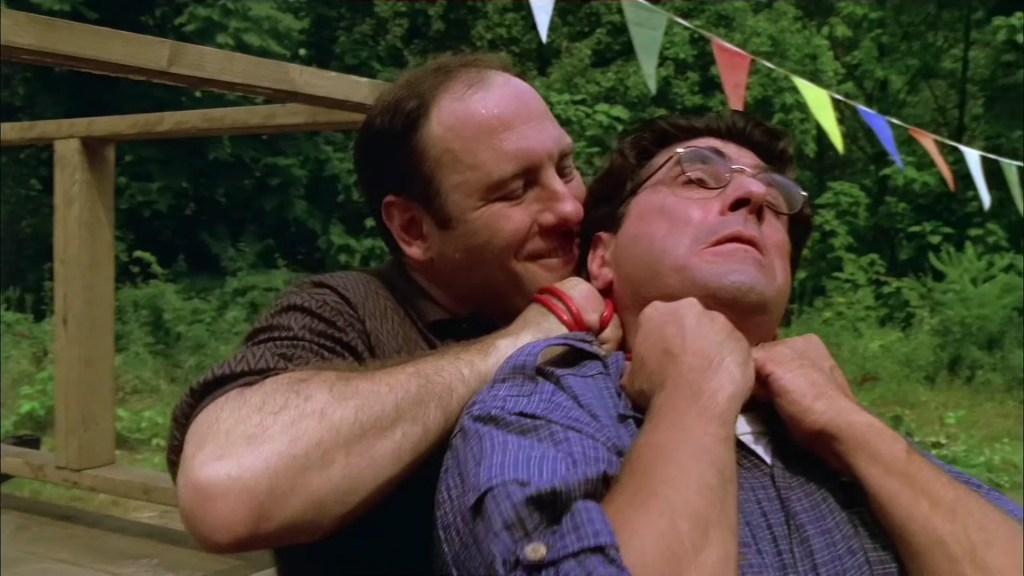
Episode 5, “College”, was the first to break the usual mold of a Sopranos episode (to that point). The episode breaks the Sopranos nuclear family up for the first time: Tony leaves New Jersey to take his daughter, Meadow (Jamie-Lynn Sigler) on a series of college tours in Maine; however, the mob boss gets violently distracted when he spots a former mobster who has been hiding in witness protection at a small town gas station. Meanwhile, Tony’s wife Carmela (Edie Falco) gets an unexpected night alone when their son A.J.stays at a friend’s house. After having flirted with temptation, Carmela decides to risk it all by having the family priest, Father Phil (Paul Schulze), come over for an unofficial date night of dinner, wine, and a movie.
The episode does exponential work in adding layers and complexity to the principal couple of Tony and Carmela – neither of whom is shown to be as committed to the idea of family as they like to pontificate that they are. Tony chooses his mob family’s vendetta over the prospect of his daughter’s future; Carmela tells the priest too much about Tony’s criminal nature, and nearly violates her marriage and her faith as an act of rebellion.
And, even when the haze of an unusual weekend fades, the episode still tosses a major developmental twist into the mix: Carmela learns that Tony’s therapist, Dr. Melfi (Lorraine Bracco), is a woman, after Tony let her believe it was a man. This revelation, and Carmela’s rebellious attempt at infidelity, are the start of an erosion that eventually splits the Sopranos family completely.

“College” is the first real showcase of what David Chase achieved with The Sopranos: It was more than a modern mobster fantasy, but rather an artistic and insightful deconstruction of mob life, and all the toxic effects it has – even on those not directly affiliated, or those trying to move on to a different life. The scene of Meadow driving with Tony (who has clear signs of injury after murdering the informant), knowing her dad’s a monster, but choosing to ignore it, is still haunting to this day.
The change in character arrangements and settings was immensely effective: “College” is still ranked within the top 10 (if not top 5) TV episodes of all time on many lists, and marks the moment where David Chase and his creative team unequivocally established that they were crafting the best show on TV at the time.
The Sopranos can be streamed on HBO Max. What are your favorite episodes of the show? Discuss with us on the ComicBook Forum!
More TV Shows
-
IMAGE COURTESY OF BBC -
Image Courtesy of Paramount+ -
Courtesy of The Sci-Fi Channel