
It’s not uncommon for a TV show to deliver its final episode and the audience to sit in silence after it concludes and wonder, “That was it?” or “What did I just watch?” or “What a waste this entire thing was.” It happened just this week with the surprise series finale of Euphoria on HBO. In fact, the premium cable network is no stranger to endings that have riled up fans of the shows, such as the hard cut to black inThe Sopranos‘ last episode or even the finale of Game of Thrones. Not everything can wrap up beautifully like Six Feet Under.
Videos by ComicBook.com
The phenomenon of bizarre TV finales isn’t limited to the past twenty years, though, with plenty of unsatisfying conclusions across the decades, like the cliffhangers found in Alf and Sliders. Recently marked the anniversary of one of the most bizarre rug-pull conclusions to a TV show ever, with May 25 marking the 38th anniversary since the series finale of medical drama St. Elsewhere. Though well-liked at the time of its airing (the series was nominated for Outstanding Drama Series at the Primetime Emmy Awards for all six seasons) the ending of the show left a bad taste in some viewers’ mouths for a bizarre twist. In the end, though, it unlocked the key to potentially the biggest pop culture crossover in history.
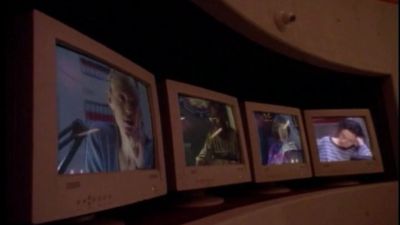
St. Elsewhere’s Ending Was a Major Twist
Though it had moments of levity, St. Elsewhere was by and large a medical drama set at the fictional St. Eligius Hospital, described as a dumping ground throughout the show. That struggle in mind, St. Elsewhere was marginally realistic for the time in the stories it told but also what the doctors had to deal with (including timely references, like AIDS). When the finale of the show arrived, it naturally had plenty of conclusions, including two major character deaths, but its two final scenes are what make it so memorable to this day.
In the penultimate scene of the finale, Dr. Donald Westphall remembers his colleague Dr. Auschlander after his death, while his son Tommy stares out the window at the snow. The scene then cuts to an exterior shot of the outside of the hospital, shifting to an all-new scene with Westphall (who is clearly now a builder, and not a doctor) returning home to his father, “Auschlander,” and revealing his son Tommy sitting on the floor playing with a snow globe.
Before the episode ends, Donald Westphall delivers the most surprising line of all, saying, “I don’t understand this autism thing, Pop. Here’s my son. I talk to him. I don’t even know if he can hear me, because he sits there, all day long, in his own world, staring at that toy. What’s he thinking about?”
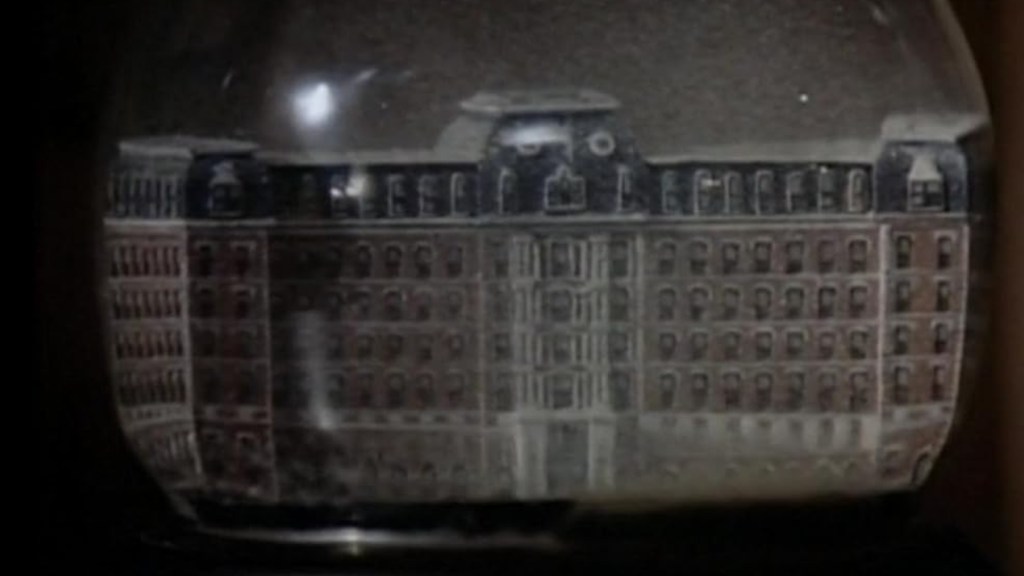
As Tommy shakes the snowglobe and puts it on top of the TV, it’s revealed that the object inside is none other than St. Eligius Hospital, raising the ultimate question: Was the entirety of St. Elsewhere a story that played out in the mind of an autistic boy? Did the “It was all a dream” trope just reach its ultimate form? The implications of the ending, however, get even bigger.
The Tommy Westphall Universe Is the Biggest Crossover in Pop Culture History

Beyond simply implying that the entirety of St. Elsewhere took place in the mind of Tommy Westphall, though, the ending of the series carries an even more profound reveal. Thanks to crossovers and connections with other shows, the ending of St. Elsewhere also implies that hundreds of TV shows from across American television, including some of your favorites, also all took place in Tommy Westphall’s mind. This idea gave rise to the “Tommy Westphall universe,” an idea first posited by none other than the late comic book creator, Dwayne McDuffie.
McDuffie first wrote about the extended idea of the Tommy Westphall universe in a blog post back in 2006. In his writing, McDuffie put forth the idea of the connectivity carried across St. Elsewhere, and the insanity implied by all of it being in Tommy Westphall’s mind, by using it as an example for how comic book fans should treat continuity for the likes of DC and Marvel as loosely as possible, and not be strict about adherence when it comes to crossovers.
To explain it all, McDuffie notes some of the connections from St. Elsewhere to other shows. The baseline is that characters from St. Elsewhere went on to appear in the show Homicide: Life on the Street, the series that marked the first appearance of Detective John Munch, played by the late Richard Belzer. Munch is a notorious fictional character thanks to his own crossovers, appearing in both The X-Files and Law & Order TV franchises, meaning that by extension all of the shows connected to both of these fall under the purview of the Tommy Westphall universe.
McDuffie takes it multiple steps further, as well, adding that Homicide also played host to characters from Chicago Hope, which itself crossed over with Picket Fences, which connects to Ally McBeal, which connects to The Practice, and so on. His point being, in what he called the “Grand Unification Theory” at the time, that while “crossovers can be fun,” the commitment to “cross-series continuity is silly.” By making it clear that believing in the connectivity between all these shows means that none of them “really” happened, he makes a great case for not adhering so closely to it as a whole.
The trouble, of course, is that McDuffie’s theory wasn’t taken with the intentions it was built around; instead, fans have used it as a guidepost to find even more connections, filling out the far reaches of the “Tommy Westphall universe.” A current website that maintains the connections puts the number of shows “in” the universe at 419, including plenty of shows that weren’t even on the air when McDuffie himself passed away in 2011. Among the shows on the list that have a connection are classic sitcoms like The Brady Bunch (which aired nine years before St. Elsewhere), the iconic Adam West-starring Batman series, the entirety of Star Trek (yes, every series), plus LOST, Breaking Bad, Supernatural, The Walking Dead, CSI, and hundreds more. You can find the full website exploring this here
In the end, though, the ending of St. Elsewhere is the best proof possible that McDuffie was correct, and that the continuity of a crossover shouldn’t be treated as gospel. When the conclusion of St. Elsewhere was being crafted, it was being done exclusively with the idea of wrapping up its own story with an ending that the writers wanted, not creating a problem for almost the entirety of fictional American television. Two things can be true, though: McDuffie was right, and St. Elsewhere‘s ending is the linchpin of the biggest crossover in pop culture history.
