Marvel’s new Wonder Man TV show is technically designed as something of a standalone. It’s released under the Marvel Spotlight banner, meaning it’s designed to require as little prior viewing as possible. Although the show is packed with Easter eggs and references – including to in-universe actors from The Eternals and Loki Season 2 – none of them are particularly important in terms of the overarching plot. There is, however, one notable exception.
Videos by ComicBook.com
Wonder Man episode 4 is probably the best in the series, perfectly described by Darren Mooney as “on the short list of the best things that Marvel has ever done… A story about fame, about exploitation and about the way that the industry chews up talented people of colour and spits them out.” This episode is centered on a super-powered character known as the Doorman, a deep cut in Marvel lore who gains his powers after exposure to a mysterious goo. And that’s where the true deep lore begins.
The Black Goo Comes From Roxxon
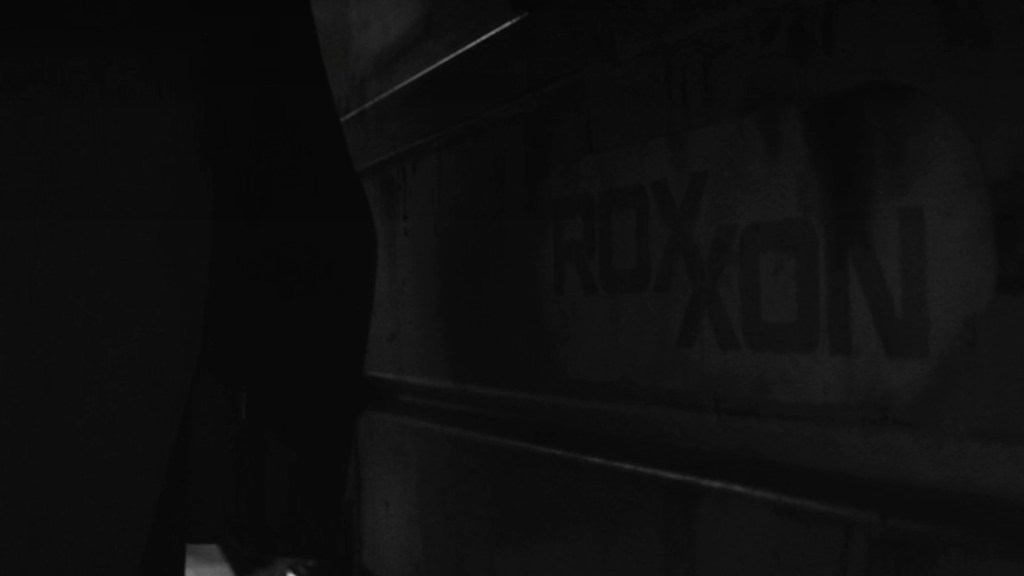
Doorman discovers this black goo while dumping trash, and touching it is enough to transform him. It’s easy to miss, but he’s dealing with trash from a company named Roxxon. This corrupt business tend to deal with energy sources, and they made their comic book debut all the way back in 1974’s Captain America #180 as an oil and petroleum company. It didn’t take Roxxon long to become a major thorn in Iron Man’s hide (a competitor with Stark Industries), although modern comics have tended to make them Thor villains given the company is currently run by a minotaur named Dario Agger.
Roxxon has been part of the MCU since its beginning, with a Roxxon logo visible in 2008’s Iron Man. There’s an ill-fated Roxon racer in Iron Man 2, while Iron Man 3 explicitly references a disaster involving a Roxxon oil refinery. More recently, they’ve been seen in Loki, She-Hulk, Echo, and there’s even a glimpse of a Roxxon logo in Captain America: Brave New World. And yet, for all that’s the case, the Doorman connection isn’t actually a link to the mainstream MCU at all; rather, it subtly references old Marvel Television shows that haven’t generally been considered canon – until now.
Roxxon’s Wonder Man Role is a Direct Callback to Agent Carter… And Cloak & Dagger
To understand Marvel canon and MCU continuity, you need to be a little familiar with the out-of-universe history between Marvel Studios and Marvel Television. Back in 2015, behind-the-scenes drama between Marvel boss Ike Perlmutter and the redoutable Kevin Feige ultimately led to Disney splitting the company in two. Feige ran Marvel Studios, Perlmutter remained in charge of Marvel Entertainment, and relations between the two were strained to say the least. In the wake of this, it increasingly seemed as though the pre-Disney+ Marvel Television shows – still produced under Perlmutter’s leadership – weren’t really MCU canon at all.
Marvel Television used Roxxon a lot more than the film studio, and revealed they were a lot shadier; they were even involved with the ninjas known as the Hand, villains in The Defenders. But Wonder Man‘s Roxxon reference owes the most to two specific shows, Agent Carter and Cloak & Dagger. Agent Carter Season 2 focused on experiments by a company called Isodyne Energy to master interdimensional energy called Zero Matter – a black goo, identical to Wonder Man. According to Agents of SHIELD, Isodyne was eventually purchased by Roxxon, implicitly canonizing that series for Wonder Man too given the clear narrative arc.
Cloak & Dagger picked up on this, with Zero Matter now called “Darkforce.” Exposure to Darkforce granted one character, Cloak, the ability to access the so-called “Darkforce Dimension,” with his body transformed into a sort of shadowy portal to that realm; he could use it to teleport from place to place. If that all sounds familiar, it’s basically the same as Doorman in Wonder Man; and though the realms weren’t rendered identically, they were similar enough to make many viewers sit up and take note. All this means this one scene in Wonder Man episode 4 references not one but three Marvel Television shows.
After Wonder Man, It’s Time to Reassess What’s MCU Canon

The old problems between Marvel Studios and Marvel Television are long gone, of course (as is Ike Perlmutter). The mainstream MCU is increasingly referencing some of those old shows; Daredevil: Born Again is (as the title alone suggests) a continuation of the classic Marvel Netflix TV show, while the recent Daredevil: Born Again Season 2 trailer brings back Jessica Jones to boot. Given this context, it’s perhaps unsurprising we’re seeing deep-cut references to other Marvel Television shows. But Wonder Man does the continuity so well, because it is deep but unobtrusive.
Wonder Man carefully avoids giving us any of the deep lore that would overwhelm casual viewers. Instead, it simply assumes the continuity, leaving it to the viewers to spot it. To the hardcore fans, this has the potential to affect the entire MCU timeline, incorporating multiple Marvel Television shows into the canon (you can even make an argument for Runaways from this, given Cloak & Dagger crossed over into that series’ second season). But it’s all done with such skill, with Wonder Man avoiding making continuity the focus. It’s surely the best way to do it.
What do you think of Wonder Man? Leave a comment below and join the conversation now in the ComicBook Forum!
Most Viewed
-
Image Courtesy of Netflix -
Image Courtesy of Netflix -
Image Courtesy of Ufotable -

Image Courtesy of WIT Studio