
While Kenner’s Super Powers line was far from the first time DC Comics’ heroes and villains had graced shelves, it’s often taken for granted today how groundbreaking its character selection was for the era. The line represented the first time ever that major DC heroes like the Flash and Green Lantern were offered in action figure form, cementing it straight away as a favorite for collectors. The inclusion of fan-favorite b and c-list heroes like Martian Manhunter and Mister Miracle only helped to cement the line’s appeal to comic book fans.
Videos by ComicBook.com
After Super Powers’ 1986 cancellation, fans immediately set to wondering “what if,” and conjuring from thin air imagined “lost waves” for the years 1986 and beyond. Early online forums were full of speculation that Kenner’s later Swamp Thing figure was developed originally for Super Powers, or that an official version of the unauthorized Argentinian Riddler figure was in development. It wasn’t until years later that official internal presentations from Kenner to DC became public, revealing an expansive and surprising roster of figures in-development.
5) Man-Bat
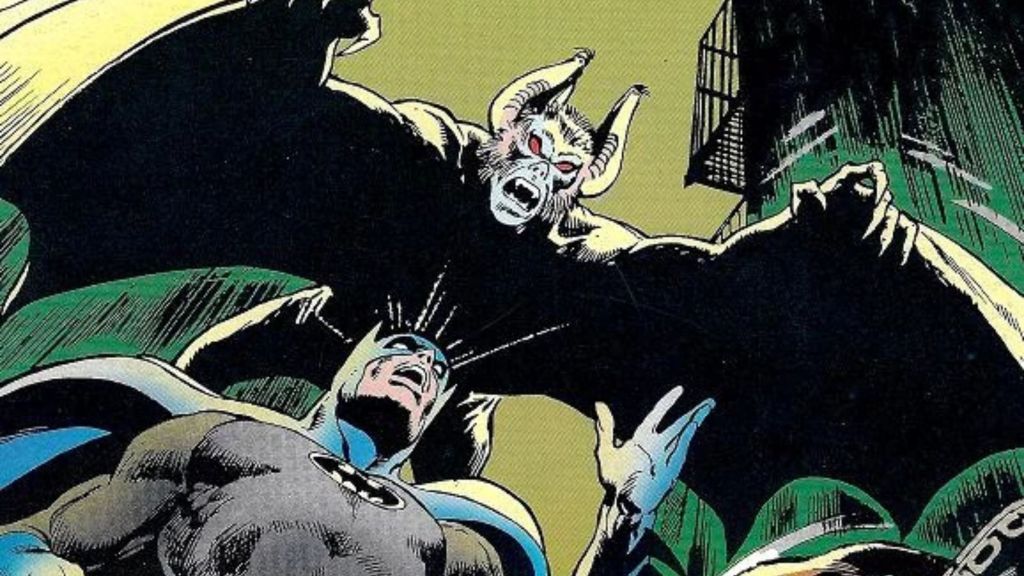
Man-Bat is among the most famous unproduced characters in Super Powers, as he made it as far as the prototype stage before the line’s demise. The prototype was discovered in 1996, with steel production molds being discovered later. Along with this, several resin copies of the prototype have been discovered, with rumor having it that these were given by request to several staff at DC Comics once they learned the planned fourth wave of Super Powers (and Man-Bat with it) would not be going into production.
Man-Bat is a logical choice: the design is eminently “toyetic,” and he compliments an existing, top-selling figure (Batman). As with most DC toylines, Batman’s rogues’ gallery is among the most fleshed out in Super Powers, with three (the Joker, Penguin, Mister Freeze) making it into the line. Though Man-Bat has been prominent since his 1970 introduction, it is surprising to see him prioritized over Riddler and Catwoman, who do not appear anywhere in Kenner’s plans for the fourth wave or beyond. This is unfortunately explicable in the case of Catwoman, who suffers from the era’s conventional wisdom that toys of female characters do not sell, which is also how we got Kenner originals like Cyclotron and Golden Pharaoh before Supergirl or Batgirl.
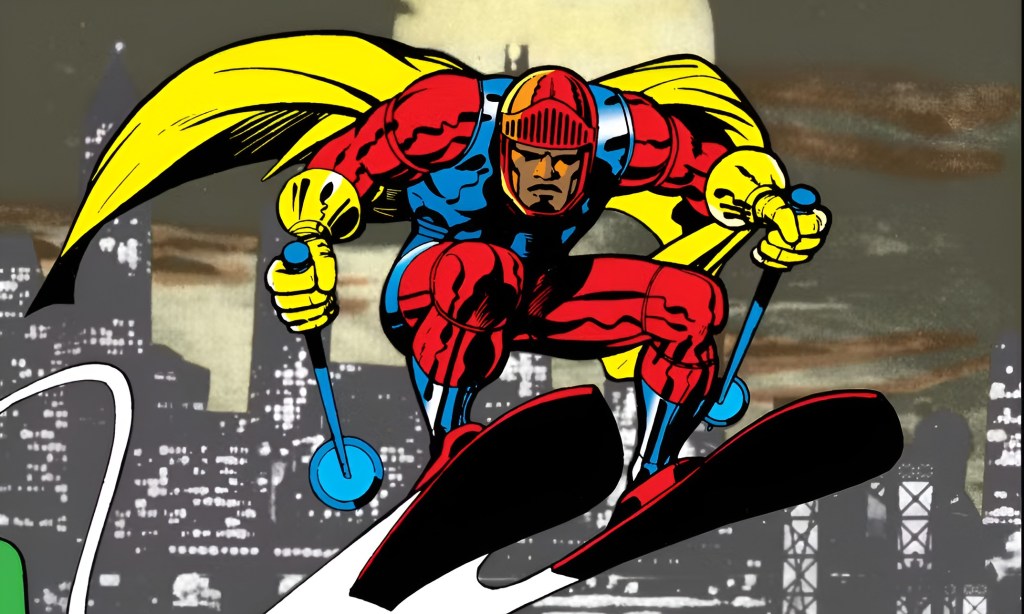
4) Black Racer
One of the coolest things about Super Powers was that comic book legend Jack “the King” Kirby was a designer and consultant for the figures, as well as a writer and artist for the tie-in comics. This did lead to some bizarre choices with character selection, as for better or worse, Kirby was adamant about the inclusion of numerous characters from his “Fourth World” Saga in the line. Of the thirty-four Super Powers figures produced, eight of them were from the Fourth World corner of the DC Universe, with most sporting Kirby-approved redesigns.
Had the line continued, so too would the Fourth World deep-cuts, with death-on-skis “the Black Racer” included in Kenner’s plans. In the comics, the Black Racer is the Grim Reaper of Kirby’s New Gods, a comatose Vietnam veteran whose essence is made to soar the cosmos, collecting the souls of Fourth World’s dead. While the character is perhaps not exactly appropriate for a children’s line, the figure would have been a hit with kids: it was intended to be vac-metallized, like the line’s iconic Brainiac (and its elusive Cyborg). Another unproduced character was also slated for vac-metallization, who we’ll come to later in the list.
3) Blue Devil
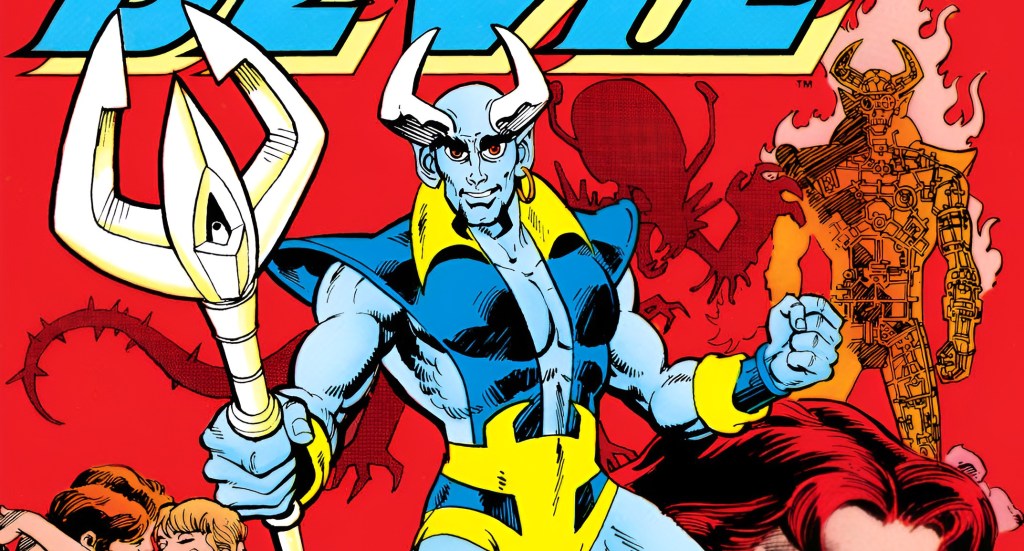
Blue Devil was in the right place at the right time, the star of his own comic book when Super Powers was on store shelves. This put him on Kenner’s radar, and he is believed to have made it fairly far along into production – especially as the figure was boasted to be on its way in the letter pages of one issue of Blue Devil. The title would be a casualty of mediocre sales and DC’s company-wide continuity reset with 1986’s Crisis on Infinite Earths, relegating Blue Devil to the background of the DC Universe.
Bizarrely, Kenner also had one of Blue Devil’s (almost as limited now as then) rogues’ gallery planned for inclusion in the line, Shockwave. The unusual thing about Shockwave’s inclusion is that Kenner, outside of Superman and Batman, seemed largely disinterested in making sure their heroes had a character-specific villain to fight. There were no plans to produce a Sinestro for Green Lantern, Black Manta for Aquaman, or Cheetah for Wonder Woman, and yet Shockwave made the cut.
2) Atomic Knight
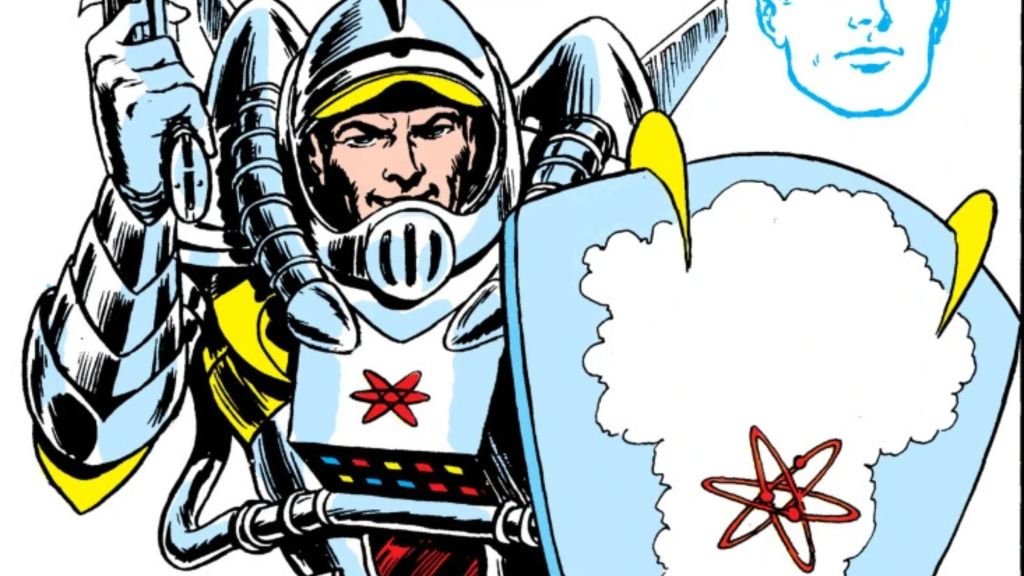
An atomic-age relic of the nineteen sixties, Atomic Knight has an unusual history, spending the first twenty-five years of his existence outside DC Universe continuity. As he appeared in the silver age pages of Strange Adventures, Atomic Knight was Gardner Grayle, survivor of a nuclear war who traveled the wastelands of a desolated America with a band of fellow “Atomic Knights,” clad in medieval knight’s armor that was radiation-proof by a quirk of chemistry.
In a 1983 issue of Superman team-up title DC Presents, it was revealed that Grayle was comatose, and had imagined the “Atomic Knights” adventures as a subconscious coping mechanism. Reviving, he joined the DC Universe proper, donned a redesigned (and equally of its time) armor, and battled alongside Batman and the Outsiders and Wonder Woman. This eye-catching redesign was likely a major factor in Kenner sizing up Atomic Knight for an action figure: it gave him a highly toyetic look, one which would be enhanced by plans to vac-metallize his armor.
1) Supergirl

The single most egregious hole in the original Super Powers line is Supergirl, who had been a complete fixture of the DC Universe since her 1959 debut. She was even included in Kenner’s original pitch for the line back in 1983, but was somehow bypassed for inclusion in the produced waves for characters like Tyr and Samurai.
When Kenner prepared this presentation in 1986, Supergirl was back under consideration (how were they to know she’d become one of the most famous casualties of the Crisis on Infinite Earths later that year). Interestingly, the sketches are of Supergirl in her bronze age costume, phased out in 1983 in favor of a more contemporary look. Some have suggested this because Kenner based many of its Super Powers designs on a 1982 DC Comics style guide.
McFarlane’s Super Powers continuation line finally righted this wrong earlier this year, included Supergirl in its thirteenth wave. This Super Powers Supergirl is in yet a third costume, modelled after her post-Crisis look, introduced in 1988.
The McFarlane Super Powers line is itself a testament to the enduring popularity of the original line. It stands alongside Kenner’s original Star Wars and Mego’s World’s Greatest Super-Heroes as one of the only vintage-era toylines with new figures being produced meant to stand alongside the originals on shelves. With different priorities and character selection than Kenner’s 1986 plans, McFarlane has kept Super Powers alive while also leaving these prototypes and concept art as a tantalizing “what if?”
What characters would have liked to see in Super Powers? Leave a Comment below and join the conversation in the ComicBook Forum!
More Collectibles
-

Courtesy of Universal Pictures




Forum Conversation: Favorite piece of Frank Frazetta Artwork
Go to ForumOh there are so many great pieces from Frank Frazetta! I’ve always loved Death Dealer and the Destroyer is another contender.
The Silver Warrior!
Also the Buck Rodger’s covers he did for Famous Funnies.