
When discussing modern action figures, there’s arguably no era more influential than the seventies. It was this decade that ushered in the modern era of licensed action figures based on movies and television, and no company represents that shift better than Mego. In the sixties, Mego was a manufacturer of “rack toys,” an industry term for the kind of low-cost, impulse toys you find at drug or grocery stores. That changed in 1971, when company president Marty Abrams led Mego in a new direction, becoming a manufacturer of eight-inch scale action figures. Mego dominated the toy world of the seventies with their first major licenses, the “World’s Greatest Super-Heroes” from Marvel and DC and 20th Century Fox’s Planet of the Apes franchise, exploiting the untapped retail potential of these brands’ popularity with kids. This time, Mego looked to TV screens, and discovered that syndication had created a whole new generation of fans for a pair of surprising properties: Star Trek and the Universal Monsters.
Videos by ComicBook.com
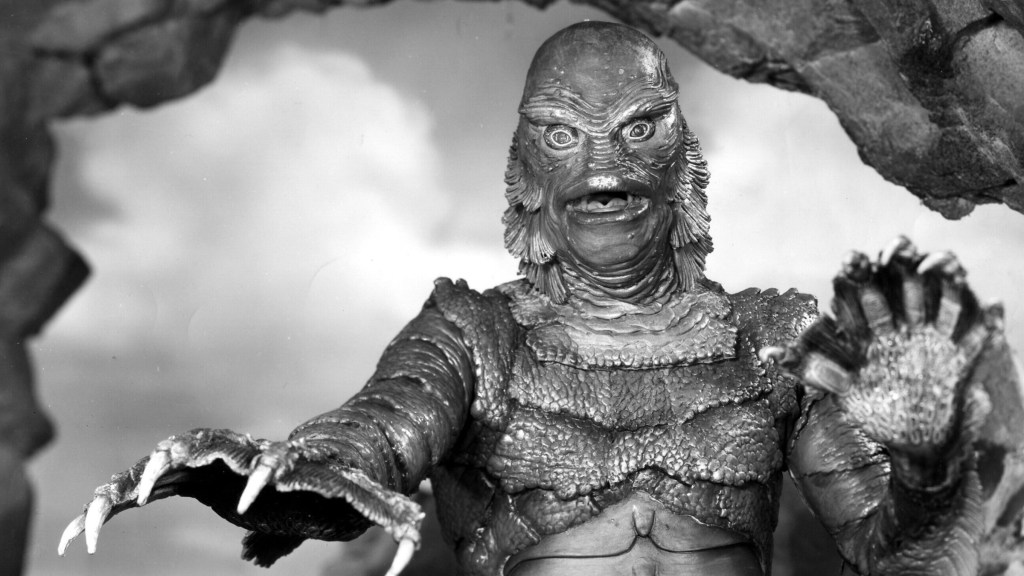
And while Star Trek proved to be both Mego’s greatest success and its downfall, the Universal Monsters may just be the best example of the creativity and the hubris that aided Mego’s meteoric rise and fall — not because of what they did with the license, but because of what they didn’t do. Mego passed on the Universal Monsters, balking at the licensing fee Universal Studios demanding, and letting their competitor Azrak-Hamway International (AHI) grab the license out from under them. AHI enjoyed a multi-year run with the master license for these iconic characters, the first-ever large-scale toyline to feature the Universal Monsters. Decades later, AHI’s line stands out as some of the coolest Universal Monsters action figures ever brought to market. Fondly remembered by those who grew up on it, and passionately collected by Universal Monsters fans of all ages, the figures command a premium after-market price — especially when they depict Universal’s most popular original creation: the Creature from the Black Lagoon. While any toy company can (and did) produce figures of Frankenstein’s Monster, Dracula, or the Wolf Man, only those with Universal’s official license could give fans the Gill-Man, ensuring that he is always the most sought-after figure in any set of Universal Monsters action figures. Heritage is set to auction a set of AHI Monsters next week, and the bidding price for a loose Creature is five times that of a lot containing a loose AHI Mummy and Frankenstein’s Monster.
How Missing Out on the Creature from the Black Lagoon May Have Been Mego’s Biggest Blunder
The public domain status of most of Universal’s classic monsters proved a deciding factor in Mego’s decision to pass on the license. They reasoned that even if they acquired the license, a competitor could still produce figures of Frankenstein’s Monster, Dracula, the Wolf Man, and the Mummy, undercutting sales for their “official” line. Taking this a step further, Mego realized they themselves could produce figures of these characters without a license, provided they made sure the designs didn’t too closely resemble Universal’s. The result was Mego’s “Mad Monsters” line, produced in 1974 and consisting of the aforementioned four public domain monsters — each redesigned to keep its legal distance from the iconic make-up of Jack Pierce, as with their wolf-headed “Human Wolfman.” Mego had been in a bidding war with AHI over the license (the same thing had happened a year before with Planet of the Apes), and assumed that when they walked away from the table, so would their competitor. Even if AHI did move ahead with the license, Mego’s superior manufacturing capabilities and name recognizability would surely win out.
Under the “World Famous Super-Monsters” banner, AHI led with five eight-inch scale, Mego-style Universal Monsters action figures in 1974. Four were the same characters as Mego’s “Mad Monsters” (Frankenstein’s Monster, Dracula, the Wolf Man, and the Mummy), the fifth was a glorious, fully-sculpted Creature from the Black Lagoon. Another difference maker for the AHI figures was that their Frankenstein’s Monster and Mummy could sport Boris Karloff-inspired likenesses, making them instantly recognizable as the same monsters that kids were seeing on TV and magazines like Famous Monsters of Filmland. The likeness on the Wolf Man was weaker; Dracula sported no actor likeness, a by-product of a decades-spanning legal dispute with Bela Lugosi’s estate and Universal over likeness rights and licensing royalties. AHI would make the same five characters across several scales and product classes, including unarticulated soft rubber figures called “Jigglers.”
While neither line was an overwhelming success (owing to a bizarre retail prejudice that classified monster toys as “seasonal items,” meaning they were only stocked during the Halloween months), AHI came out the clear winner, manufacturing Universal Monsters toys for a further two years, discontinuing their product lines in 1976. Mego’s Mad Monsters fizzled on shelves, disappearing by 1975. The three-year production run enjoyed by the World Famous Super-Monsters led to some manufacturing discrepancies and running changes between figures made from one year to the next, incidentally creating rare variants for die-hard collectors to chase. This is most noticeable on the Creature from the Black Lagoon, who AHI resculpted from the ground up later in the line’s life, resulting in two visibly distinct action figures. The variants are designated the “male” and “female” Creature, which is also the verbiage used by Heritage in their listing for the “female” sample on auction. The “male” version is more accurate to the on-screen character’s appearance (borrowing some of its sculpt from the Aurora model kit), while the “female” is significantly rarer, especially mint-on-card. Interestingly, AHI’s 1974 catalog shows photos of a prototype Creature from the Black Lagoon resembling neither finished sculpt.
What Keeps Toy Companies Coming Back to the Universal Monsters License
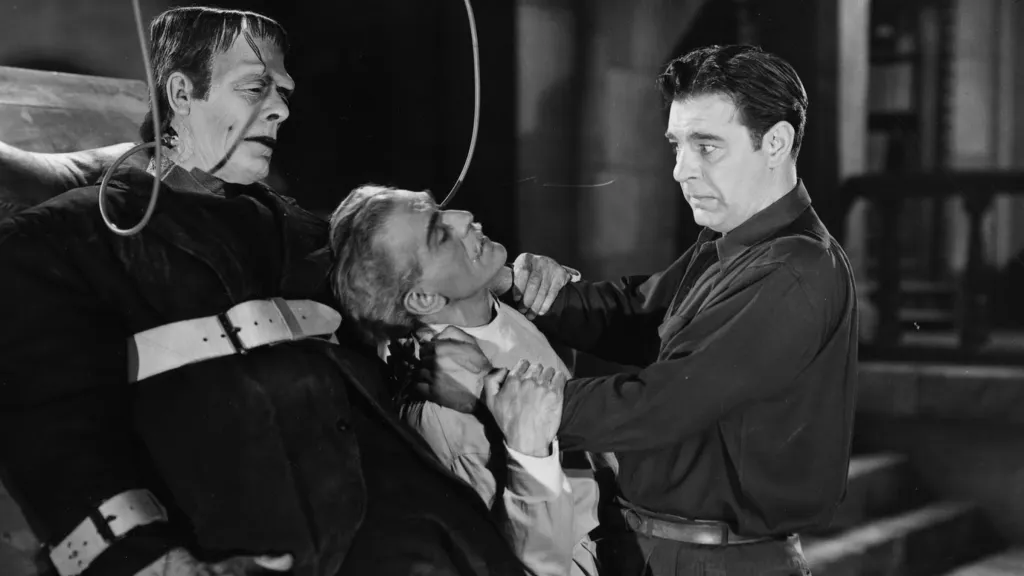
Under their Remco umbrella (which AHI used for higher price-point, “toy store toys”), AHI returned to the Universal Monsters just four years later, giving eighties kids their own iconic Universal Monsters toyline in 1980. Like the World Famous Super-Monsters, it had a brief shelf life, only lasting until 1982, but finally gave collectors a Phantom of the Opera and a (sort of) Lugosi-based Dracula. The Universal Monsters remain a fixture in popular culture, and for decades, companies knew that there was a market for action figures, but didn’t know how to capitalize on it. The shift toward collector-oriented toylines and specialty retail in the nineties proved to be key, enabling companies like Sideshow, Diamond Select Toys, and NECA to keep monsters on shelves year-round without worrying about the bizarre auspices of big box store planograms. While these characters are inextricable from the Halloween season for many of the fans that grew up on them, we’re also happy to celebrate the gothic world of the Universal Monsters year-round.
In the modern era, that has translated to one of the most passionate fanbases in toy collecting, who will buy the same characters over and over again, gleeful at slight variations like glow-in-the-dark plastic or movie-specific headsculpts and accessories. And just as with trying to track down vintage Universal Monsters memorabilia, the Creature from the Black Lagoon remains the hottest commodity in any line. NECA’s San Diego Comic-Con exclusive glow-in-the-dark Gill-Man, for example, is worth almost double their also- comic con exclusive glow Dracula. With this Heritage auction, focused entirely on classic and contemporary monsters toys, the Creature from the Black Lagoon is the highest-priced item in the sets of Aurora kits, Remco mini-monsters, and monster board games. With more than a week left to bid, the AHI Creature from the Black Lagoon may even be the most expensive American action figure in the lot.
Do you collect Creature from the Black Lagoon toys? Leave a comment below and join the conversation now in the ComicBook Forum!
More Collectibles
-
Image Courtesy of Marvel Comics



Forum Conversation: Best copycat Wolverine characters
Go to ForumI saw the article, but no one posted so here are ones they forgot… 1) Shadowhawk from Image. Not a mutant, but an armoured and clawed hero, like if Batman and Wolverine crossed like…
2) the actual Amalgam hero Dark Claw! The real Batman/Wolverine hybrid
3) Catman from Comely Comics ( no, not Splatter). Going back to the 1970’s he used an alien artifact to change into Catman. Claws, strength, unable to feel the elements like cold or heat. He was cool.
Others?