Marvel and events have gone hand in hand during the 21st century. The event cycle started with 2004’s Secret War, an event that changed SHIELD for years to come (and was heavily delayed because of artist Gabriele dell’Otto’s awesome painted artwork). This book kicked off Marvel’s new method of event storytelling, using the books to make large scale changes to the publisher’s line. Most fans don’t really think about Secret War much, but we’re still feeling the effects of the second book of Marvel’s event cycle: House of M, by Brian Michael Bendis and Olivier Coipel. The eight-issue series dealt with the aftermath of “Avengers Disassembled: Chaos”, with the X-Men meeting with the Avengers to decide what to do about Scarlet Witch, who had gone mad. It led to alternate universe shenanigans, and ended by showing the aftermath of three words: “No more mutants.”
Videos by ComicBook.com
House of M has been divisive from the word “go”. It’s the perfect example of a Bendis-written event — it’s drawn out and boring, circling the actual plot of the book for numerous issues before ending with a lackluster fight and an entire issue reserved to taking about the ending. It’s an event that is crucial to understanding Marvel in the ’00s, but it’s also a book that few would actually recommend. It’s undeniably important, and its effects are still being felt today. Even 21 years later, it’s still a controversial series for a variety of reasons.
House of M Planted Seeds that Are Still Bearing Fruit
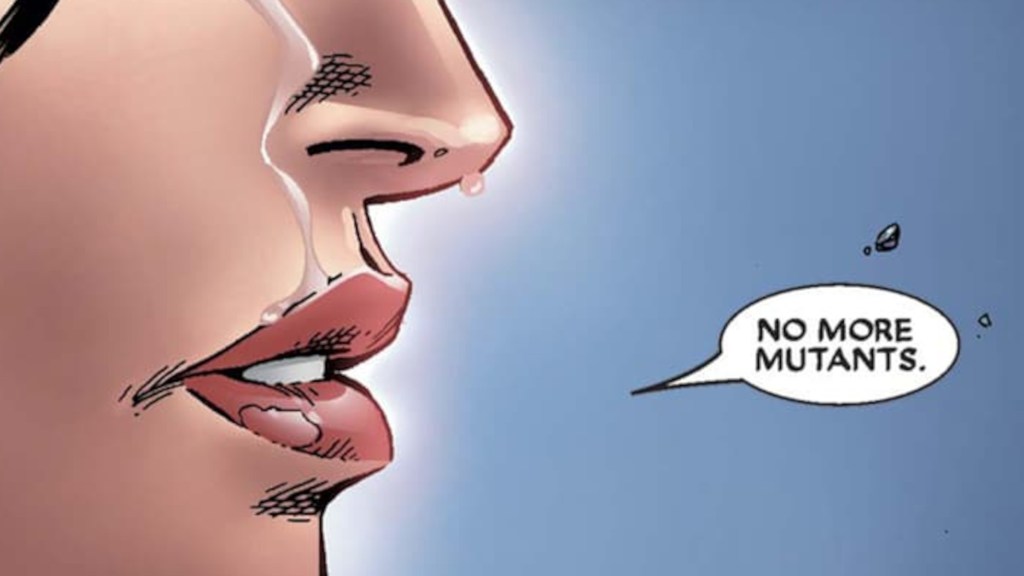
Looking back at House of M, there’s really not a lot to it as a story. It’s a pretty standard “heroes get stuck in an alternate universe and have to figure out how to get things back to normal”-type story, except because it was written by Bendis, it’s drawn out to an extent that it’s honestly kind of hard to enjoy anything in the book. It suffers from a lot of the problems with his work — the overly quippy dialogue, the lack of characters’ individual voices, a paucity of good action — and other than the art being fantastic, it’s something that you can’t recommend on its own merits, because there are very few of those. Marvel has some amazing event comics, and this isn’t one of them.
The story broke Scarlet Witch, which is pretty impressive because of how broken the character already was. It’s interesting to look at how the character has evolved since this book, because Marvel has had to do some stretches to get her back to a point where she’s a palatable character. Basically everything that Marvel has done with the character in the last 21 years has been in reaction to her committing genocide in this comic, and if I’m being honest, they’ve never actually succeeded. They’re never been able to hand wave her actions away, and had to basically retcon the whole thing so it was never actually her fault. Even then, she still looks like a monster.

One thing I think a lot of people ignore with House of M is its place in Marvel’s mutant marginalization. Most people think that this trend started in the mid-’10s, but in reality, this story was the beginning. It makes sense if you look at the timeline. The company was almost certainly already gearing up for the MCU, and knew that they would be pushing their non-mutant heroes. There’s a forgotten Wizard interview from when Quesada took over where he talked about “fixing” Marvel, and I think that, at least to him, a big part of that was taking the spotlight off mutants and Spider-Man, and putting it back on the Avengers and their related heroes.
House of M is a a pretty stark demarcation line between the ’90s, when mutants were supreme, and the “new” Marvel that Quesada and Tom Brevoort were building. If you go back to that time, you’ll notice something interesting; after House of M, the A-list writers and artists stopped going to the main X-Men books. Mutant books were no longer a focus. Marvel would still occasionally put high-level creators on X-books, but most of the time, they weren’t the biggest guns; writers like Matt Fraction and Kieron Gillen were up and comers when they were writing the book, having not reached the top yet. This was the mutant state of affairs until 2019. Marvel events often used to focus on mutants, but House of M ended that. The mutants mostly got pushed into their own corner, while the rest of the Marvel Universe flourished. All of that is because of House of M.
Without House of M, Marvel as We Know It Wouldn’t Exist
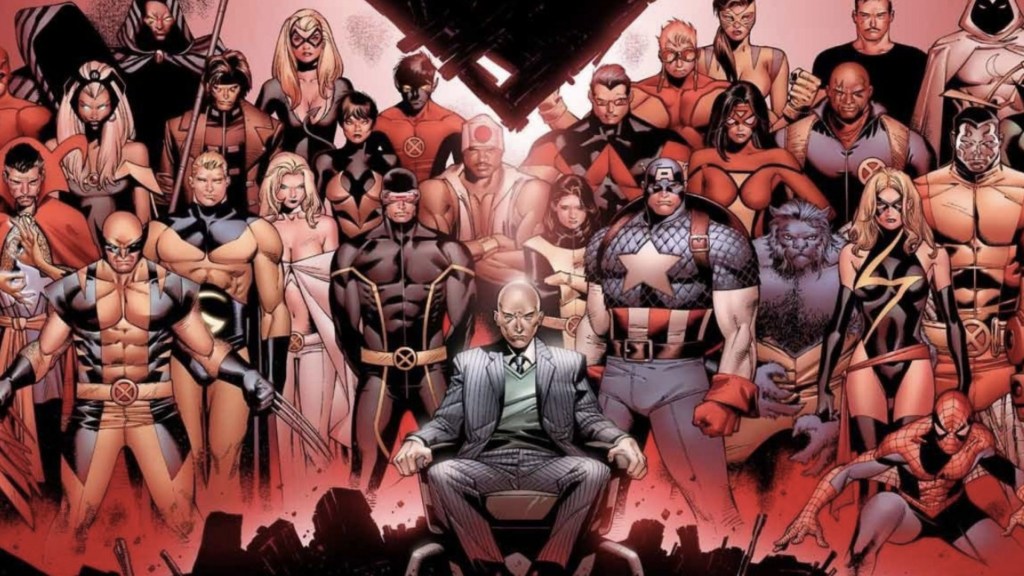
I’m going to be honest — I’ve always been a House of M hater. I was reading the books at the time, and it was always one of my least favorites of the month. It was so boring to read month to month and I used to read it once a year to see if I still hated it. I always did. Like most Bendis events, it’s a beautifully drawn comic that completely squanders its artistic excellence. However, without it, we would have never gotten to the point we are right now.
I’m an X-Men fan, but the mutants were becoming a lodestone tied to the foot of the rest of the Marvel Universe. The only way to fix that was to push them back, and House of M did that. Morrison’s New X-Men had set up a plot line about mutant births accelerating; that had to be reversed, and this Bendis-written event was the only way to do that. Most X-Men fans have always been a little angry at the story, but I think that’s because they don’t realize that the story was crucial to the development of the rest of the Marvel Universe. While I and many X-Men would prefer for it to have never happened, it not happening would have meant that many of the great runs we got after it never happen.
House of M was the first major example of Marvel’s marginalization of mutants, but it was completely necessary, unfortunately. Without it, we don’t get the Utopia Era, we don’t get a better Cyclops, and we don’t get Krakoa. We don’t get “Dark Reign” or Hickman’s Avengers run or Uncanny Avengers. We don’t get so many beloved parts of X-Men history. It’s a bad story, in my opinion, but it’s crucial to getting some of the best Marvel books ever.
What do you think about House of M and its effects on Marvel? Leave a comment in the comment section below and join the conversation on the ComicBook Forums!
Most Viewed
-

Courtesy of Sony Pictures Animation / McDonald's -
Image Courtesy of Marvel Comics -

Image courtesy of Marvel Television