The ’90s were a double-edged sword for Marvel. On the one hand, the publisher had a string of the biggest hits in comic history, starting with Spider-Man (Vol. 1) #1, then X-Force (Vol. 1) #1, and finally the coup de grace, X-Men (Vol. 2) #1. However, these early successes would prove unsustainable as the years went on, leading the industry in some bad directions. A lot of the blame for this can be laid squarely on the shoulders of X-Force. The New Mutants hit a new level when Rob Liefeld came aboard, and Marvel kissed up to him, allowing him transform the team into violent, grimacing ’90s “heroes”. For years, Cable and X-Force were the inspiration for some of the worst characters of the decade and many fans have come to hate X-Force (Vol. 1), if no other reason than it sent comics in the wrong direction.
Videos by ComicBook.com
However, X-Force wasn’t always the extreme mutant team or the violent kill squad they’ve become. 31 years ago, after the end of “Age of Apocalypse”, Marvel sent their mutant books in new directions and X-Force (Vol. 1) was no different. Issue #44 would see a huge change to the book, with longtime writer Fabian Nicieza leaving the title and Jeph Loeb taking over and artist Tony Daniel being switched out for Adam Pollina. This issue kicked off an era of X-Force that lasted until the end of the decade, taking the team in a very different direction from where it was heading before “AoA”. It’s the greatest era of X-Force ever, even better than the teams we’ve been getting in the 21st century, and it’s about time it got its flowers.
X-Force Paid Off the Promise of The New Mutants in the Mid ‘90s
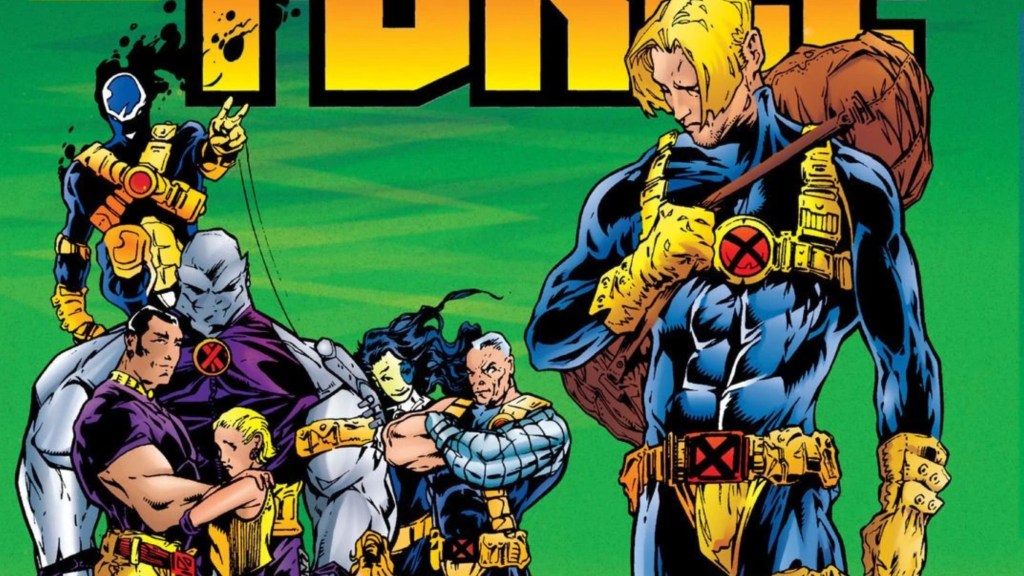
When fans think of X-Force in the ’90s, they often think of the Liefeld years, with Cable and his ridiculous guns and the weird action scenes with no backgrounds. However, after Liefeld left to start Image and Nicieza took over as writer of the book, it basically became a young mutant team book. It was about a team growing and doing things their way, with Cable leaving and Cannonball taking charge. This lasted until issue #44, when Cable returned and brought the team to the X-Mansion to begin working with the X-Men again. This began with him kicking Cannonball off the team, who was promoted to the X-Men.
X-Force’s original roster was as ’90s as it could be, and the new roster wasn’t all that different. Feral and Shatterstar were gone, with Cable, Domino, Sunspot, Boom Boom, Warpath, and Siryn joined by Caliban. It was a cool little team and they started having some fun mutant adventures, with the group dealing with Sabretooth in the mansion, the return of the Hellfire Club, and a battle against Holocaust. X-Force in the early ’90s, even under Nicieza, had been more of an extreme superhero book. Under Loeb, it became a more standard hero team. Loeb stayed around until issue #61, and would be replaced by John Francis Moore as regular writer after with issue #63 (there was a fill-in story in between).
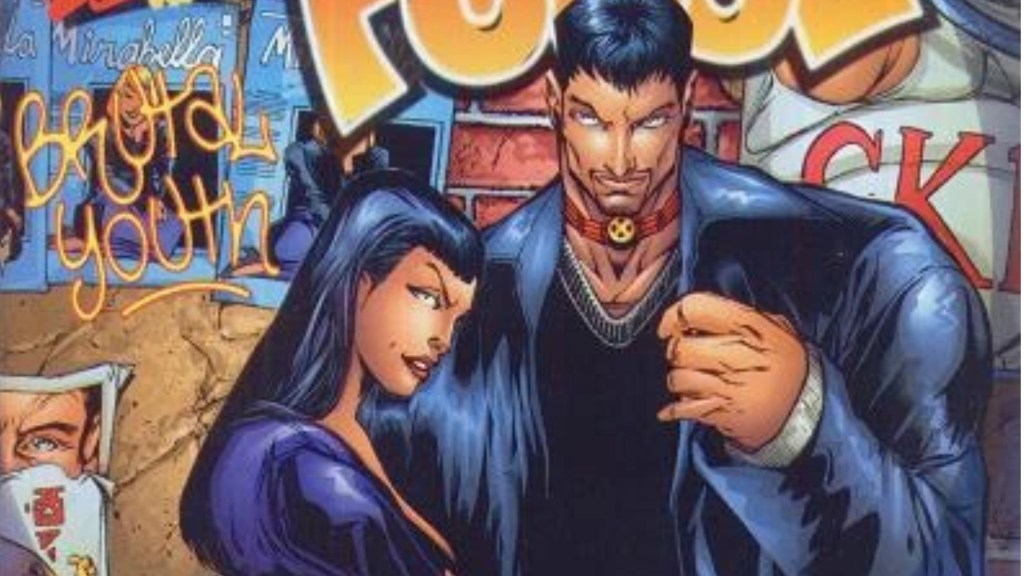
However, what really made the book work better back then was Pollina’s art. Liefeld defined the art of the early days of the team and after he left, Marvel tried to put Liefeld-alikes on the book until Tony Daniel came aboard. While Daniel wasn’t a Liefeld/Lee/Portacio/Silvestri clone, his style was still very ’90s. Pollina’s art didn’t look like any of theirs. It looked nothing like the “cool” artwork of the day. The linework was weird and there were times when it could be downright ugly. At least at first; Pollina’s work is a masterpiece of graphic storytelling and the more you look at it, the more you can see the craft. His detail, character acting, and page layouts were amazing and he was able to take the new, low-key purple outfits and make them work. He took everything thrown at him by Loeb and Moore and make it sing.
The characters became the focus, with Dani Moonstar rejoining the group, making it more of a New Mutants reunion. Sunspot and Boom Boom started dating, which was weird for everyone, Warpath met mysterious new mutant Risque and was finally becoming a character with his own personality, as was Siryn. Shatterstar’s origin started to take shape, we learned more about Deadpool, and the book captured the ennui of Gen X of the time; old enough to matter, but no one paid attention to them. It was a fun book in 1997 and 1998, with artist Jim Cheung moving from Maverick to it, some of his earliest Marvel work. Generation X was the teen mutant book and X-Force was the twentysomething mutant book, both of them playing a small but key role in the mutant ecosystem.
1998 and 1999 saw X-Force overshadowed by the build-up to “The Twelve”, but it was still solidly chugging along doing its own thing until it was folded into Warren Ellis’s 2000 “Counter X” line. From 1995 to 1998 (and later you could argue), X-Force had finally become the book that it always should have been. The transformation from The New Mutants to X-Force changed the premise of the team entirely, but instead of doing the kind of brilliant character work that The New Mutants was known for, it did extreme comic nonsense until Liefeld left. At that point, Nicieza had to try to tell actual comic stories and not just issues that were glorified pin-up galleries. No one ever talked about the characters when they talked about the book.
X-Force (Vol. 1) #44 changed that. It basically abandoned the black ops, outlaw superhero schtick and decided to go back to being the young X-Men book and it worked like gangbusters. X-Force always had a pretty great roster, so stories that focused on them finding themselves in their early ’20s were perfect for them. There are some out there who would say that X-Force didn’t truly get great until after it was transformed into a mutant kill squad in the 21st century and as a Wolverine fan, I would definitely say it helped. While that was a great time for the team, this mid ’90s run of issues is everything that X-Force should be and more, telling engaging character based stories that fulfilled the promise of its characters.
This Era of X-Force Clears the Others
I came up reading mutant books in the early ’90s, but I never really got into X-Force. It wouldn’t be until after “Age of Apocalypse” that I’d end up picking this issue up (I think my Dad bought it off a spinner rack; he would clear out the gas station spinner rack for me once a week). I was into it immediately and soon it became one of my favorite books. It made me love Warpath, Sunspot, Boom Boom, and Siryn (I’m even something of a Caliban fan because of the book, but that’s difficult because no one ever writes him the same), allowed me to gain new respect for Cable, Domino, and Shatterstar, and told the kind of engaging character-based stories that I wanted.
Look, a lot of blame for the bad parts of the ’90s can be laid at X-Force (Vol. 1)’s feet. The cyborg heroes, the big weird guns, the endless action scenes, the all style, no substance approach to superheroes, and way more all came from that book and I wouldn’t blame you if you hate the idea of ’90s X-Force on general principle alone. However, the book changed dramatically with issue #44, becoming the kind of mutant soap opera that X-Men fans love so much. Pollina’s art cannot be praised enough; watching him grow as an artist over the course of the book is such a treat. You may hate all X-Force, even the kill squad stuff, but if you like classic X-storytelling with some of the coolest mutants ever, this run on the book is everything you could want.
More Comics
-
Image Courtesy of Marvel Comics -

Image Courtesy of Marvel Comics -

Courtesy of Marvel / Kadokawa -

Image Courtesy of Marvel -

Image Courtesy of DC Comics -
Image Courtesy of Marvel Comics -
Image Courtesy of DC Comics