
Stan Lee and Jack Kirby invented the Marvel Comics cosmic villains in 1966 when Galactus arrived on Earth in Fantastic Four #48, a being that dwarfed every previous Marvel antagonist in every way. While Kirby originated the concept of the cosmic side of Marvel, Jim Starlin helped define it in the 1970s, introducing characters like Thanos, Adam Warlock, and the Magus, adding a layer of philosophy and death into the ideals of the superhero landscape. The Marvel cosmic villains add an entirely new scale to the idea of comic book stories, adding in alternate universes, timelines, and even unique forms of sentient life. From the 2006 Annihilation event to the recent Imperial crossover, Marvel’s cosmic stories remain one of Marvel’s most beloved corners of the universe.
Videos by ComicBook.com
From an ancient being who eats planets to a Titan who wiped out half of the universe, here is a look at the most threatening Marvel cosmic villains of all time.
10) Knull
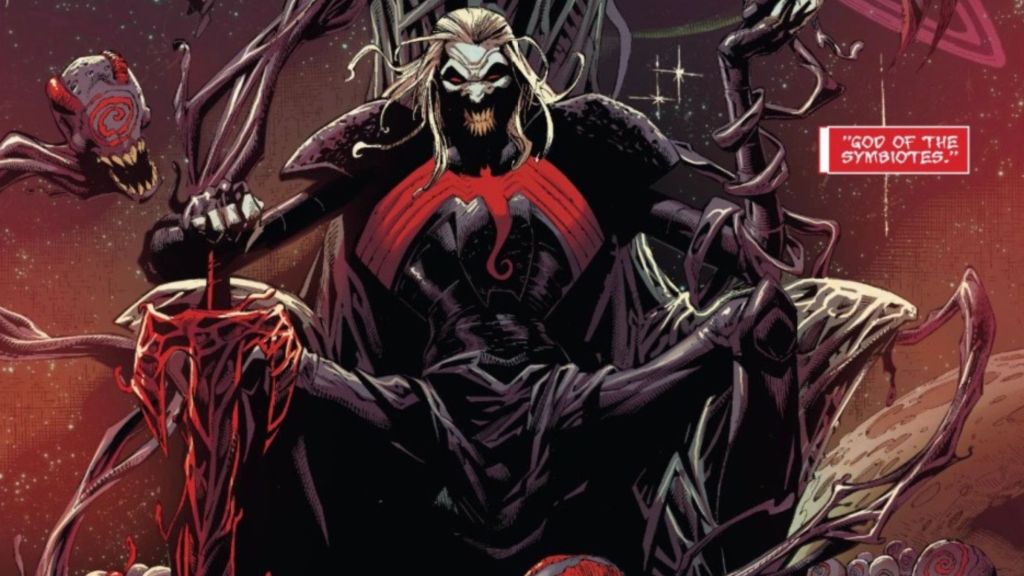
Knull made his full Marvel Comics debut in Venom Vol. 4 #3 (2018) by Donny Cates and Ryan Stegman, although he made an unnamed appearance in Thor: God of Thunder #6 (2012). He is a primordial god of the void, and he predates the current Marvel Universe, similar to a being like Galactus. While Galactus is a being who consumes and destroys planets with the fate that he will one day give back more than he takes, Knull is a being of pure darkness who wishes nothing more than to send the entire universe into darkness. He holds power over all symbiotes, a race he created, and he headlined the King in Black event series, where he attempted, and failed, to conquer the Earth. Knull seems powerful, but has never succeeded at any of his goals.
9) The Brood
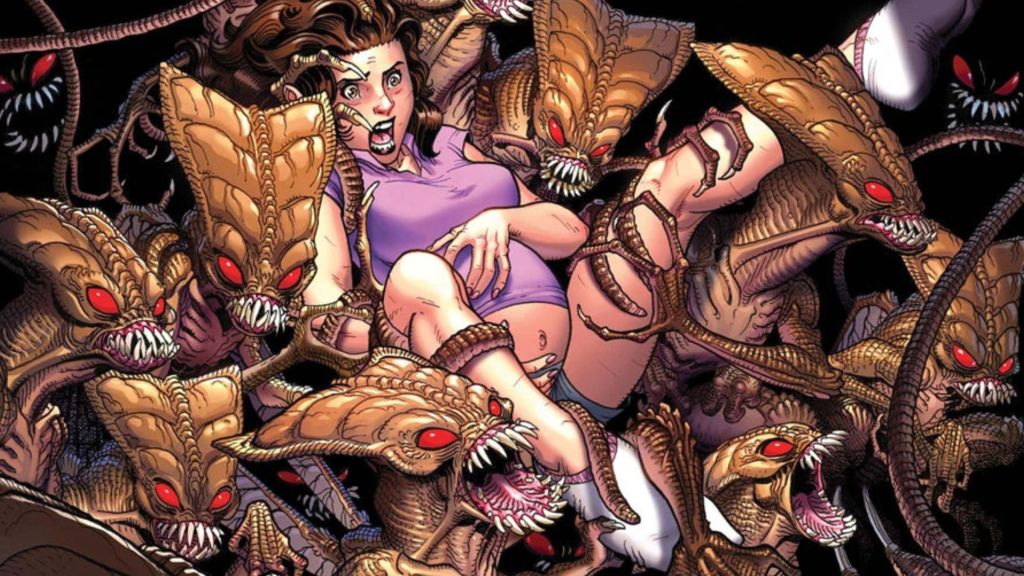
The Brood debuted in Uncanny X-Men #155 (1982) from the creative team of Chris Claremont and Dave Cockrum. This is an alien race that implants eggs in living hosts, and the embryos then form into new hosts for the Brood, while maintaining the powers of the individual they were implanted in. They look similar to smaller versions of Xenomorphs, and the implanting of eggs is another homage to that horror movie franchise. They were the main villains in “The Brood Saga” (Uncanny X-Men #161-167), where they implanted several X-Men members and almost defeated the mutant heroes. The only thing that saved Wolverine was his healing factor, purging the embryo from his body. Professor X had to transfer his mind into a cloned body to survive.
8) Gorr the God Butcher
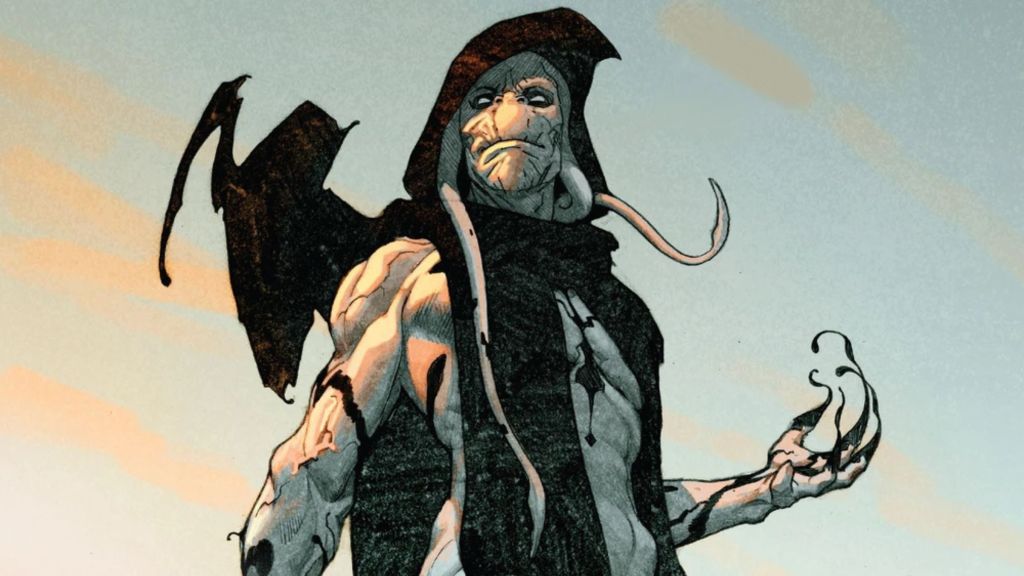
Gorr the God Butcher showed his true power and might when he set on a deadly path across the universe, killing literal gods in his quest for vengeance. Created by Jason Aaron and Esad Ribic, Gorr first appeared in Thor: God of Thunder #2 (2013). On his own, Gorr had no real power, and he was only driven by his anger and vengeance for the gods that he believed had forsaken him and his family. However, his true power comes in wielding All-Black the Necrosword (Knull’s created weapon). It took three different Thors from across the millennia to finally stop him.
7) Kang the Conqueror
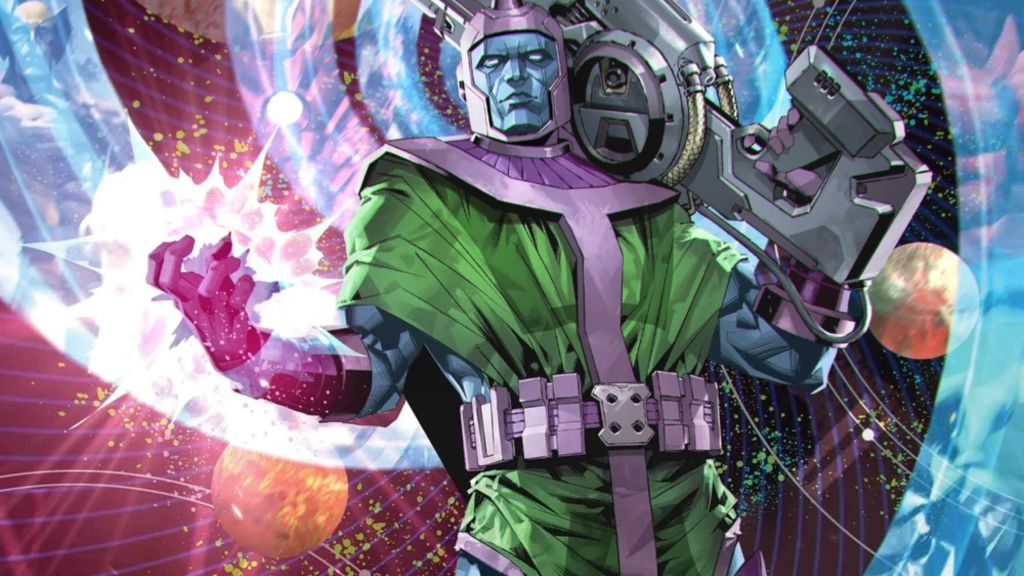
Kang the Conqueror is one of the most iconic cosmic villains in Marvel Comics. He debuted as Kang in Avengers #8 (1964), although a Kang variant named Rama-Tut actually appeared first in Fantastic Four #19 (1963). Kang is a 31st-century time-traveler who has ended up as variants across the multiverse like Rama-Tut, Scarlet Centurion, Iron Lad, and Victor Timely, often fighting each other for supremacy. He has been part of several major events in Marvel Comics, including turning Iron Man evil in “The Crossing” and the fantastic Avengers Forever series from the 1990s.
6) Annihilus
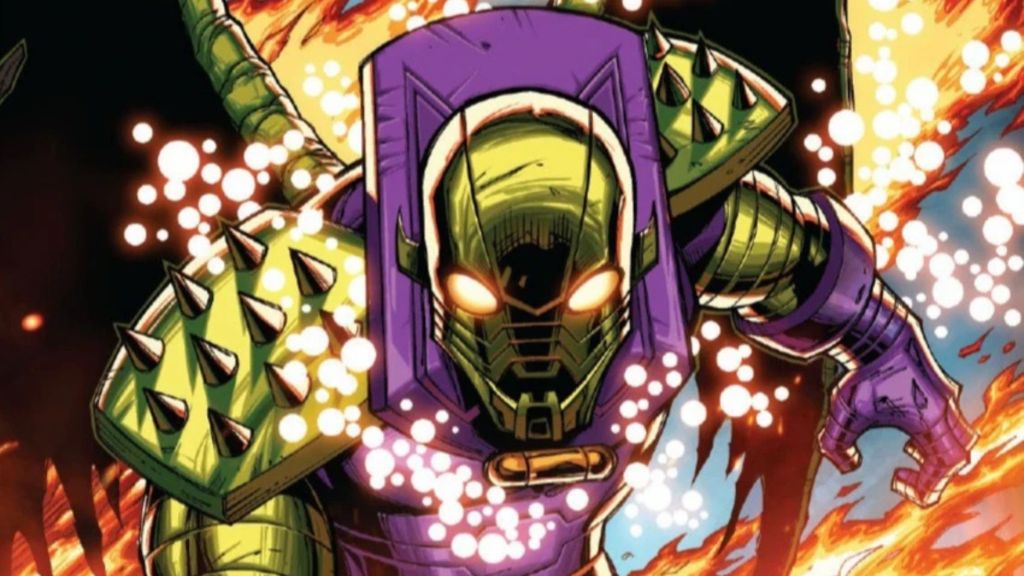
Annihilus was created by Stan Lee and Jack Kirby, debuting in Fantastic Four Annual #6 (1968). He was the self-appointed ruler of the Negative Zone, and his powers stemmed from his Cosmic Control Rod, which grants him energy projection, longevity, and life-force manipulation. He became a massive universal threat when he came over to the main universe and started the Annihilation Wave, an attack that destroyed Xandar and the Nova Corps, and a war that required the most powerful Marvel cosmic heroes to win. It took Phyla-Vell, wielding and joining the Quantum Bands on the front line, to allow Richard Rider (Nova) to finally kill the Marvel cosmic villain.
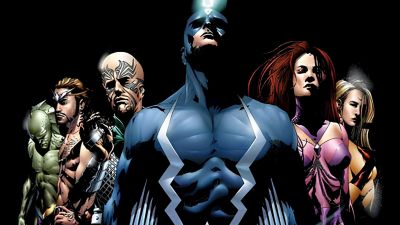
5) Thanos
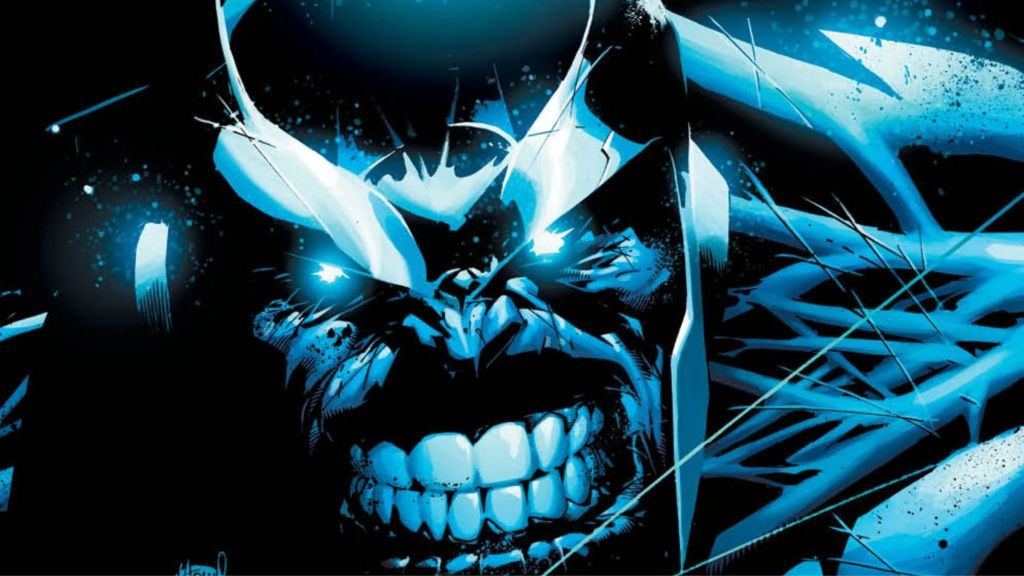
Thanos was made to seem almost overpowered when he was introduced in Marvel Comics, and he did something no one dreamed was possible in The Infinity Gauntlet storyline. Thanos debuted in The Invincible Iron Man #55 (1973), created by Jim Starlin as an Eternal-Deviant hybrid from Saturn’s moon, Titan. In the comics, it was his intense love for Death that made him want to earn her love, and he used the Infinity Gauntlet to wipe out half of all life in the universe with a snap. He was the centerpiece of the Infinity Gauntlet (1991), Infinity War (1992), and Infinity Crusade (1993), remaining one of the most influential cosmic Marvel villains of all time.
4) The Magus
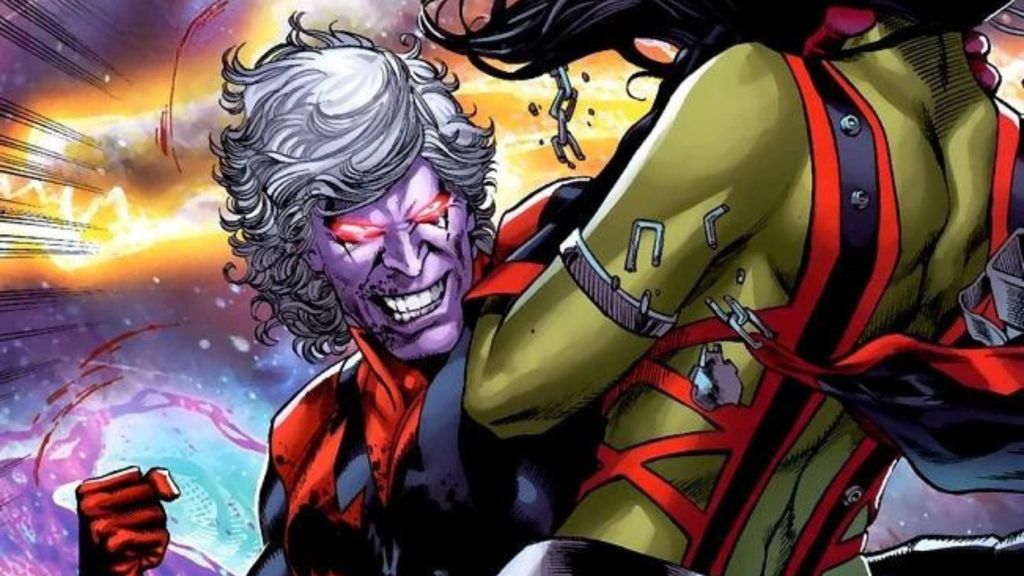
The Magus was a tragic villain, an evil future version of Adam Warlock, himself one of the cosmic universe’s most powerful heroes. The character first debuted in Strange Tales #178 (1975) by Jim Starlin. He ruled a galaxy-spanning religious empire called the Universal Church of Truth, served by the Matriarch. He also existed in a closed time loop, so he had to manipulate his younger version to become the Magus. He was the main villain in the “Magus Saga” and later again in Infinity War (1992). With the limitless powers of Adam Warlock and evil intentions, he was as threatening as any cosmic villain has ever come.
3) The Beyonder

The Beyonder was a villain in Marvel Comics, but he was also someone who was more complex than that depiction. Created by Jim Shooter and Mike Zeck, the Beyonder first appeared in Secret Wars #1 (1984). He was an all-powerful being who brought the superheroes and villains from Earth and forced them to fight each other to achieve their greatest dreams. He wasn’t necessarily a villain, but was instead curious about these lesser beings. He is a being from beyond the multiverse, and is said to be more powerful than Eternity, Death, Infinity, and the Living Tribunal combined. It took the all-powerful Molecule Man to banish him from the universe.
2) Galactus
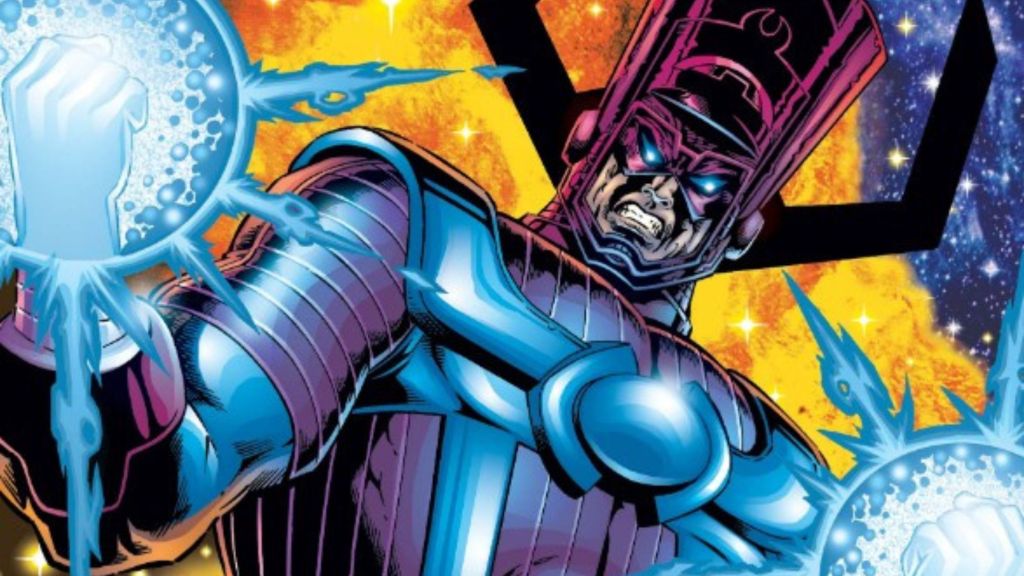
Galactus is a cosmic entity older than the current universe who must consume planetary life-energy to survive. Created by Stan Lee and Jack Kirby, he debuted in “The Galactus Trilogy” in Fantastic Four #48-50 (1966). He is a villain, as he destroys entire civilizations, but he does so to survive, and it is said he will give back more than he ever took before the end of time. This was one of Marvel’s first god-tier villains, and his use of the Power Cosmic puts him on a level above almost any other character, cosmic or otherwise. When cosmic heroes needed someone to help them defeat universal threats, they often called on Galactus.
1) Korvac
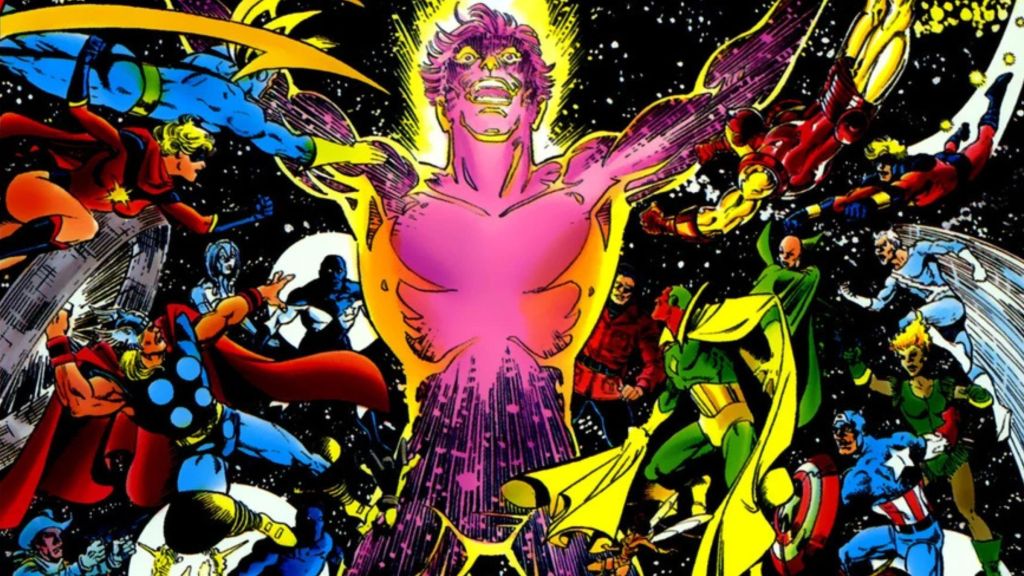
Michael Korvac is possibly the most overpowered cosmic villain in Marvel Comics. Created by Steve Gerber and Jim Starlin, he first appeared in Giant-Size Defenders #3 (1975). However, he proved the extent of his powers in “The Korvac Saga” in Avengers #167-168 and 170-177 (1978). In this storyline, he killed the entire Avengers team, arguably the most legitimate defeat the team ever faced. Korvac was a 31st-century human cyborg who stole the Power Cosmic from Galactus and became a god-like being. The Avengers only survived because he brought them back to life and took his own life. However, Korvac can’t die, and he returned decades later in Iron Man comics, showing he could still remake reality in whatever form he wanted, with no one to stop him.
What do you think? Leave a comment below and join the conversation now in the ComicBook Forum!
More Comics
-
Image Courtesy of Marvel Comics -
Image Courtesy of DC Comics -
Image Courtesy of Marvel Comics -
Image Courtesy of Marvel Comics -
Image Courtesy of Marvel Comics -
Image Courtesy of Marvel Comics
![Black Star’s Kristin Kreuk and Peter Mooney Open Up About the Real-Life Influences on New Gothic Horror Series [EXCLUSIVE]](https://comicbook.com/wp-content/uploads/sites/4/2026/04/black-star-exclusive.jpg?w=300)
