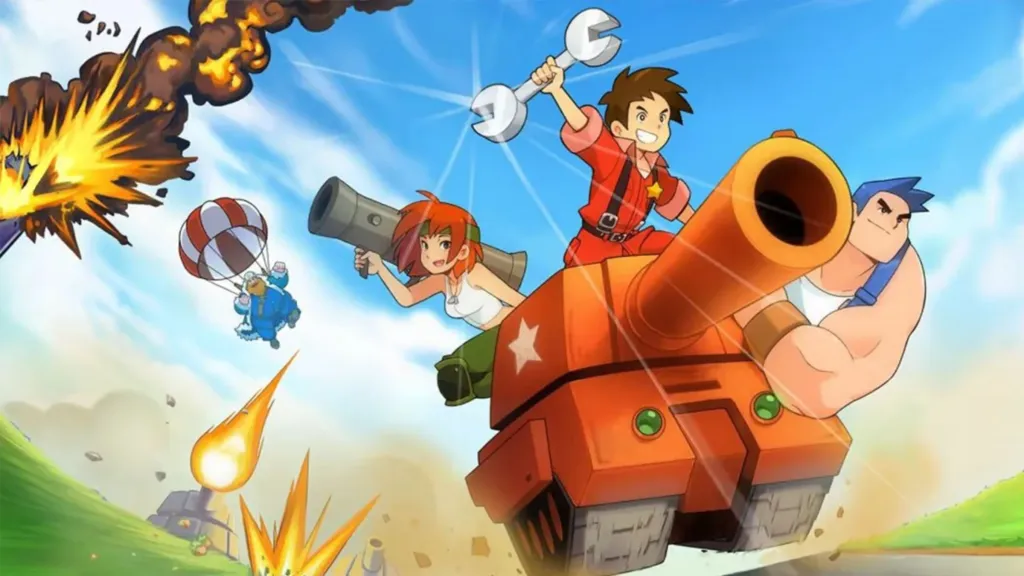
While Advance Wars was a surprisingly strong debut for the series in Western markets, the Famicom Wars franchise has a long history in Japan. The first entry in the series debuted in 1988, with twelve games released across twenty years. While American audiences didn’t get the earlier entries in the series, Advance Wars proved to be such a hit on a global scale that it not only opened up the series in the West but also helped lay the groundwork for Fire Emblem to receive global success. However, the series hasn’t only seen a single release since 2008 — and even that was a remake/compilation, Advance Wars 1+2: Re-Boot Camp.
Videos by ComicBook.com
The most recent entry in the series besides that Switch release was Advance Wars: Days of Ruin. Released on the Nintendo DS on January 21, 2008, Days of Ruin was consistent with the franchise’s typical gameplay but took a hard tonal turn in terms of presentation and execution. Well reviewed but with sales that were overshadowed by the in-house competition, I’m still frustrated about the Advance Wars series coming to a halt after Days of Ruin.
Days Of Ruin Was A Major Depature For Advance Wars

After refining itself over a decade of releases in Japan, Advance Wars introduced a colorful new cast of characters in an all-ages take on the war epic. Nations bristled against one another and battles played out, only for the distinct and often conflicting personalities to find common ground and unite against a war profiteering would-be despot. It gave the tight strategy game under the surface a charming exterior, with different C.O. personalities and advantages factoring into different player styles. This world served as the setting for three handheld releases from 2001 to 2005.
While the series developed a fan base and earned strong critical raves, the strategy genre remained something of a niche area for Nintendo. In 2008, Days of Ruin went a different route and instead returned to the more dramatic tone of the earliest games in the original Japanese series. More than that, the game introduced a world so relentlessly grim that it almost feels like self-parody. While the previous games had tackled larger themes about power and responsibility in armed conflict, they had retained a perfectly Nintendo house art style and sense of personality.
Taking place in a different world where an asteroid collided with the planet and decimated almost all life around the world, Days of Ruin focused on a small contingent of survivors who led a ragtag military force in the midst of an apocalyptic situation. It was a serious departure from the earlier games. While it still had a sense of humor in dialogue for moments of levity and character-building, the overall subject matter was darker and the characters more serious. As part of this more dramatic execution, the memorably bombastic C.O. personalities were toned down, and their unique attributes were severely reduced. It didn’t necessarily feel like an Advance Wars game, despite having much of the same gameplay.
Why Days Of Ruin Was The Only Advance Wars Game For 15 Years

Days of Ruin was the final Advance Wars game to come out during a particularly successful period for the franchise. The handheld releases were joined by Battalion Wars and its subsequent sequel in 2006 and 2007. Released for the GameCube and Wii, respectively, the real-time tactics games were given the separate title to further distinguish themselves from the turn-based combat of the other Advance Wars games. Despite lukewarm sales, strong critical reception to the games seemed to cement them as one of the more exciting expansions of the Nintendo library. Days of Ruin came out as a sincere attempt to reflect the greater response the series had received from Western audiences, with sales of the series in America exceeding those in Japan.
Taking more inspiration from American depictions of armed conflict than the Japanese-driven interpretation, Days of Ruin reflects the harsher pop culture touchstones of Western audiences. This gave it a harsher edge that fans of the old art style and characterization were frustrated by — especially in Japan, where the game was only released after an American debut (a relative rarity from Nintendo).
It also failed to light a fire underneath the audience. Despite strong reviews that reflected the further refinement of the series, Days of Ruin failed to outsell either of the first two Advance Wars games. Developer Intelligent Systems also had plenty of other Nintendo franchises to focus on, including Fire Emblem, Paper Mario, and WarioWare, likely explaining why the consistently fair but unimpressive sales for the latest Advance Wars title ensured it would be the final one, at least for a while.
Any Future Advance Wars Games Need To Avoid Days Of Ruin’s Influence
When describing the evolution of Days of Ruin in a 2008 interview, Nintendo’s North American localization lead Tim O’Leary explained how the developers took notice that American audiences enjoyed the Advance Wars series more than Japanese players. However, while the gameplay was embraced, the fans reportedly complained to the developers that they wanted “new things.” While the gameplay was experimented with in Dual Strike, the low sales seemed to suggest that what players were looking for was a different story. However, Days of Ruin‘s failure to connect with a broader audience sank any chances for the series to go through the kind of resurgence that Fire Emblem enjoyed after finding a Western audience.
It’s a shame, because the characters and world of the earlier Advance Wars games remain as charming as ever, with the Nintendo Switch release of Advance Wars 1+2: Re-Boot Camp only earning comparable sales to the original two games in the series. That loss of personality was a blow to Days of Ruin, with a plot that felt out of place with the more family-friendly approach of the Advance Wars games. What’s particularly frustrating is that the wildly different plotline aside, the gameplay in Days of Ruin remained as strong as ever, adding a fluidity to the gameplay that put emphasis on the core mechanics over bombastic C.O. Powers. Still, despite being a solid game, the lack of personality was a blow to some fans and failed to win over new ones. The result was a fan-favorite series being shut down for over a decade, and I’m still frustrated about it.
Most Viewed
-

Courtesy of Sony Pictures Animation / McDonald's -

Image Courtesy of Netflix -

Images courtesy of Warner Bros. Pictures -

Courtesy of Sony Pictures Animation / McDonalds