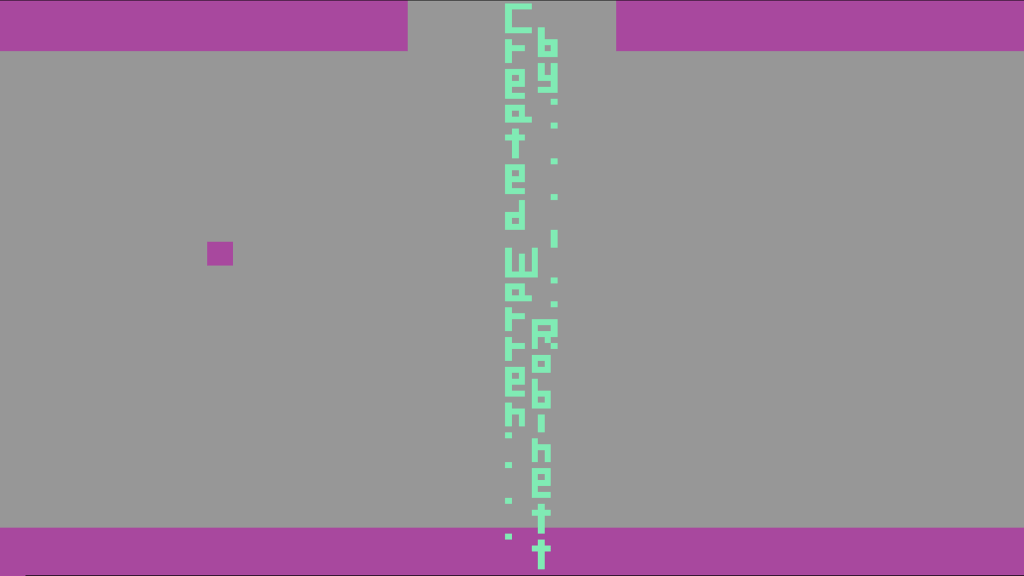
Video game Easter eggs are fun, hidden items or areas that can be incredibly easy or horribly difficult to find. When you stumble upon an Easter egg, it’s like finding a little visual treat in a game, and they’ve been around for a long time. If you’ve read the book or seen the movie Ready Player One, you likely know of the first Easter egg found in Adventure. The game was released in 1980 on the Atari 2600, and if you followed a series of steps, you could unlock a secret room that is otherwise challenging to locate.
Videos by ComicBook.com
Once inside, the player is treated to text that reads, “Created by Warren Robinett.” Robinett added the secret area at a time when creator credits weren’t included in games like they are today. It’s from this secret area that the term “Easter egg” was coined in any capacity for video games. Since then, thousands of games have included Easter eggs of various types, and many people know of Adventure’s role regarding the history of video games, but it’s not actually the first Easter egg ever coded into a game, as that occurred seven years earlier.
Video Game Easter Eggs Date Back to 1973
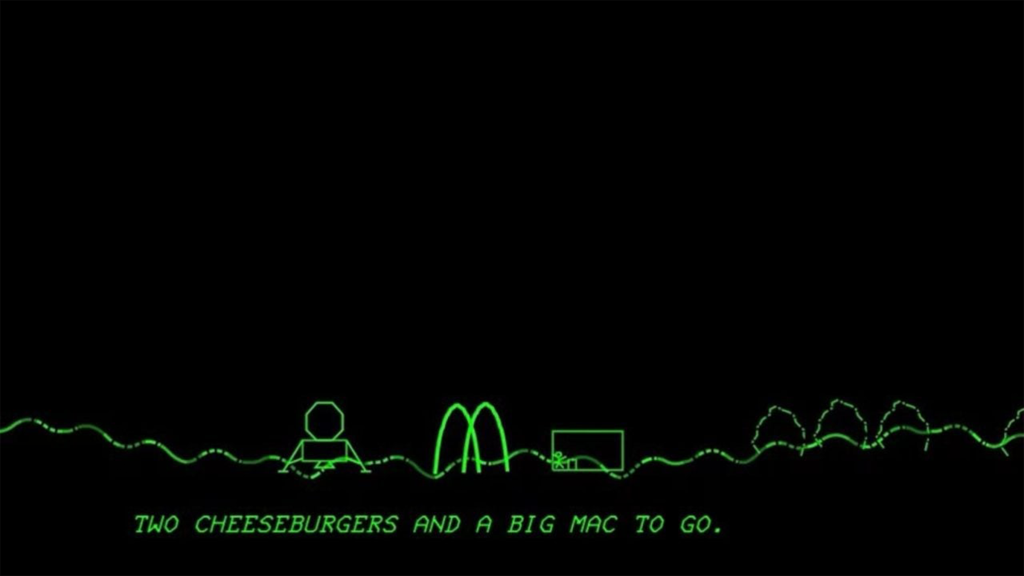
While the term “Easter egg” wasn’t applied to a video game until 1980’s Adventure, the first instance of what would become known as an Easter egg came in 1973’s Moonlander. There were several similar moon landing games released throughout the 1970s, including Lunar Lander, which appeared in arcades and on home consoles. Moonlander was distributed alongside DEC computers, so it had a comparatively smaller audience when compared to later commercial games. Regardless, the very first Easter egg can be found in Moonlander, and it’s a challenging one to find because you have to land in just the right spot.
If you manage to lower your lander perfectly, the astronaut departs, walks over to a large “M,” representing a McDonald’s restaurant, and orders “Two cheeseburgers and a Big Mac to go.” The joke at the time was that McDonald’s was popping up everywhere, and before long, they’d be on the Moon. You could say the same thing about Starbucks today, but in 1973, it was McDonald’s. If you didn’t land just right and instead crashed directly into the McDonald’s, the game delivered a message reading, “You clod. You’ve destroyed the only McDonald’s on the Moon.”

After Moonlander, coders continued adding little secrets into games, though they weren’t yet known as Easter eggs. Another example came in 1976’s Colossal Cave Adventure, the first text-based adventure game. This is the game that inspired Adventure, and it includes several secret words disguised as commands. If you enter “xyzzy,” the player can jump between two points within the game world. In 1977, Starship 1, programmed by Ron Milner, featured an Easter egg that appeared when the player entered a specific control sequence. Doing so results in the message, “Hi Ron!”
Easter Eggs Predate the Term by Seven Years
Easter eggs are an example of something that existed for years without a proper name. Coders enjoyed adding them into their work so that players could find them, and it became commonplace as time passed. While Warren Robinett’s was the first to be called an Easter egg, the idea wasn’t original in 1980. It was just the one that got the most attention. In doing so, it helped coin the term for video games in general. Nowadays, you can find all manner of Easter eggs that coders throw into their games, and just as it was decades ago, players love to find them.
Have you stumbled upon a killer Easter egg? Leave a comment below and join the conversation now in the ComicBook Forum!
Most Viewed
-

Image courtesy of Sony -

Image Courtesy of Netflix