The Legend of Zelda: The Wind Waker is one of the best examples in gaming history of how perception of a title can change over time. The Legend of Zelda series has, outside a handful of divisive misfires, been largely held up as one of the best franchises that fall under the Nintendo banner. The best games in the series are often held up as benchmarks for the entire industry, with titles like The Legend of Zelda: Ocarina of Time or The Legend of Zelda: Breath of the Wild serving as killer apps for their respective consoles.
Videos by ComicBook.com
The Legend of Zelda: The Wind Waker was meant to be something similar for the Nintendo GameCube, a massive adventure set across a largely open sea, with players tasked with setting off on a mystical quest that reveals the true fate of the lost Hyrule. It is ambitious, clever, and charming, with a depth that few other games of its era could hope to match. Despite all these strengths, The Wind Waker was actually one of the franchise’s most controversial moves when it launched.
Why Zelda Fans Turned Against Wind Waker Before It Even Came Out

The Legend of Zelda: The Wind Waker was released in Japan on December 13, 2002, and its divisive launch has given way to universal acclaim. After the success of The Ocarina of Time, the Zelda franchise was poised to be a major selling point for the then-upcoming Nintendo GameCube. Although fans embraced a 2000 video clip of an Ocarina-style Link and Ganondorf fighting, the creative team behind the game decided they were tired of that art style. After game designer Yoshiki Haruhana came up with a cartoonish visual style, the team embraced the concept and incorporated cel shading into the game. While they had to convince Shigeru Miyamoto of the concept, the team loved the idea and eventually got to run with it.
The first demo for the game was revealed to the public at the 2001 Space World showcase and was met with a very mixed reception. While some enjoyed the cartoonish design aesthetic, a lot of fans — especially Western audiences — were frustrated by the departure from the more realistic aesthetic. Male teens especially responded negatively to the direction, a huge blow to the game’s initial reception. Nintendo shifted gears and focused previews on the gameplay over the graphics, but the discourse over the visuals for the game remained positively toxic up until release. That toxicity didn’t extend to critics, though. Reviews for the game were universally positive, with even Famitsu giving the game a perfect 40 out of 40.
The cel shading may have been controversial with fans, but it won over critics who embraced the concept and enjoyed how it pushed the GameCube’s hardware in inventive ways. Overall, critics adored the game and awarded it some of the best reviews in the entire series. Although The Wind Waker won over Japanese audiences, the Western markets were mixed on the game. The cel shading was seen as a major turn-off for players, and the increasing ambivalence to the GameCube compared to the PlayStation 2 led to the game underperforming and selling 3 million fewer copies than Ocarina of Time. This resulted in a proposed sequel being scrapped in favor of The Legend of Zelda: Twilight Princess, a darker entry in the franchise that brought back an art-style more akin to Ocarina of Time.
Wind Waker’s Legacy Is Far Brighter Than Its Release
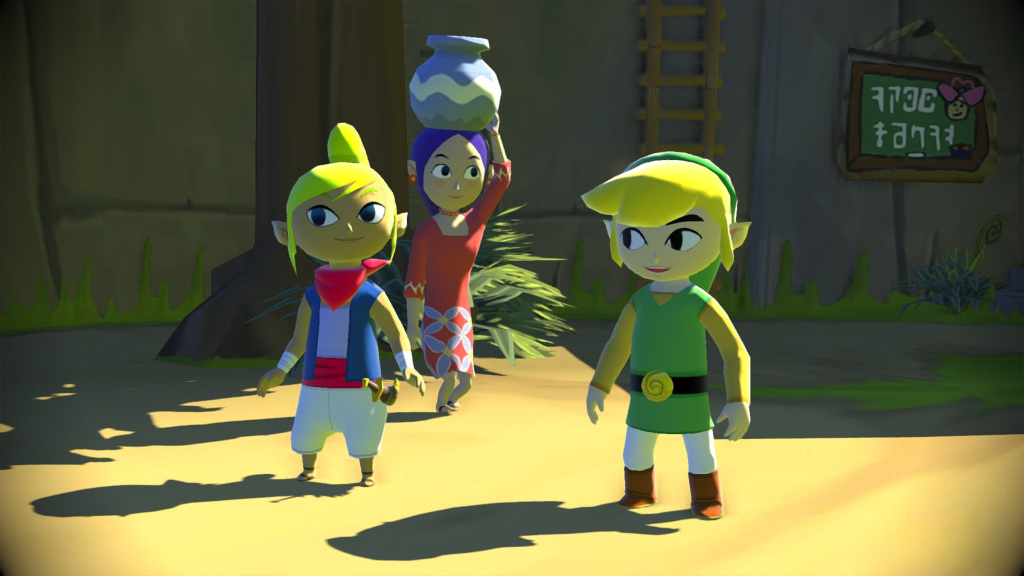
Wind Waker may have struggled when it launched, but the game has only risen in the estimation of audiences and critics in the years since. On Metacritic, The Wind Waker is the third best-reviewed entry in the series, only coming in behind Breath of the Wild and Ocarina of Time in terms of raw review score. The more animated version of Hyrule got two spin-off sequels in the form of Legend of Zelda: Phantom Hourglass and Legend of Zelda: Spirit Tracks, which fleshed out the future of this Zelda timeline in some compelling ways. Toon Link also became a mainstay of the Super Smash Bros. series, replacing Young Link in Super Smash Bros. Brawl and appearing in each Smash Bros. game since.
As time went on and the cutting-edge graphics of other GameCube games aged poorly, the more stylized and charming look of Wind Waker endured. The game has been re-released several times over the years, with remasters reintroducing older players to the game they brushed off and winning over newer generations who missed it entirely. Even among Legend of Zelda fans, Wind Waker is typically held up alongside Ocarina and Breath of the Wild as the true best entries in the series, while other games like Twilight Princess are remembered fondly but not nearly as highly as Wind Waker.
I remember the vitriol that came out at the time when Wind Waker‘s art style was revealed, especially in light of Ocarina of Time‘s popularity. However, I was quickly won over by the actual gameplay and quickly fell in love with the cartoony style. Wind Waker remains arguably the most charming entry in the series, with a fun heart and strong worldbuilding. The quietly bittersweet focus on the past as something lost and not worth sacrificing the future for gives the game a haunting and emotional thematic throughline, and it still has one of the most three-dimensional incarnations of Ganondorf ever portrayed. There’s a timeless quality to Wind Waker that was there from the very beginning, even if many fans took years to finally open up to the game.
Most Viewed
-

Image Courtesy of Netflix -
Image courtesy of Warner Bros. Pictures -
Image Courtesy of Ufotable -

Warner Bros. Pictures -

image courtesy of Studio Ghibli