There’s a certain kind of game that doesn’t announce itself loudly. It doesn’t overwhelm you with systems, or punish you for taking a wrong turn, or make you feel like you’re fighting the controls just to exist in its world. The Secret of Crystal Mountain, the upcoming platforming RPG from solo developer Chris Rosenthal (Revolutron), offers up that kind of experience. I spent some time exploring the beautifully minimalistic world during a demo at PAX East 2026, and it brought a fresh breath of air to the platforming genre that can often feel like it’s trying to do a bit too much.
Videos by ComicBook.com
You play as a Delivery Cat who crash-lands on Crystal Mountain Isle, which was, at one time, the world’s foremost exporter of magic crystals, supplying witches and wizards across the globe for generations. Then, without explanation, the exports stopped. The island went dark. Now, you’re stranded there, and the mystery of what happened is yours to unravel.
“You don’t really know what’s going on,” Rosenthal told me. “So over the course of the time, you figure that out.”
It’s a setup that does a lot of heavy lifting with very little. I was immediately intrigued, and that intrigue continued to carry me all the way through the demo.
A Platformer That Meets You Where You Are
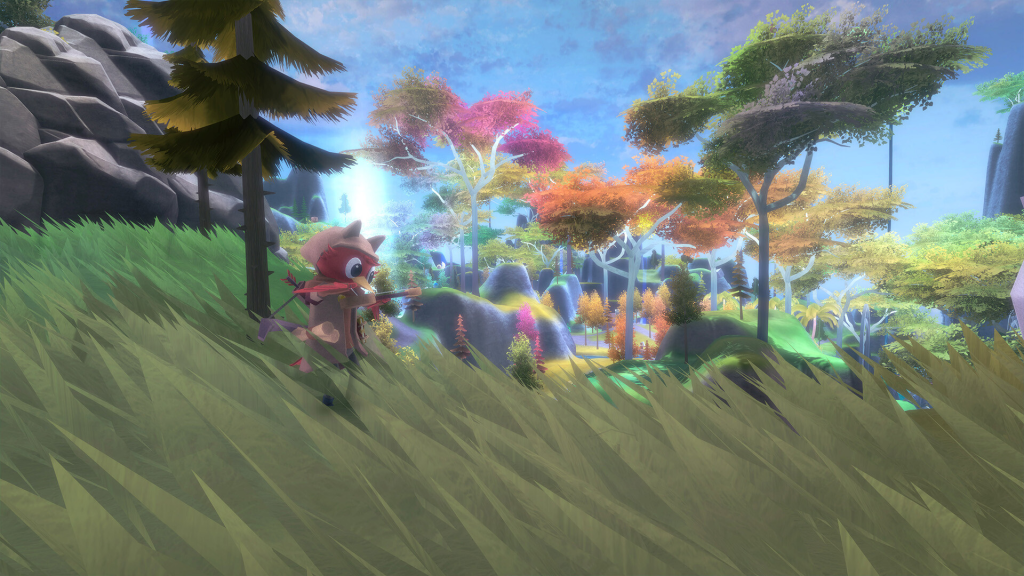
The clearest thing The Secret of Crystal Mountain communicates from its opening moments is that it isn’t here to test you. That’s not a knock. It’s a philosophy in its design, and it’s one the developer articulated directly. “My philosophy with platforming in this game is, it’s not just your skill level, it’s basically choosing where you want to go,” he explained. “Some of the areas might get really wide, and you can just kind of take a different route through it. And you have a lot of different movement options, so you can kind of chain together different abilities.”
That philosophy shows up in the feel of the game itself. Movement is fluid and expressive, with enough options that experimentation feels like the point. When I missed a jump and fell, I didn’t lose health, I simply respawned at the last safe spot. It’s a small thing, but it’s a small thing that adds up. The game respects your time and your momentum.
Similarly, dying feels more like a reset than a setback. When I died and dropped some in-game currency, I didn’t lose everything, just a portion of it. That balance felt right. There’s enough consequence to keep things from feeling completely worry-free, but not so much that a bad run leaves you feeling gutted and exhausted.
Old-School Exploration Energy
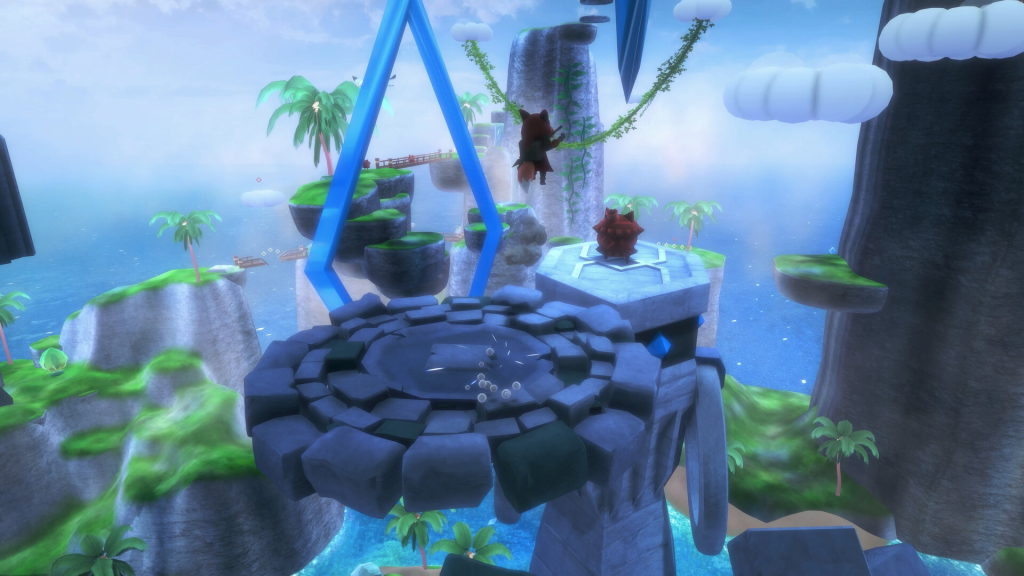
In full transparency (perhaps embarrassingly so), there were moments in the demo where I just had no idea of what to do or where I needed to go. I wandered into an area, looked around, and had to puzzle out the path forward. That kind of low-grade spatial confusion is familiar territory for me, and (hopefully) anyone else who grew up with N64 and PS1-era platformers (the Banjo-Kazooies and Spyros of the world) and Crystal Mountain carries some of that same DNA. (I did find my way out… eventually.)
That momentary disorientation never felt like a flaw, though. If anything, figuring it out made progress feel more earned. The game has a way of making its mechanics feel intuitive once they click, even if getting there takes a beat.
For players (like me) who do find themselves stuck, there’s a built-in safety valve. Silver keys, which unlock certain doors and areas, can often be purchased outright from in-game shops if a particular section is giving you too much trouble. It’s an elegant solution that keeps the world from ever feeling truly impassable, and a feature that will no doubt be welcome for players who aren’t as interested in being tested as they are in just exploring. I already envision my 7-year-old taking full advantage of silver key availability once he’s able to play this game.
Lush Without Being Loud
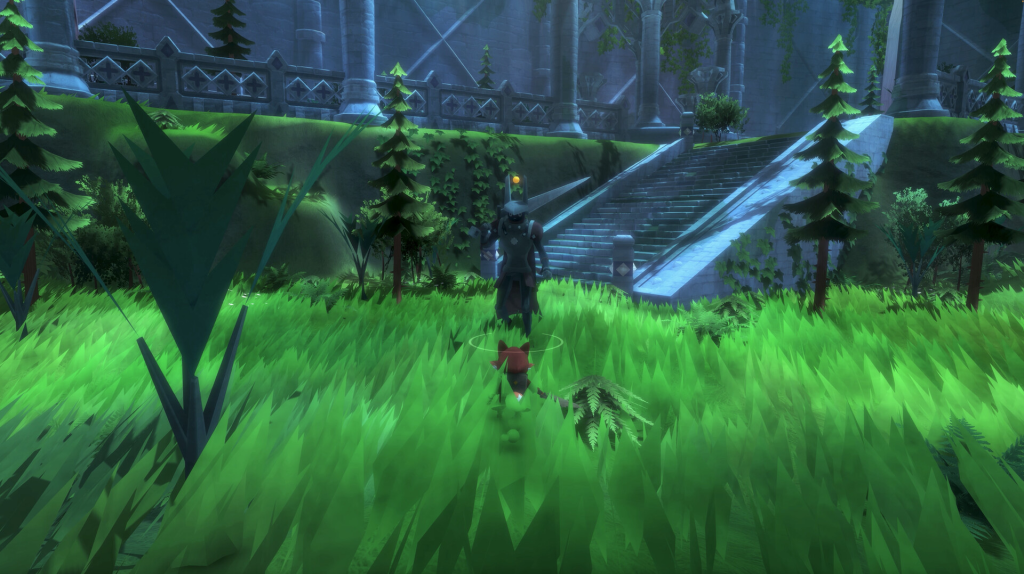
Visually, The Secret of Crystal Mountain has a look that’s harder to pull off than it seems. It’s very minimalistic with clean geometry and readable environments, but there’s a lushness to it that keeps it from feeling sparse. The island itself, as glimpsed across the demo’s outdoor sections, is beautiful, with towers of glowing blue crystals rising out of tropical greenery, and open platforming areas that stretch wide and invite exploration. It looks like something you want to inhabit… or at least spend a weekend camping in.
“I love that there’s this minimalist feel, but there’s still so much detail,” I told Rosenthal mid-demo. He laughed. “That’s pretty much what I was going for. Kind of lush, but also not overwhelming.”
If there’s one moment from the demo that stood out most, it’s the bird possession mechanic. About two-thirds of the way through a typical playthrough (though earlier in this demo build) you acquire a song (yes, a literal song) that allows you to take control of birds throughout the world. The way it works fits neatly into the game’s broader systems where as you explore, you learn songs that get catalogued in a kind of songbook, each one unlocking new possibilities in the environment.
Watching the screen shift as I took control of a bird and soared over the landscape was a “wow” moment that I wasn’t really expecting. It’s a mechanic that feels exciting both as a traversal tool, as well as a piece of the world’s internal logic. It is a magical island full of magical abilities, after all, with each ability expanding how you see and move through the world.
A Solo Act Worth Watching
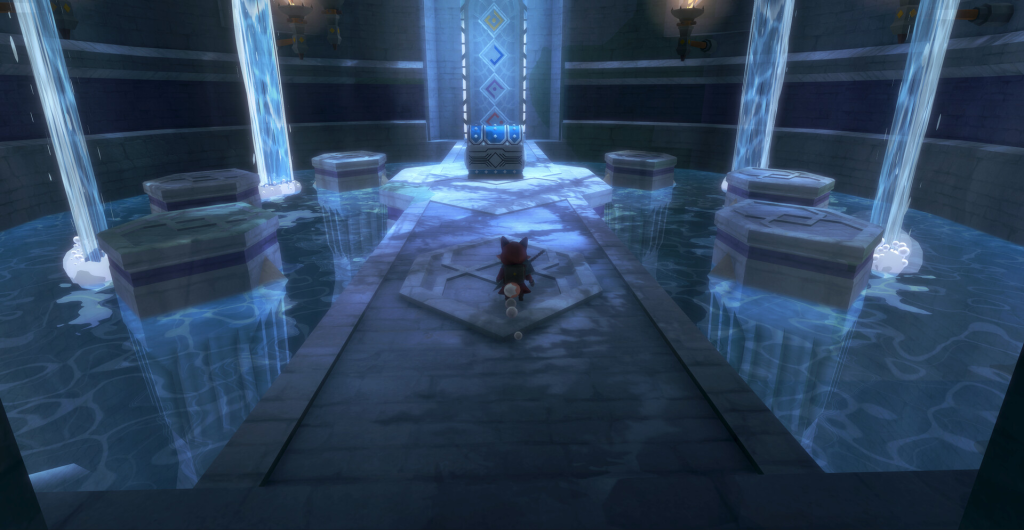
It’s worth noting that The Secret of Crystal Mountain is a largely solo endeavor that’s three years in the making. For a single developer working across that kind of timeline, the ambition of the project is pretty impressive, especially with the version that I was able to play.
The game is currently targeting a late 2026 release on PC (Windows and Mac) and Nintendo Switch, and is available to Wishlist now on Steam. In its preview form, The Secret of Crystal Mountain is the kind of game that doesn’t ask much of you, but gives back more than you’d expect. I have no reason to believe the full game won’t provide even more of that experience that harkens back to a place that my nostalgic platforming heart is apparently in need of.
More Gaming
-
Image Courtesy of Rockstar Games -
Courtesy of S-Game Studio -
Image Courtesy of Rockstar Games -

Image Courtesy of 2K -

Image Courtesy of Devolver Digital