The Legend of Zelda spinoff series, Hyrule Warriors, returns in Age of Imprisonment with some big changes. This third installment in the hack-and-slash series is a canon prequel to the events of Breath of the Wild and Tears of the Kingdom. In it, we learn the full story of the Imprisoning War and Zelda’s role in its events. The game brings back the basic mechanics from prior Hyrule Warriors entries, with a few changes to keep things interesting.
Videos by ComicBook.com
In Hyrule Warriors: Age of Imprisonment, we follow Zelda into the past to meet her ancestors. In the early days of Hyrule, we face off against The Legend of Zelda‘s familiar eternal foe, Ganondorf. The story isn’t necessarily surprising from this angle, but it does manage to deliver a few emotional moments regardless. Despite its best efforts, Age of Imprisonment is waged in a war of its own, against inherently repetitive combat mechanics. With a compelling story, fast-paced combat, and an ever-expanding cast of characters, the game is enjoyable, if not perfect.
Rating: 3.5 out of 5
| Pros | Cons |
|---|---|
| Beautiful graphics and smooth animations | Core gameplay loop can sometimes feel repetitive |
| Overall flow of combat is fast-paced and fun | Map UI isn’t very intuitive |
| Variety of characters and ways to power them up |
Age of Imprisonment Makes Hyrule Warriors Canon With a Compelling Prequel Story
Previous Hyrule Warriors games have taken place in an alternate timeline, but Age of Imprisonment is a true, canon prequel. The game takes players into history, unraveling the infamous Imprisoning War. Despite this major difference, it is still very much a Hyrule Warriors game, with the hack-and-slash combat fans of the spinoff series will remember. With beautifully rendered cutscenes before and after those battles, Age of Imprisonment does its best to tell an engaging and heartfelt story that fills in the gaps of Hyrule history.
Anyone who has played a Legend of Zelda game even once will not be surprised at the story’s villain. The moment he first appears, it’s clear who will play this role in the story. But despite this inherent predictability, the game does manage to craft a compelling and heartfelt story. Fans will encounter many familiar characters, and also a few brand-new introductions. While some of the story will be familiar to those who’ve experienced the snippets of the Imprisoning War shown in other games, there are still some surprises.
In all, the story is satisfying, if not groundbreaking. It helps flesh out the history of Hyrule and teach us more about a few key characters, including some that history forgot. Even with a foregone conclusion, the game manages to pull at your heartstrings and work in a few big moments that absolutely deliver some emotional heft. But to get there, you’ll need to win a lot of battles.
Hyrule Warriors Combat Isn’t Groundbreaking, But Age of Imprisonment Has Some Satisfying New Tricks
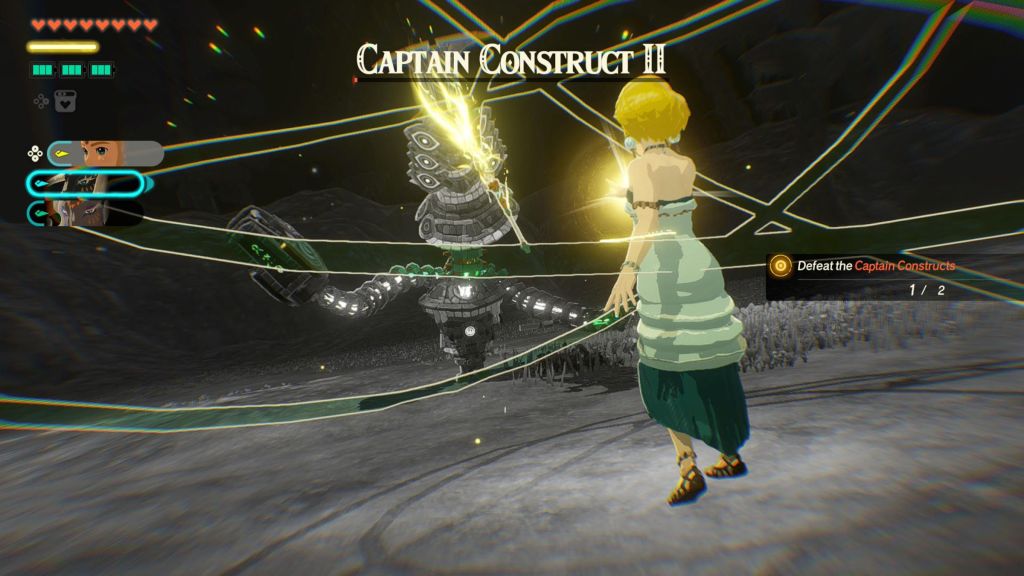
Combat in Age of Imprisonment will feel familiar to those who’ve played prior Hyrule Warriors games. It is fast-paced and satisfying, with each character offering a unique combination of moves that can be upgraded over time. At its core, this is a game about battling your way through a lot of enemies, with a satisfying K.O. total reminding you just how far you’ve come. This can be incredibly enjoyable, but it’s nothing groundbreaking for this style of game.
That said, Age of Imprisonment adds a few new tricks that keep things interesting. Sync Strikes are a new feature in this entry, letting characters team up to deliver powerful and unique attacks that deal massive damage. Each of the cast of characters also gets their own unique combat abilities, which offer more play diversity when choosing between the large roster of playable characters. These moves let you deliver a lot of damage against big bosses and keep the flow of combat feeling balanced.
Between battles, you will examine the war-torn map of Hyrule to decide your next move. There is some strategy involved here, as you must choose how to allocate resources. Using different supplies, you can increase the strength of specific characters or unlock new upgrades for character abilities and weapons. You’ll also need to keep an eye on time-restricted battles to ensure you don’t lose territory that’s already been conquered, adding another layer for players to consider between battles.
The map UI here can be a bit counterintuitive, as many controls don’t function the way you might expect from similar menus in other games. But once you get used to them, it’s a fairly straightforward mechanic that adds depth to the hack-and-slash gameplay loop. This is one of many ways that Hyrule Warriors: Age of Imprisonment strives to keep you engaged.
Despite Its Best Efforts, Age of Imprisonment Still Feels Repetitive
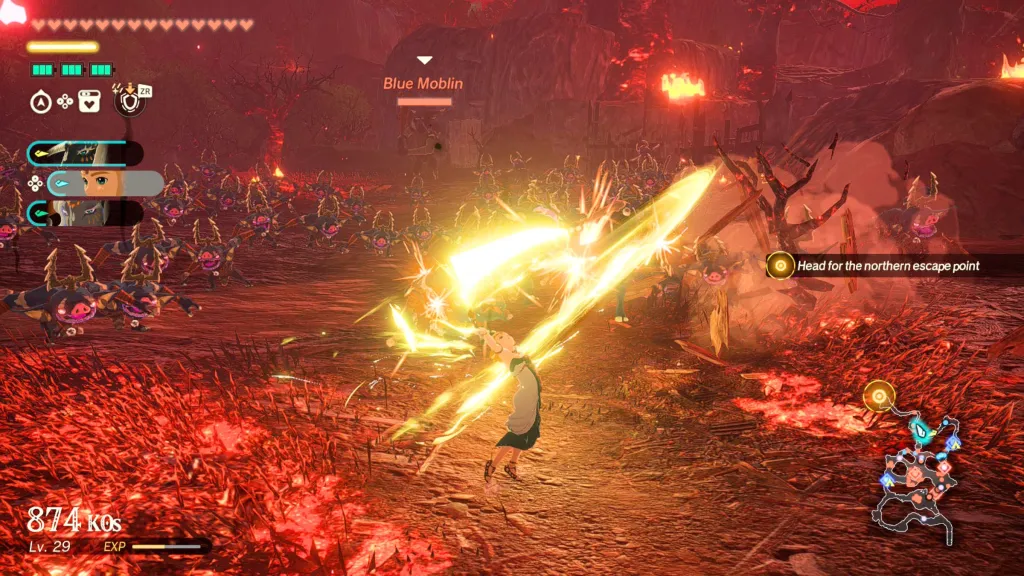
If I have one major complaint about Age of Imprisonment, it’s that it can start to feel pretty repetitive. Once you select your next mission from the map, you dive into scenarios that are frustratingly similar. There are only a few different types of monsters, some of which are region-specific. And the missions themselves generally involve the same basic idea of capturing specific outposts to claim a territory. Even the mini-bosses tend to fall within a few different monster types. This, along with each character having relatively similar controls despite their unique abilities, can leave you feeling a bit bored between story beats.
Nintendo has done its best to combat this inherent drawback in the Hyrule Warriors formula. New characters are unlocked at a steady clip throughout the game, ensuring you have some new battle styles to try out as you complete the same old missions. This, along with some regional shifts in monsters and mechanics, adds variety. The map supply missions and aside missions also help here, giving you specific items to collect and objectives to complete. And yet, at times, I wondered whether the grind to unlock the next story beat was really worthwhile.
If you like fast-paced, hack-and-slash combat, you’re going to have fun with this game. There’s a nice sense of progression as you unlock new characters and power up their moves and weapons. But a few missions have some unique map mechanics, and I couldn’t help but wish the game leaned more into that. Capturing base after base gets repetitive, whereas those rare times you do something different felt fresh and exciting. Adding a few more unique maps and mission goals would have gone a long way to make the overall gameplay loop feel more satisfying.
Hyrule Warriors: Age of Imprisonment Frequently Asked Questions

Got some questions before you commit to playing Age of Imprisonment? Here are some answers from someone who has finished the game.
Is Age of Imprisonment Canon?
Yes, Nintendo has confirmed that this will be the first Hyrule Warriors game that is considered canon, not alternate universe.
Is Link in Hyrule Warriors: Age of Imprisonment?
The short answer is no, Link is not a playable character in the base game of Age of Imprisonment. However, he is referenced and his presence is still felt in ways I won’t spoil here.
Does Age of Imprisonment Have Multiplayer?
Yes, there is a 2-player mode in Age of Imprisonment. You can play local split-screen co-op or play remotely with a friend using GameShare and Nintendo Switch Online.
How Long is Hyrule Warriors: Age of Imprisonment?
The game offers a lot of side missions and optional content, so your mileage will vary. I finished the main story in around 23 hours, while leaving several more side missions on the table. You can return for any unfinished missions in the post-game.
How many playable characters are in Hyrule Warriors: Age of Imprisonment?
You start with a small cast of playable characters, but it expands to a total of 28 allies as you progress through the story.
Hyrule Warriors: Age of Imprisonment releases on November 6th for Nintendo Switch 2. A Switch 2 code was provided by the publisher for the purpose of this review.
Most Viewed
-

Image Courtesy of HBO Max -
A screenshot from Fatal Fury: King of Fighters, showing a match. -

©Yukinobu Tatsu/SHUEISHA, DANDADAN Production Committee