Most games begin with a courteous epilepsy warning, a screen often skipped or outright ignored by a vast majority of players. But Tamashika is one of the few games that warrants such a precautionary measure; it even suggests players take breaks after 20 or 30 minutes as if it were a Nintendo game. This psychedelic first-person shooter provides a sharp high of audiovisual stimulation while also coaxing players to move and think quickly, but it’s a controlled buzz that doesn’t last long.
Videos by ComicBook.com
Tamashika’s intensity stems from its roots as a voidlike shooter, a hyperniche subgenre inspired by Post Void and its corridor structure that strips out all the fat. No involved level design. No side quests. Just kill, kill, kill.
Rating: 3.5/5
| Pros | Cons |
|---|---|
| Its unique, beautiful visual style is full of color | The drip feed of daily levels is an arbitrary limit |
| Gunplay is smooth, simple, and rewarding |
Tamashika‘s Visuals and Gameplay Are Equally Slick
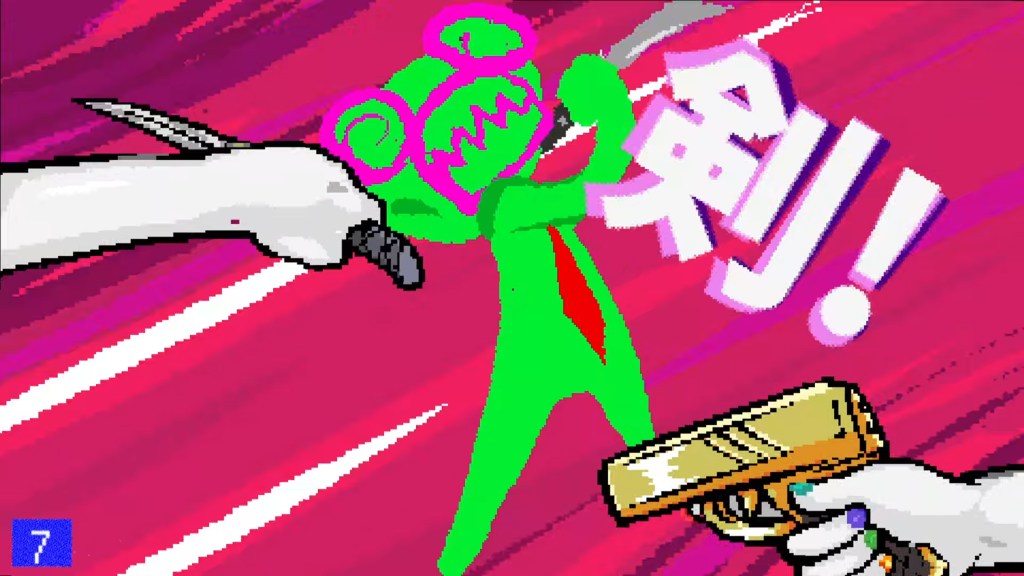
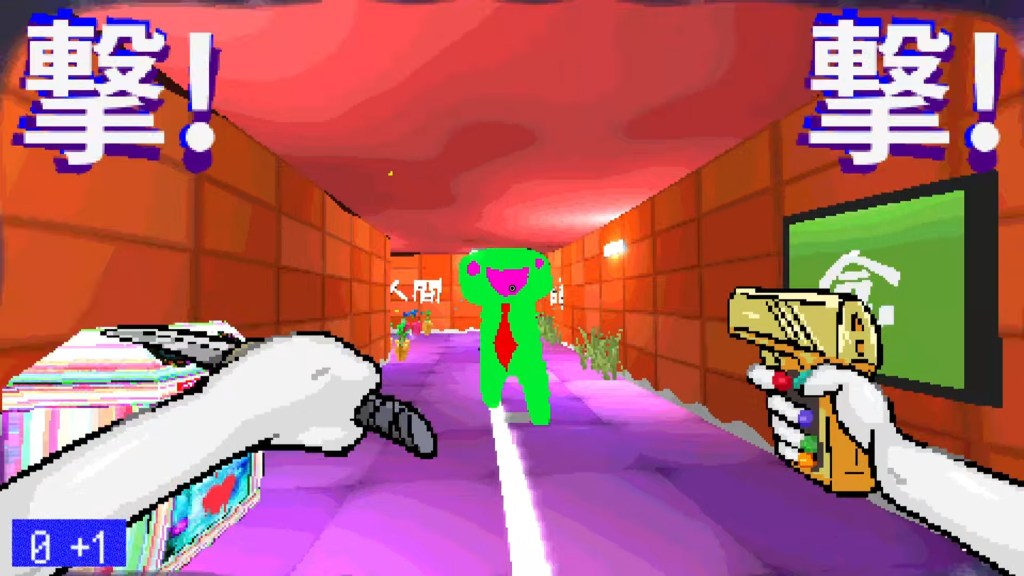
It’s a primordial form of a shooter where instinct reigns supreme, and, thankfully, Tamashika’s solid fundamentals mean these instincts aren’t inhibited. Players can simply shoot and stab; forget about upgrades or a complicated arsenal. Timing is vital since melee attacks are contingent on winning quick duels, and certain foes can quickly shoot back bullets that must be deflected. Nailing the tempo is tricky since missing is fatal, but brief yet descriptive tutorials carefully explain if players are too quick or too slow and are crucial to success.
After some acclimation, Tamashika clicks and becomes more zen-like, despite the frantic nature of its pulsing hallways, dizzying array of colors, and bloodthirsty green enemies. The quick jolts of failure fade to give way to a shooter that gets rhythmic as its intricacies become second nature. Murdering chains of jade demons, deflecting any errant bullet, and parrying every impish knife-wielding sicko is a dance that almost pulses to the music (which can be changed at any time in the menu and match a wide variety of moods).
It’s a simple dance that excels because of its simplicity and fluidity. Generous auto-aim plays no small role here in pulling off combos, but it doesn’t diminish the experience because requiring pinpoint precision could have harshed its tone.
Tamashika Limits the Player’s Dosage
Tamashika’s fundamental strengths — the marriage of its tone and rock-solid controls — are slightly undercut by its extreme brevity. It’s possible to reach the end in around 30 minutes tops, deaths and all. Too many games drone on for far too long and lose steam well before the finish line, so Tamashika‘s ability to bow out before it could even begin to grow stale is admirable.
However, it’s not shallow enough to justify such an abbreviated runtime. There’s no endless or randomized modes that remix its existing elements. While it does a bad job of explaining it, Tamashika has a level that shuffles in every day and these can reportedly sometimes yield new surprises, but the vagueness of these promises and inability to see into the future makes it hard to fully believe in these stages. If anything, it’s even more frustrating that it has other surprises nestled deep inside but is opting to drip feed them out over time.

Developer quicktequila has been deliberate in how it has spoken about Tamashika. It has sold the game as a peaceful interactive experience that isn’t out to extort players or suck up their time. Its “Attention is all you need” tagline is telling, as is its breathing exercise that fades in if players sit at the menu for too long and array of trophies and achievements that are named after various Buddhist or Shinto concepts or feelings.
Such a vision and the stubbornness to stick to that vision is commendable. Purposely pulling back from the excesses of modern game design and carefully curating how much players can take at any one time fits with the game’s meditative themes and overall aesthetic. But given its mechanical strengths, it’s difficult to not envision a better middle ground where the game can hold back while also giving players a bit more to chew on; carving up and blasting little green guys and vibing out to its visuals is too satisfying to be limited to such short, controlled bursts. These qualities mean Tamashika is a high that is ever so sweet but much too fleeting.
A PS5 copy of Tamashika was provided by the publisher for the purpose of this review.
What do you think? Leave a comment below and join the conversation now in the ComicBook Forum!
Most Viewed
-

Courtesy of Sony Pictures Animation / McDonald's -

Image courtesy of Marvel Television -

Image Courtesy of Marvel Comics -

Image courtesy of Funcom