
With titles like 28 Days Later, Sunshine, and the criminally underrated Dredd under his belt, Alex Garland has written some of the best genre movies in recent memory, leaving his mark on horror and sci-fi. His list of screenwriting credits is impressive enough, but he’s also made a name for himself as a talented director. Over the years, he turned the previously unfilmable Annihilation into an epic movie, portrayed the horrors of war in the aptly titled Warfare, and held a mirror up to society in Civil War. But before any of those films premiered, Garland announced he was a director to watch with one of the most captivating sci-fi titles of the 2010s.
Videos by ComicBook.com
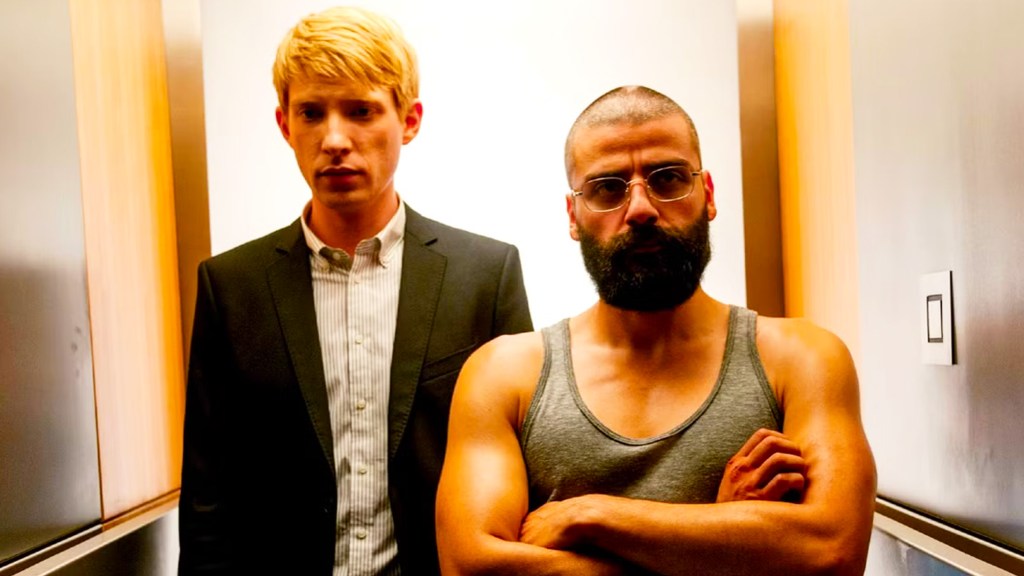
On April 10th, 2015, Ex Machina had its theatrical premiere in the United States. The film stars Domhnall Gleeson as Caleb Smith, a programmer who wins a contest to spend a week at the residence of Nathan Bateman, CEO of the tech company Caleb works for. Upon arriving, Caleb learns he is to take part in tests with an AI robot named Ava to determine how human and lifelike she is. Ex Machina earned widespread critical acclaim when it was released (92% on Rotten Tomatoes) and received numerous accolades, including an Oscar win for Best Visual Effects and another nomination for Best Original Screenplay.
How Ex Machina Became an Iconic Sci-Fi Film
Ex Machina was rightfully widely acclaimed during its time, and its reputation has only grown in the years since due to how prescient it is. At the time of its release, the idea of human-like robots seemed futuristic enough to be the basis for a sci-fi film. Today, technology has rapidly evolved to the point where AI is an increasingly prevalent part of our lives, making Ex Machina all the more relevant. It’s a cautionary tale whose morals ring truer now than they did a decade ago, as we currently live in an era where AI companions and chatbots are a thing anyone with a smartphone has access to. Ex Machina‘s compelling exploration of its heady themes make it a fascinating watch in 2026.
Garland’s script is characteristically excellent, serving as another example of him putting an exciting spin on well-worn ideas. What really elevates Ex Machina to the next level, however, are the three core performances. Star Wars sequel trilogy co-stars Gleeson and Oscar Isaac demonstrate completely different sides of their range; the former brilliantly playing a shy and introverted computer programmer while the latter shines as a narcissistic genius trying to play god. Because Ex Machina tells a small-scale, intimate story, there’s a lot riding on Gleeson and Isaac, and they’re more than up for the challenge. Caleb and Nathan’s dynamic is always interesting, especially as Caleb learns more about Ava and the nature of her creation.

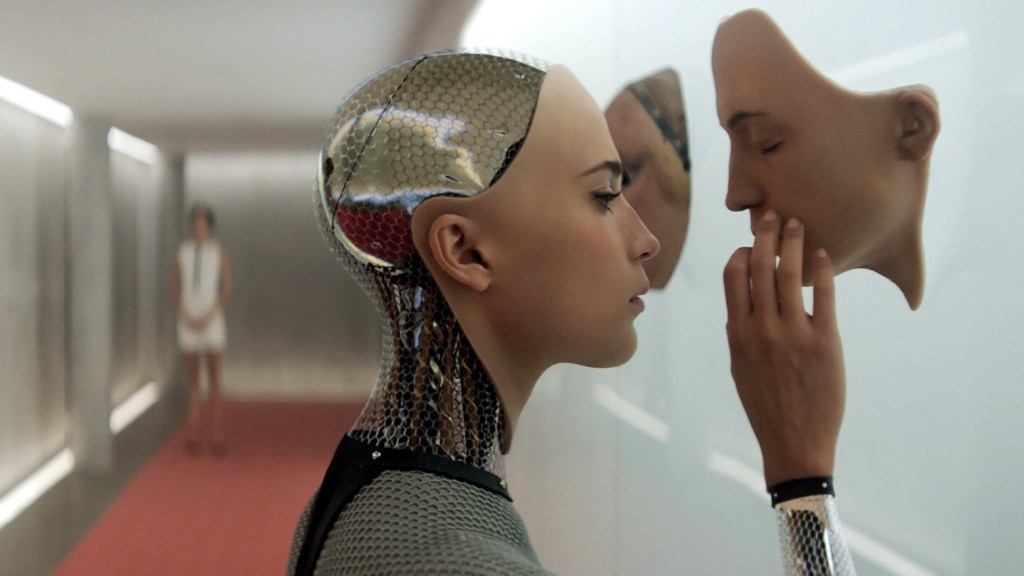
Speaking of Ava, Ex Machina wouldn’t work as well as it does without Alicia Vikander, who rounds out the main cast with the film’s best performance. What makes Ava so great is how well-rounded the character is, with Vikander delivering a layered turn that conveys a variety of emotions. Audiences know going in that Ava is an artificially created being, but she ultimately feels just as human as any of the people she interacts with. The character is a fantastic riff on the classic trope of “robot learning to be human,” commanding the audience’s full attention every time she’s on screen. Her scenes play out in a way that it’s almost like the viewer is conducting the tests alongside Caleb, coming up with their own evaluations of Ava and what she’s truly after.
Another amazing aspect of Ex Machina is how it illustrates that you don’t need hundreds of millions of dollars to put strong visuals on screen. The film was budgeted at just $15 million, and it won the Oscar for Best Visual Effects. It defeated some heavy hitters in that category; the other nominees were Star Wars: The Force Awakens, The Martian, The Revenant, and Mad Max: Fury Road. Ex Machina stretched its limited resources to the absolute limit, impressing everyone with seamless special effects. On this front, Ex Machina‘s greatest accomplishment was Eva’s design. She is the center of the story, so the robot had to be believable for the audience to buy into the narrative. If the visual effects weren’t exemplary, Vikander’s performance would have been wasted.
Will There Be An Ex Machina Sequel?
With Ex Machina proving to be a critical and commercial success (it grossed $37.3 million worldwide against that $15 million budget) and only rising in stature over the last decade, sci-fi fans have expressed interest in seeing some kind of follow-up. While Ex Machina clearly works brilliantly as a self-contained piece, the ending could conceivably lay the foundation for a sequel. After manipulating Caleb, killing Nathan, and escaping Nathan’s residence (leaving Caleb trapped inside), Ava leaves and travels to a city, where she experiences the outside world for the first time.
A sequel could pick up where Ex Machina left off, following the next steps of Ava’s journey as she continues to integrate herself into human society amidst an unsuspecting public. Considering how much tech has infiltrated our daily lives (to the point where even Pixar is using is as an antagonist force for a new Toy Story movie), there could be something interesting in watching a movie about the world at large not realizing that an AI being lives among them. Garland, who always brings a unique perspective to his projects, would surely find a way to tackle that premise in a way that wouldn’t be derivative of sci-fi classics that have come before.
As great as it would be to see Vikander reprise the role of Ava, Ex Machina 2 doesn’t appear to be in the cards. In the 11 years since the film came out, there’s been no word of a possible sequel, indicating Garland intends for it to remain standalone. There conceivably could always be a follow-up without his involvement, but that would be a risky proposition. As writer/director, Garland was the main creative force behind Ex Machina, and if he didn’t return for a sequel, it would be an impossible void to fill. Unless Garland is up to spearhead another film in this universe, a follow-up shouldn’t happen.
Ultimately, that might be for the best. There is a bit of a “what now?” quality to Ex Machina‘s conclusion, as viewers are left wondering what will become of Ava now that she’s living in the real world, but there aren’t any lingering questions that absolutely demand to be answered on screen. If there were, Garland likely would have already used them as the basis for a sequel by now. By the film’s end, all of the main character arcs have been wrapped up, and any ambiguity is left for the viewers to fill in the blanks themselves (including Caleb’s possibly dark fate). Rather than try to add on to a story that doesn’t need another chapter, it’s better to let Ex Machina stand alone as a great piece of sci-fi cinema.
What do you think? Leave a comment below and join the conversation now in the ComicBook Forum!
